
Bilde: Antioxidants in Limes Protecting Healthy Body Cells from Free Radicals
Publisert:
Sist oppdatert: 29. juli 2026 kl. 22:17:05 UTC
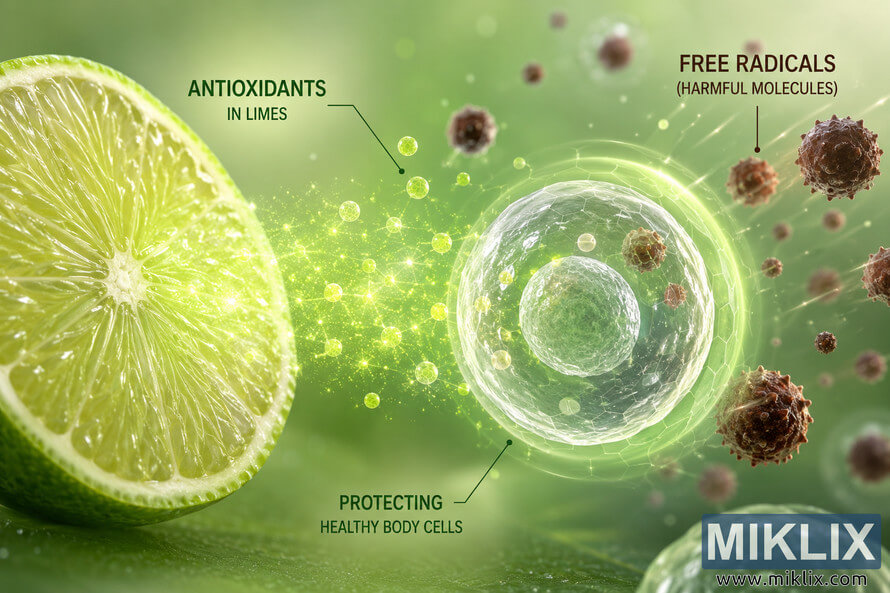
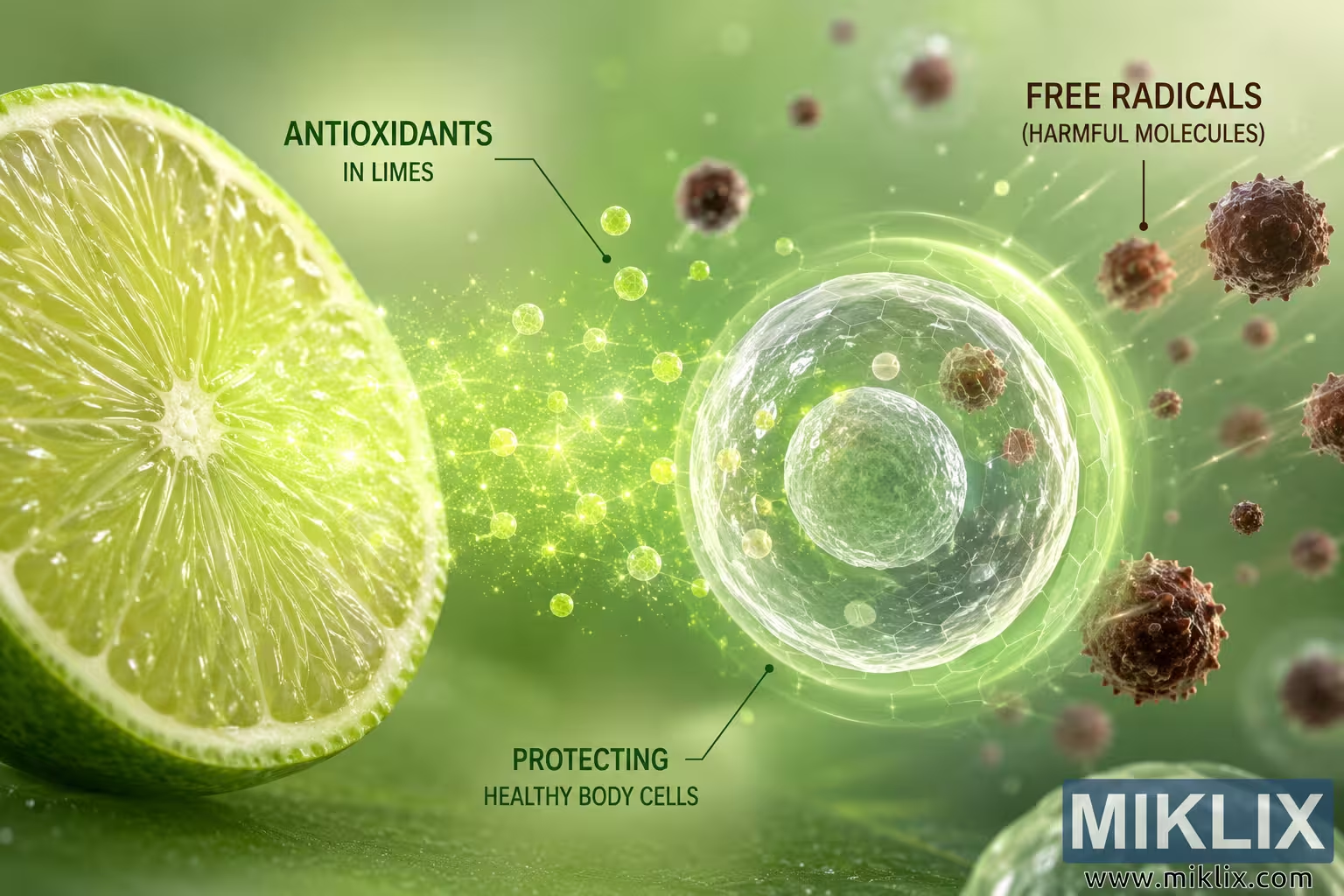
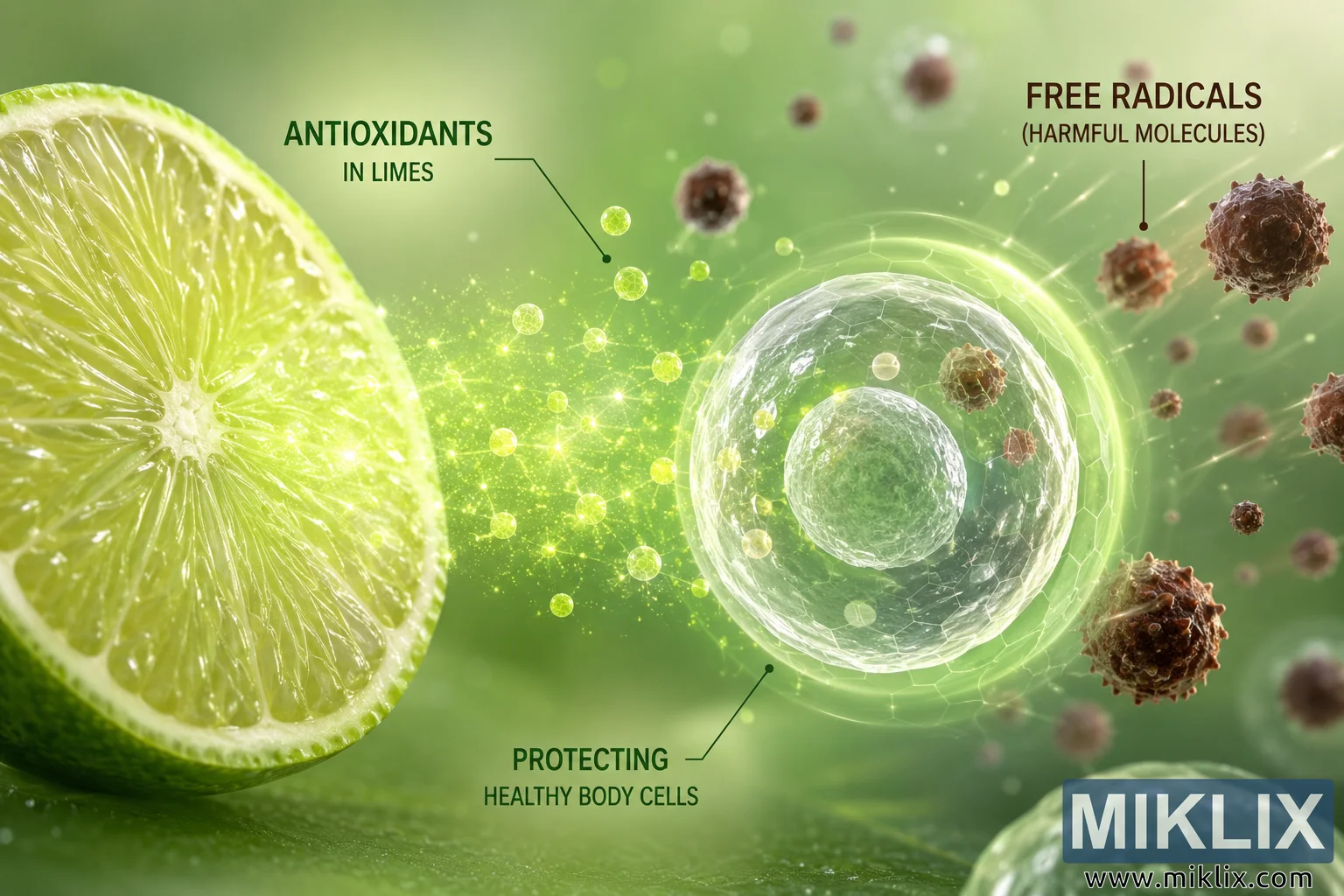
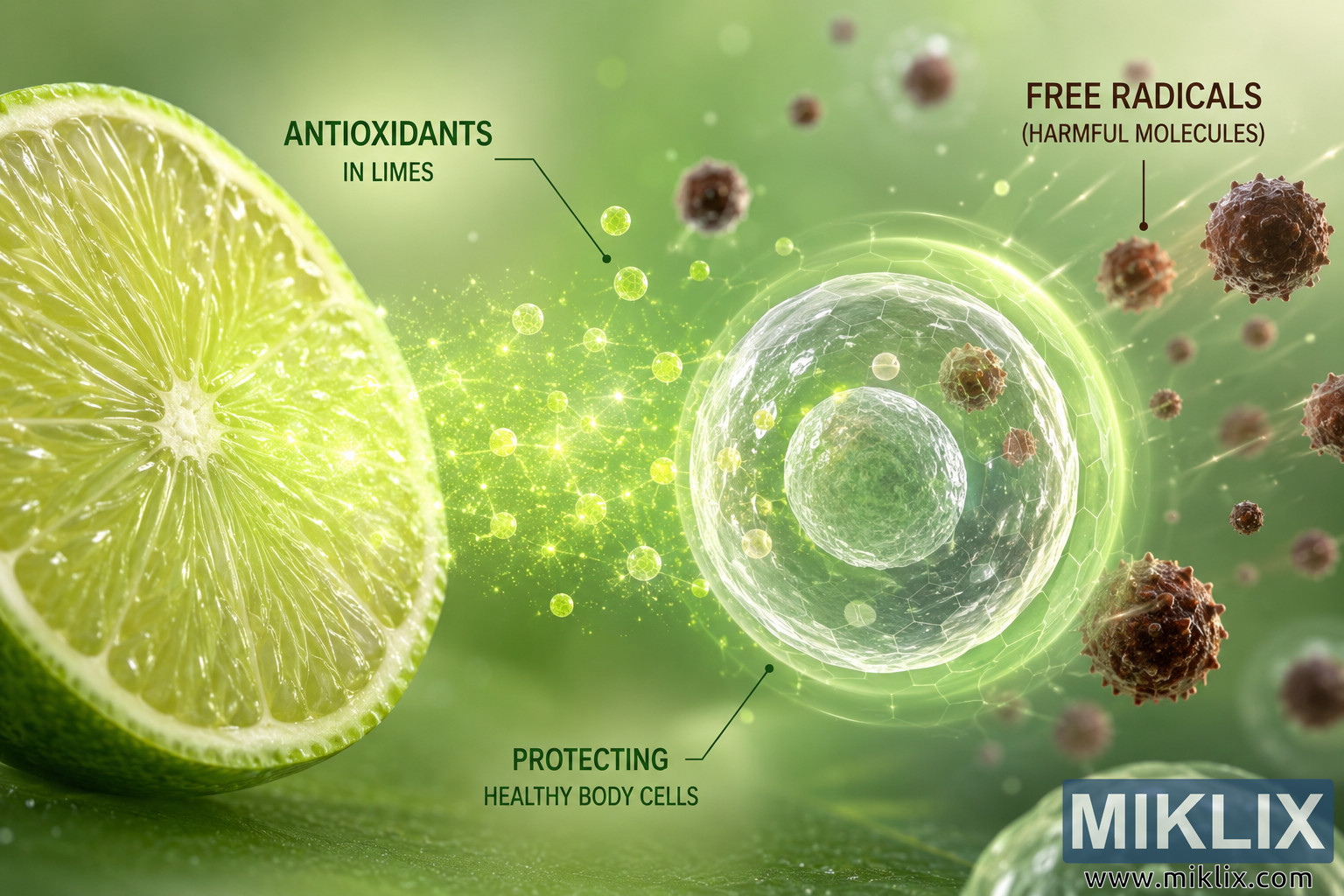
High-resolution landscape illustration depicting antioxidants in limes neutralizing free radicals and helping protect healthy body cells. The concept visually represents oxidative stress reduction, cellular defense, and the health benefits associated with antioxidant-rich citrus fruits.
Antioxidants in Limes Protecting Healthy Body Cells from Free Radicals
Tilgjengelige versjoner av dette bildet
Bildefilene som kan lastes ned nedenfor, er mindre komprimerte og har høyere oppløsning - og dermed høyere kvalitet - enn bildene som er innebygd i artikler og sider på dette nettstedet, som er mer optimalisert med tanke på filstørrelse for å redusere båndbreddeforbruket.
Vanlig størrelse (1,536 x 1,024)
Stor størrelse (3,072 x 2,048)
Svært stor størrelse (4,608 x 3,072)
Ekstra stor størrelse (6,144 x 4,096)
Komisk stor størrelse (1,048,576 x 699,051)
- Laster fortsatt opp... ;-)
Bildebeskrivelse
This landscape-oriented scientific-style conceptual illustration presents a visually engaging representation of how antioxidants found in limes help defend healthy body cells against harmful free radicals. The composition is arranged from left to right, guiding the viewer through a symbolic biological process. On the far left, a freshly cut lime dominates the foreground. The lime is rendered with vivid realism, featuring translucent citrus segments filled with juice, a bright green rind, and subtle highlights that emphasize freshness and nutritional value. The fruit appears illuminated by soft natural light, making its vibrant green and yellow tones stand out against the smooth green background.
Radiating outward from the lime are numerous glowing green particles that symbolize antioxidant molecules. These particles vary in size and brightness, creating the impression of movement and energy as they travel toward the center of the composition. Small sparkling effects, luminous dust, and soft light trails reinforce the idea that beneficial compounds are actively moving from the fruit toward the body's cells. The glowing particles create a visual bridge between the lime and the biological structures on the right side of the image.
Positioned near the center is a large healthy body cell depicted as a semi-transparent sphere with a delicate membrane. The membrane features subtle geometric and hexagonal textures that suggest biological structure while maintaining a clean and modern scientific aesthetic. Inside the cell sits a smaller spherical nucleus, emphasizing the integrity of the healthy cell. The entire cell is surrounded by a faint green protective aura or energy shield that visually communicates resilience and defense. The shield appears strongest where the antioxidant particles converge, suggesting that the antioxidants reinforce the cell's natural protective mechanisms.
Surrounding the healthy cell are multiple irregular brown and dark-colored spherical objects representing free radicals. These harmful particles vary in size and distance from the cell, creating depth within the scene. Some appear slightly blurred due to depth of field, while others remain in sharp focus near the protective barrier. Their rough textures and darker coloration contrast strongly with the smooth, luminous appearance of the healthy cell and antioxidant particles. This visual contrast reinforces the distinction between harmful oxidative agents and beneficial protective compounds.
The overall lighting employs soft gradients, subtle lens flare effects, and gentle volumetric illumination that create a clean, modern, and optimistic scientific atmosphere. The predominantly green color palette conveys freshness, health, vitality, and natural nutrition while also supporting the citrus theme. Background bokeh effects and shallow depth of field ensure the primary elements remain the focal point without distracting visual clutter.
Several educational labels are integrated into the illustration to clarify the scientific concept. A label near the glowing green particles identifies them as antioxidants originating from the lime. Another label near the central sphere identifies the protected healthy body cells. A third label identifies the surrounding harmful molecules as free radicals. Fine connector lines link each label to the corresponding visual element, giving the image the appearance of a modern educational infographic while preserving an attractive photorealistic CGI style.
The composition effectively communicates the biological concept of oxidative stress reduction in an accessible manner. Rather than depicting literal molecular interactions, the illustration relies on symbolic visualization to explain how antioxidant-rich foods may help protect cells from oxidative damage caused by free radicals. The protective barrier surrounding the cell visually implies reduced cellular stress, while the glowing antioxidant particles suggest continuous defensive activity.
The background remains intentionally uncluttered with smooth green gradients, soft lighting transitions, and subtle atmospheric effects that enhance readability and focus. No recognizable commercial products, trademarks, company logos, or branded packaging appear anywhere within the illustration. The emphasis remains entirely on the natural lime, the symbolic antioxidant activity, healthy cellular structures, and the surrounding free radicals. Overall, the image combines realistic fruit rendering, stylized biological visualization, and educational infographic elements into a cohesive landscape composition that communicates the relationship between dietary antioxidants, oxidative stress, and cellular protection in a visually compelling and scientifically inspired manner.
Bildet er relatert til: Health Benefits of Limes: Your Complete Nutrition Guide