
Bilde: Antioxidant Properties of Tangerines Supporting Disease Prevention
Publisert:
Sist oppdatert: 11. august 2026 kl. 18:22:45 UTC
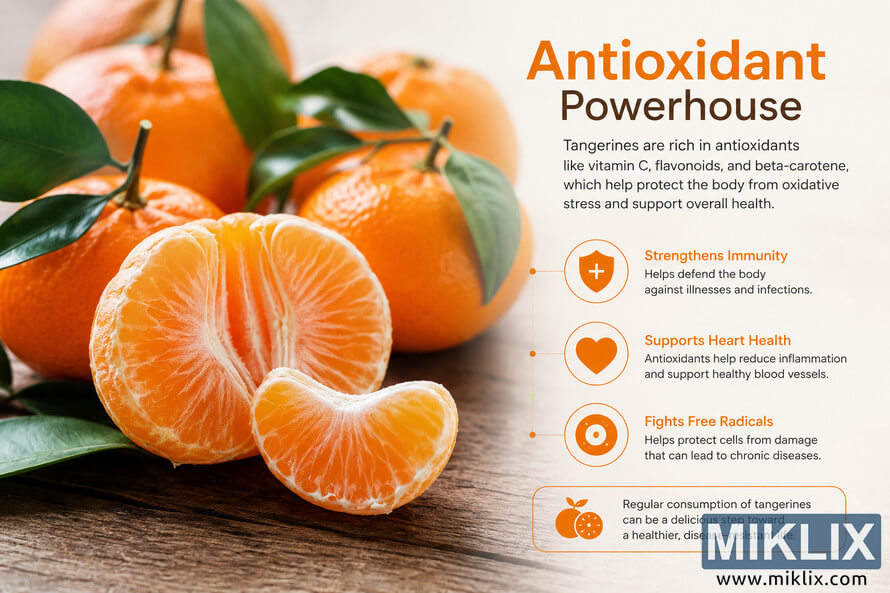
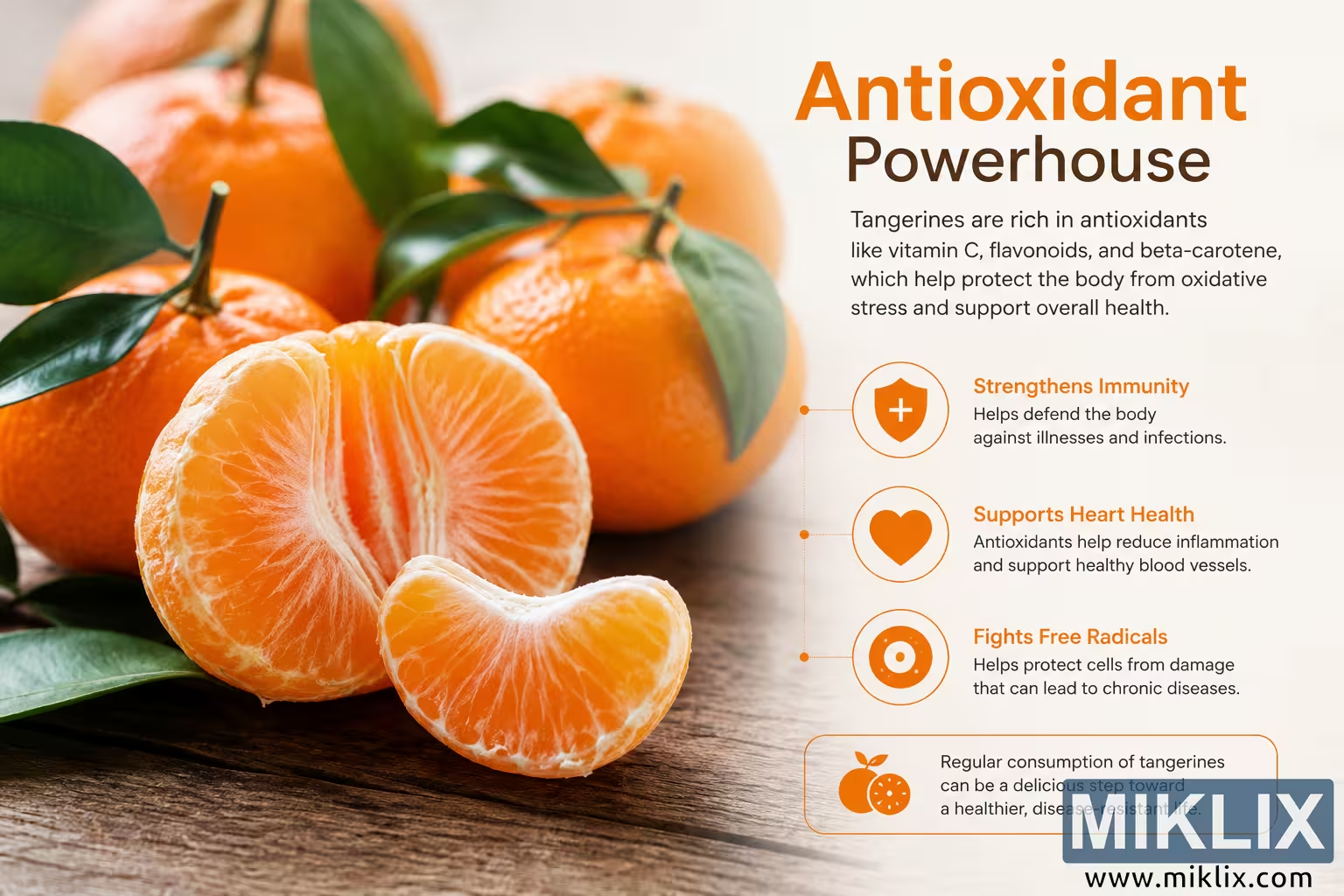
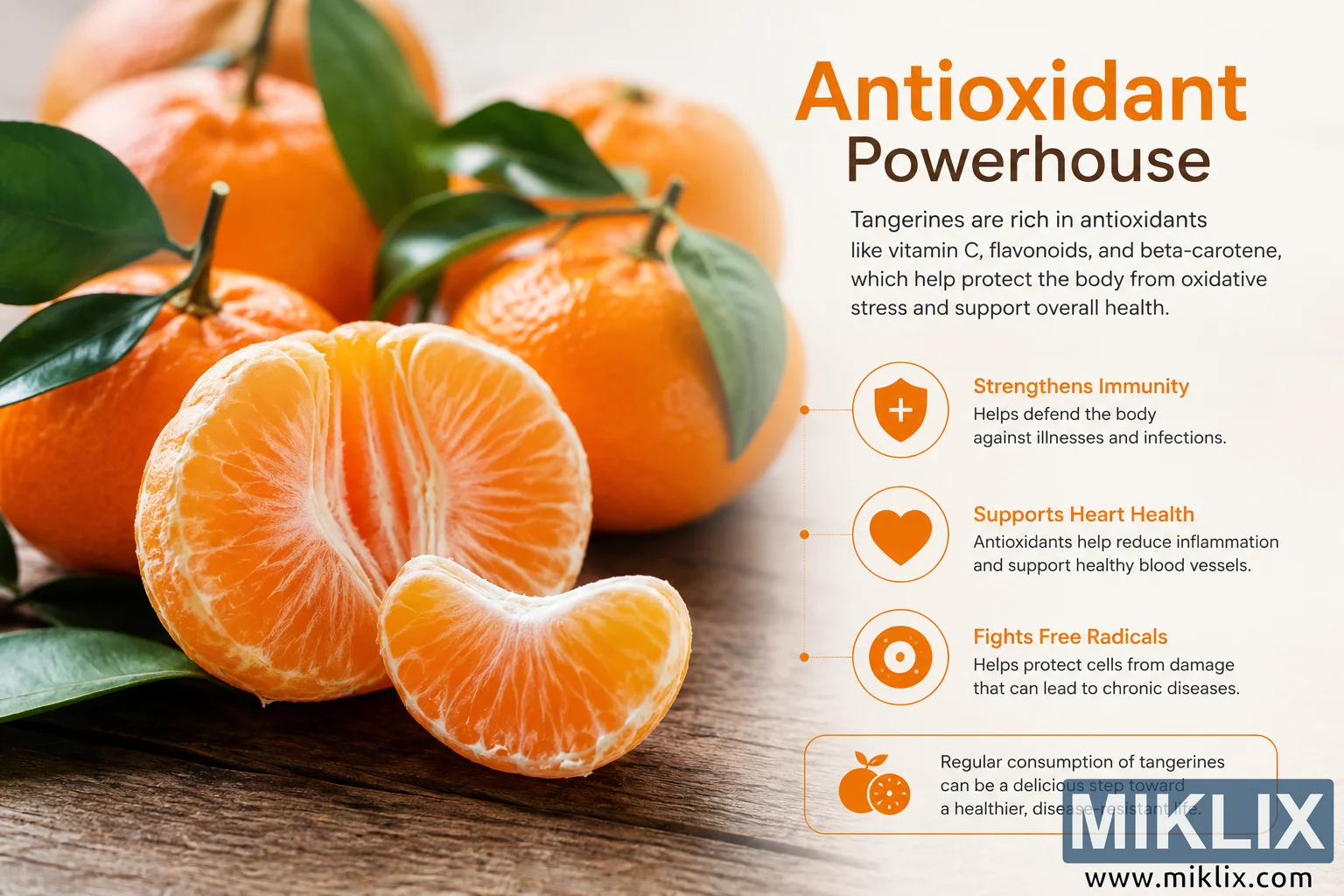
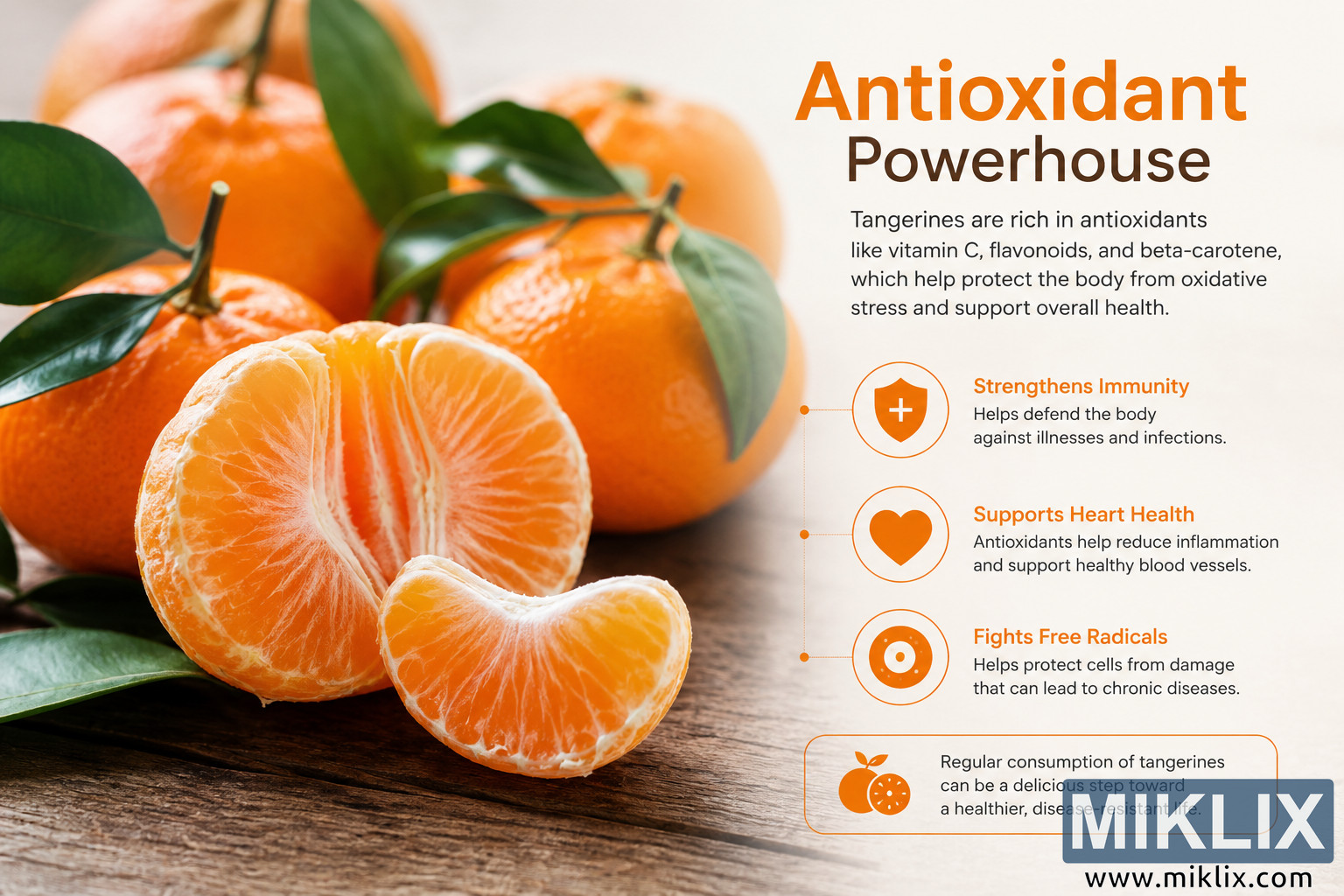
High-quality landscape infographic illustrating fresh tangerines and explaining how antioxidants such as vitamin C, flavonoids, and beta-carotene help support immunity, heart health, protect cells from oxidative stress, and contribute to disease prevention as part of a healthy lifestyle.
Antioxidant Properties of Tangerines Supporting Disease Prevention
Tilgjengelige versjoner av dette bildet
Bildefilene som kan lastes ned nedenfor, er mindre komprimerte og har høyere oppløsning - og dermed høyere kvalitet - enn bildene som er innebygd i artikler og sider på dette nettstedet, som er mer optimalisert med tanke på filstørrelse for å redusere båndbreddeforbruket.
Vanlig størrelse (1,536 x 1,024)
Stor størrelse (3,072 x 2,048)
Svært stor størrelse (4,608 x 3,072)
Ekstra stor størrelse (6,144 x 4,096)
Komisk stor størrelse (1,048,576 x 699,051)
- Laster fortsatt opp... ;-)
Bildebeskrivelse
This landscape-oriented illustration presents a clean, bright, infographic-inspired composition focused on the health benefits of tangerines, particularly their antioxidant properties and their role in supporting disease prevention. The overall visual style combines realistic food photography with modern educational design elements, resulting in an image that is both visually appealing and easy to understand. The composition is divided into two primary sections, creating a balanced layout that naturally guides the viewer's attention from the fresh fruit imagery on the left to the educational content on the right.
On the left side of the image, several ripe tangerines are arranged on a rustic wooden tabletop. Their vivid orange peels contrast beautifully against the rich brown wood, creating a warm and inviting color palette. Some of the fruit remain whole, while one tangerine has been peeled open to reveal its juicy interior. The exposed segments display a translucent texture that catches the soft lighting, emphasizing freshness and natural moisture. A single separated segment rests prominently in the foreground, adding depth and dimension to the composition. Multiple glossy green leaves remain attached to several stems, reinforcing the impression that the fruit has been freshly harvested. The background behind the fruit is softly blurred with a shallow depth of field, helping the tangerines remain the central visual focus while creating a premium photographic appearance.
The right half of the image features a clean white background that serves as the canvas for the educational infographic content. At the top is a large, bold headline reading "Antioxidant Powerhouse," using oversized typography in vibrant orange for the first word and a darker complementary color for the second. The headline immediately communicates the central topic while harmonizing with the natural orange color of the fruit. Beneath the headline appears a concise paragraph explaining that tangerines contain antioxidants including vitamin C, flavonoids, and beta-carotene, which help protect the body from oxidative stress and contribute to overall health. The paragraph is arranged in a clear, readable layout with generous spacing, making the information approachable.
Further down the infographic, three vertically stacked informational callouts summarize key health benefits associated with antioxidants found in tangerines. Each section is accompanied by a simple circular icon enclosed within an orange outline. The first icon contains a shield with a medical-style cross, visually representing immune support. Adjacent text explains that antioxidants help strengthen the body's natural defenses against illnesses and infections. The second icon displays a heart, symbolizing cardiovascular wellness. The accompanying description highlights the role antioxidants may play in supporting healthy blood vessels and reducing inflammation associated with heart health. The third icon features a circular target-like symbol, representing protection at the cellular level. Its explanatory text describes how antioxidants help neutralize free radicals, reducing cellular damage that may contribute to chronic diseases. Thin connecting lines and small orange dots visually link the icons together, creating a structured flow that guides the viewer through the information in sequence.
At the bottom of the infographic is a rounded rectangular information box accented with an orange border. Inside this panel is a small icon depicting a simplified tangerine alongside a brief concluding statement encouraging regular consumption of tangerines as part of a balanced diet supporting long-term wellness. The message reinforces the educational theme without overwhelming the viewer with excessive detail.
Lighting throughout the image is bright, soft, and evenly distributed, producing gentle highlights on the fruit while avoiding harsh shadows. The overall color scheme emphasizes oranges, greens, warm wood tones, white backgrounds, and subtle neutral grays, creating a fresh, healthy, and trustworthy visual identity. The typography is modern, clean, and highly legible, making the infographic suitable for educational articles, wellness blogs, nutrition presentations, health awareness campaigns, or informational web content. The composition avoids clutter through generous use of white space, allowing each element to remain visually distinct. The overall impression is one of freshness, health, scientific credibility, and accessible nutritional education, effectively illustrating the concept that naturally occurring antioxidants in tangerines contribute to protecting cells from oxidative stress and supporting general health as part of a healthy lifestyle.
Bildet er relatert til: Peel Back the Benefits: Why Tangerines Are So Good for You