
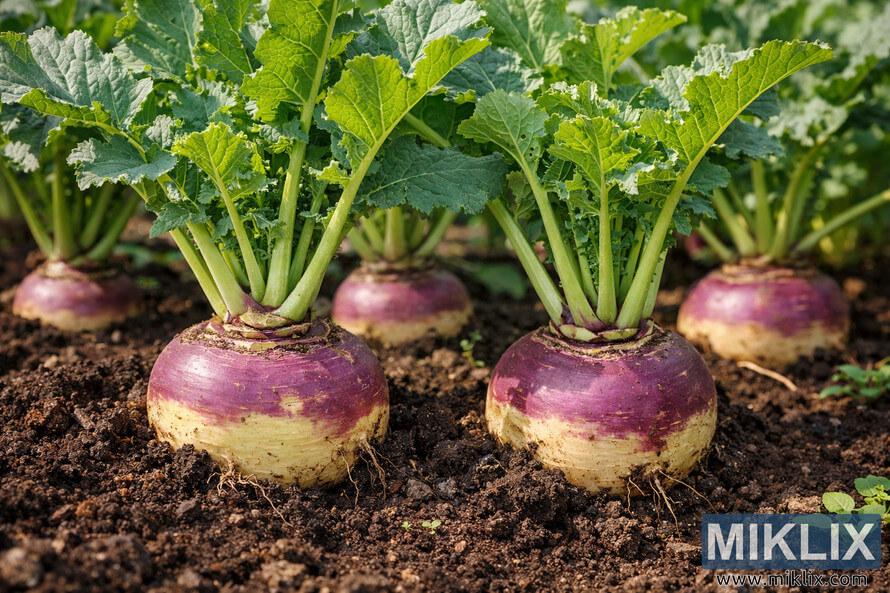
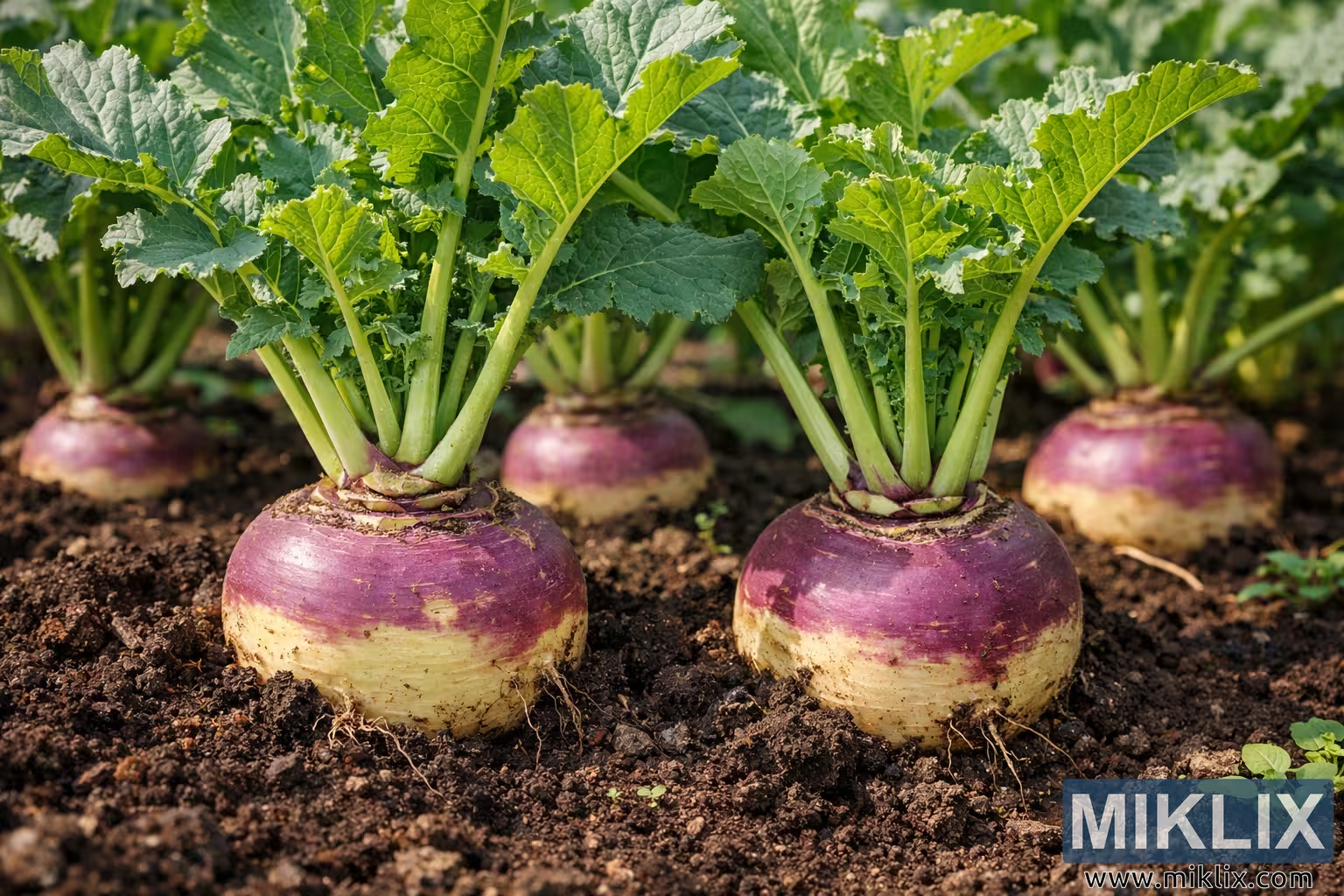
Bilde: Rutabaga Plants Flourishing in Garden Soil
Publisert:
Sist oppdatert: 10. september 2026 kl. 09:57:34 UTC
A detailed depiction of rutabaga plants thriving in garden soil, showing their purple-crowned roots and lush green leaves illuminated by natural sunlight.
Rutabaga Plants Flourishing in Garden Soil
Tilgjengelige versjoner av dette bildet
Bildefilene som kan lastes ned nedenfor, er mindre komprimerte og har høyere oppløsning - og dermed høyere kvalitet - enn bildene som er innebygd i artikler og sider på dette nettstedet, som er mer optimalisert med tanke på filstørrelse for å redusere båndbreddeforbruket.
Vanlig størrelse (1,536 x 1,024)
Stor størrelse (3,072 x 2,048)
Svært stor størrelse (4,608 x 3,072)
Ekstra stor størrelse (6,144 x 4,096)
Komisk stor størrelse (1,048,576 x 699,051)
- Laster fortsatt opp... ;-)
Bildebeskrivelse
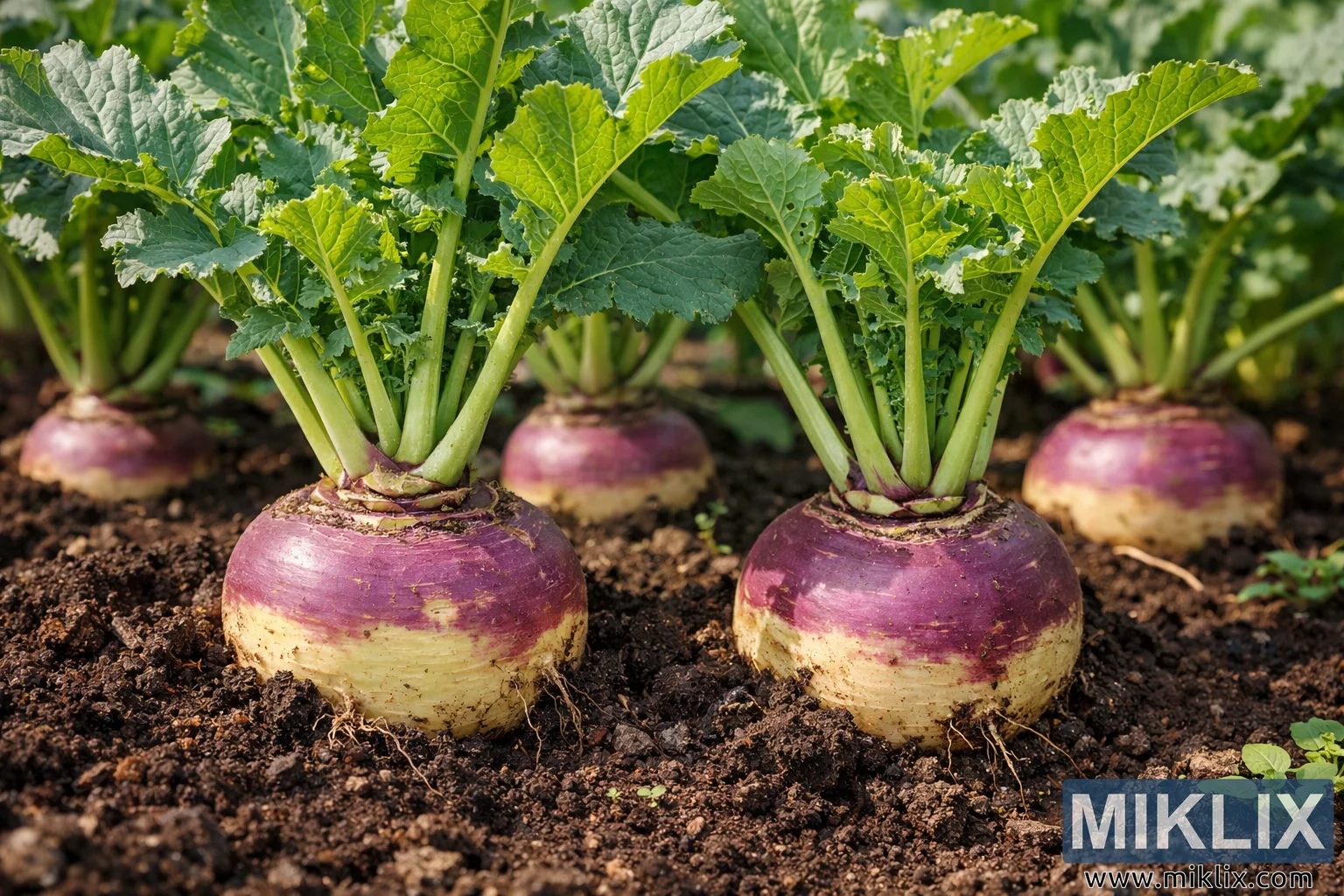
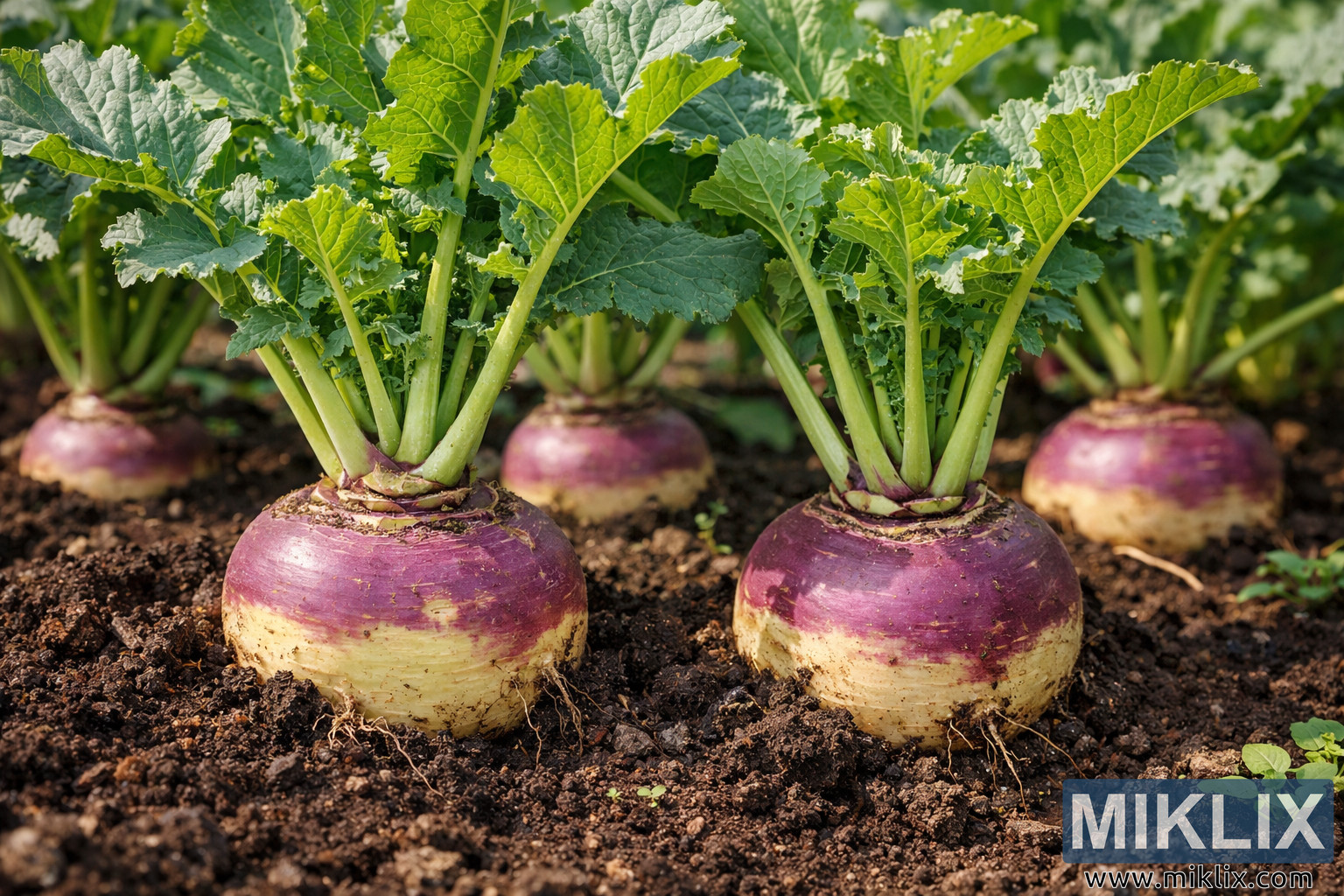
The image captures a serene and vibrant garden scene featuring several rutabaga (Brassica napobrassica) plants growing in rich, dark soil. The composition is in landscape orientation, allowing the viewer to appreciate the horizontal expanse of the garden bed and the rhythmic repetition of the rutabaga plants across the frame. Each plant displays the characteristic purple crown of its swollen root bulb, fading gradually into a creamy yellow hue near the soil line. The bulbs are partially exposed, their rounded forms emerging from the earth with small clumps of soil adhering to their lower surfaces. Fine, fibrous roots extend downward into the soil, suggesting the plants’ deep anchorage and healthy growth.
Above the bulbs, the rutabaga plants exhibit a lush canopy of green leaves. The leaves are broad, slightly crinkled, and have serrated edges with pronounced veins running through them. They are attached to thick, pale green stems that rise from the top of the bulbs, branching outward to support the foliage. The leaves vary in size and orientation, some standing upright while others arch gracefully toward the ground. A few leaves show minor imperfections—tiny holes and blemishes—adding realism and authenticity to the depiction of a natural garden environment.
The soil itself is dark brown and appears moist and fertile, with a crumbly texture that reveals small aggregates and bits of decomposing organic matter. Scattered throughout the soil are tiny seedlings and fragments of plant material, contributing to the sense of a living, dynamic ecosystem. The interplay of light and shadow across the soil surface enhances its texture, with sunlight illuminating the upper ridges and casting soft shadows into the crevices.
In the background, the garden continues into a softly blurred expanse of greenery. More rutabaga plants can be seen receding into the distance, their purple crowns and green leaves blending into a harmonious backdrop. The shallow depth of field ensures that the foreground plants remain the focal point, their details rendered with crisp clarity while the background fades gently into a soft bokeh effect. This visual technique draws the viewer’s attention to the intricate textures and colors of the rutabagas in the foreground.
The lighting in the image is natural and well-balanced, suggesting a sunny day with gentle, diffused light filtering through the garden. The sunlight highlights the glossy surfaces of the leaves, creating subtle reflections and emphasizing their vibrant green tones. The purple crowns of the rutabagas catch the light beautifully, revealing variations in color from deep violet to lighter lavender shades. The overall color palette is rich and earthy, dominated by greens, purples, yellows, and browns that evoke the vitality of a thriving vegetable garden.
The composition is carefully arranged to convey both order and organic growth. The rutabaga bulbs are positioned in a staggered pattern, leading the eye diagonally across the frame from left to right. This arrangement creates a sense of depth and perspective, inviting the viewer to explore the scene gradually. The low-angle viewpoint enhances the prominence of the rutabaga plants, making them appear robust and substantial against the backdrop of the garden.
Every element in the image contributes to a feeling of abundance and natural harmony. The soil’s richness, the plants’ vigor, and the soft sunlight together form a tableau that celebrates the beauty of cultivation and the quiet satisfaction of growing food from the earth. The absence of any artificial elements or branding ensures that the focus remains entirely on the organic forms and textures of the plants themselves. The image conveys a sense of peaceful productivity—a moment frozen in time where nature and nurture coexist seamlessly.
Overall, this depiction of rutabaga plants growing in garden soil is both scientifically accurate and aesthetically pleasing. It highlights the distinctive morphology of the rutabaga—the purple-crowned root bulb, the sturdy stems, and the leafy canopy—while situating these features within a realistic horticultural context. The photograph invites appreciation not only for the visual beauty of the plants but also for the underlying processes of growth, soil health, and sunlight that sustain them. It is a portrait of life at ground level, where color, texture, and light converge to tell the quiet story of a flourishing garden.
Bildet er relatert til: Rutabaga: The Root Vegetable Packed with Nutrients