
Bilde: Traditional Asian Medicine and the Cultural Significance of Persimmons
Publisert:
Sist oppdatert: 4. juni 2026 kl. 18:32:47 UTC
Explore the cultural significance of persimmons in traditional Asian medicine through a richly detailed still-life scene featuring herbal remedies, antique apothecary tools, botanical manuscripts, and warm rustic aesthetics inspired by East Asian healing traditions.
Traditional Asian Medicine and the Cultural Significance of Persimmons
Tilgjengelige versjoner av dette bildet
Bildefilene som kan lastes ned nedenfor, er mindre komprimerte og har høyere oppløsning - og dermed høyere kvalitet - enn bildene som er innebygd i artikler og sider på dette nettstedet, som er mer optimalisert med tanke på filstørrelse for å redusere båndbreddeforbruket.
Vanlig størrelse (1,536 x 1,024)
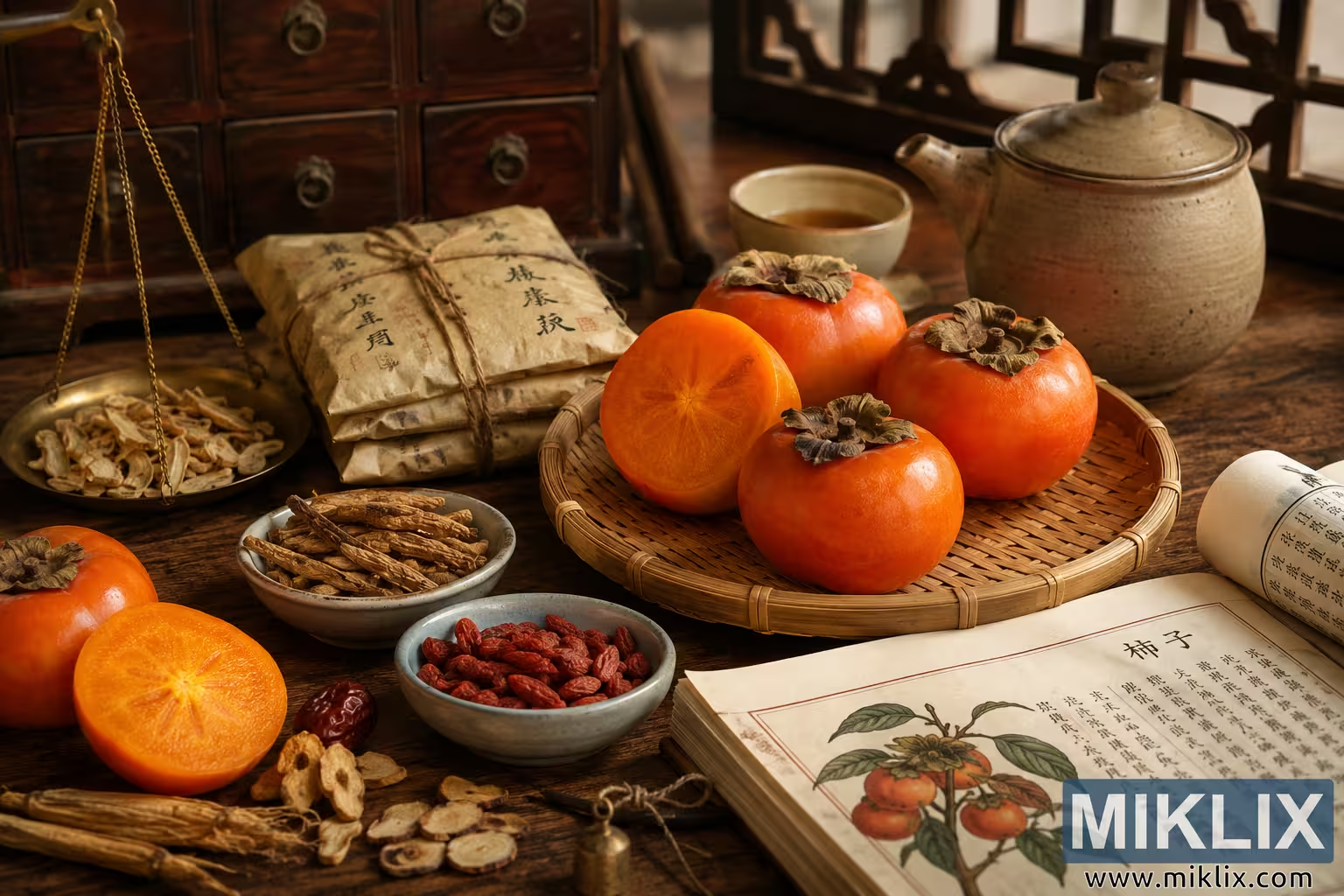
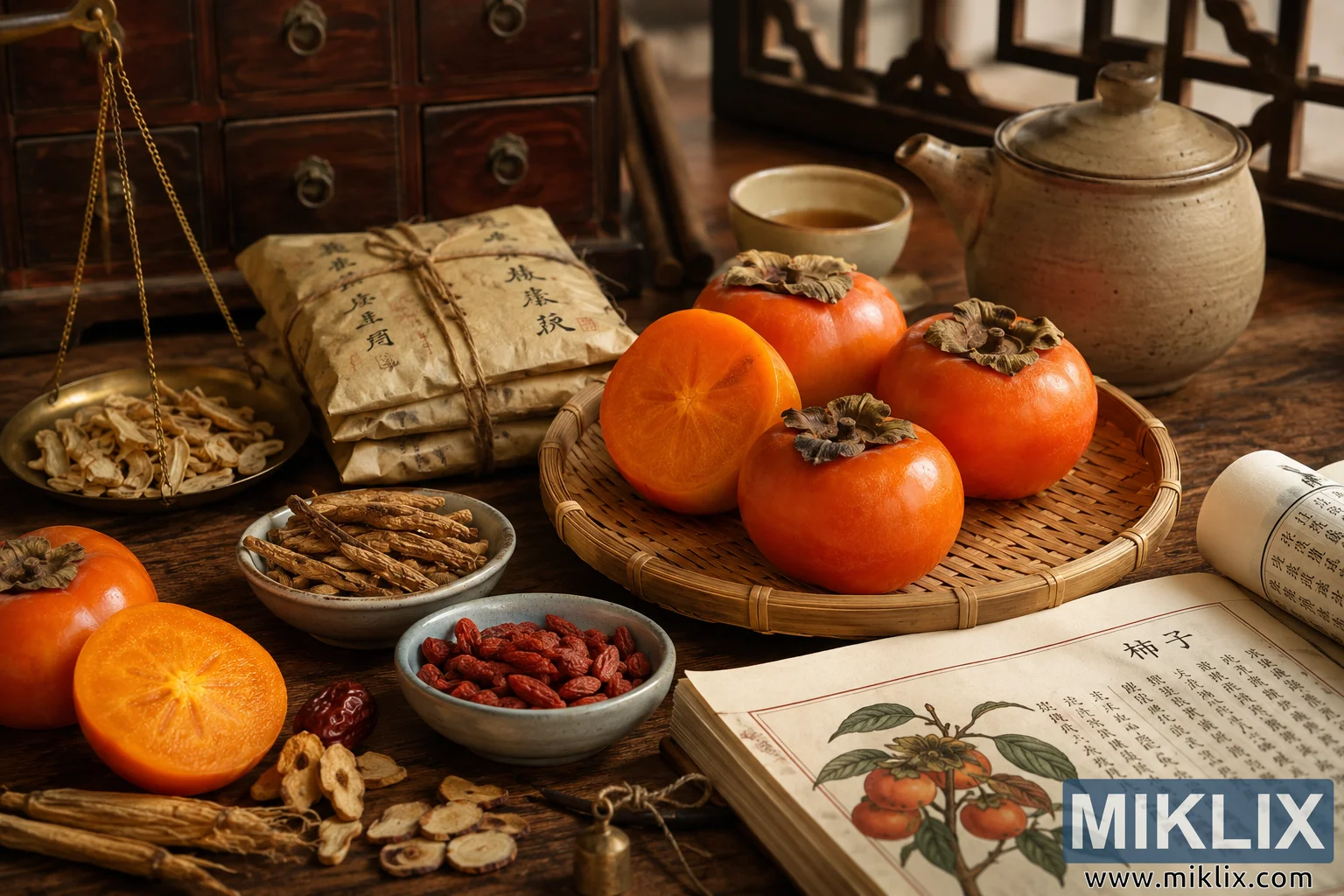
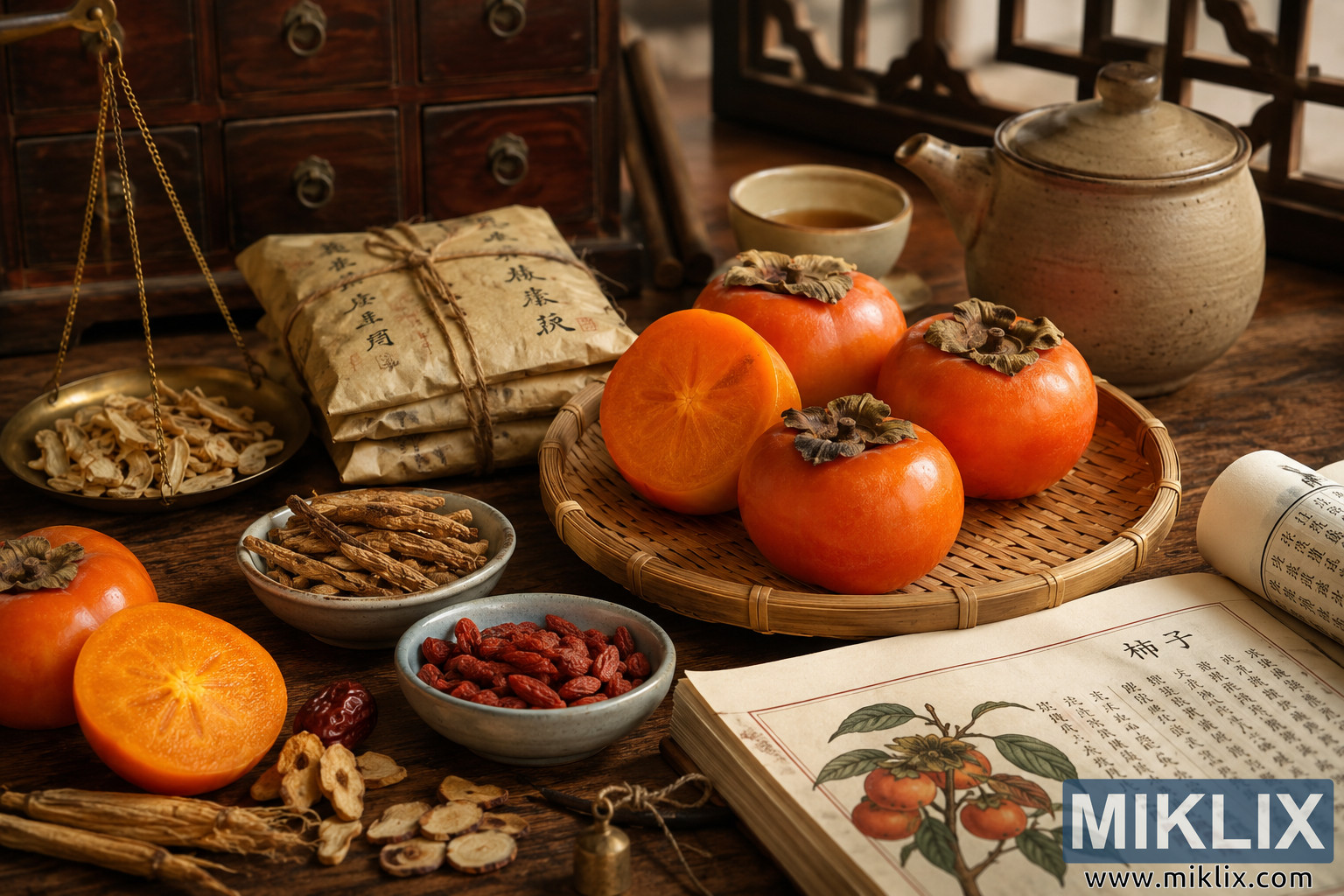
Stor størrelse (3,072 x 2,048)
Svært stor størrelse (4,608 x 3,072)
Ekstra stor størrelse (6,144 x 4,096)
Komisk stor størrelse (1,048,576 x 699,051)
- Laster fortsatt opp... ;-)
Bildebeskrivelse
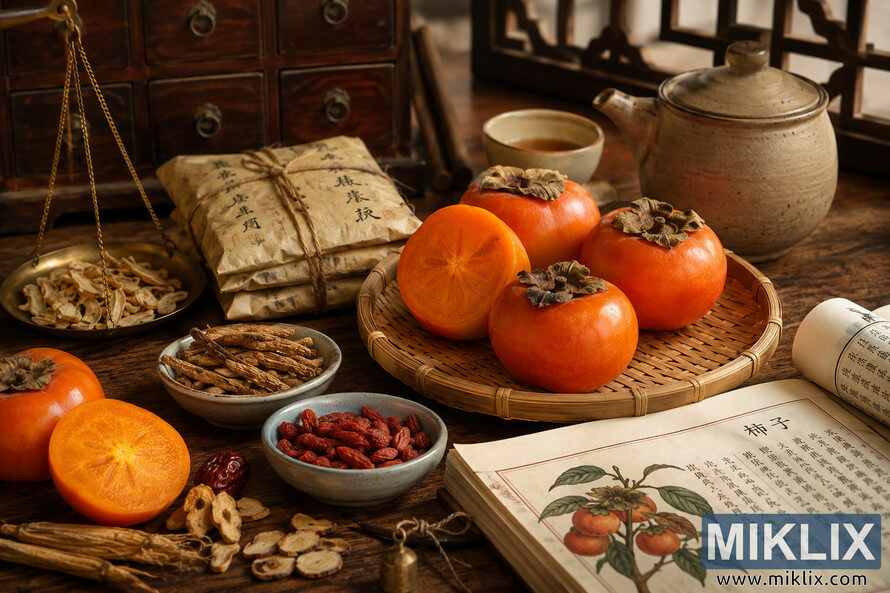
This richly detailed landscape-format still-life image presents an intimate and atmospheric interpretation of traditional East Asian medicine centered around the symbolic and medicinal significance of persimmons. The composition is arranged on a dark rustic wooden table illuminated by soft, warm natural light that streams gently across the scene, creating a sense of calm, heritage, and timeless wisdom. The visual atmosphere evokes the interior of a traditional herbal apothecary or scholar’s study where medicinal ingredients, botanical knowledge, and cultural rituals coexist harmoniously.
At the center of the composition rests a woven bamboo tray holding several vibrant orange persimmons. Their smooth skin glows warmly under the ambient lighting, emphasizing their freshness and symbolic importance. One persimmon has been sliced open to reveal its radiant interior, exposing the intricate star-like structure of the fruit’s flesh and highlighting its natural beauty. The fruit becomes the visual anchor of the image, representing abundance, longevity, seasonal change, and wellness—concepts deeply rooted in East Asian cultural traditions.
Surrounding the persimmons are carefully arranged medicinal herbs and ingredients traditionally associated with holistic healing practices. Small ceramic bowls contain dried roots, sliced herbal extracts, red berries, and botanical materials used in traditional herbal medicine. Their textures contrast beautifully against the polished surfaces of the fruit and pottery. Scattered herbal fragments and roots lie organically across the table, reinforcing the authenticity and tactile realism of the scene.
On the left side of the image stands a delicate antique brass balance scale, symbolizing precision and balance in traditional medicinal preparation. Behind it sits an old wooden apothecary cabinet with multiple small drawers, suggesting the storage of carefully categorized herbal remedies and ingredients. The aged wood grain and handcrafted details contribute to the historical ambiance of the composition.
Toward the rear of the arrangement, folded herbal paper packages tied with rustic twine are placed beside ceramic tea ware. The handwritten calligraphy on the packages and nearby scrolls evokes centuries-old botanical knowledge and scholarly practice. A ceramic teapot and matching tea cup rest quietly in the background, reinforcing themes of ritual, mindfulness, and healing. Tea culture and herbal medicine are deeply interconnected across many East Asian traditions, and their inclusion enriches the image’s narrative depth.
An open illustrated manuscript occupies the lower right foreground. The pages display detailed botanical artwork of persimmon branches accompanied by vertical lines of classical-style Asian text. The manuscript resembles an ancient medicinal encyclopedia or herbal reference guide, visually connecting the fruit to traditional healing systems and historical scholarship. Nearby rolled scrolls further enhance the scholarly atmosphere and emphasize the transmission of cultural knowledge through generations.
The overall color palette is dominated by warm amber, earthy brown, muted beige, and deep orange tones. This harmonious palette creates a feeling of comfort, wellness, and historical richness while drawing attention to the vivid persimmons at the center of the composition. Soft shadows and shallow depth of field provide cinematic realism and guide the viewer’s eye naturally across the scene.
The image communicates more than a simple arrangement of objects; it tells a story about the relationship between nature, healing, and cultural identity. Persimmons have long held symbolic importance throughout East Asia, representing good fortune, prosperity, endurance, and seasonal cycles. In traditional medicinal practices, persimmons and their dried forms have historically been associated with nourishment and wellness. The artwork visually honors these traditions by combining botanical realism with historical atmosphere.
Every object within the composition contributes to a sense of authenticity and reverence for traditional knowledge. The handcrafted ceramics, woven bamboo textures, aged paper manuscripts, herbal roots, and antique wooden furnishings collectively create a contemplative environment that feels both educational and deeply cultural. The viewer is invited to appreciate not only the visual beauty of the persimmons themselves but also the broader heritage of traditional medicine, natural healing philosophies, and the enduring connection between food, ritual, and wellbeing across generations.
The final composition balances realism, artistry, and cultural symbolism in a visually immersive scene that celebrates East Asian medicinal traditions and the enduring cultural importance of persimmons.
Bildet er relatert til: The Complete Guide to the Health Benefits of Persimmons