
Bilde: Colorful Potato Varieties Showing Different Antioxidant Compounds
Publisert:
Sist oppdatert: 4. august 2026 kl. 13:57:11 UTC
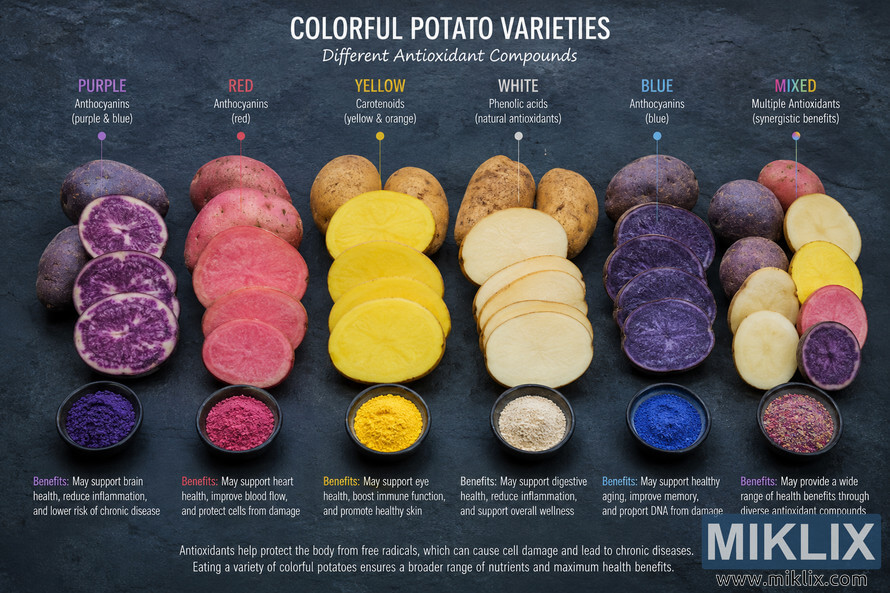
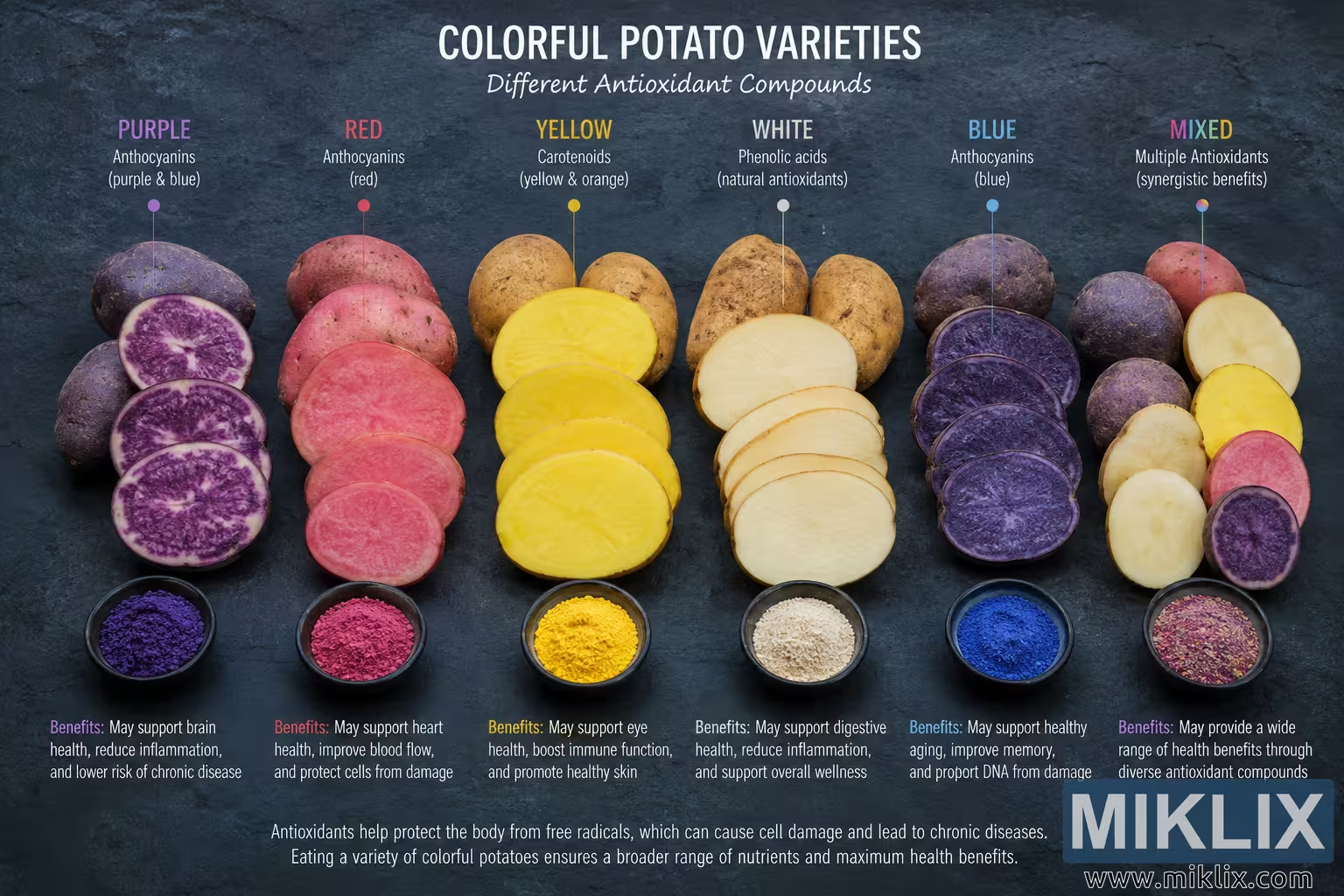
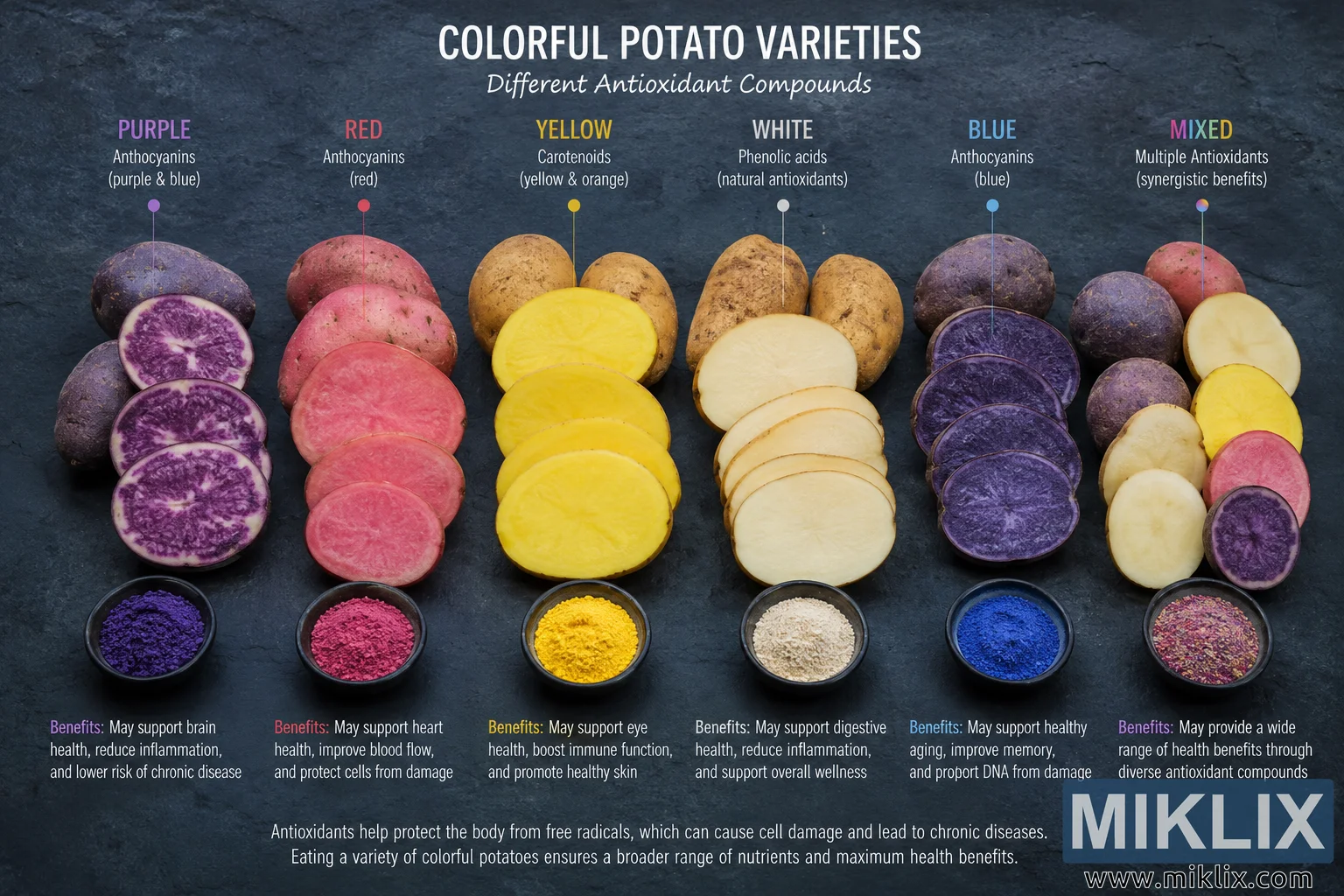
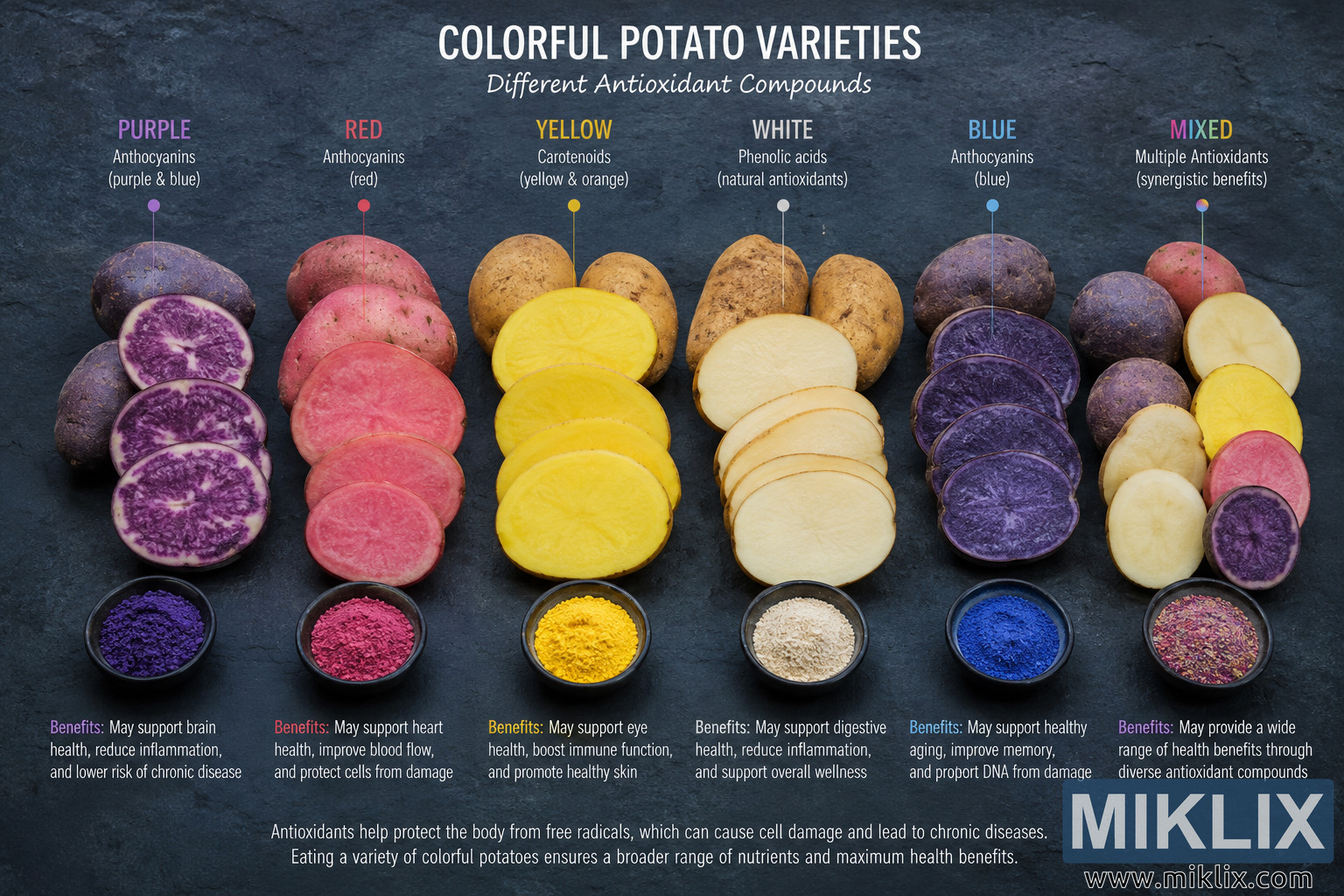
Explore colorful potato varieties and the antioxidant compounds associated with their natural pigments. This infographic presents purple, red, yellow, white, blue, and mixed-flesh potatoes in a visually organized comparison highlighting color diversity and nutritional concepts.
Colorful Potato Varieties Showing Different Antioxidant Compounds
Tilgjengelige versjoner av dette bildet
Bildefilene som kan lastes ned nedenfor, er mindre komprimerte og har høyere oppløsning - og dermed høyere kvalitet - enn bildene som er innebygd i artikler og sider på dette nettstedet, som er mer optimalisert med tanke på filstørrelse for å redusere båndbreddeforbruket.
Vanlig størrelse (1,536 x 1,024)
Stor størrelse (3,072 x 2,048)
Svært stor størrelse (4,608 x 3,072)
Ekstra stor størrelse (6,144 x 4,096)
Komisk stor størrelse (1,048,576 x 699,051)
- Laster fortsatt opp... ;-)
Bildebeskrivelse
This landscape-oriented infographic presents an organized visual comparison of colorful potato varieties, emphasizing the relationship between their naturally occurring flesh colors and the antioxidant compounds commonly associated with those pigments. The composition is arranged as a clean, symmetrical overhead flat lay against a dark charcoal-gray textured stone background that creates strong contrast with the vibrant potatoes. Centered at the top is a large headline introducing the topic of colorful potato varieties and their different antioxidant compounds. Below the heading, six evenly spaced columns extend horizontally across the image, creating a balanced educational layout. Each column features whole potatoes positioned behind several neatly sliced cross-sections, allowing viewers to compare the exterior skin with the interior flesh color. The slices are arranged in overlapping layers, making the textures, moisture, and pigmentation clearly visible while reinforcing the scientific comparison. The first section highlights purple potatoes. Deep violet skins surround richly pigmented purple interiors displaying lighter marbling throughout the flesh. Above the potatoes, a label associates this variety with anthocyanins, compounds commonly linked with purple coloration in plant foods. Beneath the potatoes, a small bowl filled with finely ground purple powder visually echoes the potato color and reinforces the antioxidant theme. The second section presents red potatoes with bright rosy interiors. Whole potatoes with reddish skins sit behind circular slices revealing uniformly pink to red flesh. A matching bowl of vivid red powder appears below, visually connecting the pigment to antioxidant compounds frequently associated with red-colored potatoes. The third column features yellow potatoes. Their golden flesh contrasts strongly with the darker background and neighboring varieties. The slices display rich yellow interiors that appear smooth and dense. Above them, text associates the variety with carotenoids, while below, a bowl of bright yellow powder mirrors the coloration. The fourth section presents traditional white potatoes. Their tan skins and creamy white interiors create a visual pause within the spectrum of colors. Several pale slices overlap neatly, emphasizing subtle texture differences rather than dramatic pigmentation. A bowl containing light beige powder complements the restrained color palette. The fifth column introduces blue potatoes with deep blue-violet skins and intensely colored interiors. Thick slices display saturated blue-purple flesh with faint radial patterns extending from the center outward. A bowl of brilliant blue powder beneath the potatoes reinforces the visual theme of pigment diversity. The final column combines multiple potato varieties into a mixed arrangement. Small whole potatoes and sliced examples display several flesh colors together, including white, yellow, red, and purple. This grouping visually communicates diversity rather than focusing on a single pigment category. A multicolored bowl of blended powder below symbolizes the combination of different naturally occurring antioxidant compounds found across multiple varieties. Thin vertical guide lines and small colored markers visually connect headings with each potato group, reinforcing the infographic's structured educational format. The typography uses large uppercase lettering for the main title and smaller readable labels throughout each column. The overall design follows a consistent visual rhythm with equal spacing, aligned elements, and strong visual hierarchy that guides the viewer naturally from left to right. Lighting is soft and diffuse, minimizing harsh shadows while emphasizing the smooth potato skins, slightly moist cut surfaces, and subtle texture of the stone background. The dark slate surface provides an understated backdrop that enhances the saturation of the colorful vegetables without distracting from the primary subject matter. The infographic uses a restrained palette for the background while allowing the natural hues of the potatoes to dominate the composition. The overall impression is clean, informative, modern, and suitable for educational materials related to nutrition, agriculture, plant science, food diversity, or healthy eating. The design communicates visual relationships between potato coloration and antioxidant concepts while remaining aesthetically balanced, easy to interpret, and visually engaging. The image contains no commercial branding, product packaging, company logos, or promotional elements, keeping the focus entirely on the natural diversity of potato varieties and their associated antioxidant compounds.
Bildet er relatert til: The Surprising Health Benefits of Potatoes: A Complete Nutrition Guide