
Bilde: Heart-Healthy Watermelon Benefits for Cardiovascular Support
Publisert:
Sist oppdatert: 16. august 2026 kl. 19:08:57 UTC
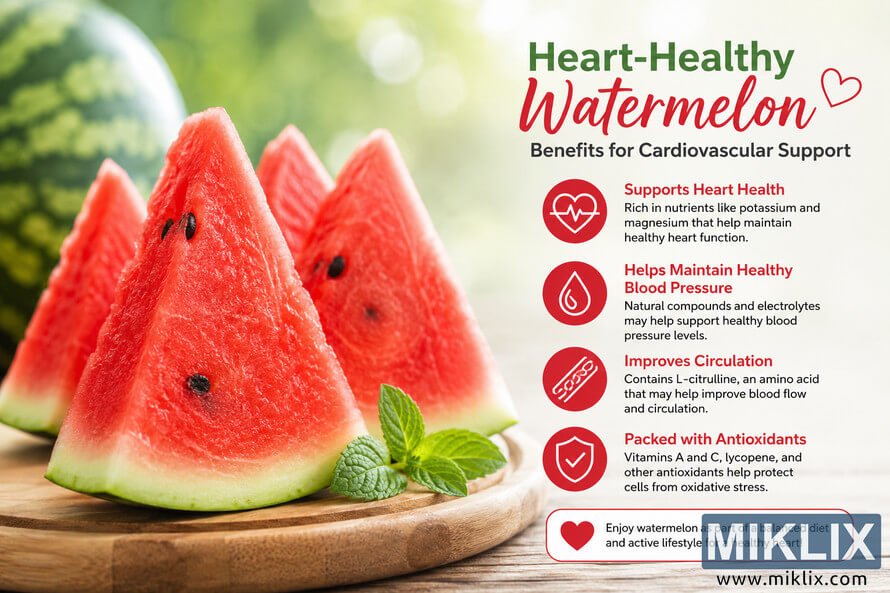
Explore a visually engaging infographic highlighting the potential heart-health benefits of watermelon, including cardiovascular support, healthy blood pressure, circulation, and antioxidant content alongside fresh watermelon imagery.
Heart-Healthy Watermelon Benefits for Cardiovascular Support
Tilgjengelige versjoner av dette bildet
Bildefilene som kan lastes ned nedenfor, er mindre komprimerte og har høyere oppløsning - og dermed høyere kvalitet - enn bildene som er innebygd i artikler og sider på dette nettstedet, som er mer optimalisert med tanke på filstørrelse for å redusere båndbreddeforbruket.
Vanlig størrelse (1,536 x 1,024)
Stor størrelse (3,072 x 2,048)
Svært stor størrelse (4,608 x 3,072)
Ekstra stor størrelse (6,144 x 4,096)
Komisk stor størrelse (1,048,576 x 699,051)
- Laster fortsatt opp... ;-)
Bildebeskrivelse
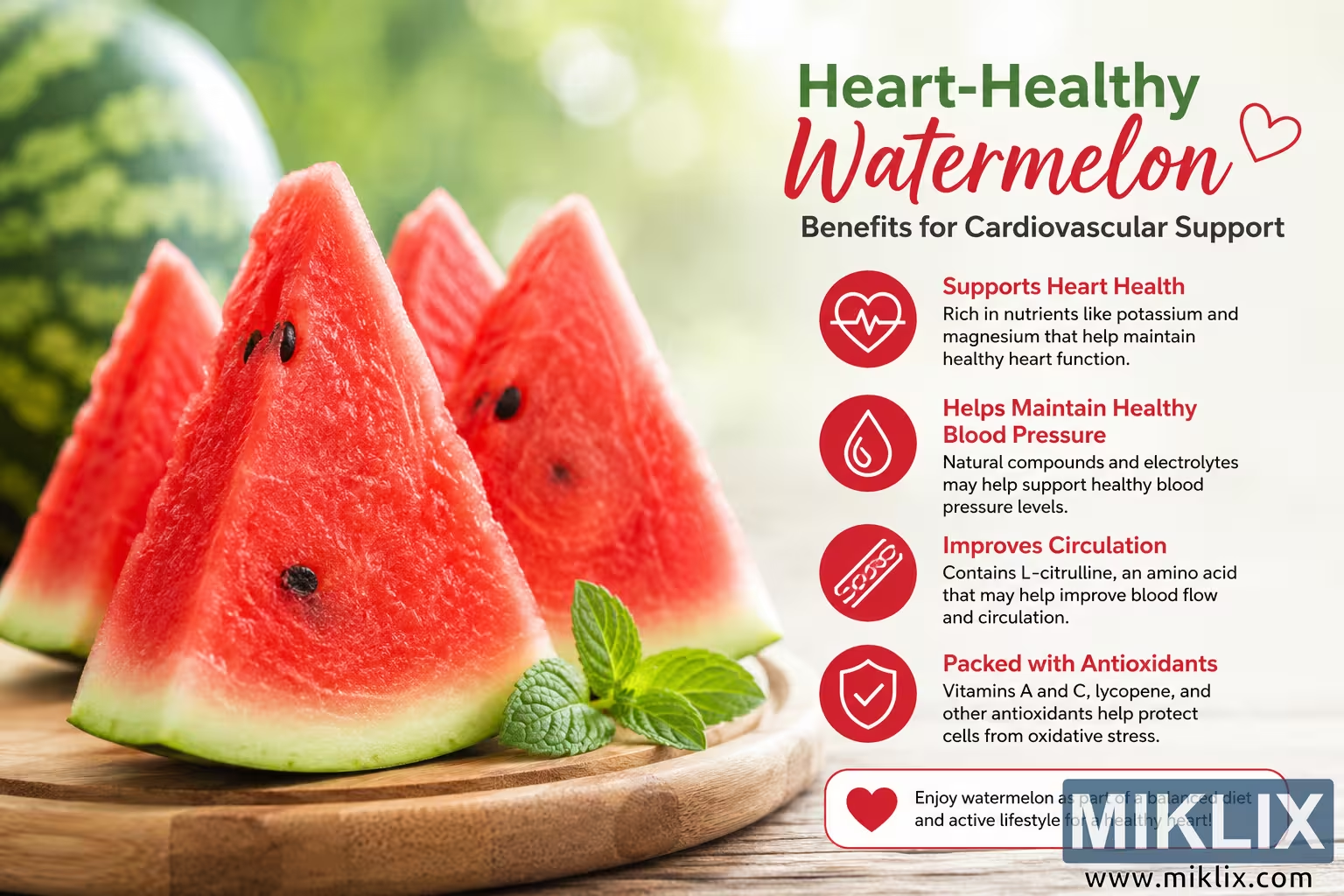
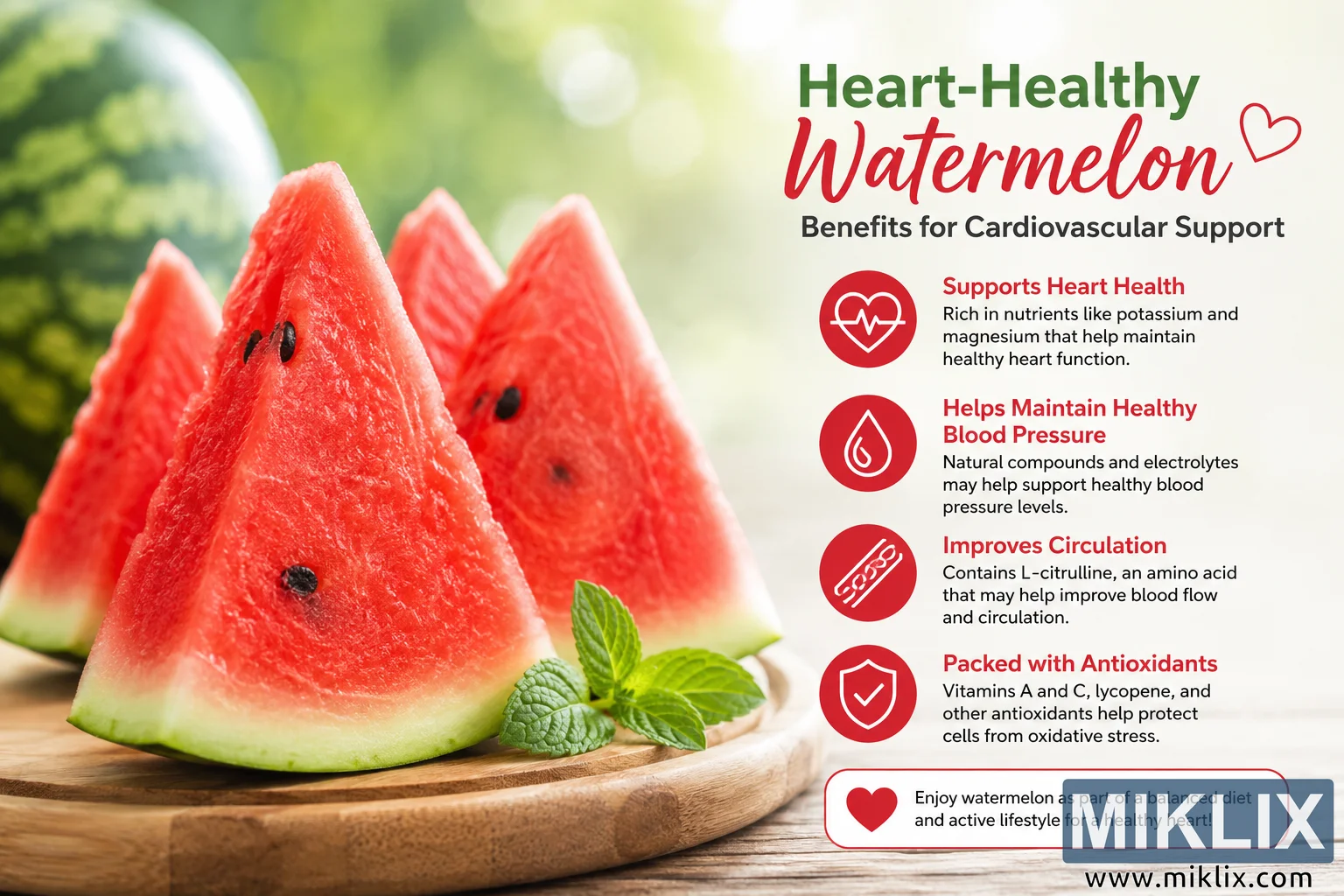
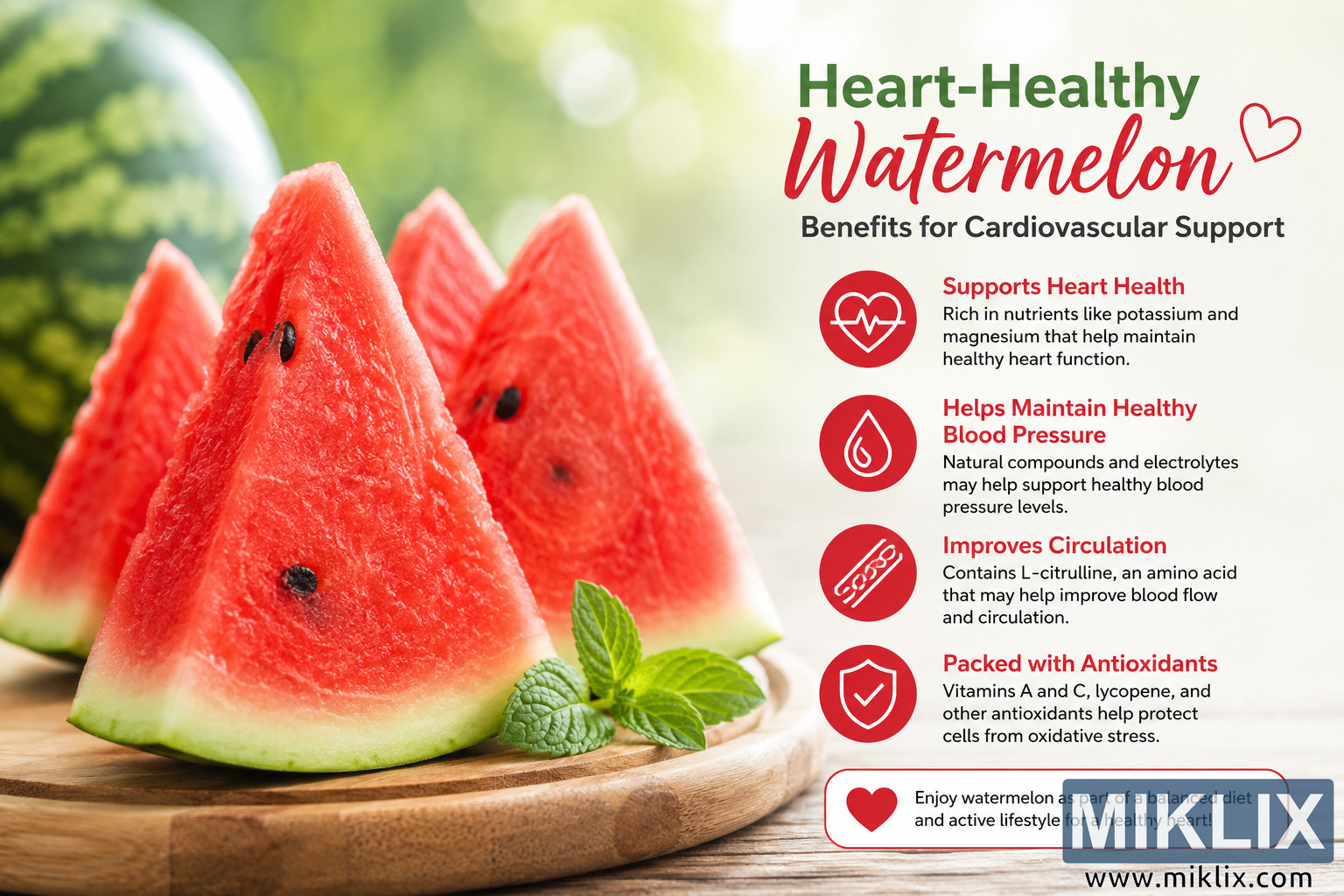
This landscape-oriented image presents a clean, bright, and modern infographic centered on the topic of watermelon and its potential role in supporting cardiovascular health. The overall composition is divided into two primary sections, creating a balanced visual layout that combines an appetizing food photograph with an easy-to-read informational panel. The color palette is dominated by vibrant reds, fresh greens, crisp whites, and warm natural wood tones, creating a healthy, summery atmosphere that immediately communicates freshness and nutrition.
On the left side of the composition, several triangular slices of ripe watermelon are arranged on a round wooden serving board. The watermelon flesh is a vivid, juicy red with a moist appearance that reflects soft natural lighting. Small black seeds are visible within the fruit, adding realistic detail and texture. Each slice has a thick pale white rind transitioning into a light green outer skin. The slices overlap slightly, creating depth while drawing attention toward the center foreground where the largest slice is positioned prominently. Near the front of the serving board rests a small sprig of fresh green mint leaves, adding visual contrast and reinforcing the healthy, fresh-food theme.
Behind the fruit, the background is intentionally blurred with a shallow depth of field. Soft green foliage and hints of sunlight create a pleasant outdoor or garden-like environment without distracting from the primary subject. A whole watermelon is partially visible in the upper left background, softly out of focus, providing context while maintaining emphasis on the sliced fruit in the foreground. The blurred background produces a gentle bokeh effect that contributes to a polished photographic style.
The right half of the image transitions into an informational infographic presented on a clean white background. At the top appears a large title emphasizing heart-healthy watermelon benefits. The typography combines bold sans-serif lettering with a decorative handwritten-style script for the word "Watermelon," giving the design both clarity and visual personality. A simple outline heart graphic appears near the title to reinforce the cardiovascular theme.
Beneath the heading, the infographic is organized into four clearly separated informational sections. Each section begins with a large circular red icon placed along the left edge of the text. The first icon depicts a stylized heart with an electrocardiogram line, symbolizing heart health and cardiovascular function. Adjacent explanatory text discusses watermelon as a source of nutrients associated with maintaining healthy heart function.
The second section features a droplet-shaped icon representing circulation and blood pressure. Its accompanying text explains that naturally occurring nutrients and electrolytes found in watermelon may contribute to supporting healthy blood pressure levels. The wording is presented in a concise educational style suitable for a wellness infographic.
The third section includes an icon symbolizing circulation and blood vessels. The corresponding text references the amino acid L-citrulline and explains its potential role in promoting healthy blood flow and circulation. The design maintains consistent spacing, icon sizing, and typography, making the information easy to scan quickly.
The fourth section presents a shield icon with a check mark inside, symbolizing protection and wellness. The accompanying text highlights antioxidants such as vitamins A and C together with lycopene, explaining that these compounds may help protect cells from oxidative stress. The repeated use of bright red icons creates visual consistency while guiding the viewer's eye smoothly down the informational column.
At the bottom of the infographic is a rounded rectangular callout box containing a large heart icon beside a brief encouragement to enjoy watermelon as part of a balanced diet and active lifestyle. This concluding message reinforces the educational theme while avoiding an overly clinical appearance.
The lighting throughout the composition is soft, natural, and evenly balanced. Gentle highlights accentuate the watermelon flesh, while subtle shadows beneath the fruit and serving board add depth without becoming harsh. The image conveys freshness, vitality, and healthy living through both its photographic elements and its infographic design. Overall, the composition successfully combines attractive food photography with accessible educational content about potential cardiovascular benefits associated with watermelon, using a clean layout, harmonious colors, consistent iconography, and an inviting visual style appropriate for nutrition, wellness, healthcare, or healthy lifestyle communication.
Bildet er relatert til: Watermelon: The Hydrating Superfruit You Should Eat More Often