
Bilde: Anti-Aging Antioxidants in Watermelon Protecting Skin Cells
Publisert:
Sist oppdatert: 16. august 2026 kl. 19:08:58 UTC
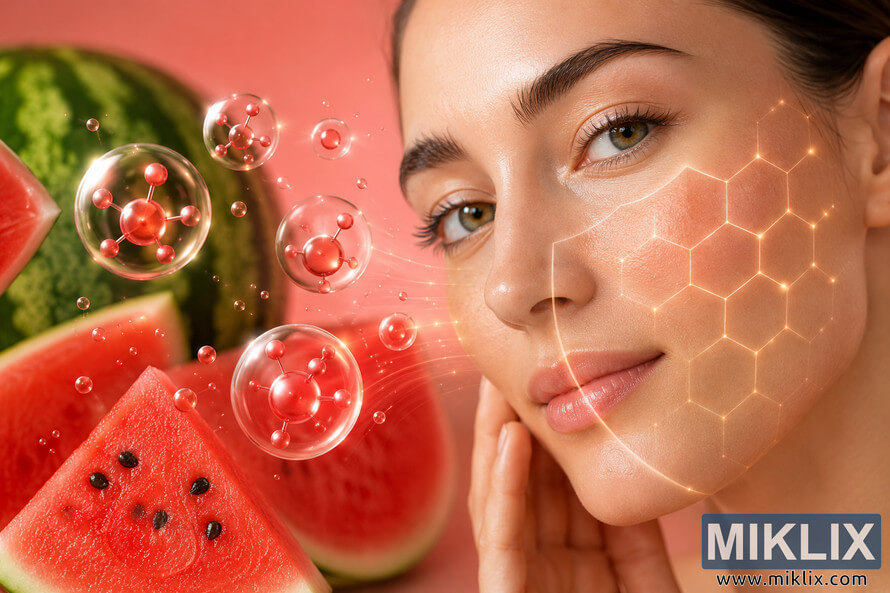
Editorial-style image showing the antioxidant benefits of watermelon for skin health. Fresh watermelon, glowing molecular graphics, and a radiant complexion visually represent cellular protection, hydration, and anti-aging skincare concepts.
Anti-Aging Antioxidants in Watermelon Protecting Skin Cells
Tilgjengelige versjoner av dette bildet
Bildefilene som kan lastes ned nedenfor, er mindre komprimerte og har høyere oppløsning - og dermed høyere kvalitet - enn bildene som er innebygd i artikler og sider på dette nettstedet, som er mer optimalisert med tanke på filstørrelse for å redusere båndbreddeforbruket.
Vanlig størrelse (1,536 x 1,024)
Stor størrelse (3,072 x 2,048)
Svært stor størrelse (4,608 x 3,072)
Ekstra stor størrelse (6,144 x 4,096)
Komisk stor størrelse (1,048,576 x 699,051)
- Laster fortsatt opp... ;-)
Bildebeskrivelse
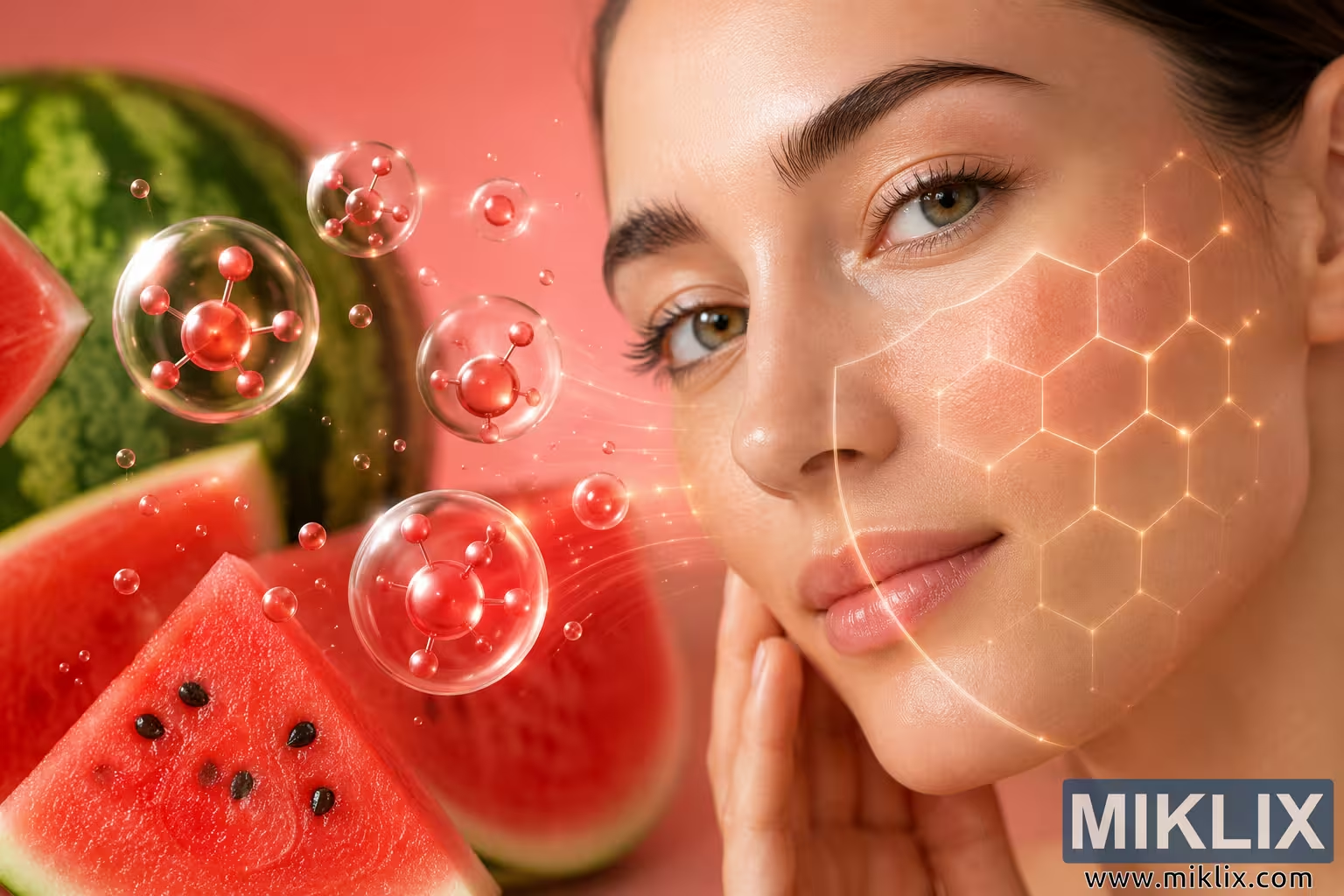
This landscape-oriented editorial-style image presents a sophisticated visual interpretation of the relationship between watermelon-derived antioxidants and healthy, youthful-looking skin. The composition balances natural produce with modern scientific symbolism to communicate the concept of skin protection against oxidative stress in a visually engaging and contemporary manner. The overall color palette is dominated by vibrant shades of watermelon red, soft coral, warm pink, fresh green, and natural skin tones, creating an inviting and refreshing atmosphere associated with health, hydration, and wellness. On the right side of the composition is the close-up portrait of a young woman with smooth, luminous skin. Her complexion appears even, hydrated, and naturally radiant without appearing artificially perfect. She gazes softly toward the left side of the frame with a calm, relaxed expression that conveys confidence, vitality, and overall wellbeing. Her eyebrows are well defined, her eyelashes are delicate, and her lips display a subtle natural sheen. One hand gently touches the lower part of her face, reinforcing the skincare theme while introducing a graceful human element into the composition. Overlaying part of her cheek is a translucent honeycomb-like protective pattern formed by thin glowing geometric lines. This semi-transparent structure symbolizes the skin's protective barrier and visually communicates the concept of cellular defense without representing any literal medical technology. The glowing network integrates naturally with the contours of her face, suggesting resilience, strength, and healthy skin function. Flowing across the center of the image are several floating transparent spheres containing stylized molecular structures. Each sphere encloses a simplified arrangement of glossy red atoms connected by slender bonds, representing antioxidant compounds in an artistic rather than scientifically literal way. Soft halos of light surround these molecular elements, emphasizing their beneficial role while creating a clean, modern scientific aesthetic. Small sparkling particles and subtle light trails connect the molecules toward the woman's face, suggesting the movement of protective nutrients from the watermelon toward the skin. These visual effects remain elegant and restrained, avoiding excessive visual clutter while reinforcing the narrative of nourishment and cellular protection. On the left side of the composition are multiple fresh watermelon slices positioned in the foreground and background. The fruit displays vivid red flesh, crisp white rind, and deep green striped skin with realistic texture and natural moisture. Tiny droplets and subtle highlights enhance the appearance of freshness. The black watermelon seeds are clearly visible within the nearest slice, providing authenticity and visual contrast against the bright red flesh. Behind the slices, a whole watermelon appears softly out of focus, adding depth to the composition without distracting from the main subjects. The background consists of a warm gradient transitioning through coral and pink hues with gentle bokeh highlights and diffused lighting. The shallow depth of field separates the foreground from the background while maintaining an airy editorial quality. Soft illumination falls evenly across the woman's face and the watermelon, emphasizing natural textures without harsh shadows. Reflections within the floating molecular spheres create additional dimensionality and reinforce the polished commercial aesthetic. The image successfully combines themes of nutrition, beauty, skincare, hydration, and healthy aging into a single coherent visual story. Instead of depicting literal medical procedures or cosmetic products, it relies on symbolic scientific graphics integrated with fresh natural ingredients to communicate the benefits of antioxidant-rich fruit. The overall style resembles premium editorial photography commonly found in health, wellness, nutrition, or skincare publications, blending realistic portraiture with subtle digital illustration elements. No commercial logos, brand identifiers, product packaging, or trademarks are visible anywhere within the scene. The composition remains clean and uncluttered, directing the viewer's attention naturally between the woman's healthy complexion, the fresh watermelon, and the glowing antioxidant-inspired molecular graphics. The final impression is one of freshness, scientific credibility, natural beauty, and gentle optimism, illustrating the concept that watermelon-derived antioxidants may help support healthy skin cells by protecting them from environmental oxidative stress while contributing to hydration and an overall youthful appearance.
Bildet er relatert til: Watermelon: The Hydrating Superfruit You Should Eat More Often