
Afbeelding: Swiss Chard Leaves Covered with Aphids
Gepubliceerd:
Laatst bijgewerkt: 16 april 2026 om 19:41:19 UTC
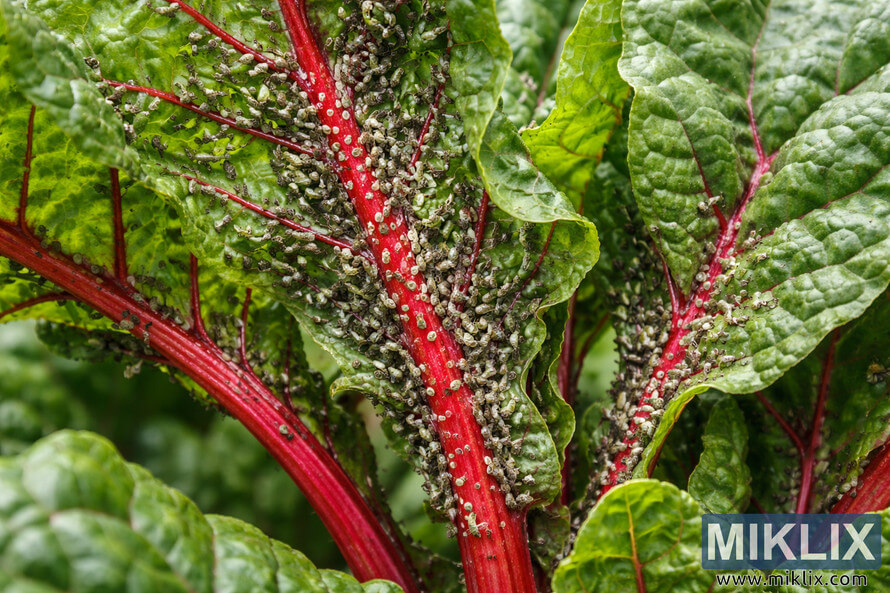
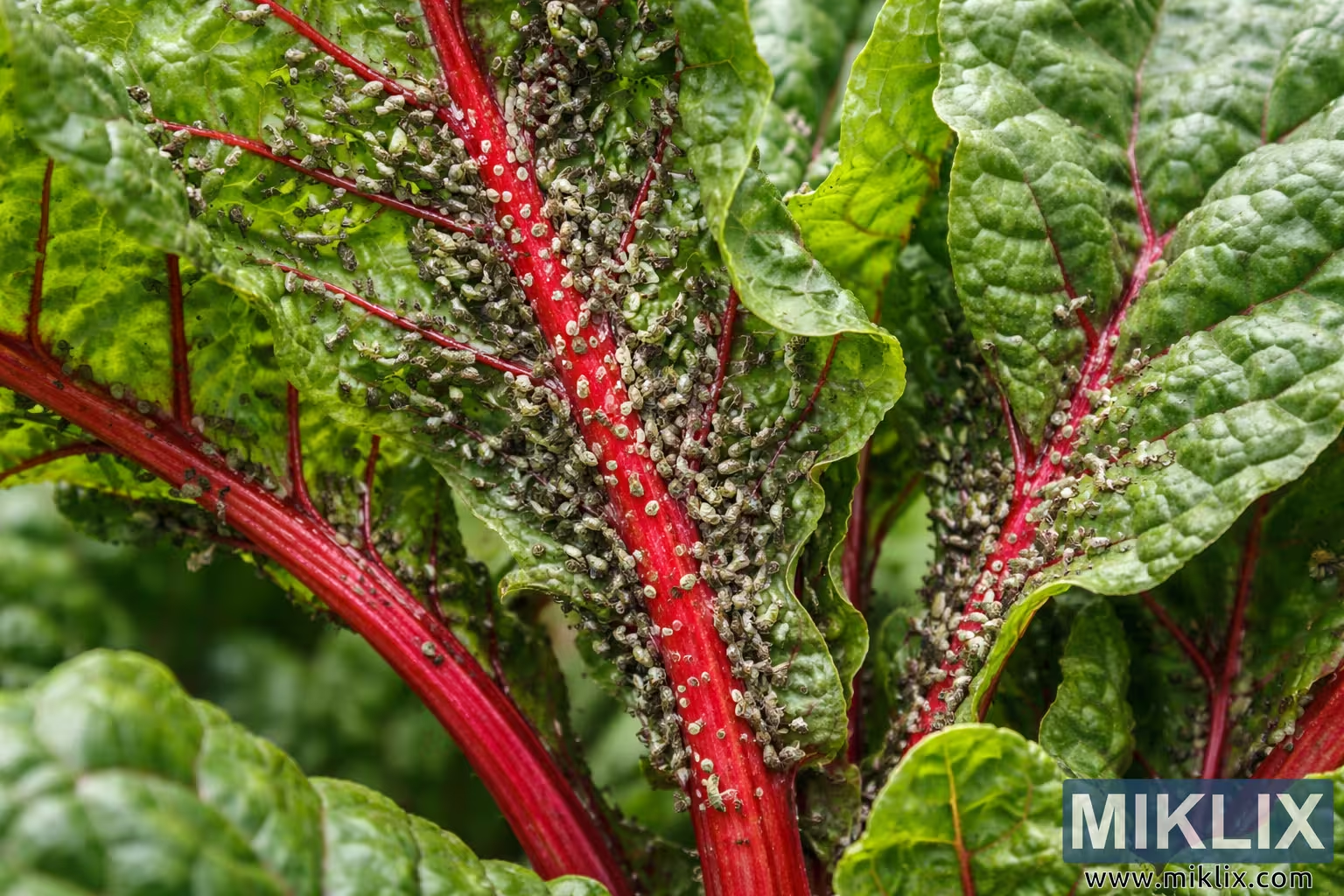
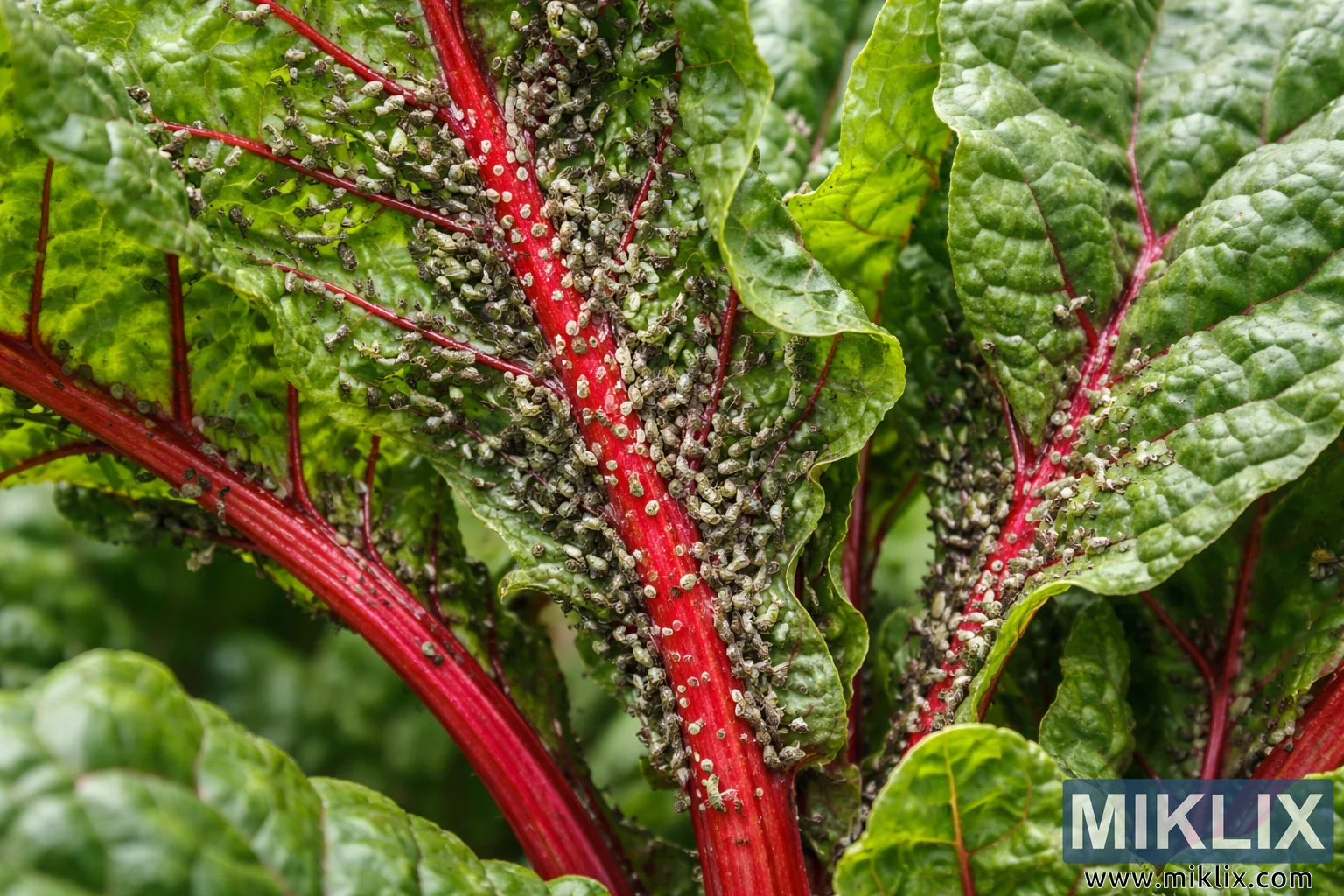
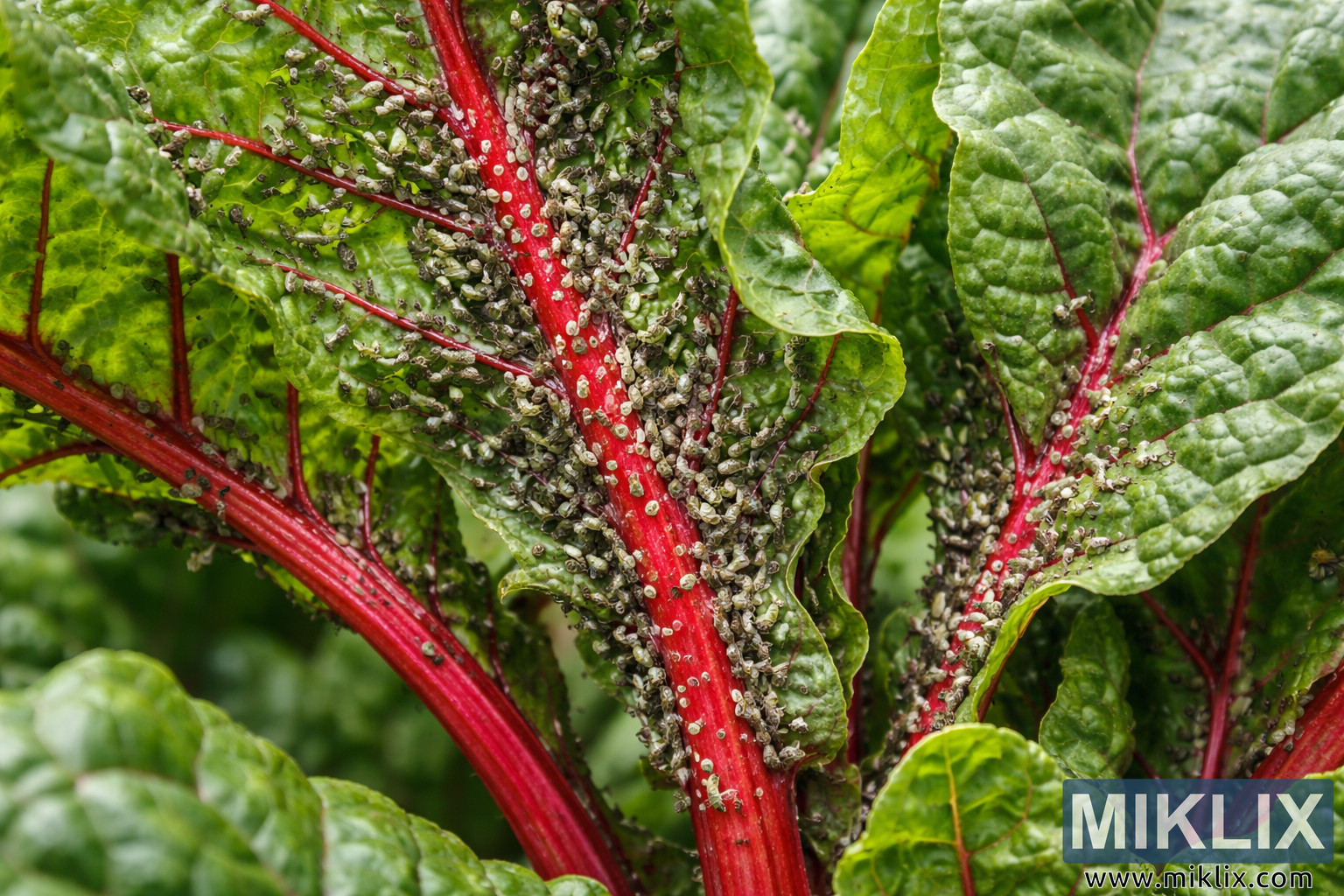
Detailed close-up image of Swiss chard under heavy aphid infestation, showing clusters of insects gathered along the red stems and green leaves.
Swiss Chard Leaves Covered with Aphids
Beschikbare versies van deze afbeelding
De afbeeldingsbestanden die hieronder kunnen worden gedownload, zijn minder gecomprimeerd en hebben een hogere resolutie - en daardoor een hogere kwaliteit - dan de afbeeldingen die zijn ingesloten in artikelen en pagina's op deze website, die meer zijn geoptimaliseerd voor bestandsgrootte om het bandbreedtegebruik te beperken.
Normale maat (1,536 x 1,024)
Groot formaat (3,072 x 2,048)
Zeer groot formaat (4,608 x 3,072)
Extra groot formaat (6,144 x 4,096)
Komisch groot formaat (1,048,576 x 699,051)
- Nog steeds aan het uploaden... ;-)
Beschrijving afbeelding
A detailed close-up photograph shows a cluster of Swiss chard plants experiencing a heavy aphid infestation. The composition is framed in landscape orientation and focuses on several overlapping leaves that fill most of the image. The chard leaves are vibrant green with a slightly crinkled texture and prominent, glossy red stems that run through the center of each leaf. These thick red veins create a striking contrast against the green foliage and guide the viewer’s eye toward the areas where the aphids have gathered.
Hundreds of aphids densely cover the stems and leaf veins. The insects appear as small, soft-bodied, oval shapes ranging in color from pale green and yellowish to darker grayish tones. Many of them cluster tightly together along the main red midrib and secondary veins where the plant tissue is richest in sap. Some aphids appear slightly translucent, allowing the red color of the stem beneath them to faintly show through their bodies. Their tiny legs and antennae are visible in the sharp macro detail of the photograph.
The infestation is most concentrated at the junctions where the red stems branch and where the leaf veins meet the central rib. These areas are thickly layered with aphids, creating uneven patches that look almost like textured grains scattered across the plant. A few aphids extend onto the surrounding leaf surface, but most remain aligned along the vascular lines of the plant where they feed.
The leaves themselves show subtle signs of stress. Slight curling and minor puckering of the leaf surface can be observed around the clusters of insects. A faint glossy sheen in some areas suggests the presence of honeydew, the sticky sugary substance produced by aphids as they feed on plant sap. This sheen catches the light and adds a reflective quality to parts of the leaf surface.
The background consists of softly blurred green foliage from neighboring chard leaves, creating a shallow depth of field that keeps the viewer’s attention on the heavily infested central stems. Natural daylight illuminates the scene, highlighting the vibrant red stems and the varied tones of green in the leaves while casting gentle shadows beneath the clusters of insects.
Overall, the image captures a vivid and realistic moment in a garden setting, documenting the interaction between plant and pest. The sharp macro detail emphasizes both the beauty of the Swiss chard’s colorful structure and the severity of the aphid infestation spreading across the plant.
De afbeelding is gerelateerd aan: How to Grow Swiss Chard: A Complete Beginner's Guide