
Afbeelding: Microscopic View of Dandelion Plant Cells with Antioxidant Compounds
Gepubliceerd:
Laatst bijgewerkt: 22 mei 2026 om 18:03:20 UTC
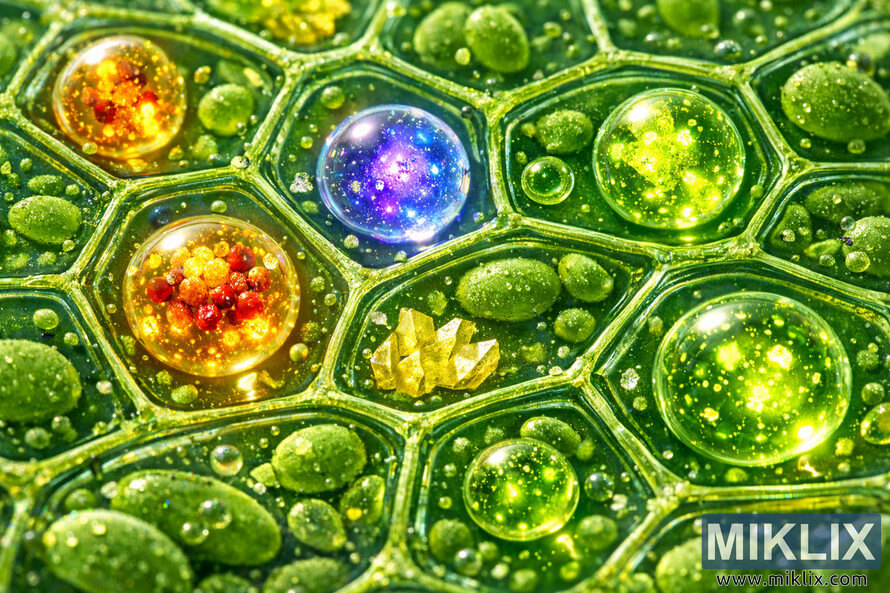
A vivid microscopic image of dandelion plant cells highlighting antioxidant compounds and chloroplasts, showcasing the intricate beauty of plant biology.
Microscopic View of Dandelion Plant Cells with Antioxidant Compounds
Beschikbare versies van deze afbeelding
De afbeeldingsbestanden die hieronder kunnen worden gedownload, zijn minder gecomprimeerd en hebben een hogere resolutie - en daardoor een hogere kwaliteit - dan de afbeeldingen die zijn ingesloten in artikelen en pagina's op deze website, die meer zijn geoptimaliseerd voor bestandsgrootte om het bandbreedtegebruik te beperken.
Normale maat (1,536 x 1,024)
Groot formaat (3,072 x 2,048)
Zeer groot formaat (4,608 x 3,072)
Extra groot formaat (6,144 x 4,096)
Komisch groot formaat (1,048,576 x 699,051)
- Nog steeds aan het uploaden... ;-)
Beschrijving afbeelding
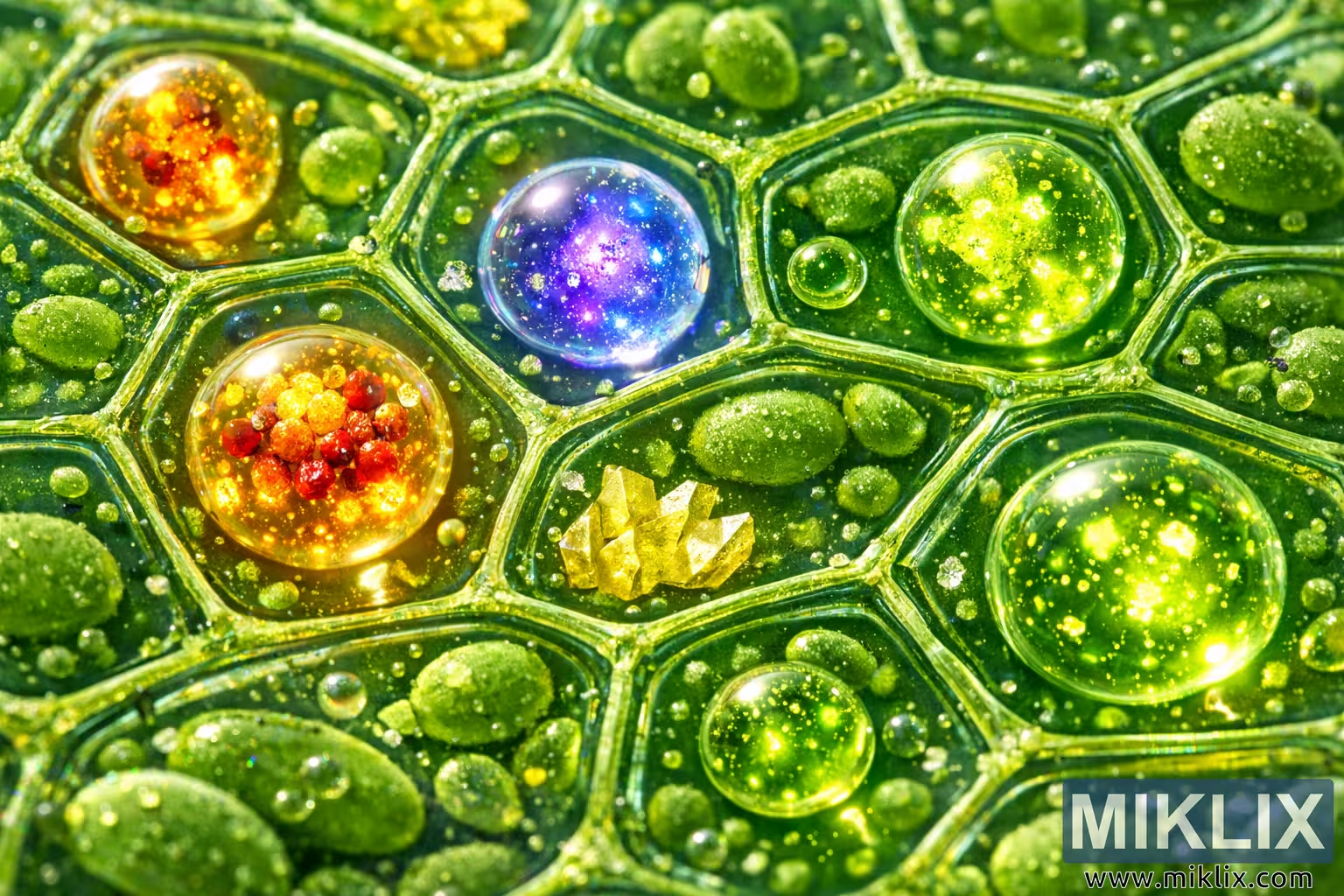
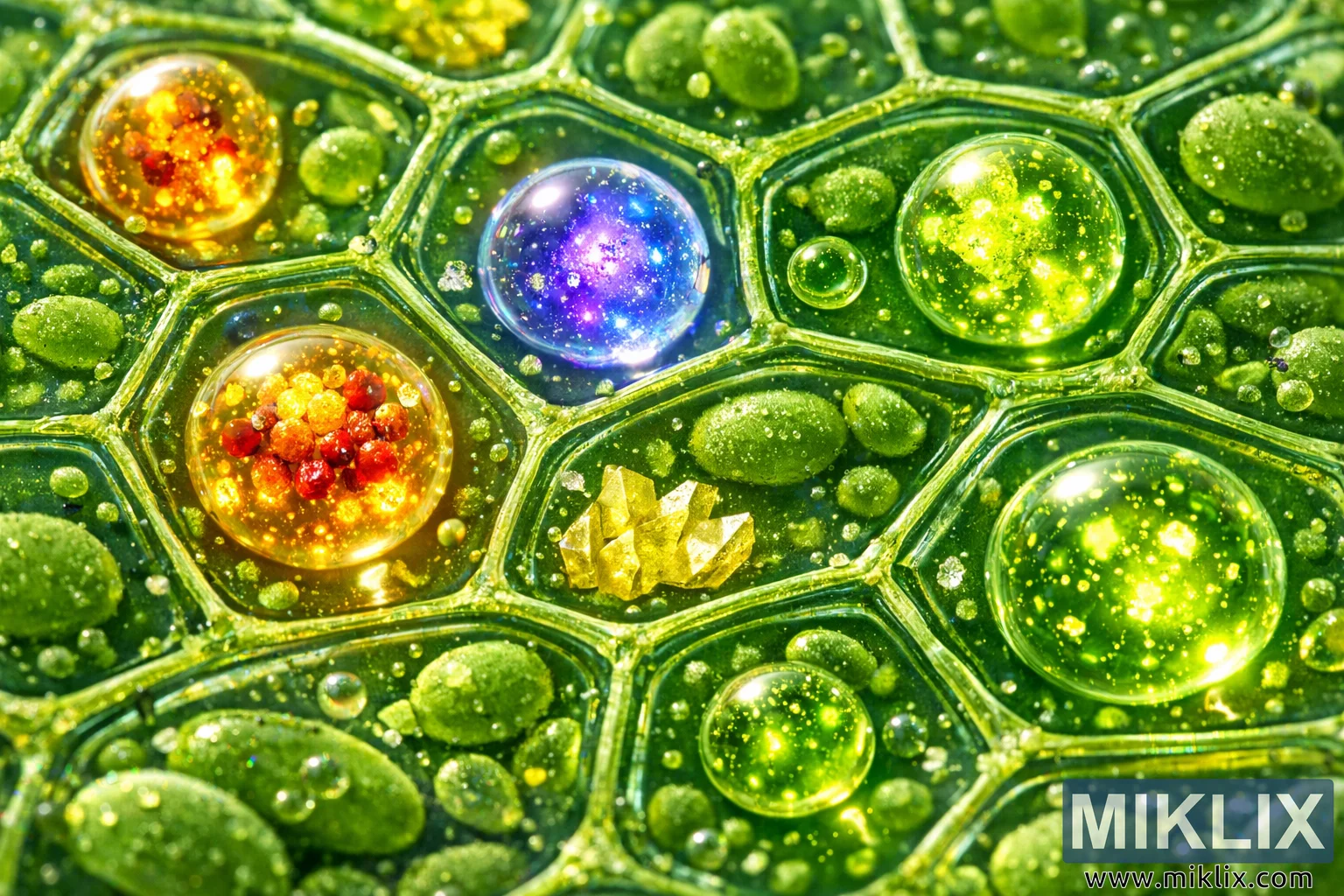
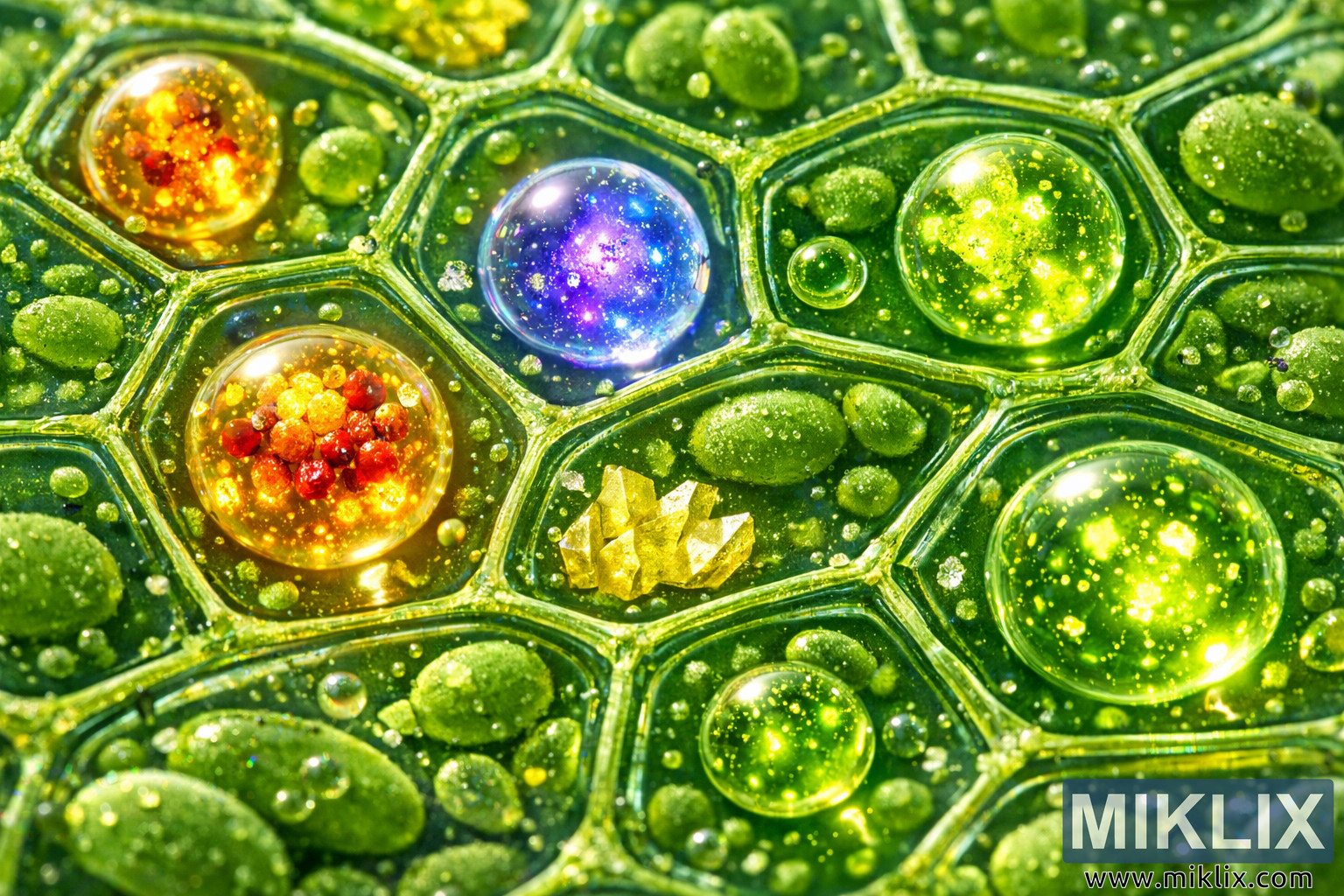
This image presents a highly detailed microscopic view of dandelion plant cells, revealing the intricate internal structures and antioxidant compounds that contribute to the plant’s resilience and health. The cells are polygonal and tightly packed, forming a cohesive network of green cell walls that shimmer with a translucent glow. Each cell is outlined by a slightly thicker membrane where neighboring cells meet, emphasizing the natural geometry of plant tissue.
Within the cells, numerous chloroplasts appear as small, rounded green organelles, responsible for photosynthesis and the plant’s characteristic coloration. Interspersed among these are luminous antioxidant vesicles—spherical compartments filled with diverse compounds that protect the plant from oxidative stress. These vesicles vary in color and intensity: golden vesicles contain red and orange granules, symbolizing carotenoid-rich antioxidants; blue and purple vesicles sparkle with a radiant luminescence, suggesting flavonoid compounds; and bright green vesicles emit a vivid glow, representing chlorogenic and polyphenolic antioxidants.
Tiny droplets resembling dew speckle the cell surfaces, adding a sense of freshness and vitality. Scattered throughout the cytoplasm are minute particles glowing in shades of yellow, orange, and green, evoking the dynamic biochemical activity within the plant. Some cells also contain crystalline yellow shards, possibly representing concentrated antioxidant crystals or mineral deposits.
The background is softly blurred with a bokeh effect, composed of gentle green hues that enhance the depth and focus of the cellular structures. The lighting is bright and vibrant, illuminating the vesicles and chloroplasts to highlight their textures and internal complexity. The interplay of light and color creates a sense of microscopic wonder, transforming a scientific subject into an artistic composition.
Overall, the image captures the beauty and sophistication of plant biology at the cellular level. It illustrates how dandelion cells harbor a rich array of antioxidant compounds, each contributing to the plant’s defense mechanisms and vitality. The glowing vesicles and crystalline inclusions serve as visual metaphors for the unseen molecular processes that sustain life, offering a glimpse into the microscopic elegance of nature’s design.
De afbeelding is gerelateerd aan: A Guide to the Health Benefits of Dandelions