
Afbeelding: Organic Cilantro vs Conventional: A Visual Exploration of Pesticide Practices
Gepubliceerd:
Laatst bijgewerkt: 15 juli 2026 om 14:46:15 UTC
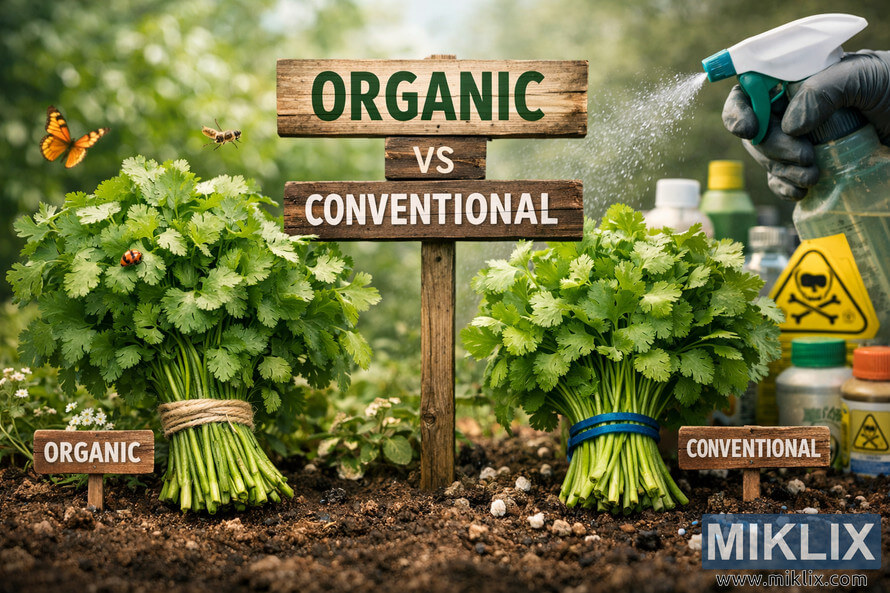
A detailed visual comparison of organic and conventional cilantro highlighting pesticide use and environmental impact. The image contrasts natural farming with chemical agriculture through vivid color, texture, and symbolism.
Organic Cilantro vs Conventional: A Visual Exploration of Pesticide Practices
Beschikbare versies van deze afbeelding
De afbeeldingsbestanden die hieronder kunnen worden gedownload, zijn minder gecomprimeerd en hebben een hogere resolutie - en daardoor een hogere kwaliteit - dan de afbeeldingen die zijn ingesloten in artikelen en pagina's op deze website, die meer zijn geoptimaliseerd voor bestandsgrootte om het bandbreedtegebruik te beperken.
Normale maat (1,536 x 1,024)
Groot formaat (3,072 x 2,048)
Zeer groot formaat (4,608 x 3,072)
Extra groot formaat (6,144 x 4,096)
Komisch groot formaat (1,048,576 x 699,051)
- Nog steeds aan het uploaden... ;-)
Beschrijving afbeelding
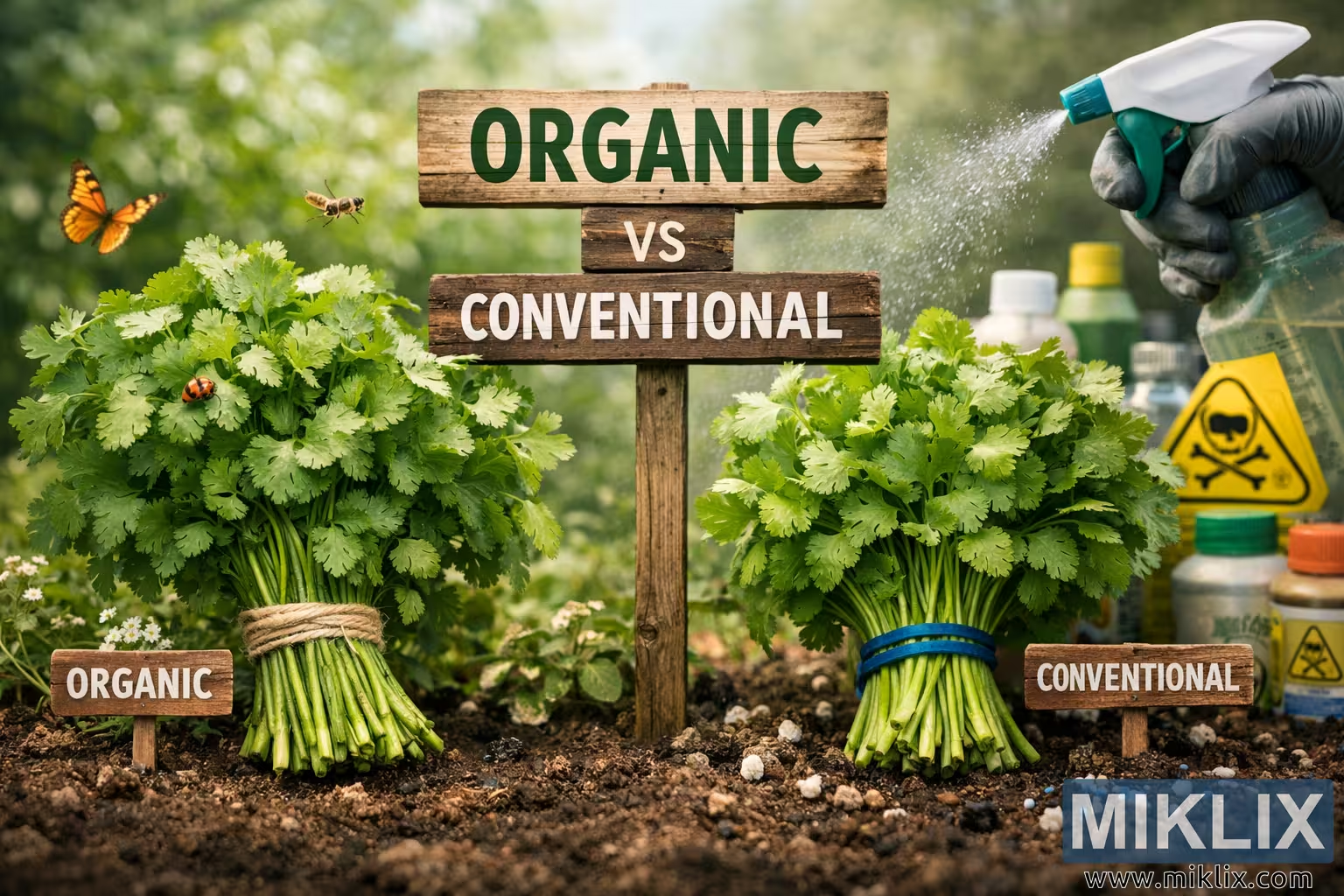
The image presents a detailed, high-resolution landscape composition contrasting organic cilantro with conventional cilantro, emphasizing the environmental and health implications of pesticide use. At the center stands a rustic wooden sign composed of three planks nailed to a sturdy post embedded in the soil. The top plank reads "ORGANIC" in bold, green, capitalized letters, the middle plank displays "vs" in smaller white text, and the bottom plank reads "CONVENTIONAL" in white, capitalized letters. The sign divides the frame into two distinct halves, each representing a different agricultural philosophy.
On the left side, the organic cilantro bunch is lush, vibrant, and full of life. The leaves are a rich, saturated green, glistening under natural sunlight that filters through a blurred garden background. The cilantro is tied together with a piece of natural twine, symbolizing simplicity and sustainability. The soil beneath it is dark and fertile, dotted with small white flowers and tiny sprouts. A ladybug rests delicately on one of the upper leaves, while a butterfly with orange and black wings flutters nearby. A honeybee hovers above the cilantro, suggesting pollination and ecological balance. The overall atmosphere on this side is warm, serene, and harmonious, evoking the purity and vitality associated with organic farming.
In stark contrast, the right side of the image portrays conventional cilantro under the influence of chemical agriculture. The cilantro bunch here is tied with a blue rubber band, its leaves slightly duller and less vibrant. A gloved hand is seen spraying the cilantro with a mist of liquid from a transparent bottle, symbolizing pesticide application. Droplets are suspended mid-air, catching the light as they descend onto the leaves. Behind the cilantro, several containers of chemicals are visible, including a green plastic bottle with a hazard symbol and a yellow warning sign featuring a skull and crossbones. The soil beneath this bunch is lighter and speckled with small blue and white granules, representing synthetic fertilizers or pesticide residues. The background is hazy, with a faint mist suggesting chemical dispersion. The lighting on this side is cooler and more subdued, creating a sense of sterility and caution.
The composition is balanced yet emotionally charged, using color, texture, and symbolism to convey the contrast between natural and industrial farming methods. The organic side radiates life and biodiversity, while the conventional side evokes efficiency tinged with environmental risk. The juxtaposition of the two halves invites viewers to reflect on the broader implications of their food choices — not only for personal health but also for ecological sustainability. The image’s meticulous detail, from the texture of the soil to the reflections on the pesticide droplets, underscores the complexity of modern agriculture.
The photograph’s lighting and depth of field further enhance its storytelling. The organic side is bathed in warm, golden light, suggesting vitality and growth, while the conventional side is cast in cooler tones, hinting at artificial intervention. The central sign acts as both a literal and metaphorical divider, reminding viewers that the difference between these two approaches lies not only in appearance but in philosophy. The image captures the tension between tradition and technology, between ecological harmony and chemical control.
Overall, this visual narrative serves as an educational and thought-provoking representation of how farming practices shape the world around us. It encourages awareness of pesticide considerations and invites dialogue about sustainability, consumer responsibility, and the future of agriculture. The scene is rendered with exceptional clarity and realism, making it both aesthetically compelling and intellectually engaging.
De afbeelding is gerelateerd aan: Cilantro Health Benefits: Complete Evidence-Based Guide