
Afbeelding: Loquat Portion Size Visualization on Rustic Wooden Table
Gepubliceerd:
Laatst bijgewerkt: 3 september 2026 om 20:25:42 UTC
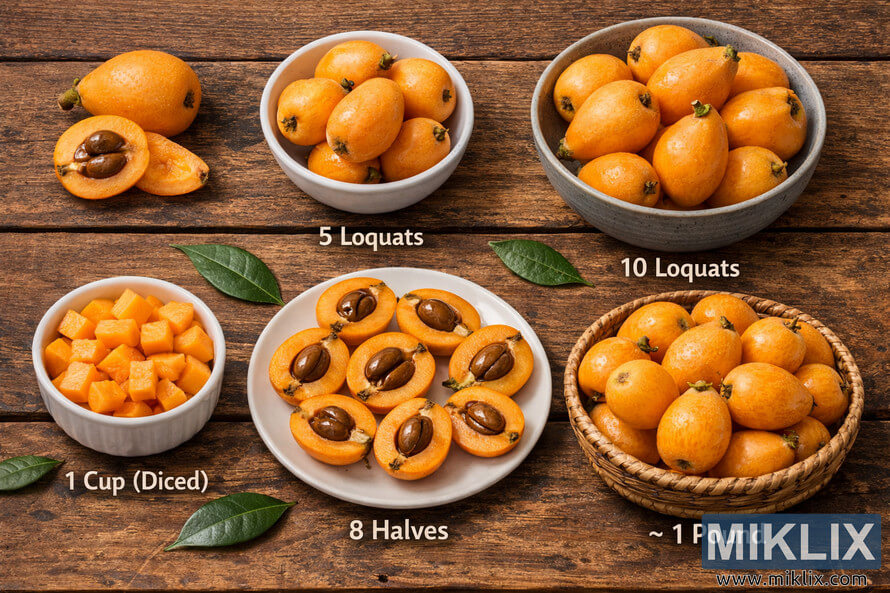
High-resolution loquat portion size visualization on a rustic wooden table. The image shows whole, halved, diced, counted, and weight-based servings of loquats, each clearly labeled: 5 loquats in a small white bowl, 10 loquats in a larger gray bowl, 1 cup of diced loquats in a white dish, 8 halved loquats on a white plate, and approximately 1 pound of loquats in a woven basket. Green leaves and warm wood tones create a natural, inviting setting, making this image ideal for nutrition, recipe, or educational content about loquat serving sizes.
Loquat Portion Size Visualization on Rustic Wooden Table
Beschikbare versies van deze afbeelding
De afbeeldingsbestanden die hieronder kunnen worden gedownload, zijn minder gecomprimeerd en hebben een hogere resolutie - en daardoor een hogere kwaliteit - dan de afbeeldingen die zijn ingesloten in artikelen en pagina's op deze website, die meer zijn geoptimaliseerd voor bestandsgrootte om het bandbreedtegebruik te beperken.
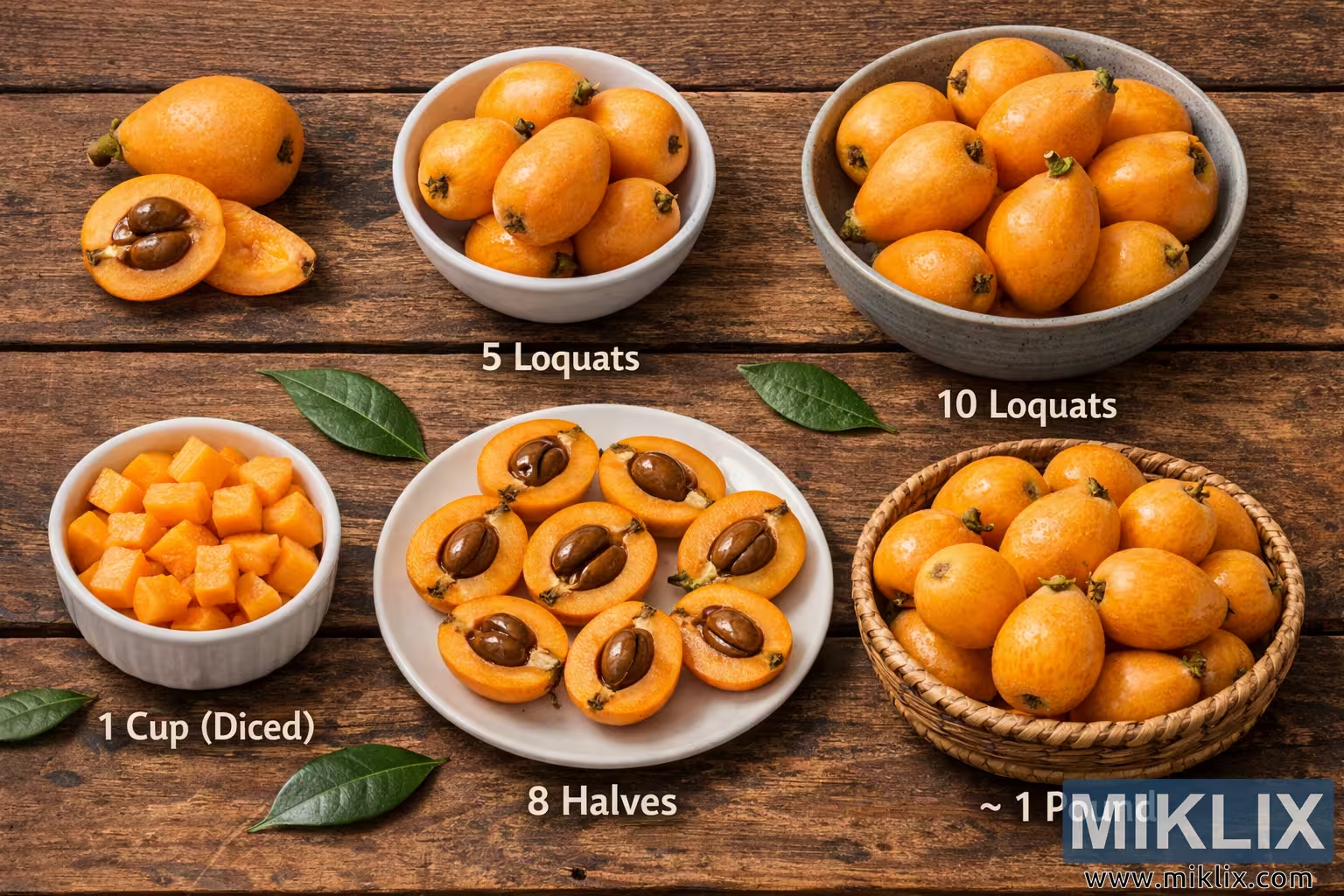
Normale maat (1,536 x 1,024)
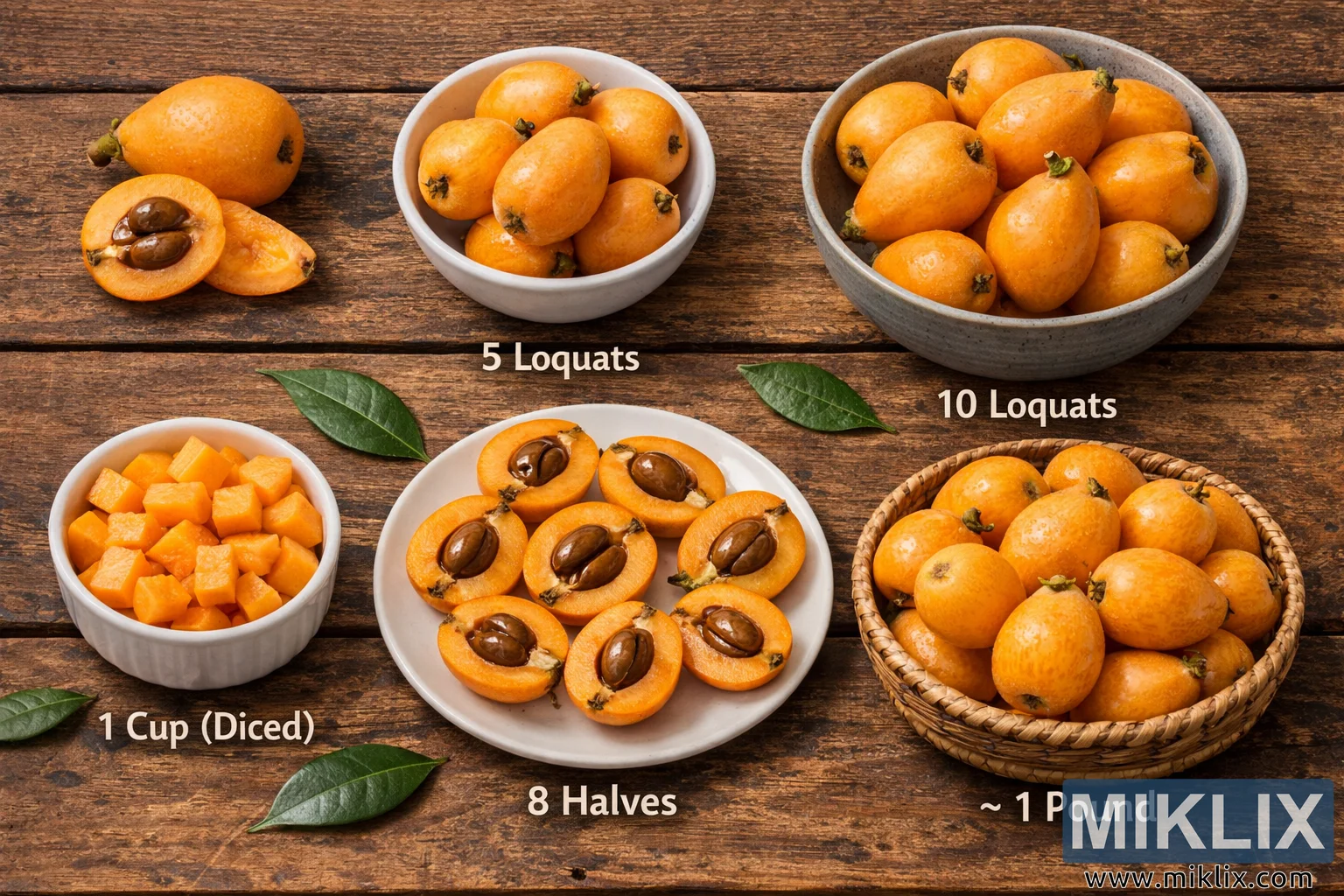
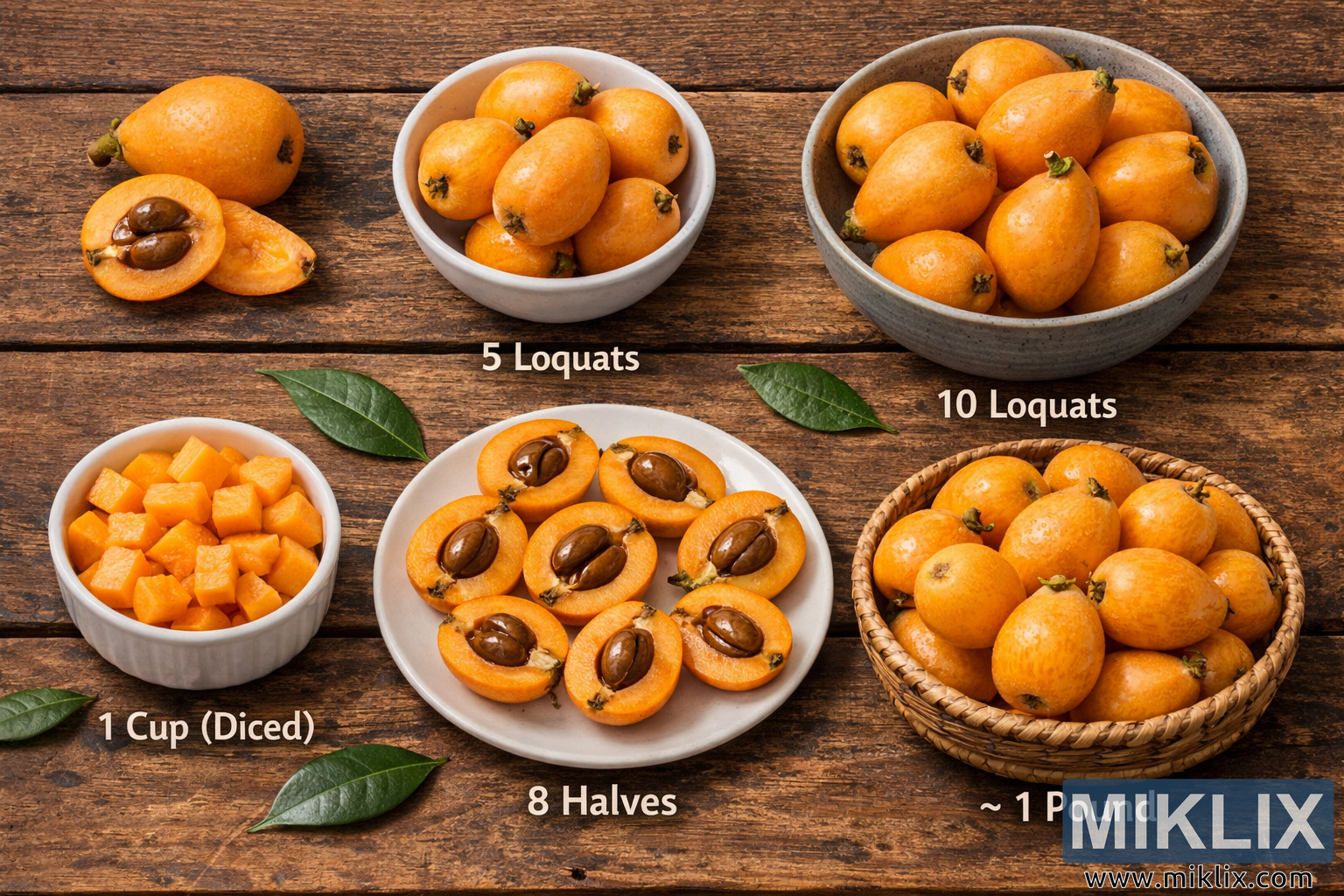
Groot formaat (3,072 x 2,048)
Zeer groot formaat (4,608 x 3,072)
Extra groot formaat (6,144 x 4,096)
Komisch groot formaat (1,048,576 x 699,051)
- Nog steeds aan het uploaden... ;-)
Beschrijving afbeelding
This image presents a carefully arranged, high-resolution visualization of loquat portion sizes on a rustic wooden table, designed to help viewers understand different serving quantities at a glance. The composition is laid out in a landscape orientation, with each portion clearly separated into its own section and labeled with clean, white text directly beneath the corresponding dish or container. The overall aesthetic is warm, natural, and inviting, emphasizing the vibrant golden-orange color of the loquats against the rich brown tones of the wood and the fresh green of scattered leaves.
At the very top left of the image, a single whole loquat fruit is placed next to a halved loquat. The whole fruit has a smooth, slightly glossy skin in a deep golden-orange hue, with a small stem at the top. Beside it, the halved loquat reveals its interior: two glossy brown seeds nestled in the center, surrounded by juicy, golden-orange flesh. The seeds have a polished, almost reflective surface, while the flesh appears moist and tender, suggesting ripeness and sweetness. This close-up pairing of whole and halved fruit serves as a visual introduction to what a loquat looks like both externally and internally, grounding the viewer before they explore the portion-size examples.
Moving toward the top middle section of the image, there is a small white ceramic bowl filled with exactly five whole loquats. The bowl is simple and unadorned, with a smooth, rounded shape that contrasts nicely with the organic forms of the fruits. The loquats inside are arranged casually but neatly, some leaning against each other, their greenish-brown stems visible and adding a subtle touch of color variation. Beneath this bowl, in crisp white text, is the label "5 Loquats," clearly indicating the quantity represented. This portion suggests a modest serving size, perhaps suitable for a small snack or a single person, and the clean presentation makes it easy to visually associate the number with the physical volume of fruit.
In the top right section of the photograph, a larger gray ceramic bowl holds ten whole loquats. The bowl is wider and deeper than the one in the top middle, with a slightly textured surface that gives it a handcrafted feel. The loquats inside are piled higher, creating a sense of abundance. Their golden-orange skins catch the light, and the subtle variations in color—from lighter yellow-orange to deeper amber tones—add visual richness. The stems are less prominent here, as many of the fruits are nestled closely together, but the overall impression is of a generous, substantial portion. Beneath this bowl, the label "10 Loquats" appears in white text, making it clear that this is a larger serving size, perhaps suitable for sharing or for use in a recipe that calls for multiple fruits.
In the bottom left section of the image, a small white dish is filled with diced loquats. The dish is shallow and round, with a clean, minimalist design that keeps the focus on the fruit pieces. The loquat cubes are bright orange, their cut surfaces slightly glistening, suggesting freshness and juiciness. The pieces are relatively uniform in size, indicating careful preparation, and they fill the dish to the brim, forming a compact mound. Beneath this dish, the label "1 Cup (Diced)" is written in white text, providing a clear measurement that is especially useful for cooking or nutritional guidance. This portion visually communicates what one cup of diced loquats looks like, helping viewers translate abstract volume measurements into a concrete, visual reference.
At the bottom center of the image, a white plate holds eight halved loquats arranged in a circular or slightly overlapping pattern. Each half is placed cut-side up, prominently displaying the brown seeds in the center and the surrounding golden-orange flesh. The seeds vary slightly in size and shape but consistently appear smooth and glossy, while the flesh looks tender and moist, with subtle variations in texture near the edges. The plate itself is simple and bright, providing a neutral backdrop that highlights the vivid color of the fruit. Beneath the plate, the label "8 Halves" appears in white text, indicating that this portion represents eight half-loquats, equivalent to four whole fruits. This arrangement is particularly helpful for illustrating how halved fruit portions compare visually to whole fruit servings.
In the bottom right section, a larger woven basket is filled with approximately one pound of loquats. The basket has a natural, earthy appearance, with visible weaving patterns and a slightly rounded shape. It is generously filled, with numerous loquats piled together, some resting on top of others, creating a sense of abundance and weight. The fruits in the basket share the same golden-orange coloration as those in the other portions, but the sheer number of them makes this section feel more substantial and robust. Beneath the basket, the label "~ 1 Pound" is written in white text, indicating that this portion is an approximate weight-based serving rather than a precise count. This visual helps viewers understand what a pound of loquats looks like in terms of volume and quantity, which can be useful for shopping, meal planning, or dietary tracking.
Throughout the image, green loquat leaves are scattered around the various dishes and containers, adding a fresh, natural accent to the composition. The leaves vary in size and orientation, some lying flat on the table, others slightly angled or overlapping the edges of bowls and plates. Their rich green color contrasts beautifully with the warm tones of the loquats and the wooden surface, enhancing the overall visual appeal and reinforcing the fruit’s connection to its natural origin.
The wooden table itself has a rustic, textured appearance, with visible wood grain running horizontally across the image. The color of the wood ranges from medium to dark brown, with subtle variations that suggest age and character. The texture of the wood adds depth and warmth to the scene, making the arrangement feel homely and approachable rather than clinical or overly stylized. The lighting in the image is even and natural, with soft shadows that gently define the shapes of the fruits, dishes, and leaves without creating harsh contrasts. This balanced lighting ensures that every portion is clearly visible and easy to distinguish.
Overall, the image functions as a practical and visually appealing guide to loquat portion sizes. By presenting whole fruits, halved fruits, diced fruit, counted servings, and a weight-based portion side by side, it allows viewers to compare different ways of measuring and serving loquats. The consistent use of white text labels beneath each portion, combined with the careful arrangement of containers and the harmonious color palette, makes the visualization intuitive and easy to understand. The scene feels both educational and aesthetically pleasing, inviting viewers to linger and absorb the information while appreciating the natural beauty of the fruit.
De afbeelding is gerelateerd aan: Loquat: The Sweet Fruit Packed with Real Health Benefits