
Afbeelding: Cooking Pumpkin vs Decorative Pumpkin – A Visual Comparison
Gepubliceerd:
Laatst bijgewerkt: 7 september 2026 om 06:31:19 UTC
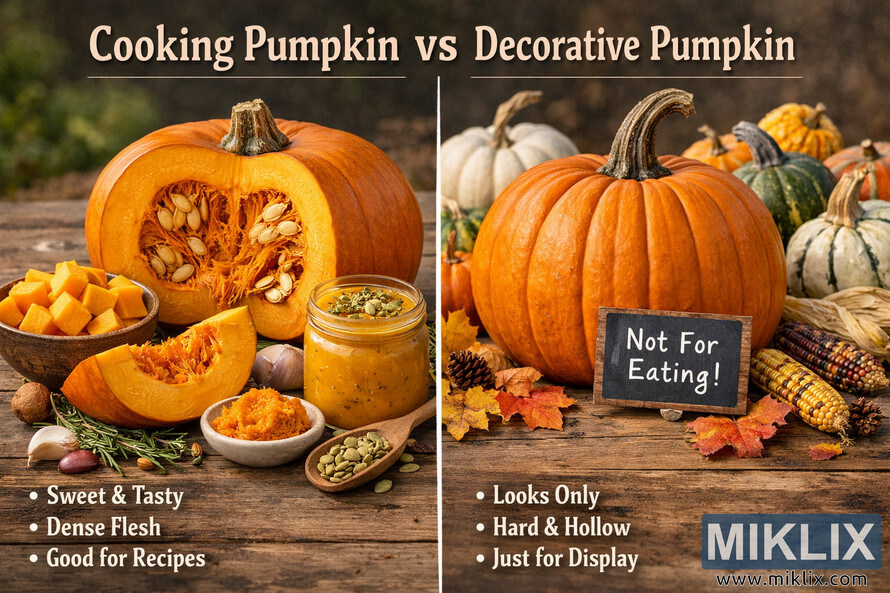
A detailed landscape image comparing a cooking pumpkin and a decorative pumpkin side by side. The left half shows a halved, deep orange cooking pumpkin with cubed pieces, purée, soup, seeds, and spices, labeled with bullet points like "Sweet & Tasty" and "Good for Recipes." The right half features a bright decorative pumpkin with deep ridges, assorted gourds, dried corn, autumn leaves, pinecones, and a sign stating "Not For Eating!," accompanied by bullet points such as "Looks Only" and "Just for Display." Set on a rustic wooden surface with a blurred garden background, the image clearly illustrates the difference between pumpkins meant for cooking and those intended purely for decoration.
Cooking Pumpkin vs Decorative Pumpkin – A Visual Comparison
Beschikbare versies van deze afbeelding
De afbeeldingsbestanden die hieronder kunnen worden gedownload, zijn minder gecomprimeerd en hebben een hogere resolutie - en daardoor een hogere kwaliteit - dan de afbeeldingen die zijn ingesloten in artikelen en pagina's op deze website, die meer zijn geoptimaliseerd voor bestandsgrootte om het bandbreedtegebruik te beperken.
Normale maat (1,536 x 1,024)
Groot formaat (3,072 x 2,048)
Zeer groot formaat (4,608 x 3,072)
Extra groot formaat (6,144 x 4,096)
Komisch groot formaat (1,048,576 x 699,051)
- Nog steeds aan het uploaden... ;-)
Beschrijving afbeelding
This image presents a detailed, side‑by‑side comparison between a cooking pumpkin and a decorative pumpkin, arranged as a single, cohesive photograph in landscape orientation. The scene is set on a rustic wooden surface outdoors, with a softly blurred garden in the background that adds depth and a natural, autumnal atmosphere. The composition is visually divided into two halves: the left side is dedicated to the "Cooking Pumpkin," while the right side showcases the "Decorative Pumpkin." Above the central dividing line, large, bold, cream‑colored text clearly labels each half with the words "Cooking Pumpkin" on the left and "Decorative Pumpkin" on the right, separated by a small "vs" in the middle. This textual header immediately communicates that the image is meant to compare two different types of pumpkins and their uses.
On the left side, the "Cooking Pumpkin" section focuses on a halved pumpkin with a deep, rich orange color and a smooth, slightly glossy exterior. The pumpkin is cut cleanly in half, revealing its bright orange flesh and the central cavity filled with fibrous strands and numerous off‑white seeds. The interior looks dense and moist, suggesting a texture suitable for cooking and baking. In front of the halved pumpkin, a wedge has been cut and placed on the wooden surface, emphasizing the thickness and firmness of the flesh. This wedge helps viewers imagine how the pumpkin might be sliced or prepared in a kitchen setting.
Surrounding the cooking pumpkin are several culinary elements that reinforce its role as an ingredient. A small wooden bowl holds neatly cubed pieces of pumpkin, each cube showing the same vibrant orange color and dense texture. Nearby, a small white dish contains a spoonful of pumpkin purée, with a wooden spoon resting on or beside it, hinting at the process of mashing or blending the cooked pumpkin into a smooth consistency for soups, pies, or other recipes. A glass jar filled with pumpkin soup sits close to the pumpkin, topped with a sprinkle of seeds and herbs that add visual interest and suggest flavor and aroma. The soup has a creamy, orange appearance, echoing the color of the pumpkin flesh and reinforcing the idea that this type of pumpkin is ideal for cooking.
Additional ingredients and garnishes are arranged around the cooking pumpkin to create a sense of a working kitchen or a rustic cooking scene. A small wooden scoop holds a pile of pumpkin seeds, emphasizing that the seeds themselves can be roasted or used as a topping. A tiny wooden bowl contains ground spices, which might include warm, earthy flavors commonly associated with pumpkin dishes. Garlic cloves and sprigs of rosemary are placed nearby, adding a savory, aromatic touch and suggesting that the pumpkin can be used in both sweet and savory recipes. All of these elements are carefully positioned to look natural yet intentional, creating a visually rich and inviting composition.
At the bottom of the left side, beneath the cooking pumpkin and its accompanying ingredients, there are three short bullet‑point phrases in cream‑colored text: "Sweet & Tasty," "Dense Flesh," and "Good for Recipes." These phrases summarize the key qualities of the cooking pumpkin. "Sweet & Tasty" highlights its flavor profile, suggesting that it has a pleasant sweetness suitable for desserts and comforting dishes. "Dense Flesh" points to its texture, indicating that the pumpkin has substantial, firm flesh that holds up well during cooking. "Good for Recipes" reinforces the idea that this pumpkin is meant to be used in the kitchen, whether for soups, pies, roasted dishes, or other culinary creations.
On the right side of the image, the "Decorative Pumpkin" section presents a contrasting visual story. The central focus is a large, bright orange pumpkin with deep, pronounced ridges running vertically from top to bottom. Its thick, curved brown stem adds character and a sense of age or sturdiness, making it visually striking and ideal for display. The surface of this pumpkin appears harder and more rigid than the cooking pumpkin, and its exaggerated ridges give it a sculptural, ornamental quality.
Behind and around the main decorative pumpkin, there is an assortment of other gourds and pumpkins in various shapes, sizes, and colors. Some are small and round, others elongated or irregularly shaped. Their colors range from white to green to striped combinations, creating a visually diverse and festive arrangement. These additional gourds and pumpkins emphasize that this side of the image is about visual appeal and seasonal decoration rather than food.
In front of the decorative pumpkin, a small rustic sign is placed, styled like a chalkboard. The sign reads "Not For Eating!" in clear, light‑colored text. This sign serves as a direct warning and a playful reminder that the decorative pumpkin is not intended for consumption. It suggests that the flesh may be hard, bland, or otherwise unsuitable for cooking, and that its primary purpose is to look attractive in autumn displays, on porches, or as part of seasonal centerpieces.
To further enhance the decorative theme, several autumnal elements are scattered around the decorative pumpkin. Dried corn with multicolored kernels lies nearby, its husks partially peeled back to reveal the vibrant pattern of the kernels. This corn evokes harvest imagery and traditional fall decorations. Autumn leaves in shades of red, orange, and yellow are scattered across the wooden surface, adding texture and color and reinforcing the seasonal atmosphere. Pinecones are also present, contributing a natural, woodland feel and complementing the rustic setting.
At the bottom of the right side, beneath the decorative pumpkin and its surrounding items, three bullet‑point phrases appear in cream‑colored text: "Looks Only," "Hard & Hollow," and "Just for Display." These phrases succinctly describe the decorative pumpkin’s characteristics. "Looks Only" emphasizes that its value lies in its appearance rather than its taste or texture. "Hard & Hollow" suggests that the interior may be tough, fibrous, or lacking the dense, flavorful flesh found in cooking pumpkins. "Just for Display" clearly states that this pumpkin is meant to be used as a visual accent in seasonal arrangements, not as an ingredient in recipes.
The overall lighting in the image is even and natural, as if captured during a mild autumn day. Soft shadows and gentle highlights give the pumpkins and surrounding objects a three‑dimensional presence without creating harsh contrasts. The blurred garden background keeps the focus on the foreground elements while still providing context and a sense of place. The warm orange tones of the pumpkins are complemented by the earthy browns of the wooden surface, the muted greens of the background foliage, and the subtle colors of the leaves, corn, and pinecones.
The composition is carefully balanced so that both sides feel equally important. The cooking pumpkin side is rich with culinary cues and textures, while the decorative pumpkin side is filled with ornamental details and seasonal accents. Together, they create a clear visual narrative: some pumpkins are grown and selected for their flavor, texture, and suitability for recipes, while others are chosen for their striking appearance and ability to enhance autumn décor. The text labels, bullet points, and central "vs" symbol all work together to reinforce this comparison, making the image both informative and visually engaging.
In summary, this image is a comprehensive visual comparison between a cooking pumpkin and a decorative pumpkin. The left side highlights the edible qualities of the cooking pumpkin, supported by ingredients and prepared dishes that suggest warmth, flavor, and versatility in the kitchen. The right side emphasizes the ornamental nature of the decorative pumpkin, surrounded by gourds, dried corn, leaves, and pinecones that evoke the beauty of the autumn season. The clear text labels and descriptive bullet points ensure that viewers understand the difference between pumpkins meant for eating and those meant purely for display, making the image useful for educational, culinary, and seasonal design contexts.
De afbeelding is gerelateerd aan: Pumpkins: The Nutrient-Packed Superfood You Should Eat Year-Round