
Afbeelding: Watermelon Nutrients for Healthy Blood Vessels Infographic with Healthy and Unhealthy Artery Comparison
Gepubliceerd:
Laatst bijgewerkt: 16 augustus 2026 om 19:09:02 UTC
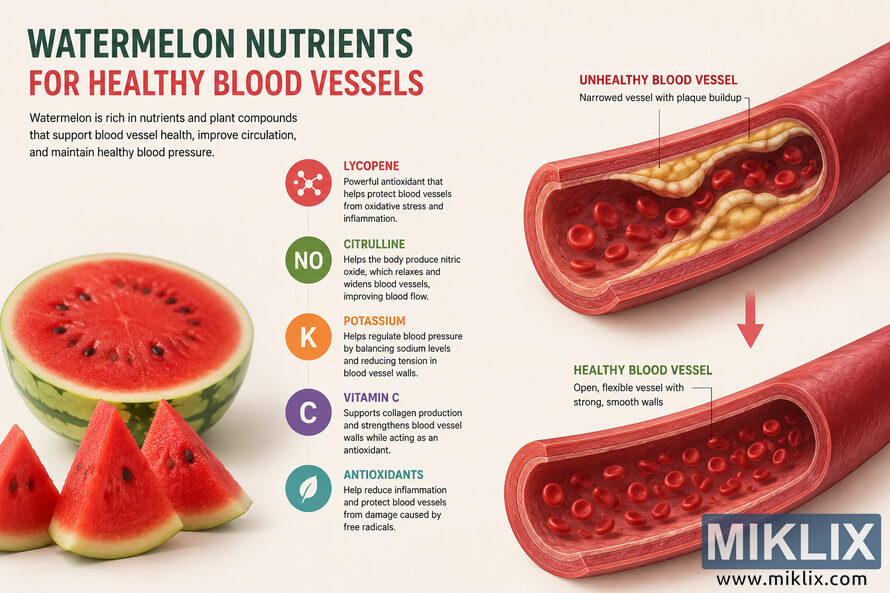
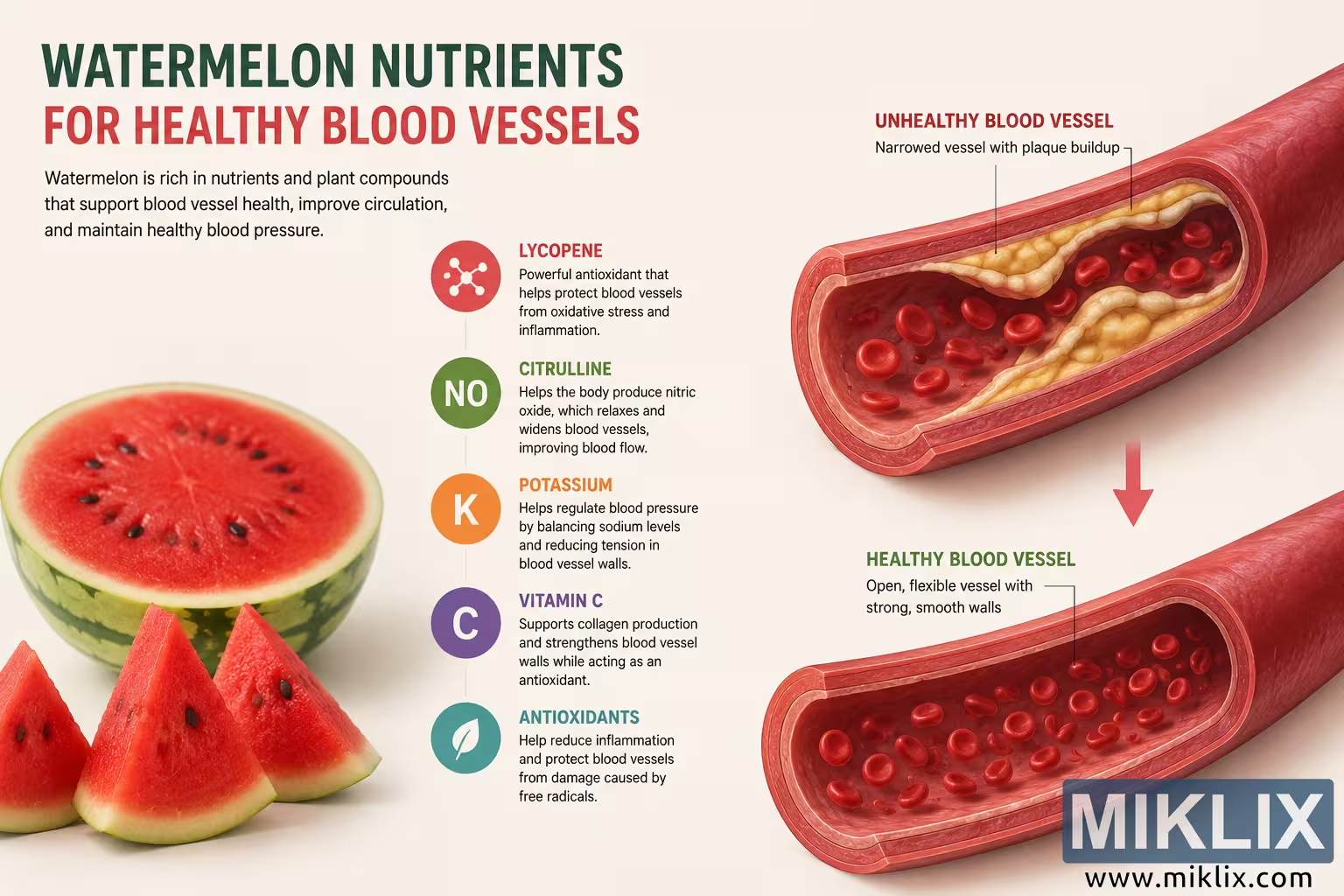
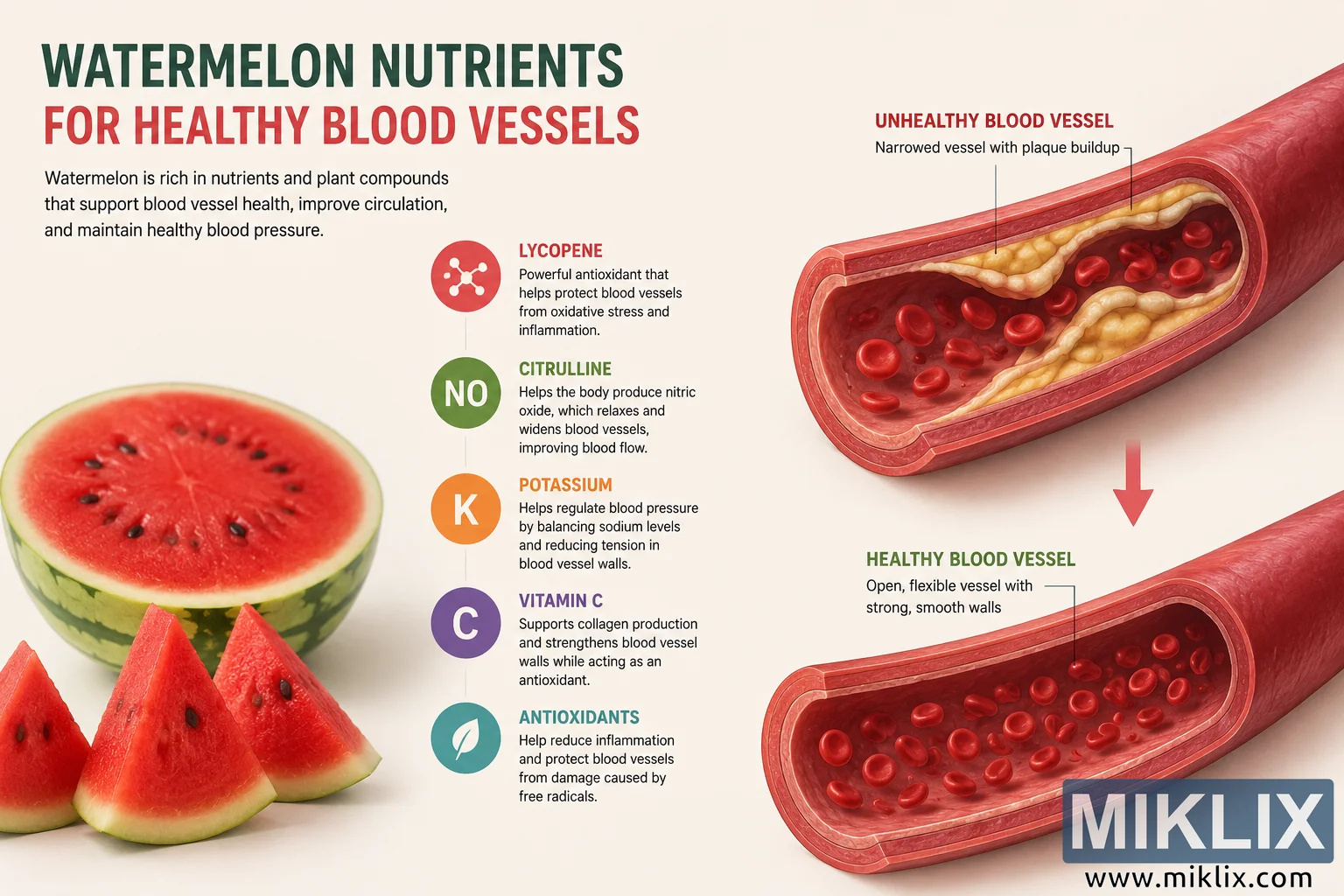
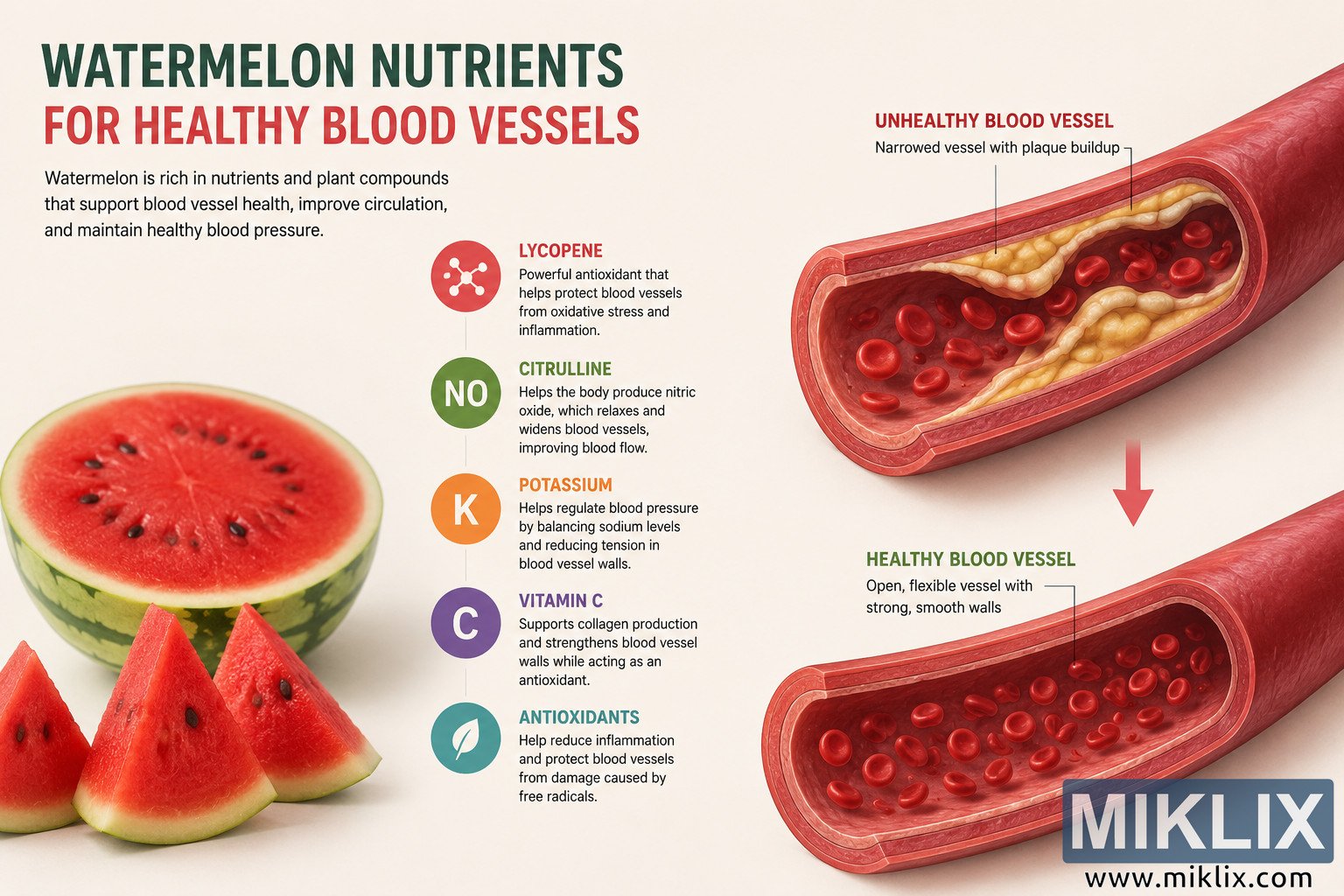
Educational infographic illustrating watermelon nutrients that support blood vessel health, featuring lycopene, citrulline, potassium, vitamin C, antioxidants, and a comparison of unhealthy and healthy arteries.
Watermelon Nutrients for Healthy Blood Vessels Infographic with Healthy and Unhealthy Artery Comparison
Beschikbare versies van deze afbeelding
De afbeeldingsbestanden die hieronder kunnen worden gedownload, zijn minder gecomprimeerd en hebben een hogere resolutie - en daardoor een hogere kwaliteit - dan de afbeeldingen die zijn ingesloten in artikelen en pagina's op deze website, die meer zijn geoptimaliseerd voor bestandsgrootte om het bandbreedtegebruik te beperken.
Normale maat (1,536 x 1,024)
Groot formaat (3,072 x 2,048)
Zeer groot formaat (4,608 x 3,072)
Extra groot formaat (6,144 x 4,096)
Komisch groot formaat (1,048,576 x 699,051)
- Nog steeds aan het uploaden... ;-)
Beschrijving afbeelding
This landscape-oriented infographic presents an educational overview of how nutrients commonly associated with watermelon may contribute to healthy blood vessels. The overall composition is arranged on a light cream-colored background with a clean, modern medical infographic style that combines realistic food photography, anatomical illustrations, icons, and explanatory text. The layout is visually divided into three primary vertical sections. On the left side, large bold headline text reads 'Watermelon Nutrients for Healthy Blood Vessels.' Below the headline is a short introductory paragraph explaining that watermelon contains nutrients and plant compounds that support blood vessel health, improve circulation, and help maintain healthy blood pressure. Beneath this introductory text are realistic illustrations of watermelon, including a large halved watermelon displaying bright red flesh with black seeds and a green rind, accompanied by several triangular watermelon slices placed in the foreground. The fruit is rendered with vivid colors, subtle reflections, and natural texture to create an appetizing appearance. The center section contains a vertically arranged list of nutrient callouts, each paired with a circular colored icon and explanatory text. The first nutrient is Lycopene, represented with a red circular icon featuring a simple molecular graphic. Its accompanying text describes lycopene as a powerful antioxidant that helps protect blood vessels from oxidative stress and inflammation. The second nutrient is Citrulline, represented by a green circular icon containing the letters 'NO,' symbolizing nitric oxide. The accompanying explanation states that citrulline helps the body produce nitric oxide, which relaxes and widens blood vessels to improve blood flow. The third nutrient is Potassium, shown inside an orange circular icon with the letter 'K.' The nearby text explains that potassium helps regulate blood pressure by balancing sodium levels and reducing tension within blood vessel walls. The fourth nutrient is Vitamin C, illustrated with a purple circular icon containing the letter 'C.' The descriptive text explains that vitamin C supports collagen production, strengthens blood vessel walls, and functions as an antioxidant. The final nutrient is Antioxidants, displayed using a teal circular icon featuring a stylized leaf. The adjacent explanation notes that antioxidants help reduce inflammation and protect blood vessels from damage caused by free radicals. Thin connecting lines visually link these nutrient icons into a vertical sequence, emphasizing their relationship within the infographic. The right side of the infographic contains two large cross-sectional anatomical illustrations of blood vessels positioned vertically. The upper illustration is labeled 'Unhealthy Blood Vessel' and depicts a narrowed artery containing thick yellow plaque deposits attached to the inner vessel wall. Numerous red blood cells travel through the reduced central opening, visually demonstrating restricted blood flow. Small annotation lines identify the plaque buildup and narrowed vessel lumen. Between the upper and lower vessel illustrations appears a large downward-pointing red arrow indicating improvement or transition. The lower illustration is labeled 'Healthy Blood Vessel' and depicts a wide-open artery with smooth, flexible vessel walls and an unobstructed interior. Red blood cells flow freely through the enlarged lumen without visible plaque accumulation, illustrating improved circulation. The anatomical illustrations use realistic shading, layered vessel walls, and detailed red blood cells to create a three-dimensional medical visualization. Throughout the infographic, typography uses large bold headings paired with smaller explanatory body text, while nutrient labels are color coordinated with their corresponding icons. The visual hierarchy guides the viewer naturally from the headline and watermelon imagery to the nutrient explanations before concluding with the side-by-side comparison between unhealthy and healthy blood vessels. The color palette primarily consists of reds, greens, oranges, purples, teals, cream tones, and natural anatomical colors. The overall presentation conveys an educational, health-focused message while maintaining a polished, easy-to-read infographic design suitable for nutrition or wellness education. The illustration does not depict any recognizable commercial products, corporate logos, trademarks, or branded packaging. Instead, it focuses entirely on generic educational content combining fruit imagery, nutrition concepts, and anatomical visualization to explain the relationship between watermelon-associated nutrients and blood vessel health.
De afbeelding is gerelateerd aan: Watermelon: The Hydrating Superfruit You Should Eat More Often