
Imagine: Mature Shallot Plants with Yellowing Foliage Ready for Harvest
Publicat:
Ultima actualizare: 22 martie 2026 la 21:44:11 UTC
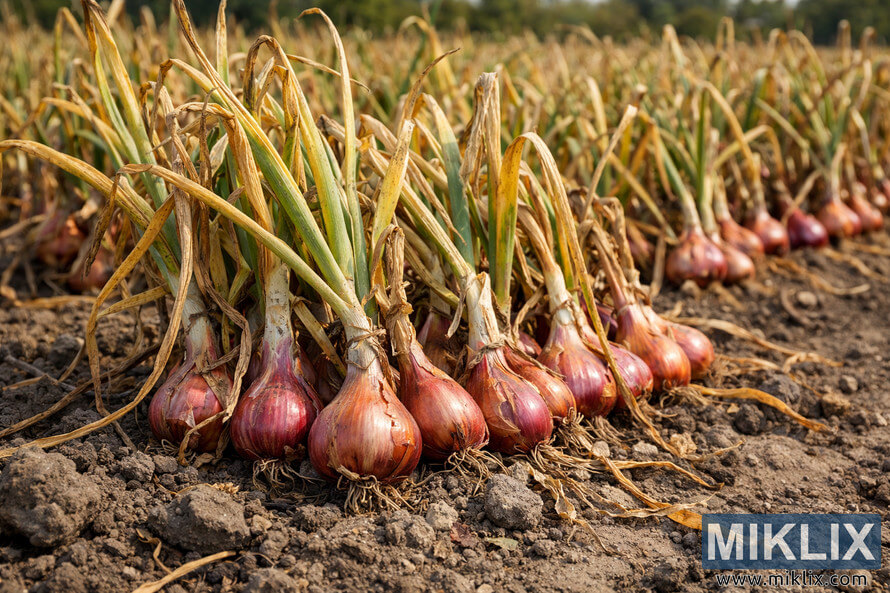
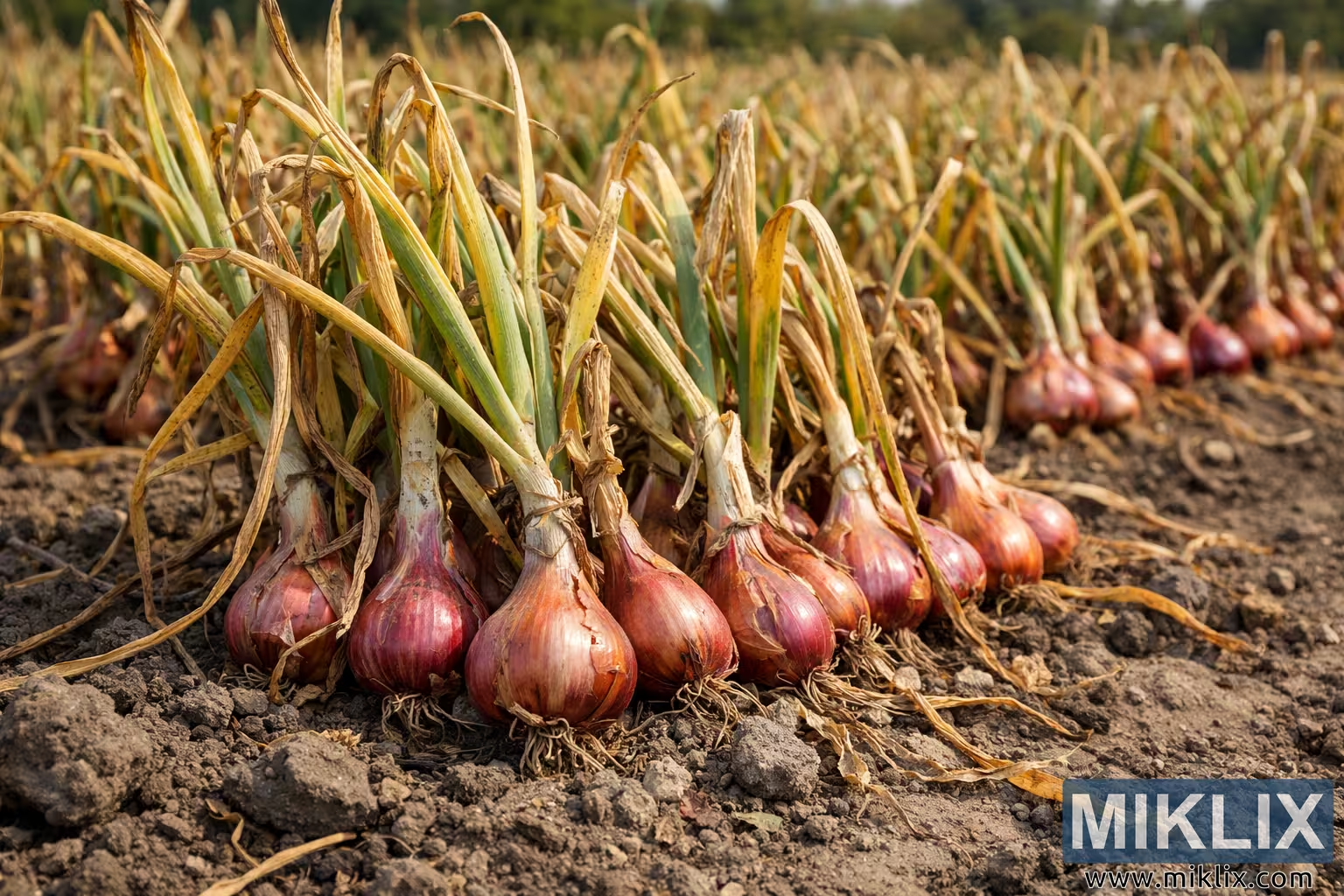
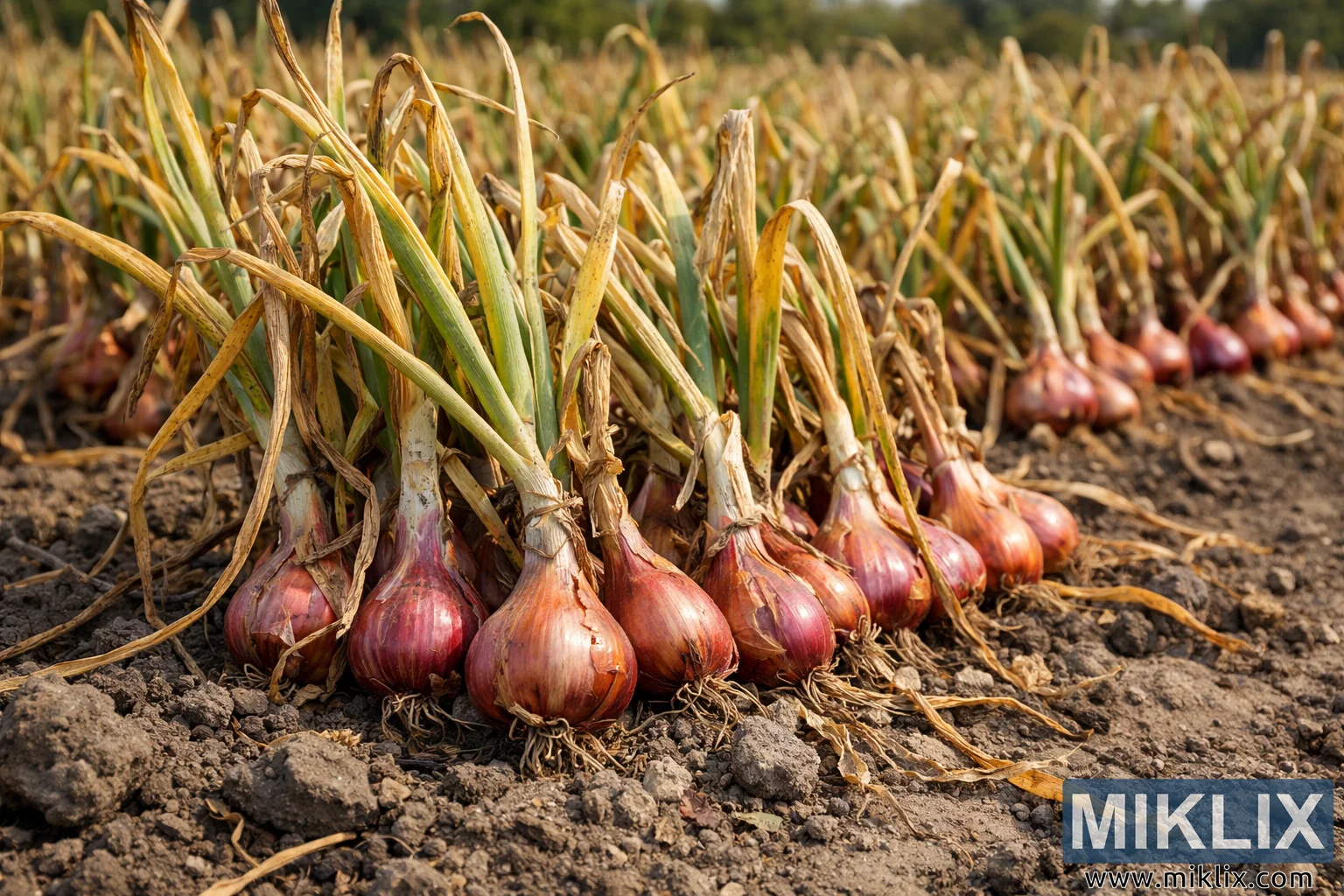
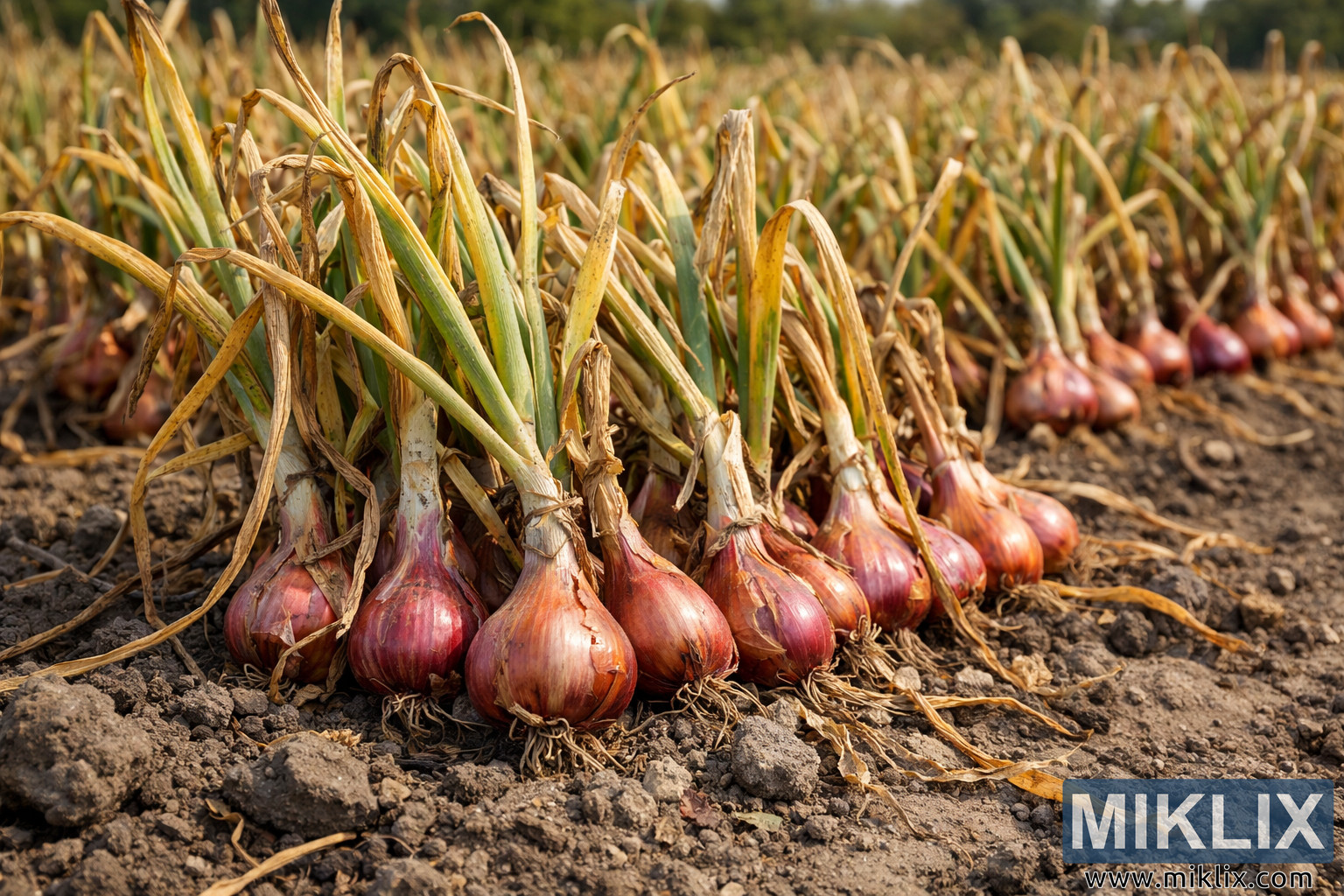
Close-up photograph of mature shallot plants with yellowing foliage in a cultivated field, showing bulbs swelling above dry soil and signaling harvest readiness.
Mature Shallot Plants with Yellowing Foliage Ready for Harvest
Versiuni disponibile ale acestei imagini
Fișierele de imagine disponibile pentru descărcare de mai jos sunt mai puțin comprimate și au o rezoluție mai mare - și, prin urmare, o calitate mai bună - decât imaginile încorporate în articolele și paginile de pe acest site, care sunt mai optimizate în ceea ce privește dimensiunea fișierului pentru a reduce consumul de lățime de bandă.
Dimensiune normală (1,536 x 1,024)
Dimensiune mare (3,072 x 2,048)
Dimensiune foarte mare (4,608 x 3,072)
Dimensiune foarte mare (6,144 x 4,096)
Dimensiune comică mare (1,048,576 x 699,051)
- Încă se încarcă... ;-)
Descrierea imaginii
This landscape-oriented photograph shows a row of mature shallot plants growing in cultivated soil and approaching harvest readiness. In the foreground, several shallot bulbs are clearly visible where the soil has loosened around their bases, allowing the rounded, reddish-brown skins to emerge partially above ground. The bulbs display subtle variations in color, ranging from coppery red to pinkish purple, with thin, papery outer layers catching the light. Fine, fibrous roots extend from the bottom of the bulbs and spread into the dry, slightly clumped soil, emphasizing the natural texture of the field.
The foliage of the plants has begun to yellow and wilt, a typical sign that shallots have matured and are nearly ready to be harvested. The long, narrow leaves bend and curl downward, transitioning in color from pale green near the base to straw-yellow and light brown toward the tips. Some leaves lie partially on the ground while others arch gently over neighboring plants, creating a layered pattern of drying foliage across the row.
The soil surface appears dry and granular, with small clods and cracks that reveal the structure of the cultivated bed. The bulbs sit in a shallow ridge of earth, suggesting the plants were grown in rows for easier maintenance and harvest. The warm sunlight illuminates the scene from a low angle, bringing out earthy tones in both the bulbs and the surrounding soil. Highlights reflect softly off the smooth skins of the shallots, while the dried leaves cast delicate shadows.
In the background, the field continues with many more shallot plants stretching into the distance. These plants gradually blur due to a shallow depth of field, which keeps the foreground bulbs and foliage in crisp focus while softening the distant rows. The repeating pattern of yellowing leaves and rounded bulbs conveys the scale of the crop and reinforces the agricultural setting.
Overall, the image captures a natural moment in the shallot growing cycle when the plants have completed their development. The yellowing foliage, exposed bulbs, and dry soil together indicate that the crop has reached maturity and is ready to be lifted from the ground for curing and storage. The photograph highlights both the beauty and practicality of the harvest stage in vegetable cultivation.
Imaginea este legată de: Growing Shallots: Your Complete Guide to a Bountiful Harvest