
Изображение: Citrus Tree Protected by Frost Cloth During Winter Cold Snap
Опубликовано:
Последнее обновление: 25 марта 2026 г. в 19:05:45 UTC
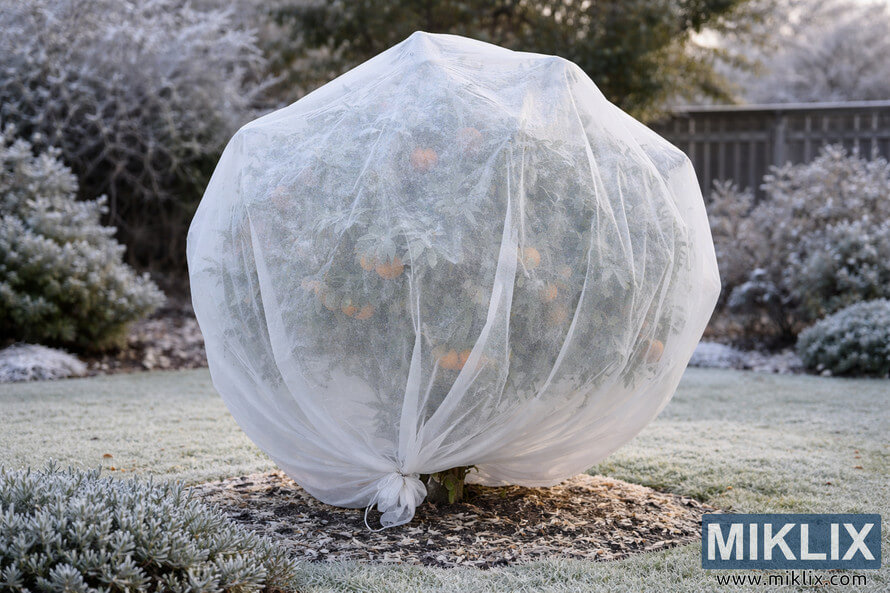
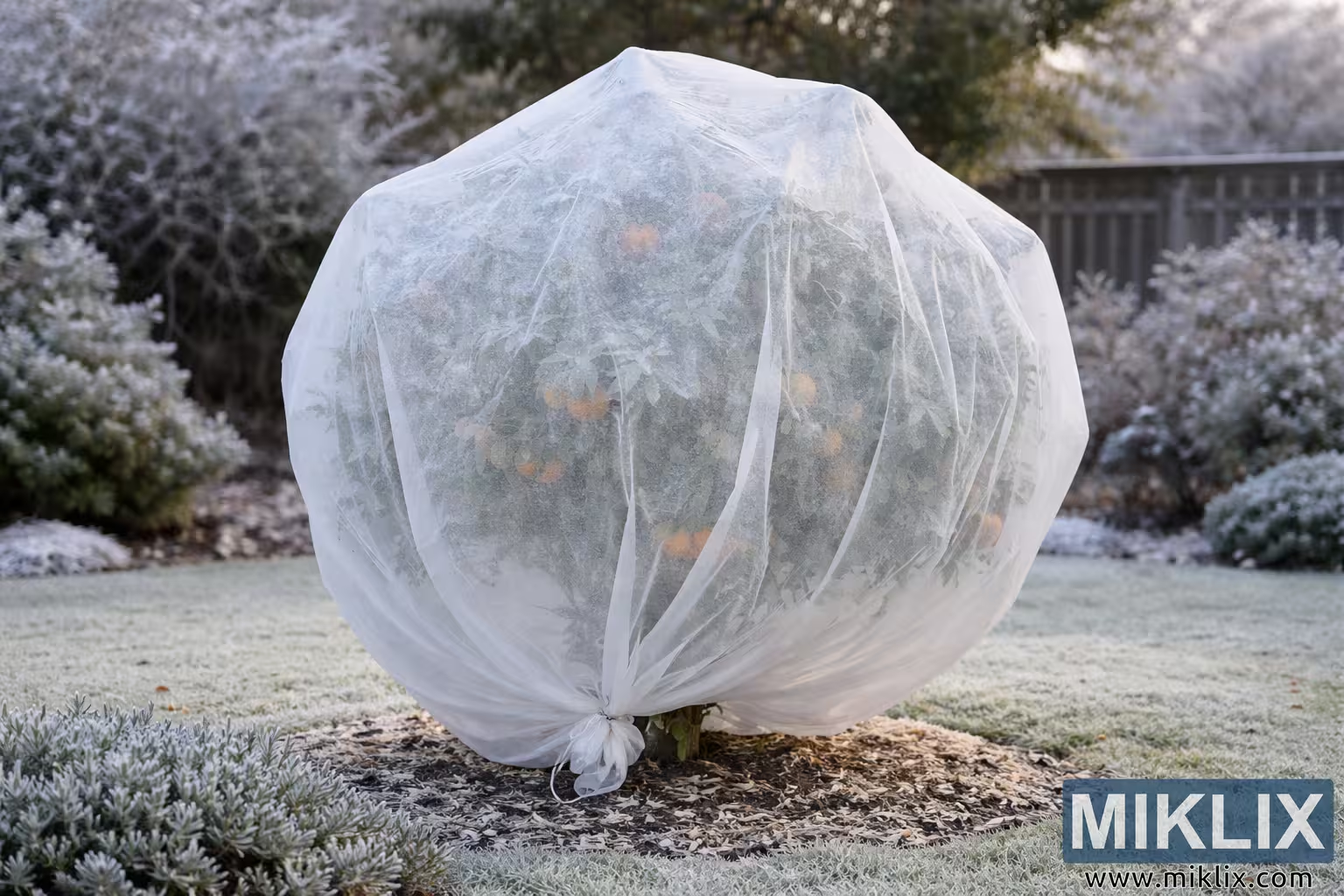
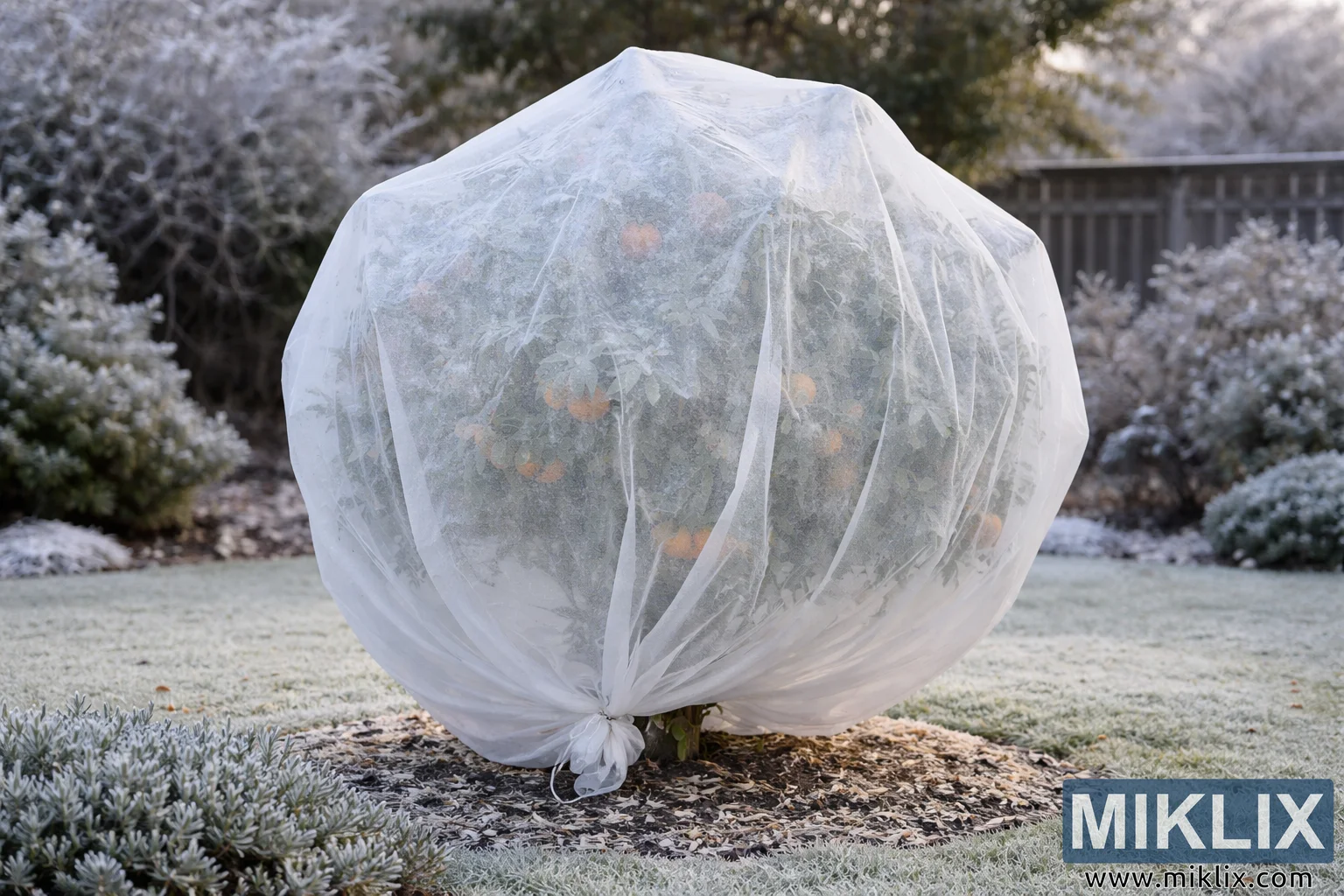
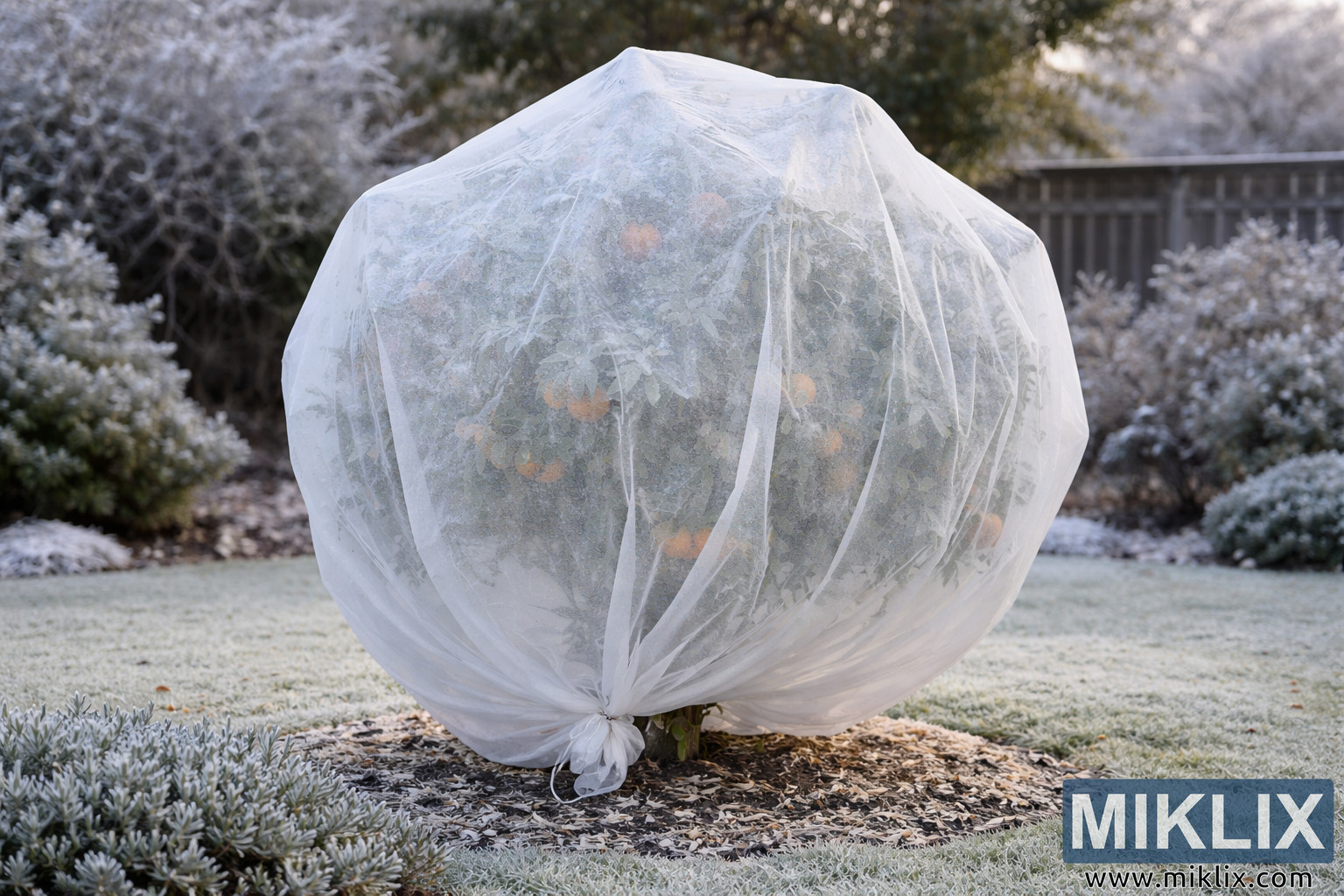
A citrus tree in a garden is protected from freezing temperatures by a white frost cloth during a winter cold snap, with frost covering the surrounding ground and plants.
Citrus Tree Protected by Frost Cloth During Winter Cold Snap
Доступные версии этого изображения
Файлы изображений, доступные для загрузки ниже, менее сжаты и имеют более высокое разрешение - и, как следствие, более высокое качество - чем изображения, встроенные в статьи и страницы на этом сайте, которые более оптимизированы по размеру файла, чтобы уменьшить потребление полосы пропускания.
Обычный размер (1,536 x 1,024)
Большой размер (3,072 x 2,048)
Очень большой размер (4,608 x 3,072)
Очень большой размер (6,144 x 4,096)
Комически большой размер (1,048,576 x 699,051)
- Все еще загружаю... ;-)
Описание изображения
A citrus tree stands in the center of a quiet residential garden during a cold winter morning, carefully wrapped in a translucent white frost protection cloth designed to shield it from freezing temperatures. The protective fabric drapes loosely over the entire canopy of the tree, forming a rounded, tent-like shape that extends from the top of the foliage down to the ground. The cloth gathers near the base of the trunk where it is tied together, preventing cold air from entering and helping to trap warmth around the tree. Through the thin material, the outline of the branches and leaves can be seen, along with several round citrus fruits whose warm orange color subtly shows through the pale covering. The contrast between the faint glow of the fruit and the cool, muted tones of the winter scene adds visual interest and hints at the living plant protected beneath the fabric.
The garden around the tree is lightly coated with frost, creating a delicate crystalline texture across the grass and nearby shrubs. The frost gives the lawn a pale, silvery appearance and outlines the shapes of leaves and small plants scattered around the bed where the tree grows. A circular patch of mulch surrounds the trunk, slightly darker than the frosted ground, emphasizing the base of the covered tree. In the background, soft-focus garden shrubs and bushes are also dusted with frost, their branches appearing white and brittle in the cold morning air. A wooden fence stretches across the rear of the garden, partially obscured by the foliage and the shallow depth of field.
The lighting in the scene is gentle and natural, typical of an early winter morning shortly after sunrise. Soft sunlight filters across the garden from one side, illuminating the frost protection cloth and creating subtle highlights and folds in the fabric. The light also accentuates the frosty surfaces of the surrounding plants, causing them to shimmer faintly. The overall color palette of the image is cool and subdued, dominated by pale whites, soft grays, and muted greens, with the faint orange tones of the citrus fruit providing a warm contrast. The scene conveys a sense of calm and care, illustrating how gardeners protect sensitive fruit trees from harsh winter conditions while preserving the possibility of harvest once warmer weather returns.
Изображение относится к: Growing Tangerines: The Complete Guide to Sweet Success in Your Home Garden