
The Complete Guide to the Health Benefits of Endive
Publikované:
Posledná aktualizácia: 24. mája 2026 o 15:46:28 UTC
Endive deserves a spot on your plate for reasons beyond its crisp texture and sophisticated flavor. This leafy vegetable from the chicory family packs impressive nutritional power that supports your body in multiple ways. Whether you call it Belgian endive, curly endive, or simply endive, this versatile green offers health benefits backed by science.
The Complete Guide to the Health Benefits of Endive
Kliknutím alebo ťuknutím na obrázok získate ďalšie informácie a vyššie rozlíšenie.
Many people walk past endive in the produce section without realizing what they're missing. The slightly bitter flavor might seem intimidating at first. But once you understand how this vegetable supports digestive health, strengthens bones, and aids weight management, you'll want to add it to your regular rotation.
This guide explores everything you need to know about endive's health benefits. You'll discover its complete nutritional profile, learn about different varieties, and find practical ways to incorporate this nutrient-rich vegetable into your meals.
What Is Endive and Where Does It Come From
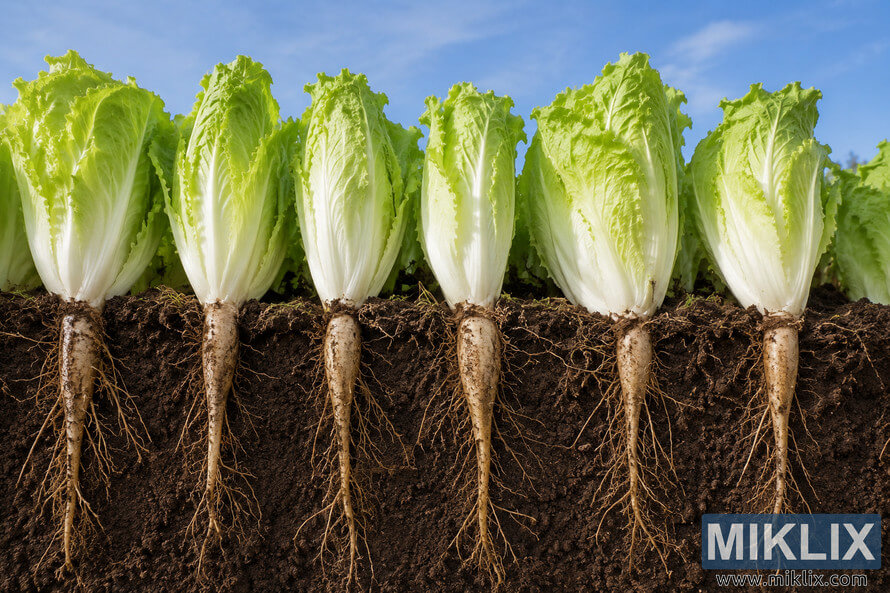
Endive belongs to the chicory family, specifically classified as Cichorium intybus. This vegetable has traveled from its Mediterranean roots to become a staple in cuisines worldwide. The plant grows in two distinct stages that determine its final form and flavor profile.
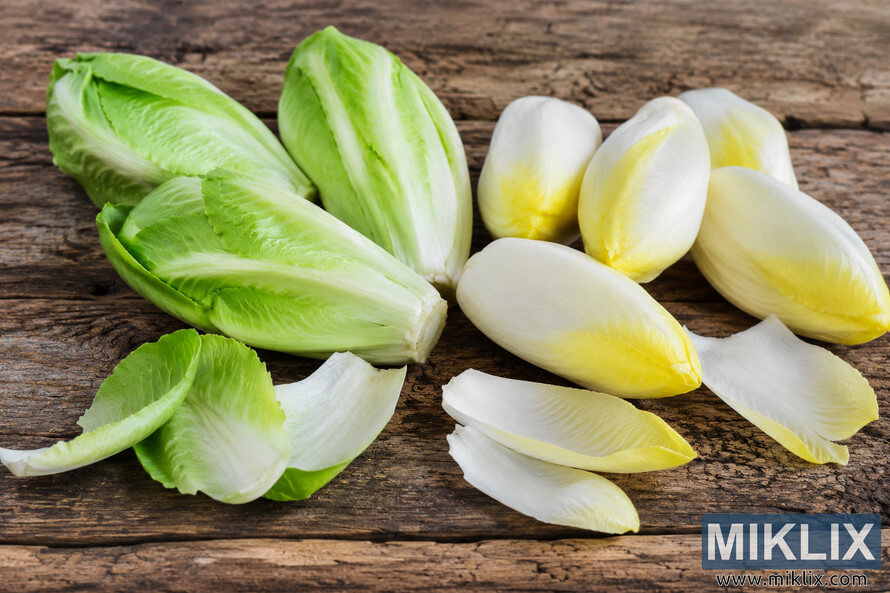
Farmers cultivate endive using a unique two-part process. The roots first grow in field conditions for several months during fall. Then growers force the roots in dark, controlled environments to produce the crisp heads or leaves we find in stores. This darkness prevents chlorophyll development, creating those characteristic pale, mild inner leaves that belgian endive is known for.
The united states imports much of its belgian endive from Europe, though domestic farmers in certain states have begun growing this vegetable. Different varieties thrive in various climates, making endive available year-round in most markets.
Kliknutím alebo ťuknutím na obrázok získate ďalšie informácie a vyššie rozlíšenie.
Belgian Endive Characteristics
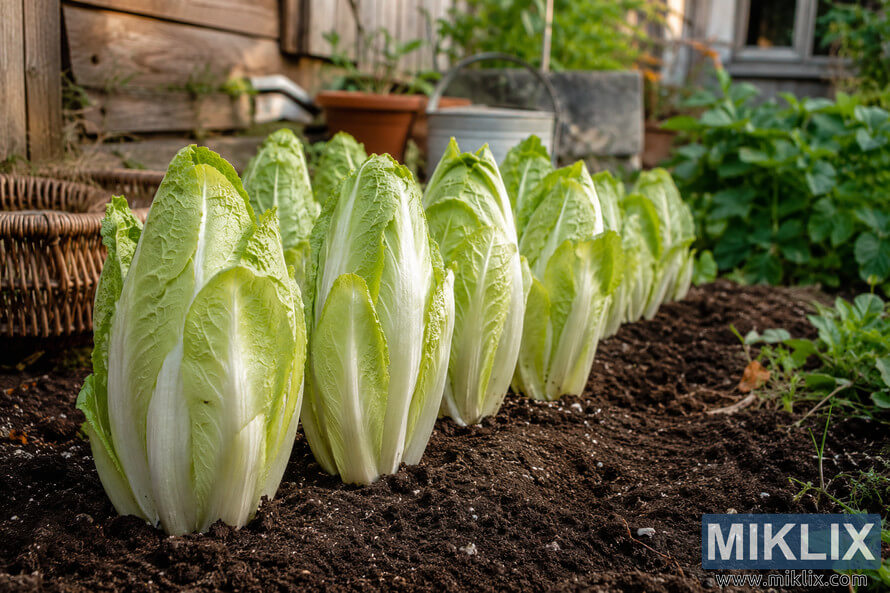
Belgian endive grows as compact, torpedo-shaped heads with tightly packed leaves. The outer leaves show pale yellow-white coloring.
- Mild, slightly bitter flavor
- Crisp, crunchy texture
- Ideal for salads and appetizers
- Stores well for weeks when refrigerated
Kliknutím alebo ťuknutím na obrázok získate ďalšie informácie a vyššie rozlíšenie.
Curly Endive Features
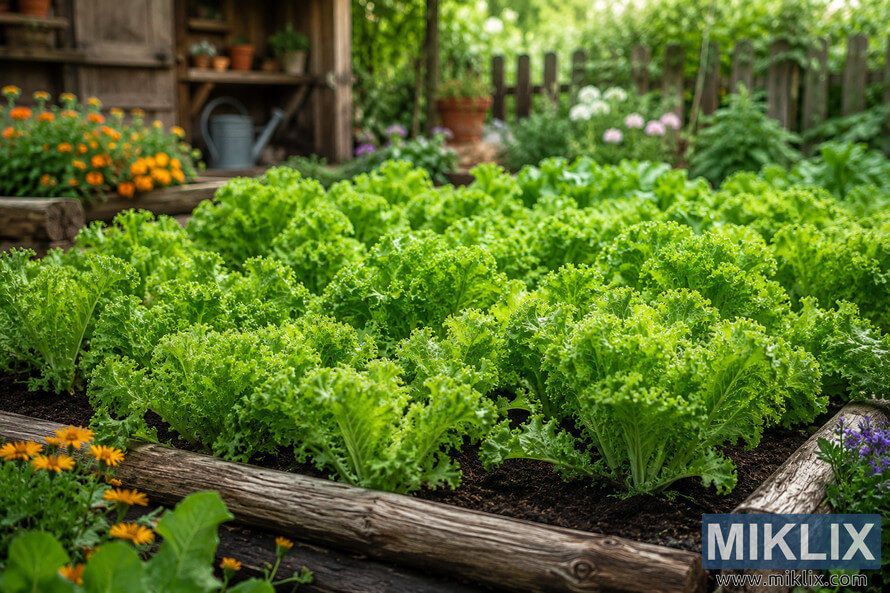
Curly endive, also called frisée, displays frilly, narrow leaves that form loose heads. The outer leaves appear darker green.
- More pronounced bitter taste
- Delicate, feathery texture
- Perfect for adding volume to salads
- Best used within days of purchase
Kliknutím alebo ťuknutím na obrázok získate ďalšie informácie a vyššie rozlíšenie.
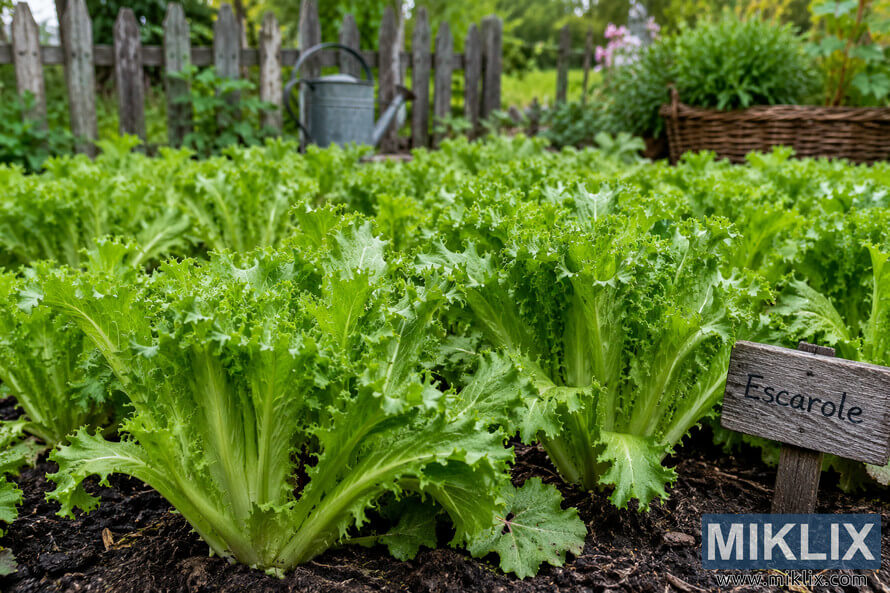
Escarole Properties
Escarole represents the broadest-leafed member of the endive family. Its large, ruffled leaves work beautifully in cooking.
- Milder than other endive types
- Sturdy leaves that hold up to heat
- Excellent for soups and stews
- Outer leaves more bitter than inner ones
Kliknutím alebo ťuknutím na obrázok získate ďalšie informácie a vyššie rozlíšenie.
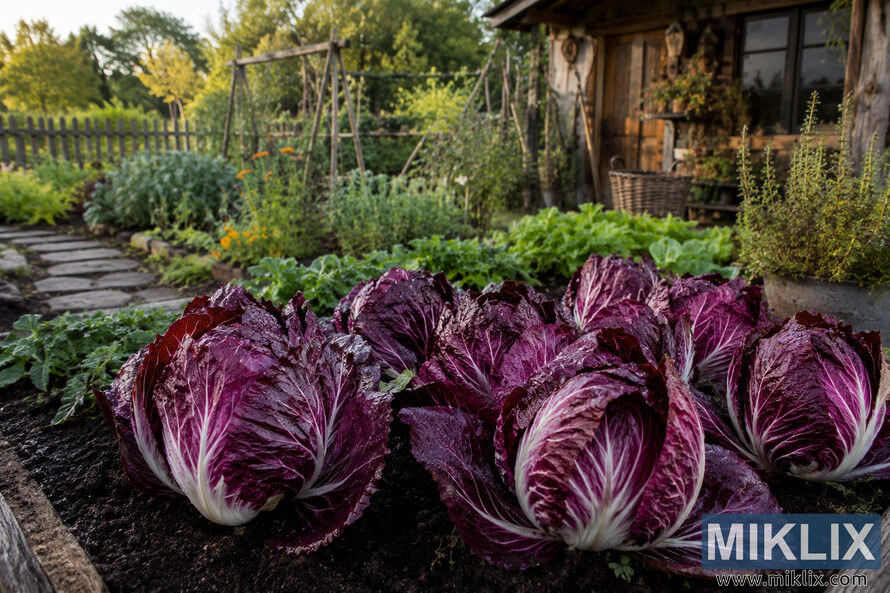
Radicchio Distinctions
Radicchio, a close relative in the chicory family, offers deep purple-red leaves with white veins throughout.
- Distinctive bitter, peppery flavor
- Stunning visual appeal in dishes
- Holds shape well when grilled
- Contains additional antioxidants from pigments
Kliknutím alebo ťuknutím na obrázok získate ďalšie informácie a vyššie rozlíšenie.
The difference between these chicories lies in their growing methods, appearance, and flavor intensity. All varieties share similar nutritional benefits, though their applications in cooking vary based on texture and bitterness levels.
The Impressive Nutritional Profile of Endive
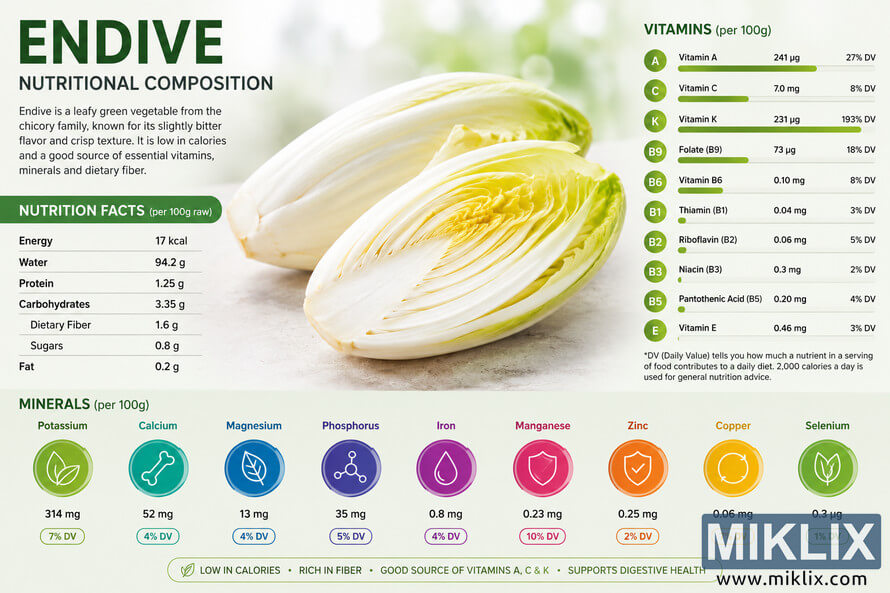
Endive delivers exceptional nutrition with minimal calories, making it a smart choice for health-conscious eaters. One cup of raw endive contains only about 8 calories yet provides substantial amounts of essential vitamins and minerals that your body needs daily.
The vegetable stands out for its vitamin K content. A single serving provides more than your entire daily requirement for this crucial nutrient. Vitamin K plays a vital role in blood clotting and bone health, working alongside calcium to keep your skeleton strong.
| Nutrient | Amount per 100g | Daily Value % | Primary Function |
| Vitamin K | 231 mcg | 289% | Blood clotting, bone health |
| Vitamin A | 108 mcg | 12% | Vision, immune function |
| Folate | 142 mcg | 36% | Cell growth, DNA synthesis |
| Vitamin C | 6.5 mg | 7% | Antioxidant, collagen production |
| Fiber | 3.1 g | 12% | Digestive health, satiety |
| Potassium | 314 mg | 9% | Heart health, blood pressure |
| Manganese | 0.42 mg | 21% | Metabolism, antioxidant support |
Beyond these key nutrients, endive contains smaller amounts of calcium, iron, and various B vitamins. The fiber content supports digestive health while the water content keeps you hydrated. This combination of nutrients and low calorie density makes endive an excellent food for overall wellness.
Nutritional Advantage: Endive provides more vitamin K per calorie than almost any other vegetable. The bitter compounds that give endive its distinctive flavor also function as beneficial phytonutrients with potential health-promoting properties.
The roots of the endive plant contain inulin, a type of prebiotic fiber that feeds beneficial gut bacteria. While we typically consume the leaves, understanding the whole plant helps explain why endive has been used in traditional medicine for centuries.
Kliknutím alebo ťuknutím na obrázok získate ďalšie informácie a vyššie rozlíšenie.
How Endive Supports Your Digestive System
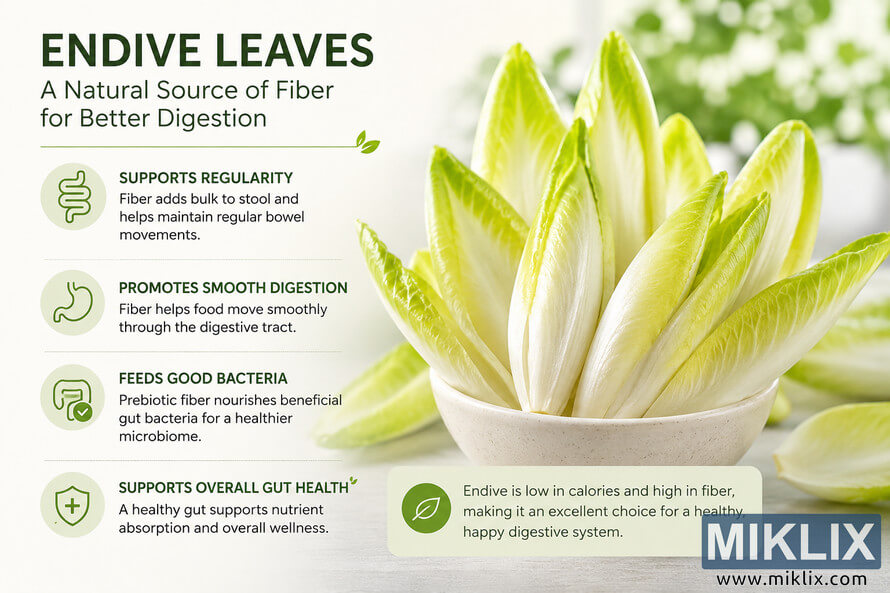
Your gut thrives on the fiber and special compounds found in endive. The vegetable provides both soluble and insoluble fiber, each playing distinct roles in maintaining digestive health. This combination keeps your system running smoothly while supporting the beneficial bacteria that live in your intestines.
Insoluble fiber from endive adds bulk to stool and helps food move through your digestive tract. This prevents constipation and promotes regular bowel movements. The outer leaves of curly endive contain particularly high amounts of this beneficial fiber type.
The inulin found in endive roots and leaves acts as a prebiotic. These special fibers feed the good bacteria in your colon, helping them multiply and thrive. A healthy gut microbiome supports immune function, mood regulation, and even weight management.
Digestive Benefits
- Promotes regular bowel movements
- Supports beneficial gut bacteria
- May reduce bloating and discomfort
- Helps maintain healthy gut lining
- Assists in nutrient absorption
Considerations
- May cause gas initially in sensitive individuals
- Bitter compounds might upset very sensitive stomachs
- High fiber content requires adequate water intake
- Those with IBS should introduce gradually
Research suggests that the bitter compounds in endive also stimulate digestive enzyme production. These enzymes help break down food more efficiently, improving nutrient extraction from your meals. The mild bitterness you taste signals your body to prepare for digestion.
People with digestive issues often find that adding endive to their diet improves symptoms over time. Start with small portions if you're not used to bitter vegetables. Your taste buds and digestive system will adapt, allowing you to enjoy larger servings as tolerance builds.
Kliknutím alebo ťuknutím na obrázok získate ďalšie informácie a vyššie rozlíšenie.
Endive for Healthy Weight Management
Managing your weight becomes easier when you include low-calorie, high-volume foods like endive in your meals. The vegetable fills your plate and your stomach without adding significant calories to your daily intake. This natural approach to portion control supports sustainable weight loss and maintenance.
One cup of chopped endive contains roughly 90% water and just 8 calories. You can eat generous portions without worrying about exceeding your calorie goals. The fiber content slows digestion, keeping you satisfied longer after meals and reducing the urge to snack between eating times.
Studies on high-fiber vegetables show they help control appetite hormones. When you eat endive, your body releases peptides that signal fullness to your brain. This natural appetite regulation makes it easier to stick to reasonable portion sizes throughout the day.
Satiety Mechanisms
Endive triggers multiple biological pathways that promote feelings of fullness and satisfaction after eating.
- High water content physically fills stomach volume
- Fiber slows gastric emptying, extending satiety
- Low calorie density allows generous portions
- Requires chewing, which promotes satiation signals
- Stabilizes blood sugar, preventing energy crashes
Practical Applications
Smart ways to use endive for weight management in your daily eating routine.
- Start meals with endive salad to reduce overall intake
- Use belgian endive leaves as low-carb appetizer boats
- Add curly endive to bulk up soups and stews
- Replace higher-calorie greens in sandwiches
- Snack on endive leaves with healthy dips
The bitter flavor of endive also plays a psychological role in portion control. Unlike sweet or salty foods that often lead to overeating, the moderate bitterness naturally limits how much you want to consume in one sitting. This built-in moderation helps prevent the mindless eating that derails many weight management efforts.
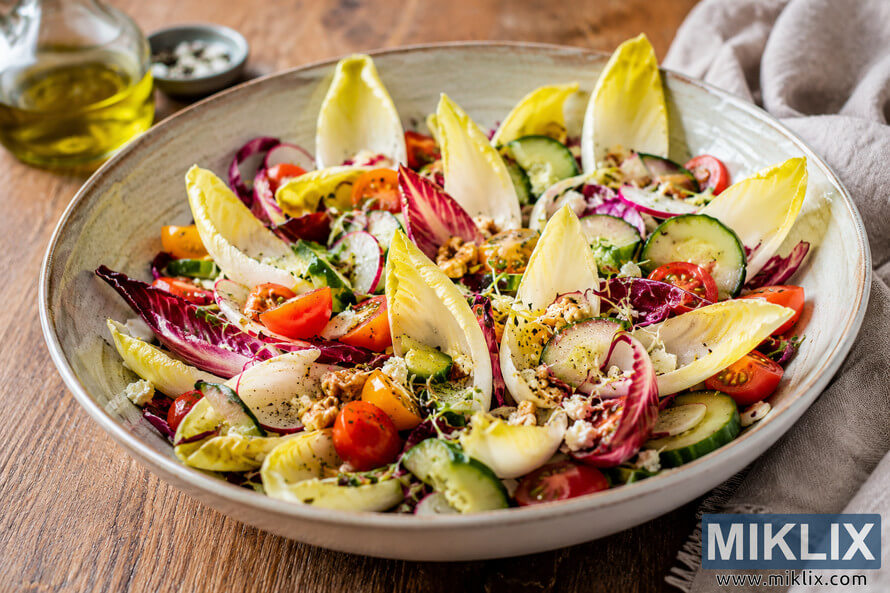
For best results, combine endive with protein and healthy fats in your meals. This combination provides complete nutrition while maximizing satiety. The endive adds volume and nutrients without significantly increasing calories, creating satisfying meals that support your weight goals.
Kliknutím alebo ťuknutím na obrázok získate ďalšie informácie a vyššie rozlíšenie.
Strengthening Your Immune System with Endive
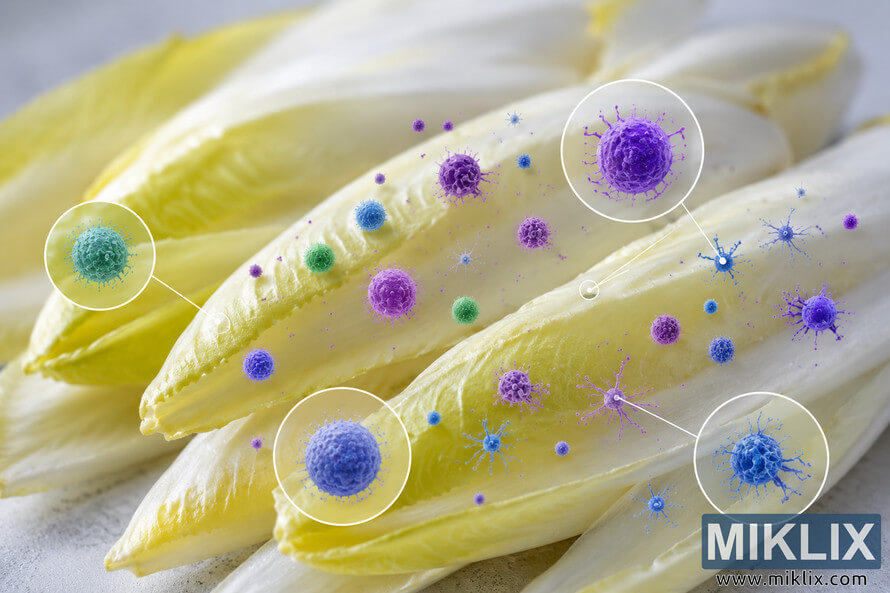
Your immune system relies on specific nutrients to function at its best, and endive delivers several key players. The vitamins, minerals, and plant compounds in this vegetable work together to support your body's natural defense mechanisms against illness and infection.
Vitamin C in endive acts as a powerful antioxidant that protects immune cells from damage. While endive doesn't contain as much vitamin C as citrus fruit, every bit contributes to your daily needs. Regular consumption as part of varied vegetable intake helps maintain optimal immune function year-round.
The vitamin A content supports the health of mucous membranes throughout your body. These barriers serve as your first line of defense against pathogens. Strong, healthy membranes in your respiratory and digestive tracts prevent harmful organisms from entering your system.
Immune-Boosting Nutrients
- Vitamin K supports immune cell regulation
- Folate aids white blood cell production
- Vitamin C protects cells from oxidative stress
- Vitamin A maintains barrier tissues
- Minerals support enzyme function in immune response
- Antioxidants reduce inflammation throughout body
Synergistic Effects
- Fiber feeds gut bacteria that train immune system
- Prebiotic compounds enhance microbiome diversity
- Phytonutrients modulate inflammatory responses
- Low glycemic impact prevents immune suppression
- Hydration from water content supports lymph flow
- Nutrients work together for greater immune benefit
The prebiotic fiber in endive deserves special mention for immune support. About 70% of your immune system resides in your gut, where beneficial bacteria help train immune cells to distinguish friend from foe. By nourishing these bacteria, endive indirectly strengthens your entire immune response.
Research on chicory family vegetables shows they contain compounds with anti-inflammatory properties. Chronic inflammation weakens immune function over time, so including anti-inflammatory foods like endive in your diet supports long-term immune health. The combination of nutrients and beneficial plant compounds makes endive a smart addition to an immune-supporting eating pattern.
Kliknutím alebo ťuknutím na obrázok získate ďalšie informácie a vyššie rozlíšenie.
Protecting Your Eyes and Strengthening Your Bones
Two often-overlooked benefits of endive relate to vision and skeletal health. The specific nutrient profile of this vegetable provides exactly what your eyes and bones need to stay healthy as you age. Regular consumption contributes to long-term wellness in these critical areas.
Vision Protection Through Nutrition
Your eyes need specific nutrients to maintain clear vision and prevent age-related deterioration. Endive provides vitamin A in the form of beta-carotene, which your body converts as needed. This vitamin supports the health of your retinas and helps your eyes adjust to different light levels.
The lutein and zeaxanthin found in green leafy vegetables like endive accumulate in your retinas. These compounds filter harmful blue light and protect delicate eye tissues from oxidative damage. Studies link higher intake of these carotenoids with reduced risk of macular degeneration and cataracts.

Kliknutím alebo ťuknutím na obrázok získate ďalšie informácie a vyššie rozlíšenie.
Building and Maintaining Strong Bones
Bone health requires more than just calcium. Your skeleton needs vitamin K to properly use calcium and build strong bone matrix. Endive provides exceptional amounts of this crucial vitamin, making it one of the best vegetables for supporting skeletal health.
Vitamin K activates proteins that bind calcium to bone tissue. Without adequate vitamin K, your body cannot effectively use the calcium you consume, regardless of how much you take in. The high vitamin K content in endive ensures your bones can utilize available calcium efficiently.
The folate in endive also contributes to bone health by helping regulate homocysteine levels. High homocysteine can weaken bone structure over time, so maintaining proper folate intake protects your skeleton from this risk factor. Combined with vitamin K, folate makes endive particularly valuable for preventing osteoporosis.
Women past menopause and older adults of all genders benefit especially from the bone-supporting nutrients in endive. The natural food form provides these nutrients in combinations that work synergistically, offering advantages over isolated supplements. Including endive alongside other nutrient-dense vegetables creates a dietary pattern that supports lifelong bone strength.

Kliknutím alebo ťuknutím na obrázok získate ďalšie informácie a vyššie rozlíšenie.
Understanding Different Endive Varieties and Their Benefits
The endive family offers several distinct types, each with unique characteristics that suit different culinary applications. While all varieties share similar nutritional profiles, their textures, flavors, and growing methods create diverse options for your kitchen.
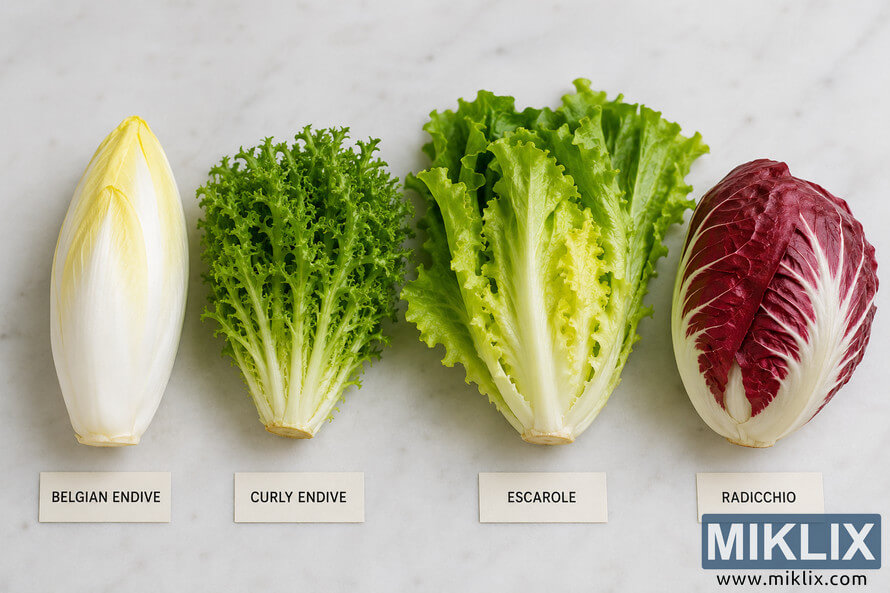
Belgian endive represents the most refined member of the family. Growers force these roots in complete darkness, producing compact heads with pale yellow leaves. The mild bitterness and crisp texture make belgian endive perfect for raw applications, though it also responds beautifully to gentle cooking methods.
Curly endive, known as frisée in French cuisine, displays dramatically frilly leaves that add visual interest to salads. The outer leaves carry more pronounced bitterness, while the pale center parts taste milder. This variety grows in the field without forcing, developing its characteristic shape naturally.
Kliknutím alebo ťuknutím na obrázok získate ďalšie informácie a vyššie rozlíšenie.
Escarole: The Cooking Endive
Escarole stands apart with its broad, slightly ruffled leaves that resemble lettuce more than other endive types. The sturdy leaves hold up exceptionally well to heat, making escarole the preferred choice for soups, stews, and sautéed preparations. Italian cuisine particularly values escarole for its versatility in both raw and cooked dishes.
The flavor profile of escarole skews milder than curly endive but more assertive than belgian endive. This middle ground makes it approachable for those new to bitter greens while still offering the characteristic taste that endive lovers appreciate.
Belgian Endive Uses
The elegant torpedo shape creates natural serving vessels for appetizers and hors d'oeuvres.
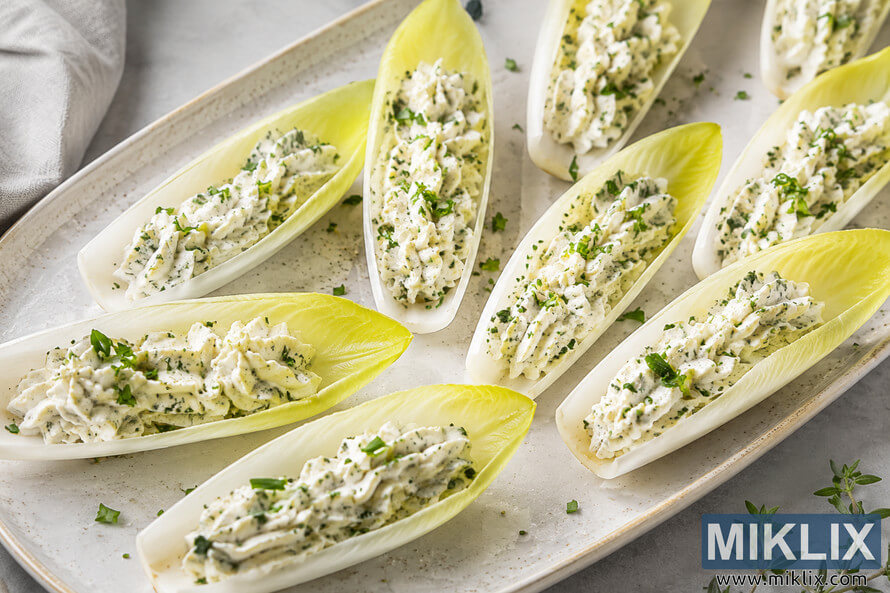
- Raw leaves stuffed with cheese spreads
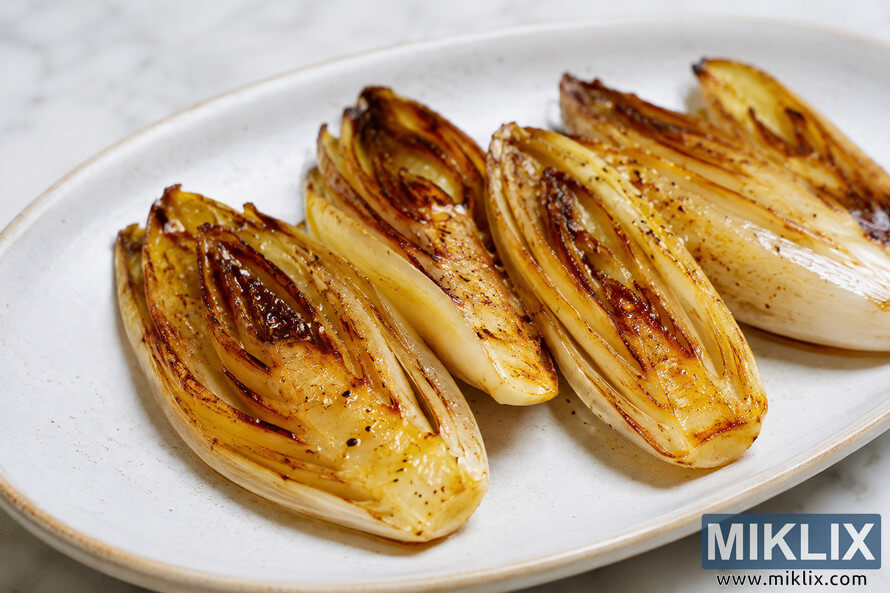
- Braised with butter and herbs
- Grilled with olive oil
- Caramelized with balsamic vinegar
Curly Endive Applications
The delicate texture adds volume and interest to composed salads and raw preparations.
- Mixed into green salads
- Topped with warm bacon dressing
- Paired with citrus segments
- Garnish for soups and dishes
Escarole Preparations
Hearty leaves withstand cooking while maintaining pleasant texture in finished dishes.
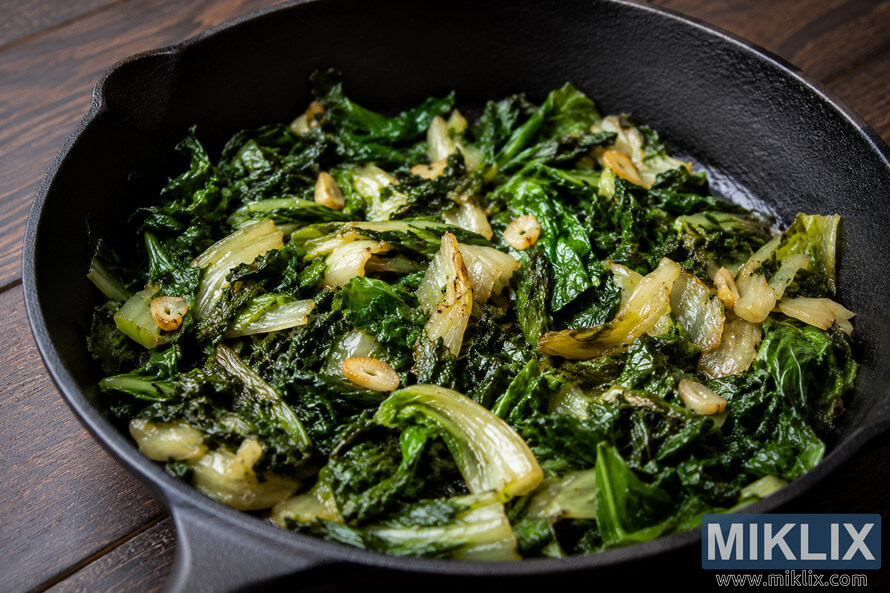
- Sautéed with garlic and olive oil
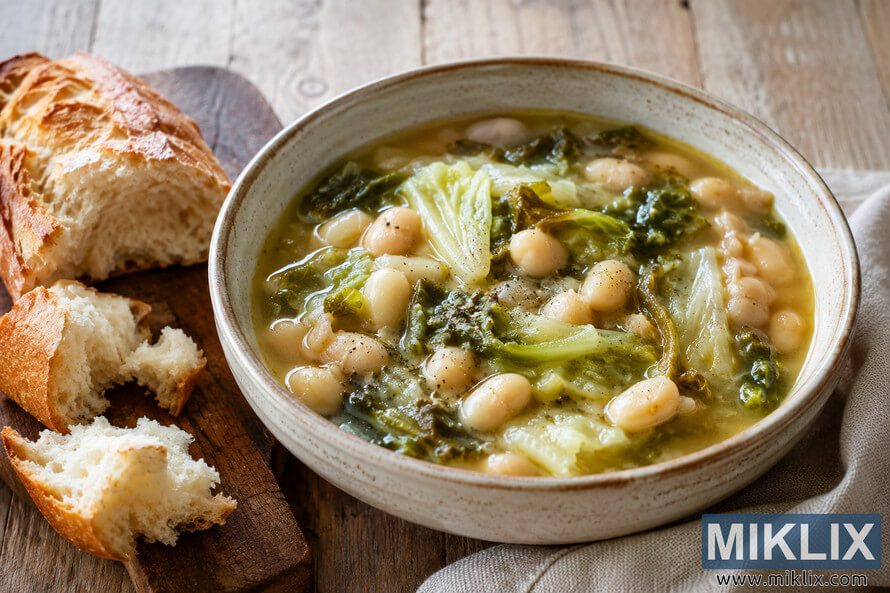
- Added to bean soups
- Wilted into pasta dishes
- Braised as a side vegetable
Radicchio and Related Chicories
Radicchio technically belongs to the same chicory family as endive, though most people consider it a separate vegetable. The distinctive purple-red coloring comes from anthocyanin pigments that provide additional antioxidant benefits beyond those found in green endive varieties.
The flavor of radicchio leans decidedly bitter, making it an acquired taste for some eaters. However, grilling or roasting mellows the bitterness while bringing out subtle sweetness. The striking color makes radicchio valuable for adding visual drama to salads and composed plates.
All these chicories share the characteristic bitter flavor that stimulates digestion and provides beneficial plant compounds. Your choice between varieties depends on your intended preparation method and personal taste preferences. Many people enjoy rotating through different types to experience the full range of flavors and textures this vegetable family offers.
How to Prepare and Cook Endive for Maximum Benefits
Proper preparation preserves the nutrients in endive while making it more enjoyable to eat. The vegetable requires minimal processing, but a few key techniques ensure you get the best flavor and texture from each variety.
Cleaning and Storage
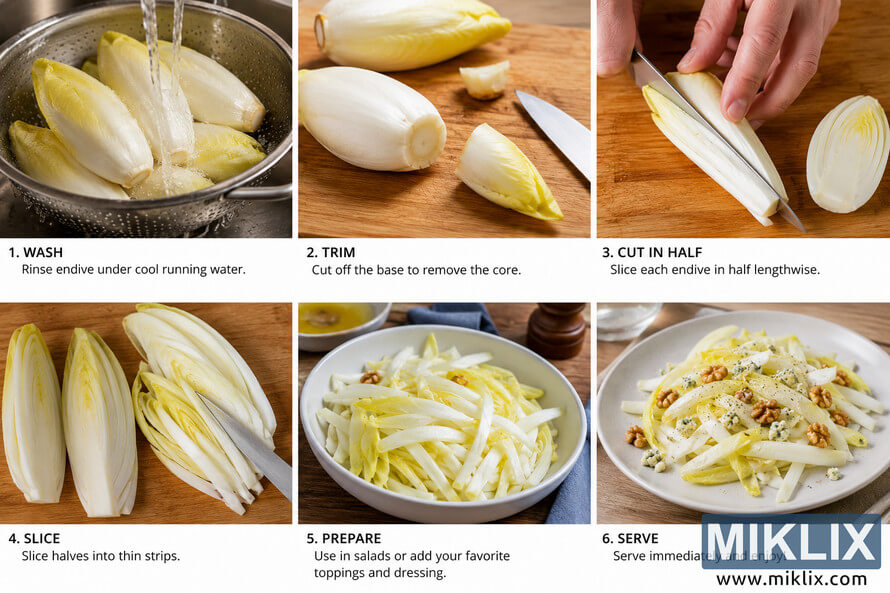
Always rinse endive thoroughly under cool running water before use. The tightly packed heads of belgian endive trap less dirt than curly varieties, but all types benefit from proper washing. Gently separate outer leaves to ensure water reaches all surfaces, then pat dry with clean towels or use a salad spinner.
Store unwashed endive in the refrigerator crisper drawer. Belgian endive keeps for two to three weeks when properly stored, while curly endive and escarole remain fresh for about one week. Wrapping the vegetables loosely in paper towels absorbs excess moisture and prevents premature wilting.
Nutrition Tip: Eat endive raw when possible to preserve water-soluble vitamins like vitamin C and some B vitamins. However, cooking increases the availability of certain beneficial compounds, so both raw and cooked preparations offer nutritional value.
Raw Preparation Techniques
For salads, separate belgian endive leaves from the core and use them whole or sliced crosswise into rings. The individual leaves also function as edible serving vessels for dips, spreads, and appetizer portions. This presentation showcases the vegetable's natural elegance while minimizing preparation time.
Curly endive works best when torn into bite-sized pieces rather than cut with a knife. Tearing preserves the delicate structure and prevents browning at cut edges. Remove the tougher outer leaves for cooking applications, saving the tender pale center for raw use in salads.
Kliknutím alebo ťuknutím na obrázok získate ďalšie informácie a vyššie rozlíšenie.
Cooking Methods That Preserve Nutrients
Quick cooking methods work best for maintaining nutritional value while developing appealing flavors. Braising belgian endive in a small amount of liquid caramelizes the natural sugars and mellows bitterness without destroying heat-sensitive vitamins.
Recommended Cooking Techniques
- Braising: Halve belgian endive lengthwise, cook cut-side down in butter until golden, add small amount of broth, cover and simmer 15 minutes
- Grilling: Brush endive halves with olive oil, grill over medium-high heat 3-4 minutes per side until charred and tender
- Sautéing: Chop escarole roughly, sauté in olive oil with garlic 5-7 minutes until wilted but still slightly crisp
- Roasting: Toss endive quarters with oil and seasonings, roast at 400°F for 20 minutes until edges brown and leaves soften
Avoid boiling endive, as this cooking method leaches water-soluble nutrients into the cooking water. If you do boil vegetables, save the cooking liquid for soup stock to capture those nutrients. Steaming provides a gentler alternative that preserves more nutritional value while softening tough outer leaves.
The bitter compounds in endive decrease with cooking, making cooked preparations more palatable for those sensitive to bitterness. However, completely eliminating bitterness also removes some beneficial phytonutrients. Finding your personal balance between palatability and optimal nutrition helps you enjoy endive regularly.
Kliknutím alebo ťuknutím na obrázok získate ďalšie informácie a vyššie rozlíšenie.
Practical Ways to Add Endive to Your Healthy Diet
Making endive a regular part of your eating routine doesn't require complicated recipes or special skills. Simple preparations often showcase the vegetable's natural qualities while fitting easily into busy schedules. These practical approaches help you reap the health benefits without added stress.
Starting Your Day with Endive
While endive might not seem like a breakfast food, adding it to morning meals boosts your nutrient intake right from the start. Toss chopped curly endive into scrambled eggs during the last minute of cooking. The slight bitterness balances rich egg yolks while adding a pop of green color and fresh flavor.
Belgian endive leaves work beautifully as low-carb breakfast vessels. Fill them with smoked salmon, cream cheese, and capers for an elegant morning bite. Or stuff them with scrambled eggs and avocado for a portable breakfast option that provides protein, healthy fats, and vegetables all in one.

Kliknutím alebo ťuknutím na obrázok získate ďalšie informácie a vyššie rozlíšenie.
Lunch and Dinner Applications
Salads represent the most obvious application for endive, but don't limit yourself to standard green salads. Create composed salads featuring belgian endive spears arranged spoke-like on plates, topped with proteins and interesting dressings. The presentation feels special while requiring minimal effort.
Quick Weeknight Side Dish
Sauté chopped escarole with sliced garlic in olive oil for 5 minutes. Season with salt, pepper, and red pepper flakes. Serve alongside grilled chicken or fish for a nutrient-dense meal ready in minutes.
Kliknutím alebo ťuknutím na obrázok získate ďalšie informácie a vyššie rozlíšenie.
Elegant Appetizer
Separate belgian endive leaves and fill each with herbed goat cheese, toasted walnuts, and dried cranberries. The natural boat shape holds toppings perfectly while providing crisp, slightly bitter contrast to rich cheese.
Kliknutím alebo ťuknutím na obrázok získate ďalšie informácie a vyššie rozlíšenie.
Hearty Winter Soup
Add chopped escarole to white bean soup during the last 10 minutes of cooking. The sturdy leaves wilt into the broth while maintaining pleasant texture, adding nutrition and a slightly bitter note that balances creamy beans.
Kliknutím alebo ťuknutím na obrázok získate ďalšie informácie a vyššie rozlíšenie.
Overcoming Bitterness Barriers
If the bitter flavor challenges you initially, several strategies can help your palate adjust. Pair endive with sweet elements like fruit, honey-based dressings, or caramelized ingredients. The sweet-bitter contrast creates complex flavor profiles that many people find more approachable than bitterness alone.
Fat also tempers bitterness effectively. Dress endive salads with creamy vinaigrettes, serve it with cheese, or cook it in butter or olive oil. The fat coats your taste buds and carries flavors in ways that reduce the perception of bitterness while enhancing overall enjoyment.
Important Note: People taking blood thinners should consult their healthcare provider before significantly increasing endive consumption. The high vitamin K content can affect medication effectiveness. Consistent intake is generally acceptable, but sudden large increases may require medication adjustment.
Start with small amounts and gradually increase your endive consumption over several weeks. Your taste buds adapt to bitter flavors with repeated exposure. What seems unpleasantly bitter initially often becomes enjoyable after your palate adjusts. Many people develop strong preferences for bitter vegetables once they pass this adaptation period.
Mix endive with milder greens in salads if the flavor seems too intense on its own. Combine curly endive with romaine lettuce, or pair escarole with spinach in cooked dishes. These combinations let you enjoy the nutritional benefits while building tolerance to the characteristic bitter taste that makes endive unique.
Delicious Endive Recipes for Every Meal
These tested recipes showcase endive's versatility while maximizing its nutritional benefits. Each preparation highlights different aspects of the vegetable, from crisp raw applications to tender cooked dishes that demonstrate how heat transforms both texture and flavor.
Classic Belgian Endive Salad with Walnuts and Blue Cheese
This simple salad balances bitter endive with rich cheese and crunchy nuts. The combination provides healthy fats, protein, and fiber in one satisfying dish.
Ingredients
- 4 heads belgian endive, leaves separated
- 1/2 cup toasted walnuts, roughly chopped
- 1/3 cup crumbled blue cheese
- 1 apple, thinly sliced
- 2 tablespoons olive oil
- 1 tablespoon lemon juice
- 1 teaspoon honey
- Salt and pepper to taste
Instructions
- Arrange endive leaves on a serving platter or individual plates
- Scatter apple slices, walnuts, and blue cheese over the leaves
- Whisk together olive oil, lemon juice, honey, salt, and pepper
- Drizzle dressing over the salad just before serving
- Serve immediately to maintain crisp texture

Kliknutím alebo ťuknutím na obrázok získate ďalšie informácie a vyššie rozlíšenie.
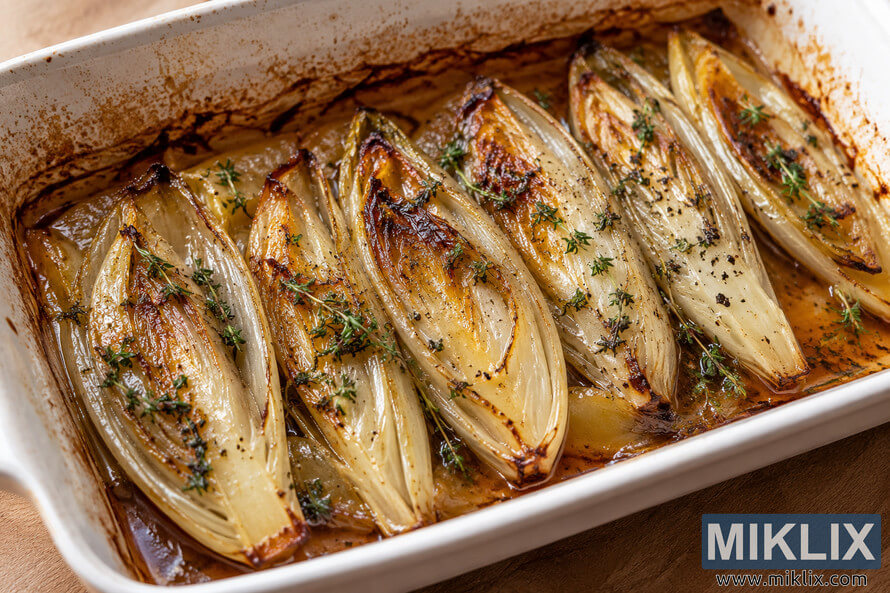
Braised Belgian Endive with Herbs
Gentle cooking transforms belgian endive into a tender side dish with complex, slightly sweet flavor. This method works particularly well for fall and winter meals.
Halve 6 belgian endive heads lengthwise. Heat 2 tablespoons butter in a large skillet over medium-high heat. Place endive cut-side down and cook until golden brown, about 5 minutes. Add 1/2 cup chicken or vegetable broth, 1 tablespoon lemon juice, and fresh thyme sprigs. Cover and simmer for 15 minutes until tender. Season with salt and pepper before serving.
Kliknutím alebo ťuknutím na obrázok získate ďalšie informácie a vyššie rozlíšenie.
Escarole and White Bean Soup
This hearty soup combines protein-rich beans with nutrient-dense escarole for a complete meal. The recipe scales easily for batch cooking and freezing.
- Heat olive oil in a large pot and sauté diced onion, carrot, and celery until soft
- Add minced garlic and cook 1 minute until fragrant
- Pour in 6 cups vegetable broth and bring to a simmer
- Add 2 cans drained white beans and simmer 10 minutes
- Stir in roughly chopped escarole and cook 5 minutes until wilted
- Season with salt, pepper, and red pepper flakes
- Serve with grated Parmesan cheese and crusty bread
Curly Endive with Warm Bacon Dressing
This classic preparation uses warm dressing to slightly wilt the greens while creating irresistible flavor contrast. The technique works for any bitter green but particularly suits curly endive's delicate texture.
Cook diced bacon until crisp, remove and set aside. In the bacon fat, whisk together red wine vinegar, Dijon mustard, and a touch of honey. Pour the warm dressing over torn curly endive in a large bowl. Toss quickly to slightly wilt the leaves. Top with crispy bacon, sliced hard-boiled eggs, and serve immediately while dressing remains warm.
These recipes demonstrate endive's range from elegant appetizers to hearty main courses. Each preparation method preserves different nutrients while creating distinct eating experiences. Rotating through various recipes keeps endive interesting in your diet while ensuring you benefit from all this vegetable has to offer.

Kliknutím alebo ťuknutím na obrázok získate ďalšie informácie a vyššie rozlíšenie.
Frequently Asked Questions About Endive
How much endive should I eat for health benefits?
Aim for 1-2 cups of endive several times per week as part of your overall vegetable intake. There's no specific minimum, but regular consumption provides consistent nutrient benefits. Most people can safely eat endive daily without concerns. Those on blood thinners should maintain consistent intake and consult their doctor about appropriate amounts given the high vitamin K content.
Can I eat endive if I'm pregnant?
Yes, endive is safe and beneficial during pregnancy. The high folate content particularly supports fetal development during early pregnancy. Wash endive thoroughly before eating to remove any potential contaminants. Pregnant women should include a variety of vegetables in their diet, and endive contributes valuable nutrients including folate, fiber, and vitamin K that support both maternal and fetal health.
Does cooking endive reduce its nutritional value?
Cooking does decrease some heat-sensitive nutrients like vitamin C, but it increases the availability of certain beneficial compounds. Both raw and cooked endive offer nutritional value. Quick cooking methods like sautéing and braising preserve most nutrients while making endive more digestible for some people. The fiber and mineral content remain stable through cooking, and some people actually absorb certain nutrients better from lightly cooked vegetables.
Why does endive taste so bitter?
Endive contains natural compounds called sesquiterpene lactones that create its characteristic bitter flavor. These same compounds provide beneficial effects including digestive stimulation and anti-inflammatory properties. The bitterness serves a purpose beyond taste—it signals the presence of phytonutrients that contribute to endive's health benefits. You can reduce perceived bitterness by pairing endive with sweet or fatty ingredients, or by cooking it to mellow the flavor.
Is endive the same as lettuce?
No, endive and lettuce belong to different plant families. Endive comes from the chicory family (Cichorium intybus), while lettuce belongs to the Lactuca genus. Though both are leafy greens used in salads, they have distinct nutritional profiles, growing requirements, and flavor characteristics. Endive typically contains more vitamins K and A than most lettuce varieties and offers a more complex, slightly bitter flavor compared to lettuce's mild taste.
Can endive help with weight loss?
Endive supports weight management through several mechanisms. Its high water and fiber content provides volume with minimal calories, helping you feel full while consuming fewer calories overall. The fiber slows digestion and helps regulate appetite hormones. However, endive alone won't cause weight loss—it works best as part of an overall healthy eating pattern combined with appropriate calorie intake and physical activity. Its nutritional density makes it a smart choice for anyone managing their weight.
How do I select fresh endive at the store?
Look for endive heads with crisp, tightly packed leaves free from brown spots or wilting. Belgian endive should show pale yellow-white coloring without green tips, which indicate exposure to light and increased bitterness. Curly endive and escarole should have vibrant green outer leaves with no sliminess. Avoid heads with soft spots or excessive browning. Fresh endive feels heavy for its size and snaps crisply when bent. Check the base where the leaves attach—it should look fresh and moist, not dried or discolored.
Making Endive Part of Your Healthy Lifestyle
Endive brings remarkable nutritional value to your plate with minimal calories and maximum health benefits. From supporting digestive health to strengthening bones and protecting vision, this versatile vegetable deserves a regular spot in your meal rotation.
The different varieties of endive—belgian endive, curly endive, escarole, and related chicories like radicchio—offer options for every taste preference and cooking style. Whether you enjoy the mild crispness of belgian endive leaves stuffed with cheese or prefer the hearty comfort of escarole wilted into soup, there's an endive preparation that fits your lifestyle.
Starting with small portions allows your palate to adjust to endive's characteristic bitterness. As you experiment with different recipes and preparation methods, you'll discover which varieties and cooking techniques you prefer. The slight bitterness that might seem challenging initially often becomes a flavor you actively seek out and enjoy.
The health benefits of endive extend beyond any single nutrient. The combination of fiber, vitamins, minerals, and beneficial plant compounds work together to support your body's systems. Regular consumption as part of a varied, vegetable-rich diet contributes to long-term wellness in ways that supplements alone cannot replicate.
Remember that endive grows during fall and winter months, making it particularly valuable when other fresh produce options dwindle. Adding this seasonal vegetable to your diet provides nutritional variety throughout the year while supporting local farmers who cultivate these specialty greens.
Your journey with endive might start with a simple salad or stuffed appetizer. As you grow more comfortable with its flavors and preparation methods, you'll find countless ways to incorporate this nutritious vegetable into breakfast, lunch, dinner, and snacks. The recipes and techniques shared in this guide provide a foundation for exploring endive's culinary and health potential.
Give endive a chance to prove its worth in your kitchen. The impressive nutritional profile, versatility in cooking, and unique flavor make it a valuable addition to any health-conscious eating pattern. Your body will thank you for choosing this nutrient-dense vegetable that supports everything from your digestive system to your bones and immune function.

Kliknutím alebo ťuknutím na obrázok získate ďalšie informácie a vyššie rozlíšenie.
Ďalšie čítanie
Ak sa vám tento príspevok páčil, možno sa vám budú páčiť aj tieto návrhy:
- Dajte hrášku šancu: Drobná superpotravina, ktorá je plná zdravých účinkov
- Zhltnite dobré zdravie: Prečo je morčacie mäso super mäsom
- Hydratácia, liečenie, žiara: Odhalenie výhod doplnkov s kyselinou hyalurónovou