
Slika: Baby Bok Choy and Regular Bok Choy Size Comparison on a Marble Surface
Objavljeno:
Nazadnje posodobljeno: 12. julij 2026 ob 8:33:43 pop. UTC
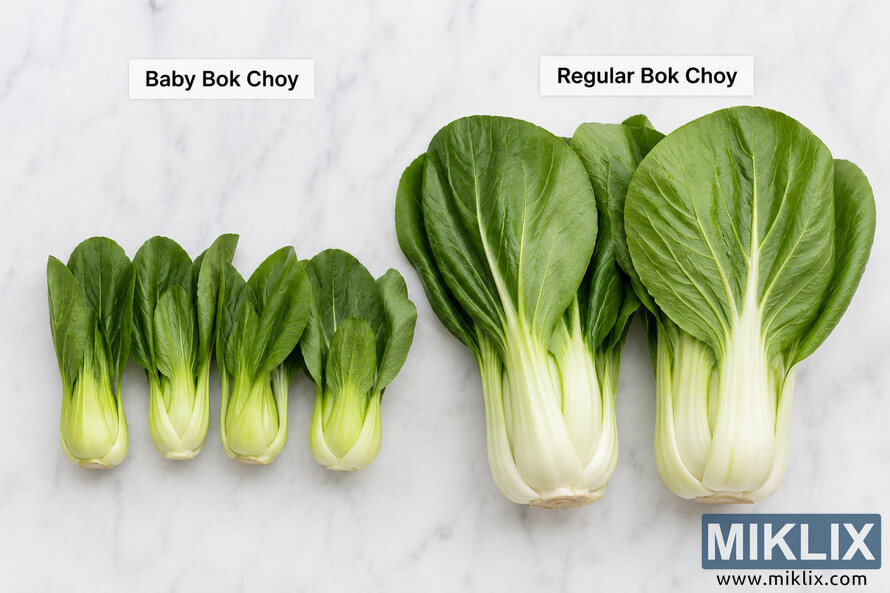
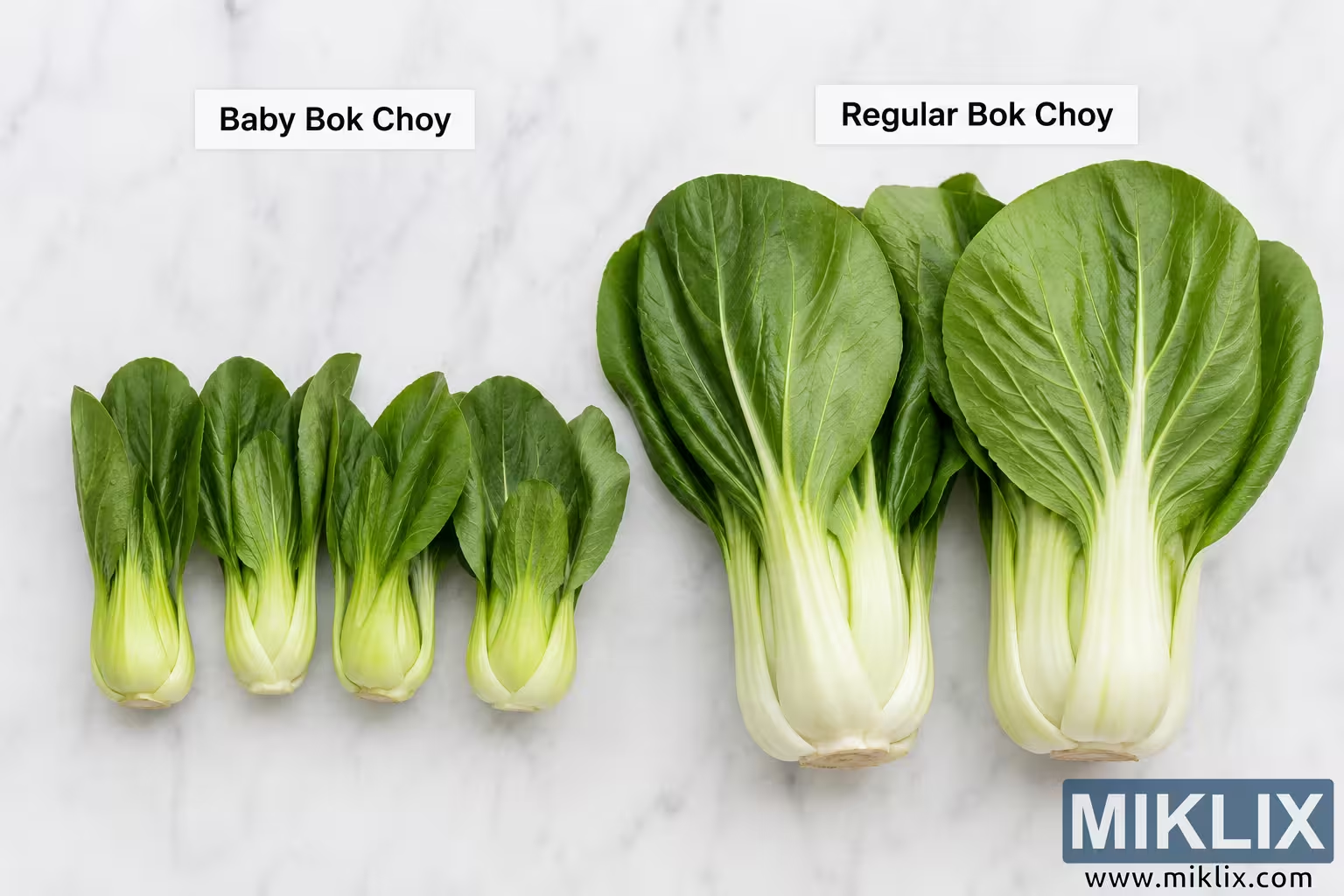
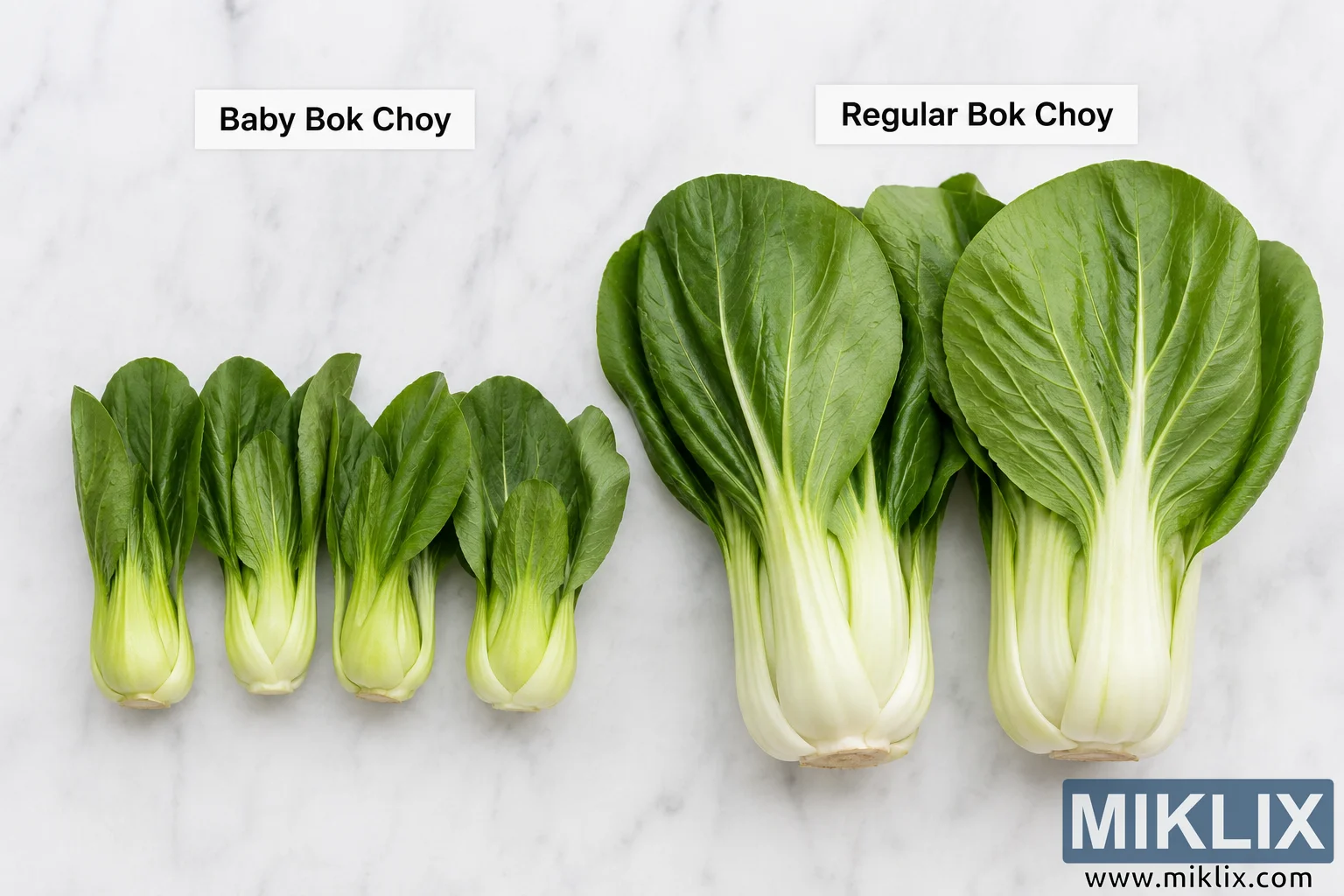
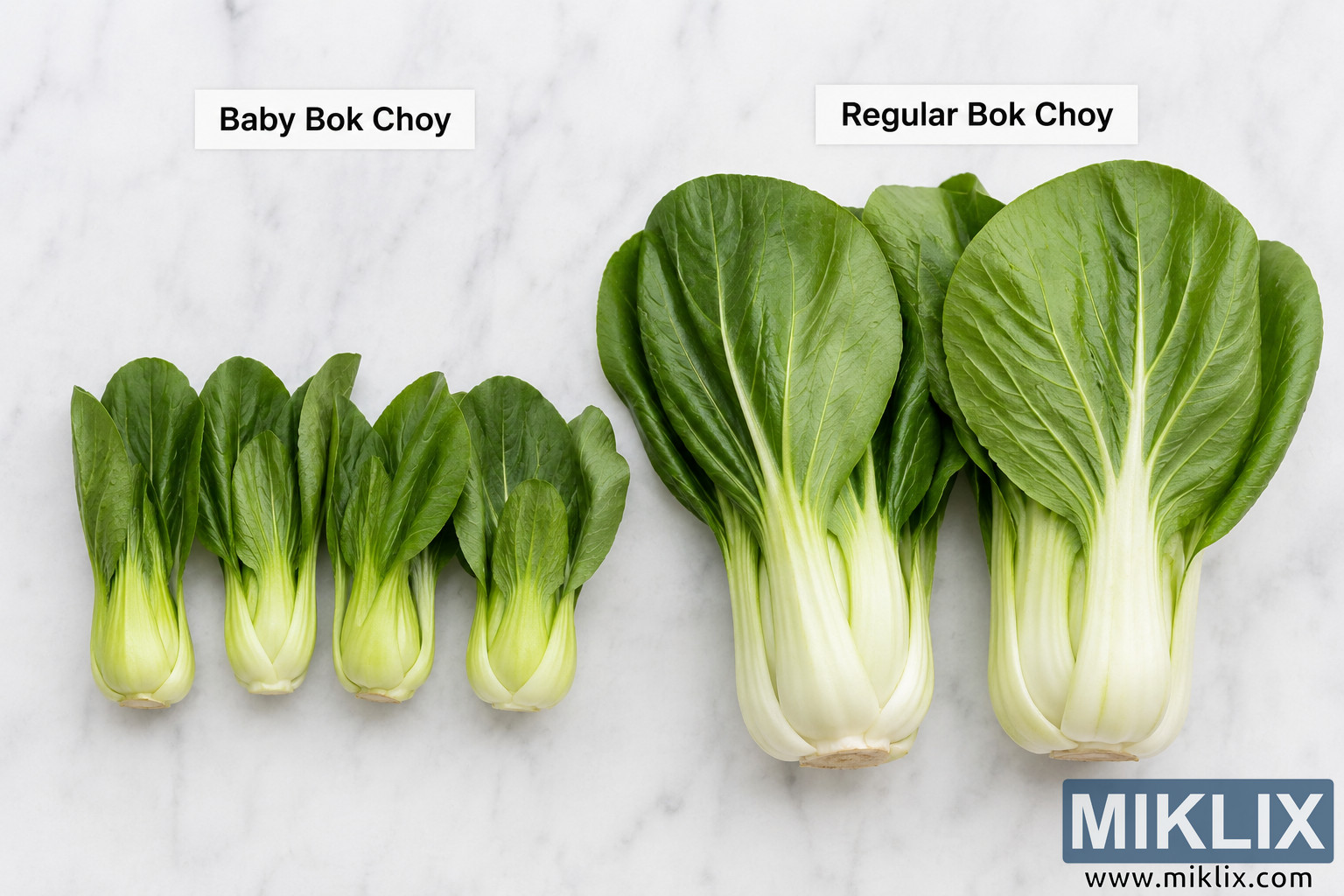
Compare baby bok choy and regular bok choy in this clean overhead landscape image highlighting the noticeable size differences, fresh green leaves, thick white stems, and labeled side-by-side arrangement on a marble background.
Baby Bok Choy and Regular Bok Choy Size Comparison on a Marble Surface
Razpoložljive različice te slike
Slikovne datoteke, ki so na voljo za prenos spodaj, so manj stisnjene in imajo višjo ločljivost - in s tem višjo kakovost - kot slike, vdelane v članke in strani na tem spletnem mestu, ki so bolj optimizirane glede velikosti datotek, da se zmanjša poraba pasovne širine.
Redna velikost (1,536 x 1,024)
Velika velikost (3,072 x 2,048)
Zelo velika velikost (4,608 x 3,072)
Zelo velika velikost (6,144 x 4,096)
Komično velika velikost (1,048,576 x 699,051)
- Še vedno nalagam... ;-)
Opis slike
This image presents a clean, high-resolution, landscape-oriented overhead comparison of two common varieties of bok choy arranged side by side on a light gray and white marble surface. The composition is intentionally simple and educational, allowing viewers to immediately recognize the significant size differences between baby bok choy and regular bok choy. The neutral marble background provides subtle texture without distracting from the vegetables, creating a bright and modern presentation suitable for cooking guides, educational materials, gardening references, or food-related articles.
On the left half of the image are four heads of baby bok choy positioned vertically with their trimmed root ends facing downward and their leafy tops pointing upward. A rectangular white label positioned above them reads "Baby Bok Choy" in large, bold, black sans-serif lettering. The baby bok choy heads are compact and relatively short, demonstrating their characteristic small size. Their thick stems transition from creamy white at the base to pale green before blending into rich green leaves. The leaves are smooth, fresh-looking, and gently curved with clearly visible central veins. Although each baby bok choy differs slightly in width, leaf arrangement, and curvature, they are similar enough to emphasize that they belong to the same variety while still appearing naturally harvested rather than artificially identical.
On the right half of the image are two significantly larger heads of regular bok choy. Above them is a matching white label displaying the text "Regular Bok Choy" in the same bold black sans-serif font, creating a balanced visual comparison between the two groups. These mature bok choy heads occupy considerably more space than the baby bok choy and immediately communicate their larger overall dimensions. Their broad white stalks are thick and substantial, supporting large, dark green leaves that spread outward with graceful curvature. The leaves display gentle texture, visible veins, and natural highlights that suggest freshness. The larger plants extend higher and wider within the frame, reinforcing the intended visual lesson regarding the size difference between the varieties.
The arrangement creates a direct side-by-side comparison. Four baby bok choy heads approximately equal the horizontal width occupied by the two regular bok choy heads, making the contrast immediately understandable even without reading the labels. The vegetables are evenly spaced, aligned carefully, and photographed from directly above, eliminating perspective distortion and allowing their relative dimensions to be compared accurately. Soft, diffuse lighting minimizes harsh shadows while preserving subtle depth around the stems and leaves. Gentle highlights along the smooth white stalks contrast naturally with the darker green foliage, enhancing texture without appearing overly dramatic.
The marble background features delicate gray veining that remains understated throughout the composition. Its cool neutral tones complement the vibrant greens and creamy whites of the vegetables while maintaining a clean culinary aesthetic. The lighting appears evenly distributed across the entire frame, producing consistent color reproduction and making each vegetable appear crisp and fresh. The labels remain highly legible due to the strong contrast between the black typography and the white rectangular backgrounds.
The overall composition communicates an educational message focused on the physical differences between baby bok choy and regular bok choy rather than preparation or cooking techniques. The image does not include any kitchen utensils, bowls, cutting boards, decorative herbs, additional produce, hands, packaging, logos, watermarks, brand identifiers, or commercial elements. Instead, it concentrates solely on presenting the vegetables in a straightforward comparison. The uncluttered layout makes it suitable for instructional articles discussing vegetable varieties, grocery shopping guides, recipe introductions, nutrition resources, gardening references, or classroom materials.
Color balance throughout the photograph remains natural, with bright white stems transitioning smoothly into vibrant green foliage. Fine details such as leaf veins, subtle variations in leaf edges, and the trimmed root ends remain visible, contributing to a realistic appearance. The image emphasizes freshness, clarity, and organization while maintaining a professional food-photography style. Overall, the composition serves as an effective visual reference illustrating how baby bok choy differs from regular bok choy primarily in scale while preserving the recognizable characteristics shared by both varieties.
Slika je povezana z: Bok Choy Health Benefits: Transform Your Diet with This Nutritional Powerhouse