
Slika: Zero-Waste Honeydew Melon Feast on Rustic Wooden Table
Objavljeno:
Nazadnje posodobljeno: 20. avgust 2026 ob 2:17:17 pop. UTC
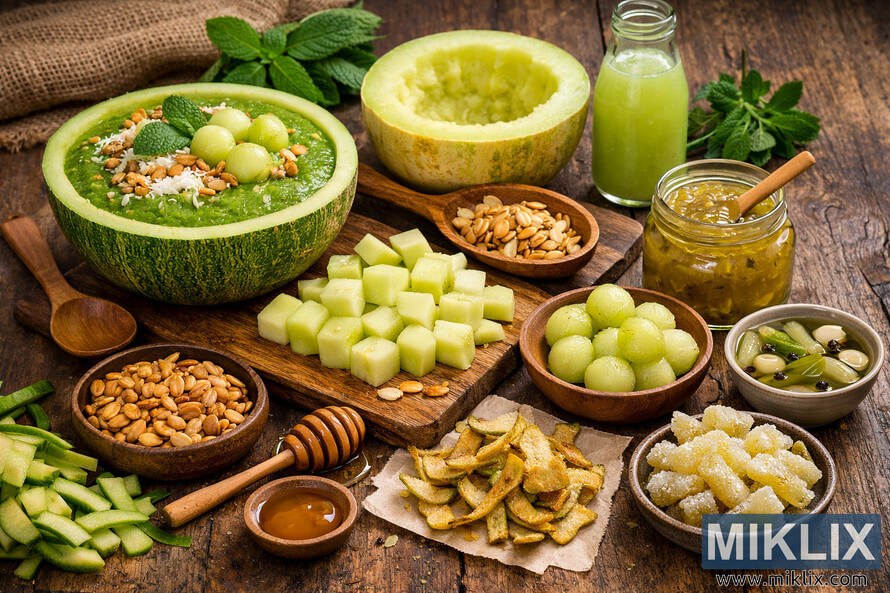
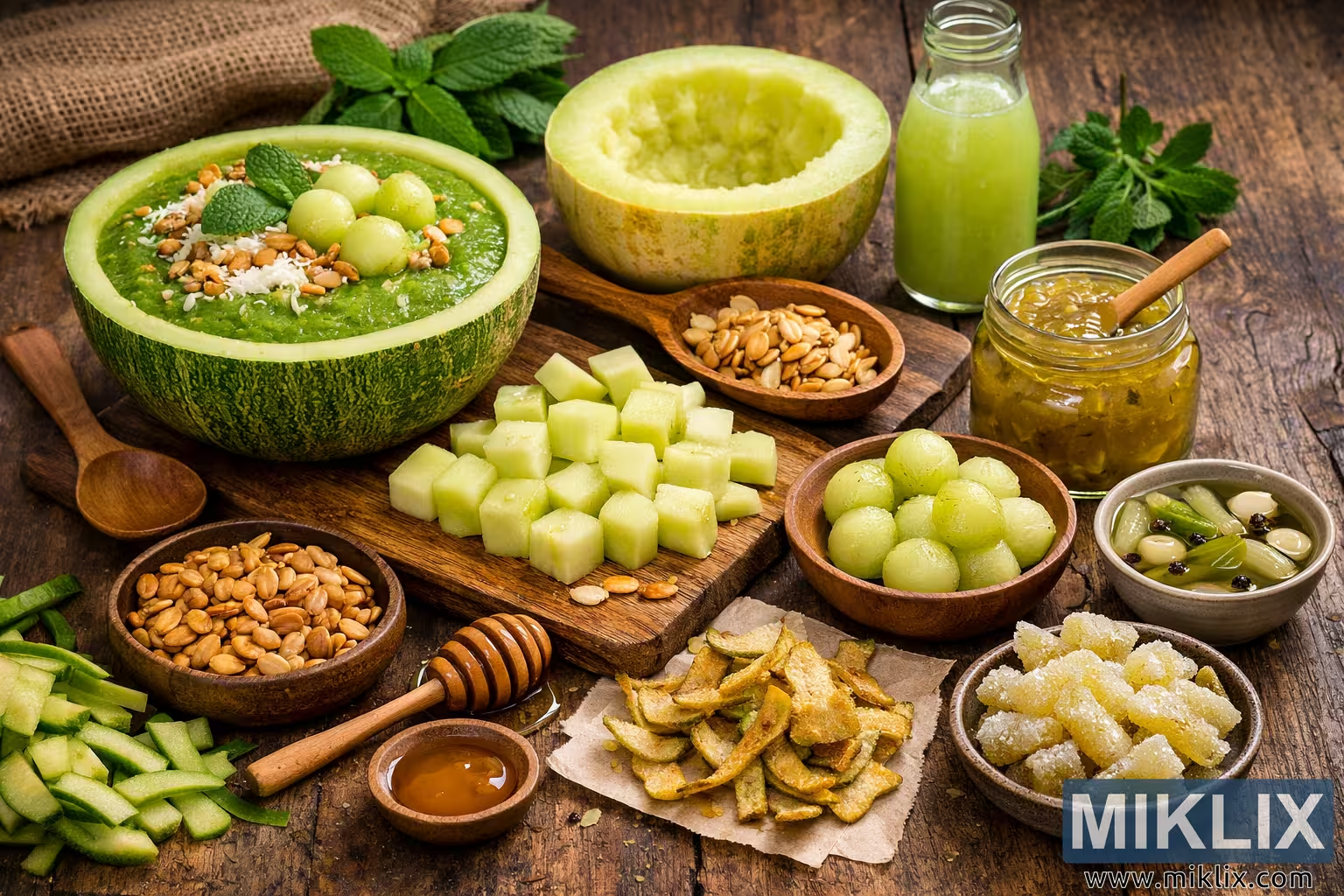
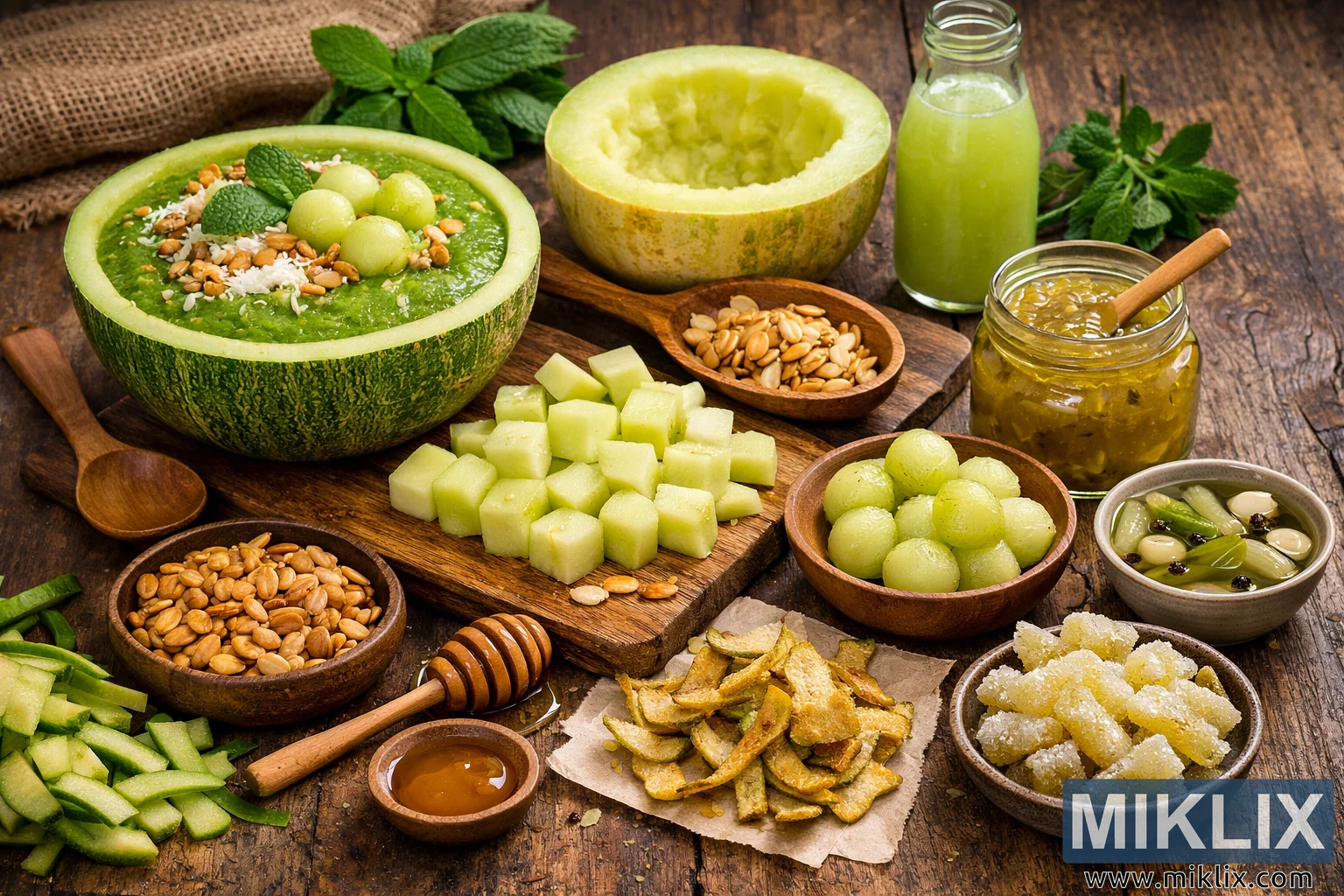
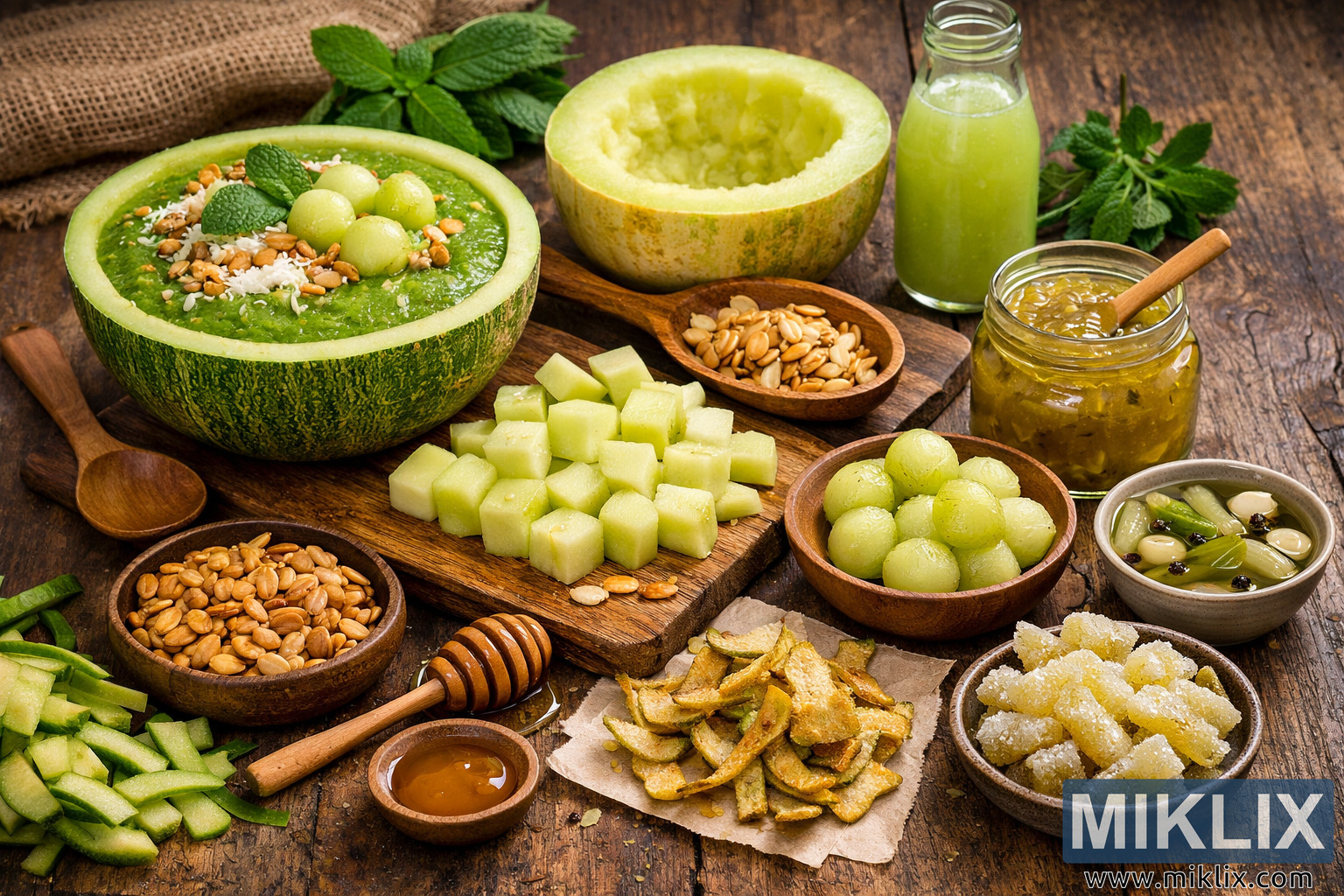
A detailed zero-waste honeydew melon scene on a rustic wooden table, featuring a smoothie in a melon rind bowl, roasted seeds, cubed melon, melon balls, jam, pickles, candied rind, and dehydrated chips. Every part of the fruit is repurposed into creative dishes and ingredients, with natural lighting, warm colors, and no visible brands, highlighting sustainable, mindful cooking.
Zero-Waste Honeydew Melon Feast on Rustic Wooden Table
Razpoložljive različice te slike
Slikovne datoteke, ki so na voljo za prenos spodaj, so manj stisnjene in imajo višjo ločljivost - in s tem višjo kakovost - kot slike, vdelane v članke in strani na tem spletnem mestu, ki so bolj optimizirane glede velikosti datotek, da se zmanjša poraba pasovne širine.
Redna velikost (1,536 x 1,024)
Velika velikost (3,072 x 2,048)
Zelo velika velikost (4,608 x 3,072)
Zelo velika velikost (6,144 x 4,096)
Komično velika velikost (1,048,576 x 699,051)
- Še vedno nalagam... ;-)
Opis slike
This image captures a richly detailed, zero-waste culinary scene centered around a single honeydew melon, thoughtfully transformed into a variety of dishes and ingredients that make use of every part of the fruit. The setting is a rustic wooden table with a warm, natural grain that runs horizontally across the frame, giving the entire composition a grounded, homely feel. The lighting is soft yet bright enough to highlight the textures and colors of each element, suggesting daylight streaming in from an unseen window.
On the left side of the image, the most striking feature is a large honeydew melon rind that has been repurposed as a bowl. The rind bowl is filled with a vibrant green smoothie made from the melon flesh, creating a creamy, luscious surface. The smoothie is artfully topped with granola clusters, small melon balls, shredded coconut, and fresh mint leaves. These toppings add layers of texture and color, from the earthy browns of the granola to the bright white coconut and the deep green mint. A long-handled wooden spoon rests beside the rind bowl, its smooth surface echoing the natural tones of the table and reinforcing the rustic, eco-friendly aesthetic.
Just below the rind bowl, a small wooden bowl holds roasted honeydew melon seeds. The seeds are golden brown, slightly glossy, and piled loosely, suggesting they have been lightly oiled and toasted to bring out their flavor. To the left of this bowl, a small pile of honeydew melon peels has been cut into thin green strips. These strips show the outer rind and a hint of the pale inner flesh, emphasizing that even the peels are being saved and repurposed rather than discarded.
In the center of the composition, a wooden cutting board serves as the main workspace and focal point. On the cutting board, neatly arranged cubes of honeydew melon are stacked in a small mound, their pale green color and slightly translucent texture catching the light. Nearby, a small wooden plate holds perfectly round melon balls, each one smooth and glistening, suggesting they were scooped out with a melon baller. At the top of the cutting board sits a hollowed-out half of the honeydew melon. The interior has been scraped clean, leaving a smooth cavity that hints at its previous use as a container or ingredient source. Next to this melon half, a wooden spoon cradles the seeds and pulp that were removed, showing that even the less glamorous parts of the fruit are being collected for further use.
Behind the cutting board, slightly to the right, stands a glass bottle filled with light green juice. The juice appears freshly pressed, with a soft, pastel hue that matches the melon flesh. The bottle’s simple design and lack of branding keep the focus on the homemade, sustainable nature of the scene. The placement of the bottle adds vertical interest and draws the eye upward, balancing the horizontal spread of ingredients across the table.
On the right side of the image, a small glass jar contains honeydew melon jam. The jam is a rich, glossy green, slightly darker than the fresh melon, indicating it has been cooked down with sweeteners to create a thick, spreadable preserve. A wooden spoon is dipped into the jar, its handle leaning outward, suggesting that the jam is ready to be tasted or used in another dish. In front of the jar, honeydew melon rind chips rest on a piece of parchment paper. These chips are dehydrated, crisp, and curled, with edges that catch the light and cast tiny shadows. Their appearance evokes the idea of a healthy, homemade snack made from parts of the fruit that might otherwise be thrown away.
Further to the right, a small bowl holds honeydew melon rind pickles. The rind pieces are submerged in a clear, slightly tinted liquid, along with visible garlic cloves and peppercorns. The pickles show a mix of pale green rind and darker specks from the spices, hinting at a tangy, savory flavor profile. In the foreground on the right, a small ceramic dish contains candied honeydew melon rind pieces. These candied pieces are coated in sugar, giving them a sparkling, crystalline surface that contrasts with the more rustic elements around them. Their bright, candy-like appearance adds a playful touch to the otherwise earthy scene.
Near the center of the table, a wooden honey dipper lies next to a small dish of honey. The honey is golden and slightly viscous, pooling gently in the dish. The honey dipper’s ridges are lightly coated, suggesting it has been used to drizzle honey over some of the melon-based creations. This detail introduces a natural sweetener into the composition, reinforcing the theme of wholesome, minimally processed ingredients.
In the background, a piece of burlap cloth is draped casually, adding texture and a sense of rustic charm. Scattered green mint leaves peek out from behind various elements, providing fresh pops of color and tying together the different dishes with a common herbal note. The overall color palette of the image is warm and inviting, dominated by the soft greens of the melon and its rind, the golden browns of the wood and roasted seeds, and the subtle whites of coconut and parchment.
The composition as a whole tells a story of mindful, sustainable cooking, where every part of the honeydew melon—from flesh to seeds to rind—is transformed into something delicious or useful. There are no visible brands or packaging, emphasizing a homemade, zero-waste approach. Each item on the table contributes to the narrative of resourcefulness and creativity, showcasing how a single fruit can inspire a full spread of dishes, snacks, and ingredients without generating unnecessary waste.
Slika je povezana z: Honeydew Melon: The Refreshing Fruit Packed with Nutrients