
Hops in Beer Brewing: Zlatan
Publikuar:
Përditësimi i fundit: 6 qershor 2026 në 2:27:41 e pasdites, UTC
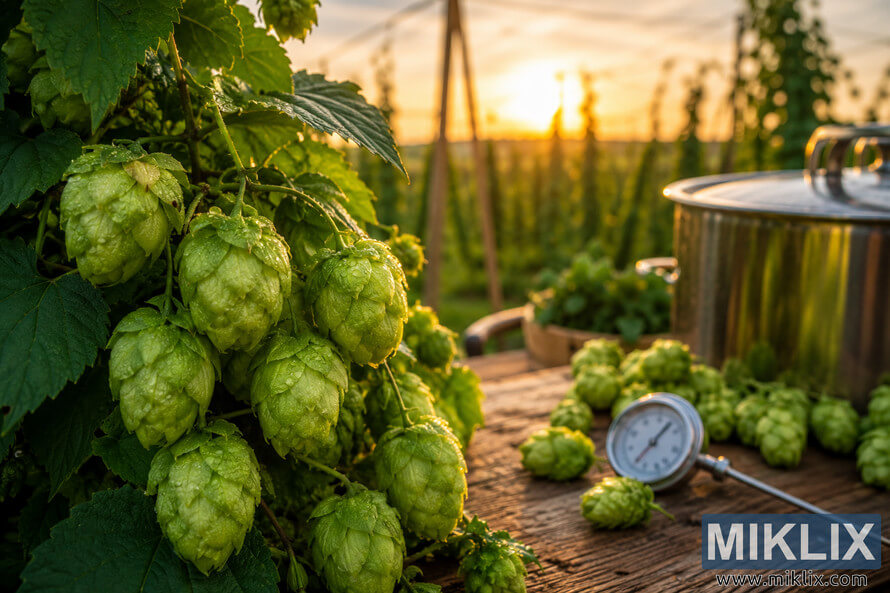
Zlatan hops, a Czech aroma variety, were introduced in 1976 by the Hop Research Institute in Žatec. They were bred as a clonal selection of Saaz, aiming to enhance yield and field performance while maintaining the noble character. The Zlatan hop profile is celebrated for its soft bitterness and refined herbal, floral, and spicy-earthy aroma. This makes it ideal for traditional lagers.
Hops in Beer Brewing: Zlatan
Klikoni ose prekni imazhin për më shumë informacion dhe rezolucione më të larta.
As a Czech hop, Zlatan is primarily used as a late-addition aroma hop. It boasts alpha acid values around 5.2%, with beta acids and co-humulone proportions that support mild bitterness and stable aroma delivery. In Bohemian Pilsner hops recipes, Zlatan is often used in large quantities to recreate the authentic Czech pilsner character.
Key Takeaways
- Zlatan hops were released in 1976 from Žatec as a Saaz clonal selection.
- The Zlatan hop profile emphasizes noble aroma notes: herbal, floral, and spicy-earthy.
- Alpha acids average around 5.2%, making Zlatan suitable as an aroma-focused hop.
- Commonly used in Bohemian Pilsner hops recipes and other traditional European lagers.
- Often paired with classic bittering hops to balance soft bitterness and aroma.
Origin and Breeding History of Zlatan
The Zlatan hop's origins are rooted in the Hop Research Institute in Žatec. This institution is renowned for enhancing noble hop varieties. Breeders aimed to preserve the delicate Saaz aroma while enhancing field performance and yields.
At the institute, focused hop breeding was the norm. Scientists employed clonal selection to identify lines that mirrored Saaz's flavor profile. These lines were chosen for their ability to thrive in the Bohemian region's climate.
Development at the Hop Research Institute in Žatec
- The Hop Research Institute in Žatec played a pivotal role in Czech hop development. Through extensive trials and local adaptation, it refined agricultural practices. This ensured consistent cone production for commercial growers.
Clonal selection from Saaz and goals of breeding
- Breeders meticulously selected Saaz clone material, evaluating hundreds of selections. Their objective was straightforward: maintain the noble, herbal aroma of Saaz. They sought to increase yields and simplify cultivation, addressing Saaz's common challenges.
Release year, early maturity, and regional context (Czechia)
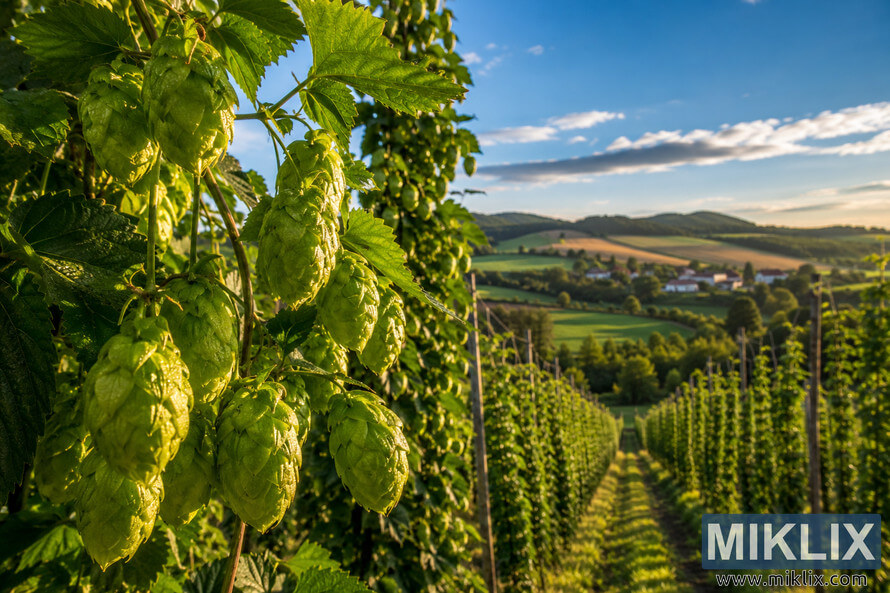
- Zlatan was introduced to the market in 1976, marking a significant achievement in Czech hop development. It exhibits early maturity, aligning with the Saaz region's climate and soil conditions. Growers in Czechia found it particularly appealing for its consistent harvest timing.
Klikoni ose prekni imazhin për më shumë informacion dhe rezolucione më të larta.
Zlatan hops
Zlatan is a top choice for brewers aiming for a classic Bohemian aroma. It combines noble heritage with practical field traits. This blend offers aroma and mild bitterness, making it ideal for beers that must be authentically Czech. At the same time, it ensures crop reliability.
Alias and relationship to Saaz
Zlatan is often referred to as Saaz Zlatan in catalogs and trial notes. It originated from Saaz, with a focus on increasing yield and consistency. Yet, it retains the noble aroma that Saaz is known for. Growers appreciate its dependable maturation and the preservation of the herbal, floral, and spicy-earthy profile.
Key identity points for brewers
- Noble aroma: clear herbal and floral notes with a subtle spicy-earthy backbone.
- Soft bitterness: low to gentle bite that supports malt without dominating.
- Usage emphasis: often used heavily as an aroma hop to provide traditional Czech character in recipes.
- Agronomy: early maturity and reliable yields make it attractive to commercial growers.
- Storage: fair to good stability that helps retain aromatic oils during handling.
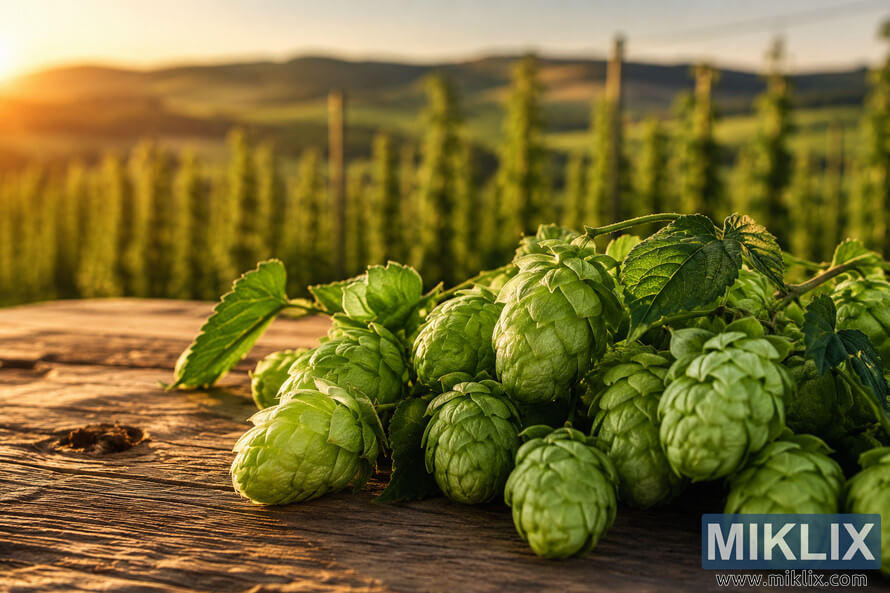
For recipes needing a distinct Czech noble hop presence, Zlatan is a preferred choice. It offers a balance of aroma, mild bitterness, and practical growing traits. This results in a beer that embodies traditional Czech character while benefiting from enhanced field performance.
Klikoni ose prekni imazhin për më shumë informacion dhe rezolucione më të larta.
Flavor and Aroma Profile of Zlatan
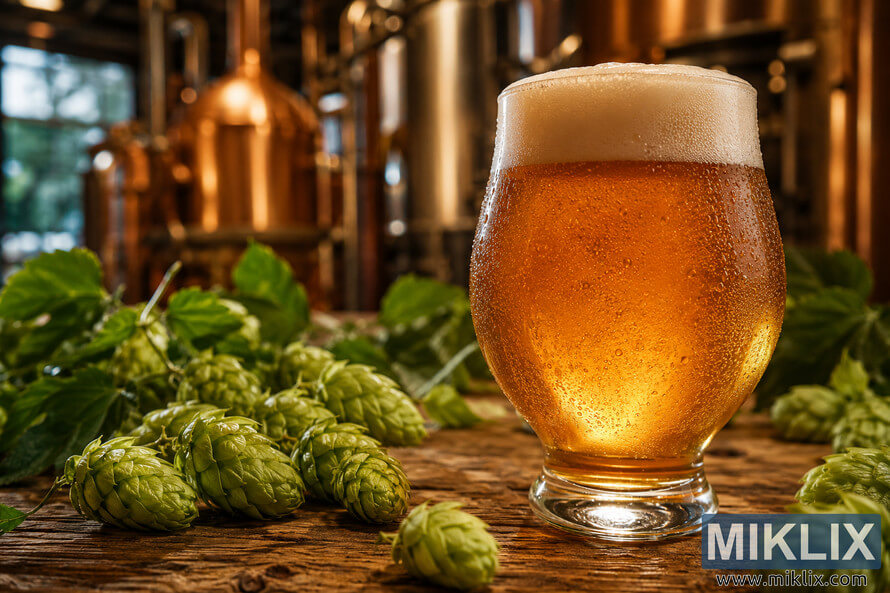
Zlatan offers a refined noble hops aroma, perfect for classic Bohemian lagers. Its late additions and dry-hop work highlight floral and herbal notes. These elements balance the nose without overwhelming malt or yeast.
Primary sensory impressions include herbal floral spicy hops with a delicate spring-floral topnote. Tasting reveals an herbal tea quality and light floral perfume. A subtle spicy-earthy snap adds a traditional Central European dimension.
- Herbal: rounded green and tea-like facets driven by myrcene.
- Floral: soft, noble-laced florals from humulene and farnesene.
- Spicy-earthy: faint peppery and woody accents from caryophyllene.
The palate showcases soft bitterness Zlatan is known for. This mild bite complements the malt backbone, leaving a clean finish. Bitterness supports balance, making Zlatan a top choice for pilsners and lighter lagers.
Aromatic oils shape the overall profile. Myrcene provides the green-herbal lift, while humulene supplies noble floral and spicy tones. Caryophyllene adds depth and peppery warmth, and farnesene contributes delicate woody and fruity highlights. These oil ratios explain why Zlatan aroma is refined and subtly complex, especially when used late in the boil or during conditioning.
Klikoni ose prekni imazhin për më shumë informacion dhe rezolucione më të larta.
Chemical Composition and Brewing Chemistry
Zlatan's modest alpha acid profile makes it perfect for enhancing flavor and aroma in lagers and pilsners. Lab reports indicate alpha acids around 5.2%, with a range of 3.5–5.5% across samples. This range is crucial for bittering calculations and recipe planning.
The chemical makeup of Zlatan influences its performance in brewing. Beta acids are near alpha levels, typically 4–4.5% in reports. Co-humulone values, around 20–25%, contribute to a milder bitterness compared to hops with higher co-humulone fractions.
These figures guide practical brewing chemistry.
- Estimate IBUs Zlatan will contribute using an alpha value between 3.5% and 5.5%.
- For late additions, whirlpool, and dry-hop, expect lower utilization. Increase mass slightly for desired aromatic impact.
- Co-humulone Zlatan near 21% indicates a rounded bitterness rather than sharp.
Total oil estimates for Zlatan are around 0.5–1.0 ml per 100 g. The mix of myrcene, humulene, caryophyllene, and farnesene defines its hop oils fingerprint. These oils provide strong aroma at low dosages, making them ideal for late additions, whirlpool, or dry-hop timing.
When calculating IBUs Zlatan, adjust utilization factors based on addition timing and boil vigor. Use conservative utilization for late additions and whirlpool contacts under 20 minutes. Batch-to-batch variability in Zlatan alpha acids necessitates close monitoring of lab data and scaling additions accordingly.
Small recipe tips: pair Zlatan with a neutral high-alpha bittering hop for a stable IBU target. Reserve Zlatan for aroma work. This strategy leverages hop chemistry Zlatan for noble character without risking under- or over-bittering the final beer.
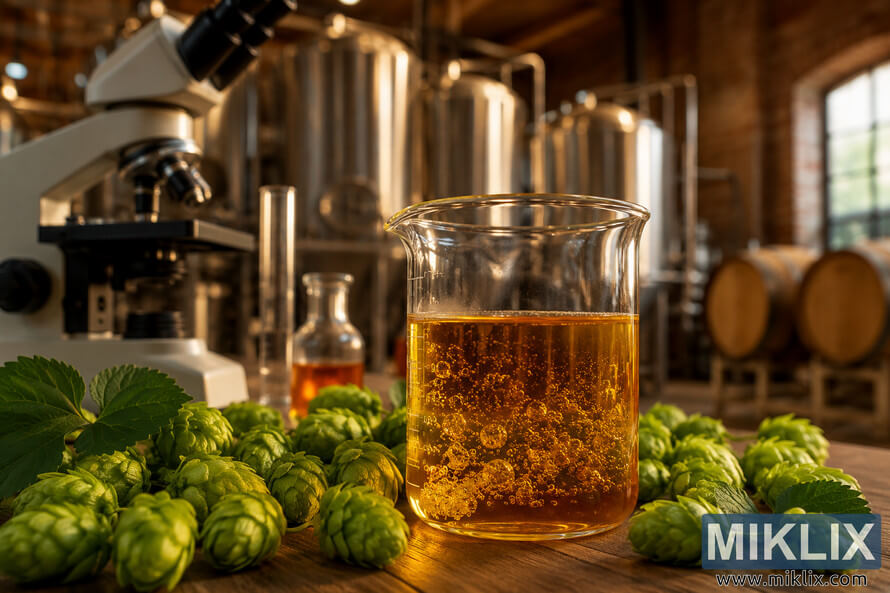
Klikoni ose prekni imazhin për më shumë informacion dhe rezolucione më të larta.
Primary Brewing Uses and Timing
Zlatan is best for adding noble aroma, not for bittering. It's chosen for late hop additions to preserve its delicate floral, herbal, and spicy notes. The right timing ensures the soft bitterness remains while enhancing volatile oils during whirlpool hops and short post-boil rests.
Professional and home brewers follow established patterns for Zlatan dosage. In single-hop ales, Zlatan often dominates the aroma. For multi-hop recipes, it makes up 30–60% of the aroma blend. Some recipes aim for a 51% Zlatan presence for a strong Czech character.
Dosage varies from small late additions to larger whirlpool charges for a stronger aroma. Use grams per liter or ounces per gallon to achieve the desired intensity. For dry hopping, small, clean additions are best to showcase the hop's herbal and spicy aspects.
To balance bittering hops, employ a two-part strategy. Start with a high-alpha bittering hop in the early boil to set IBUs. Magnum or Nugget are good choices for neutral, efficient bittering. Then, add Zlatan in late additions to enhance aroma without increasing bitterness.
- Early boil: use a high-alpha bittering hop to reach calculated IBUs.
- Late kettle: small Zlatan additions at 10–5 minutes for lift and softness.
- Whirlpool: a short rest with whirlpool hops Zlatan to extract oils with little isomerization.
- Dry hop: light Zlatan dosage to reinforce aroma without vegetal notes.
When balancing bittering hops, monitor alpha variability and adjust the early charge to avoid overshooting IBUs. Keep Zlatan dosage conservative in bitter styles. For pilsners and lagers, this balance creates a crisp bitterness complemented by a gentle, authentic Czech aroma.
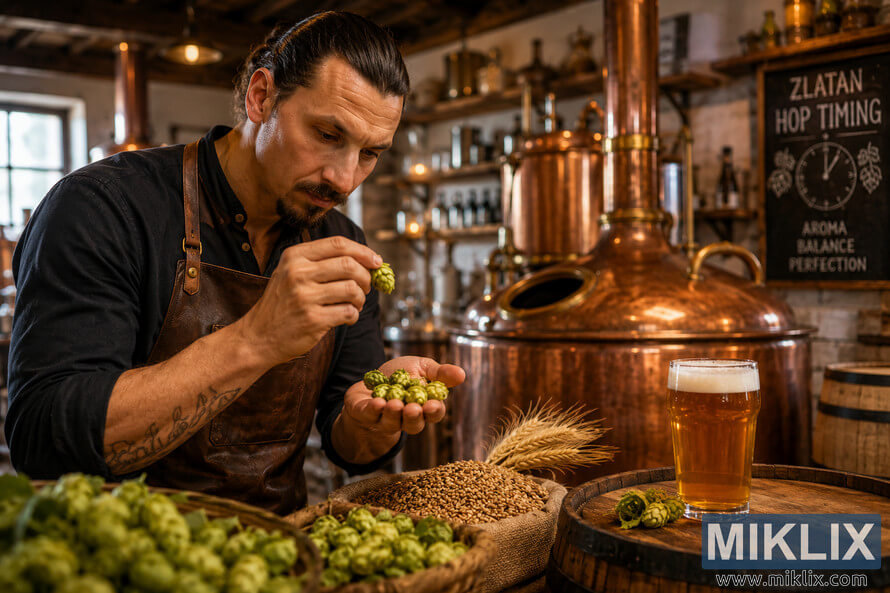
Klikoni ose prekni imazhin për më shumë informacion dhe rezolucione më të larta.
Beer Styles Suited to Zlatan
Zlatan's mild spice, soft bitterness, and floral-herbal aroma make it ideal for traditional lagers and lighter ales. It's the go-to choice for Czech Pilsner Zlatan, offering a clean, classic noble profile. This profile supports malt without overpowering it.
Bohemian and Czech Pilsners are the biggest winners with Zlatan. Use it as the primary aroma hop in a classic Bohemian Pilsner. This highlights herbal top-notes and a gentle spicy backbone. Small late additions preserve the delicate oils that define many noble hop beers.
Belgian pale ales and other lighter ales also benefit from Zlatan's subtle complexity. A modest dry-hop or late whirlpool touch adds floral and earthy accents. These pair well with Belgian yeast esters, keeping the beer lively without masking yeast-driven flavors.
- Single-hop recipes: Showcase Zlatan beer styles by using it alone for aroma and late additions. Expect herbal, floral, and spicy-earthy clarity.
- Multi-hop blends: Use Zlatan as the noble foundation while layering one or two complementary hops for citrus or resin notes.
- Dry-hopping: Apply small doses in finished lighter ales to boost aroma. Avoid heavy doses that overwhelm the noble subtlety.
When crafting lager recipes, balance Zlatan with a firmer bittering hop. This keeps the pilsner body crisp. For ales, pair it with yeast strains that enhance fruity esters. This creates a pleasing contrast with the hop's noble traits.
Substitutes and Hop Pairings
Zlatan is best appreciated as a classic noble hop. For those seeking alternatives, several options maintain the Czech pilsner's essence. These alternatives offer slight variations in aroma or alpha acids.
Acceptable substitutes include Saaz and Lubelski for a traditional aroma. Tettnanger adds a softer herbal note, while Sterling introduces a touch of citrus. These alternatives ensure a delicate floral-spicy backbone without overpowering the malt.
- Saaz alternatives: use Saaz or Lubelski for minimal change in noble aroma.
- Hybrid options: Sterling brings subtle citrus; Tettnanger adds gentle spice.
To enhance complexity, blend Zlatan with other noble varieties or a restrained modern aromatic. Pair Zlatan with Hallertau Blanc or Mandarina Bavaria for stone fruit or tangerine notes. Use Magnum or another neutral hop for early additions to preserve noble oils.
When planning hop pairings with Zlatan, consider layered additions. Late whirlpool and dry-hop additions should favor low-oil, high-aroma hops. This protects the hop's soft herbal profile. Modern aromatics should not exceed 10–15% of total hop weight to preserve the noble signature.
Yeast choices significantly impact how Zlatan presents. Lager strains and Czech pilsner yeasts emphasize crispness and floral notes. Belgian ale yeasts add esters, creating a hybrid profile for those seeking fruit complexity.
Yeast pairings for Zlatan
Czech pilsner strains for clarity; clean lager strains for balance; Belgian strains for hybrid styles.
Malt pairings for Zlatan
Pilsner malt base, light Vienna for depth, restrained specialty malts for color and toast.
Malt choices should complement Zlatan's aroma, not compete. A simple Pilsner malt base highlights delicacy. Light Vienna or Munich adds depth without overpowering. Use crystal or specialty malts sparingly to keep the hop in focus.
Finally, treat Zlatan as a finishing element. Keep bittering neutral, pair with compatible noble hops, and choose a yeast that suits the style. Use a light, supporting malt bill. These steps ensure balanced beers that showcase Zlatan's subtle, classic charm.
Growing, Yield and Agricultural Traits
Zlatan hops present a mixed picture in cultivation. Yields vary from modest to generous, influenced by plant habit and cone structure. Growers assess Zlatan yield alongside growth rate, cone density, and harvest method. This evaluation is crucial for selecting varieties in both craft and commercial hop gardens.
Yield records show a wide range. One report mentions about 220 kg per hectare, or 200 lbs per acre. Yet, other accounts suggest yields between 900 and 1,300 lbs per acre. These discrepancies highlight the impact of site fertility, trellis management, and regional conditions on hop cultivation Zlatan.
Plant habit significantly affects hop growth Zlatan. Vines grow more slowly and may not reach the trellis height of vigorous varieties. Cones are small to medium and compact. Leaf color is darker, and side-arm length is typically six to ten inches. These characteristics influence field layout and pruning strategies.
Mechanization is well-suited for Zlatan in many settings. Its compact cone density and retention make it practical for operations concerned with labor costs and efficiency. This variety is ideal for those prioritizing mechanical harvest Zlatan.
Seasonal timing is favorable for early schedules. Early maturity reduces exposure to late-season weather risks and tightens the harvest window. Growers should align irrigation, nutrient programs, and harvest crews with Zlatan's prompt ripening and modest canopy height.
- Yield examples: ~200 lbs/acre reported in one study, 900–1,300 lbs/acre in other records.
- Growth notes: slow to moderate vine growth; cones small to medium; compact density.
- Harvest: well suited to mechanical harvest Zlatan due to cone compactness and retention.
- Season: early maturing, dark foliage, 6–10" side arms, female plants favored for cone production.
Pest, Disease Susceptibility and Storability
Zlatan hops have a mixed profile for field health and post-harvest handling. Growers must consider yield gains against ongoing risks from common hop pathogens. Proper storage is crucial to keep oils intact for brewing.
Downy mildew Zlatan is a recurring problem in several reports. Plantings are moderately susceptible in some trials and susceptible in others. Scout rows early in the season to catch infections before they spread.
Powdery mildew Zlatan is often seen alongside downy mildew in trials. Infected plants show reduced vigor and shorter bines that fail to reach full trellis height. Use resistant rootstocks and sanitation to lower local pressure.
Storage is key for hop quality. hop storability Zlatan rates fair to good under recommended conditions. Vacuum-sealed packaging and cold storage slow oil loss and oxidation.
- Recommended: vacuum-seal hops and store refrigerated or frozen to preserve volatile oils.
- Typical total oil for Zlatan (0.5–1.0 ml/100 g) means aroma fades if left warm or exposed to oxygen.
- Monitor moisture and avoid temperature swings to reduce mold risk in stored cones or pellets.
Breeders aim to balance higher yield and more reliable cultivation against disease resistance. This trade-off explains why Zlatan disease susceptibility remains notable, despite better agronomic traits compared with Saaz.
On-farm tactics help manage risk. Rotate fields, remove volunteer hops, apply targeted fungicide programs when thresholds are met, and favor timely harvests. This limits disease impact and protects hop storability Zlatan for brewing use.
Practical Homebrewing Tips with Zlatan
Zlatan is a standout aroma hop for lighter lagers and pilsners. To enhance its herbal and spicy-earthy notes, use Pilsner malt, soft water, and Czech lager yeast. Late additions are key to preserve the delicate oils.
For a classic small-batch boil, aim for 5 gallons. The grain bill should be 90–95% Pilsner malt, with 5–10% Munich or Vienna for body. Use a high-alpha bittering hop at 60 minutes to hit your IBU target. Then, rely on Zlatan for flavor and aroma.
- Example split schedule: bittering hop at 60 min, Zlatan at 10–5 min, whirlpool at 160–170°F for 15–30 min, light Zlatan dry-hop during conditioning.
- Use Zlatan as roughly half of the hop mass devoted to aroma in many recipes; for small pilots, make it the dominant aroma hop to test character.
Late addition strategy favors low-temperature whirlpooling and short contact times. Add Zlatan at 10 minutes left for aroma lift, then whirlpool at 160–170°F to capture volatile oils without excess bitterness. Keep dry-hop doses modest to avoid vegetal or harsh notes.
Zlatan dry-hop is effective when used lightly. Try 0.25–0.5 oz per gallon for a 5-gallon batch and limit contact to 3–5 days. Cold-crash before packaging to drop hop particles and preserve clarity in a Bohemian-style pilsner.
IBU math must reflect alpha variability. Use the reported alpha range of 3.5–5.5% (common ~5.2%) when you run a Zlatan IBU calculation. For 60-minute additions use standard utilization rates. For 10-minute and whirlpool additions reduce utilization to account for lower isomerization.
- Calculate IBUs using the specific alpha for the lot of Zlatan you have.
- Reserve a high-alpha bittering hop early to reach bitterness targets.
- Adjust utilization downward by 30–50% for whirlpool and late additions compared to 60-minute additions.
Track hop weights and alpha percentages each brew. Logging these details improves accuracy for future homebrew Zlatan recipes and refines your Zlatan IBU calculation over time.
Where to Buy Zlatan Hops and Availability
Securing Zlatan hops for brewing requires some planning. Retailers, regional wholesalers, and online hop shops update their stock seasonally. Always check batch notes for alpha values and packaging details before placing an order.
Top stockists for national shipping in the United States and Europe include craft supply houses and specialized hop merchants. Major platforms like Yakima Chief Hops distributors, Hops Direct resellers, and well-known homebrew stores often list availability. For substantial orders, reach out to Zlatan hop suppliers or authorized distributors to verify harvest dates and storage conditions.
- Opt for fresh or frozen hops to maintain oils; vacuum-sealed, cold-shipped packages are ideal.
- Request lab certificates from suppliers for alpha acid and total oil information when available.
- Smaller craft shops typically sell Zlatan whole cone for single-batch use, whereas wholesalers offer Zlatan pellets in bulk.
The form of hops impacts your recipe and storage. Many brewers favor Zlatan whole cone for delicate late additions and dry-hopping. Zlatan pellets, on the other hand, have a longer shelf life and facilitate consistent IBU and aroma levels. While Zlatan extracts are less common, manufacturers can create CO2 or citrate extracts upon request for commercial brewers.
Availability follows the Czech harvest schedule for this early-maturing variety. Supply peaks post-harvest, then wanes until the next season. To secure Zlatan hops at their freshest, order shortly after harvest or opt for frozen inventory that was promptly bulk-packed.
- Verify current alpha ranges per batch (typically 3.5–5.5%).
- Opt for vacuum-sealed, cold-shipped packages when feasible.
- Ensure the vendor offers Zlatan pellets or whole cone and their storage practices.
When engaging with Zlatan hop suppliers, inquire about minimum order quantities, shipping speed, and return policies for damaged goods. For small quantities, explore local homebrew retailers that carry Zlatan pellets or whole cones. For commercial-scale needs, collaborate with distributors who can allocate post-harvest and provide COAs.
Comparative Analysis with Saaz and Other Noble Hops
Zlatan emerges as a viable substitute for brewers aiming for the classic Czech flavor profile, minus the agronomy challenges. This brief comparison underscores Zlatan's performance against Saaz and other noble hops. It also clarifies when its use is preferable.
- Zlatan was developed to mimic Saaz's aroma while enhancing yields and harvest consistency. Growers report its shorter bine height and better mechanical harvest suitability, though results vary by region.
- Yield data is scattered, with some trials reporting 900–1,300 lbs/acre, while others show significantly lower figures. Saaz, on the other hand, demands more manual intervention and poses challenges for large-scale cultivation.
Aroma and brewing performance
- Both hops exhibit noble, herbal, floral, and spicy-earthy notes. Their oil profiles, rich in myrcene, humulene, caryophyllene, and farnesene, contribute to that distinctive aroma.
- Zlatan offers a milder bitterness and a more consistent alpha acid level, around 5.2%. This consistency aids in achieving predictable IBUs and scaling recipes.
- Opt for Zlatan in late additions or dry hops for a delicate herbal-floral enhancement without the sharpness.
Recipe outcomes and substitution notes
- In single-hop tests, Saaz often appears more nuanced and terroir-specific. Zlatan, however, presents a cleaner, more consistent profile across different vintages.
- For brewers seeking a noble hop suitable for commercial production, Zlatan vs Saaz becomes a practical decision rather than a stylistic one.
- Comparing noble hops, Zlatan vs Lubelski reveals Zlatan's closer alignment with Saaz in herbal tones. Lubelski, meanwhile, introduces a unique floral-citrus balance.
When to choose Zlatan
- Opt for Zlatan when you desire Saaz-like noble character with more predictable alpha acids and farm-level reliability.
- Choose classic Saaz for its historical authenticity or when a specific Saaz terroir is crucial for a heritage lager.
- Consider Zlatan when supply chain factors are significant: it offers easier mechanical harvest, steadier yields, and consistent lab results, simplifying production.
Conclusion
Zlatan hop summary: bred at the Hop Research Institute in Žatec and released in 1976, Zlatan is a clonal selection of Saaz. It aims to preserve noble herbal, floral, and spicy-earthy aroma. At the same time, it improves yield and harvestability. Chemically, it falls in the moderate alpha acid range, commonly near 5.2%. Total oil and key aromatics—myrcene, humulene, caryophyllene, and farnesene—define its gentle noble character.
Zlatan brewing impact is most evident in Bohemian and Czech pilsners, lighter European lagers, and delicate ales. Its soft bitterness and noble aroma are best showcased through late additions, whirlpool additions, and light dry-hopping. For clean bitterness control, pair Zlatan with a dedicated bittering hop early in the boil. Build the grist around Pilsner malt and use a lager or neutral ale yeast to let the hop character shine.
Agronomically, Zlatan is early-maturing with variable yields reported across regions. It shows some susceptibility to downy and powdery mildew, making storage and batch testing crucial when sourcing. Available as whole cones and pellets from specialty suppliers, it provides brewers with a practical way to achieve classic Saaz-like notes with improved field performance.
This noble hop conclusion: for brewers seeking authentic Czech character with manageable agronomy, Zlatan is a balanced choice. It offers distinctive aroma, moderate alpha acids, and clear roles in late additions. This makes it a reliable option for traditional lagers and refined ales.
FAQ
What is Zlatan and where did it come from?
Zlatan is a Czech aroma hop developed at the Hop Research Institute in Žatec. It was released in 1976. It's a clonal selection from Saaz, bred to keep Saaz's noble aroma. It also improves agronomic reliability and yields.
It matures early and comes from the traditional Bohemian hop-growing region around Žatec.
Is Zlatan the same as Saaz?
Zlatan is not identical to Saaz but is closely related. Often listed as Saaz Zlatan, it was selected from Saaz material. It preserves the classic noble profile—herbal, floral, and spicy-earthy.
It delivers more consistent yields and easier harvestability. Brewers choose Zlatan when they want Saaz-like character with steadier alpha levels and supply.
What are the typical flavor and aroma characteristics of Zlatan?
Zlatan offers a pleasant noble aroma with herbal tea notes, delicate spring florals, and a spicy-earthy snap. Its bitterness is soft and mild, integrating smoothly with a malt backbone.
The overall impression is refined. It's well suited to traditional Czech lagers and lighter ales where subtle, noble aroma is desired.
What is Zlatan’s chemical profile (alpha, beta, oils)?
Reported alpha acids range from about 3.5–5.5% with a common benchmark near 5.2%. Beta acids are roughly in the 3.5–5.5% band; co-humulone is typically about 20–25%.
Total oil content is usually 0.5–1.0 ml/100 g. Myrcene, humulene, caryophyllene, and farnesene contribute to the hop's herbal, floral, spicy, and woody/fruity notes.
How should Zlatan be used in brewing—when to add it?
Zlatan is best used as an aroma hop. Favor late kettle additions, whirlpool at lower temperatures, and light dry-hopping. This captures delicate floral and herbal notes without extracting harsh bitterness.
Use a separate higher-alpha bittering hop early in the boil for IBUs. Reserve Zlatan for flavor and aroma stages.
What percentage of total hops does Zlatan typically represent in recipes?
Recipe data commonly shows Zlatan accounting for roughly half of total hop additions. This is around 30–60% for multi-hop blends and often near 51% in recipes where it defines the beer's Czech character.
In single-hop trials Zlatan can be the dominant aromatic component.
Which beer styles suit Zlatan best?
Zlatan shines in Bohemian and Czech pilsners, traditional European lagers, and any lighter ales seeking noble character. It works well in single-hop pilsners, restrained multi-hop lager blends, and subtle dry-hopped lighter ales or Belgian hybrids.
Where a refined herbal/floral profile is desired.
What hops make good substitutes or partners for Zlatan?
Acceptable substitutes include Saaz, Lubelski, Tettnanger, and Sterling. Complementary pairings pair Zlatan with other noble hops for cohesion or with restrained modern aromatics in small amounts.
For bittering, use higher-alpha hops like Magnum or Nugget early in the boil. Malt and yeast pairings favor Pilsner malt, soft water, and Czech lager yeasts to showcase Zlatan.
What are Zlatan’s agronomic traits and yield ranges?
Zlatan is early-maturing with a low growth habit and compact cone size suitable for mechanical harvest. Reported yields vary widely across sources—from around 200 lbs/acre (220 kg/ha) to reports of 900–1,300 lbs/acre.
Reflecting regional and management differences. Plants tend to be shorter and easier to harvest mechanically.
Is Zlatan susceptible to pests or diseases?
Zlatan shows susceptibility to downy mildew and, in some reports, powdery mildew. These disease pressures are part of the trade-offs in its breeding history.
Improved yield and harvestability versus remaining vulnerability to certain mildews. Growers should monitor and manage mildew risk accordingly.
How well does Zlatan store and what are recommended storage practices?
Storage stability for Zlatan is reported fair to good. To preserve volatile oils and aroma, store hops vacuum-sealed and cold—preferably refrigerated or frozen—and order fresh or frozen stock when possible.
Pellets and whole cones are common; check batch alpha values and packaging for best results.
How should brewers calculate IBUs with Zlatan given alpha variability?
Use the reported alpha range (3.5–5.5%, commonly ~5.2%) when calculating IBUs and adjust utilization for late additions and whirlpool (lower isomerization). For reliable bittering targets, use a dedicated higher-alpha bittering hop early in the boil.
Reserve Zlatan for aroma—this avoids under- or over-estimating IBUs from Zlatan's moderate alpha variability.
What are practical homebrewing tips when working with Zlatan?
For an authentic Bohemian pilsner, pair Zlatan with Pilsner malt, soft water, and a Czech lager yeast. Use a higher-alpha bittering hop early, then Zlatan at 10–0 minutes, whirlpool, and a light dry-hop.
Keep late additions modest; Zlatan's aroma is concentrated and benefits from lower-temperature whirlpooling and short dry-hop rests.
Where can I buy Zlatan hops and in what forms are they available?
Zlatan is available through specialty hop suppliers and regional stockists that ship nationally. It is commonly sold as whole cones or pellets; specific Zlatan extracts are less common but can be sourced from extract suppliers on request.
Order during or after harvest seasons and prefer vacuum-sealed, cold-shipped lots while checking batch alpha figures.
How does Zlatan compare to Saaz and when should I choose it?
Zlatan delivers Saaz-like noble aroma with slightly more consistent alpha and improved agronomic traits like better harvestability. Choose Zlatan when you want Saaz character with steadier supply and predictable chemistry.
Choose classic Saaz when historical provenance or a particular Saaz terroir is essential for authenticity.
Lexime të mëtejshme
Nëse ju pëlqeu ky postim, mund t'ju pëlqejnë edhe këto sugjerime:
- Humulusi në prodhimin e birrës: Herkules
- Humulusi në prodhimin e birrës: Crystal
- Humulusi në prodhimin e birrës: Glacier