
Fermenting Beer with White Labs WLP090 San Diego Super Ale Yeast
Publikuar:
Përditësimi i fundit: 10 korrik 2026 në 4:19:37 e pasdites, UTC
WLP090 has become a favorite among homebrewers for its reliable fermentation and subtle flavor additions. It falls on the cleaner side of the ale spectrum, allowing hops and malt to shine. Its consistency and predictable attenuation make it a go-to for hop-forward beers.
Fermenting Beer with White Labs WLP090 San Diego Super Ale Yeast
Klikoni ose prekni imazhin për më shumë informacion dhe rezolucione më të larta.
Key Takeaways
- White Labs WLP090 delivers a clean, slightly fruity profile suited for hop-forward ales.
- Typical attenuation and medium flocculation support drier finishes ideal for IPAs.
- Recommended pitching rates and temperature windows optimize ester control.
- Proper packaging, cold storage, and timely starters improve fermentation reliability.
- Repitching and nutrient strategies help with high-gravity and double IPA batches.
Why Choose White Labs WLP090 San Diego Super Ale Yeast for Homebrewing
WLP090 has become a favorite among homebrewers for its reliable fermentation and subtle flavor additions. It falls on the cleaner side of the ale spectrum, allowing hops and malt to shine. Its consistency and predictable attenuation make it a go-to for hop-forward beers.
Key flavor profile characteristics
WLP090 offers a clean ale yeast base with minimal ester presence. At lower temperatures, it presents a neutral to lightly citrus or fruit-forward flavor. As fermentation temperature increases, it can introduce mild tropical or stone-fruit notes. This balance enhances hop aroma and bitterness without overpowering them.
Performance benefits compared to other ale yeasts
WLP090 ferments vigorously and finishes clean, ensuring reliable attenuation across a broad gravity range. It outshines English ale strains with their malty esters and Belgian strains with their phenolic and fruity profiles. This makes it ideal for brewers seeking speed, strong attenuation, and dependable performance in higher-OG worts.
Ideal beer styles to brew with this strain
- American Pale Ales and West Coast IPAs where hop clarity and punch matter most.
- Double IPAs and DIPA recipes that demand a high-attenuating, neutral backbone.
- Blonde Ales, Kölsch-style beers, and session IPAs that benefit from a clean ale yeast character.
- Hazy beers when paired with haze-friendly techniques and appropriate fermentation control.
For brewers aiming to highlight hops, WLP090 is often a top choice for IPAs. Its San Diego yeast characteristics and minimal ester output make it a reliable pick for hop-forward and clean-profile beers.
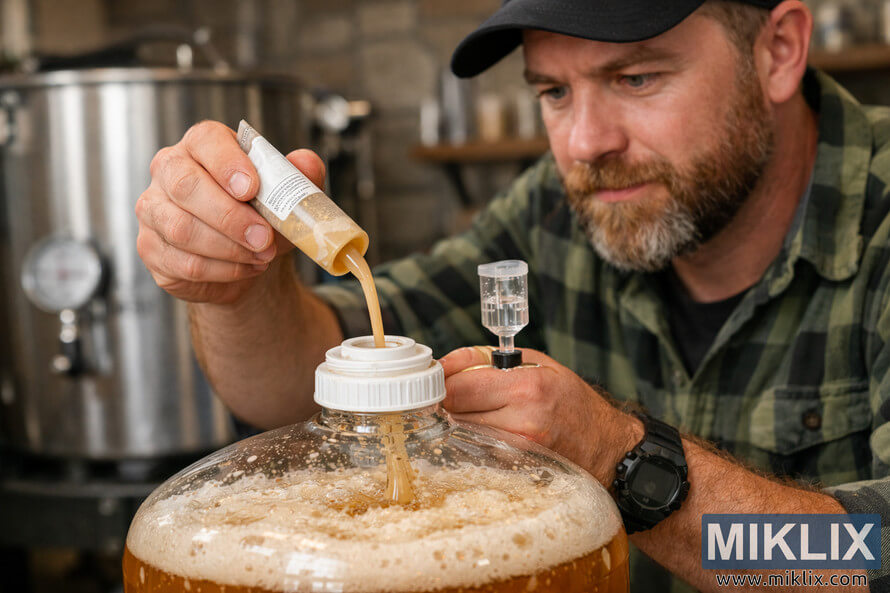
Klikoni ose prekni imazhin për më shumë informacion dhe rezolucione më të larta.
Understanding the Genetics and Origin of WLP090
White Labs WLP090 originates from the West Coast brewing scene, specifically San Diego. Its creation was a result of careful selection for traits preferred by American craft brewers. The history of White Labs shows how isolations from local breweries led to strains known for clean fermentation and strong attenuation.
The breeding background and yeast lineage of WLP090 highlight a focus on reliable performance. White Labs developed and distributed this strain after isolating yeasts that complemented pale malts and bold hop profiles. The selection emphasized attenuation, moderate flocculation, and restrained ester production, allowing hops to take center stage.
The origin of WLP090 significantly influences its fermentation behavior. San Diego ale yeast genetics are designed for fast, clean fermentations that highlight hop character. Yeasts adapted to high hop rates and warm fermentation cycles better tolerate alcohol and osmotic stress. This results in fewer unwanted phenolics and more predictable attenuation.
The practical implications of this origin include steady attenuation across various gravities and reliable diacetyl cleanup within the recommended temperature range. Brewers leveraging knowledge of WLP090's origin can achieve consistent results with hop-forward styles by adjusting pitching rates, aeration, and temperature control.
Klikoni ose prekni imazhin për më shumë informacion dhe rezolucione më të larta.
Packaging Options and How to Store WLP090 Safely
Opting for the right packaging and storage method is crucial for maintaining WLP090's health and fermentation readiness. White Labs provides this strain in various formats, each with its own advantages and disadvantages. It's important to adhere to cold handling practices and inspect the packaging before use.
Vial, smack pack, and liquid culture formats
White Labs offers glass vials, foil smack packs, and larger liquid cultures for propagation. Glass vials are ideal for small batches and direct pitching. Smack packs, on the other hand, are convenient for single brews and activate when struck, mixing the yeast before pitching. Liquid cultures allow for cell count buildup through starter creation.
Vials generally have a longer shelf life than swollen foil packs when handled correctly. Smack packs, while easy to use, can lose vitality faster if not refrigerated promptly. Liquid culture is the best choice for creating a starter or scaling up for larger batches.
Cold chain and refrigerator storage best practices
WLP090, being a true liquid yeast, requires a consistent cold chain from the vendor to your fridge. Aim for a temperature range of 34–40°F (1–4°C) from purchase to pitching. Minimize temperature fluctuations during transport; insulated carriers are recommended for longer journeys.
Store packs upright in the main fridge compartment, avoiding the door. Keep them away from strong-smelling foods to prevent contamination. Use the manufacturer’s expiration date as a guideline. For extended delays, consider growing a chilled starter instead of relying on stored packs.
Signs of a compromised pack and when to discard
Normal slurry appears cloudy and may settle. Discard any pack showing mold, leakage, or off odors that are putrid or solvent-like. Excessive swelling or gas at cool fridge temperatures is a warning sign.
Do not use packs that have warmed for extended periods or are past the expiration date. When in doubt, create a small test starter and observe healthy krausen development. Discard any pack showing visible contamination or persistent foul smell.
Klikoni ose prekni imazhin për më shumë informacion dhe rezolucione më të larta.
Preparing a Starter for White Labs WLP090 San Diego Super Ale Yeast
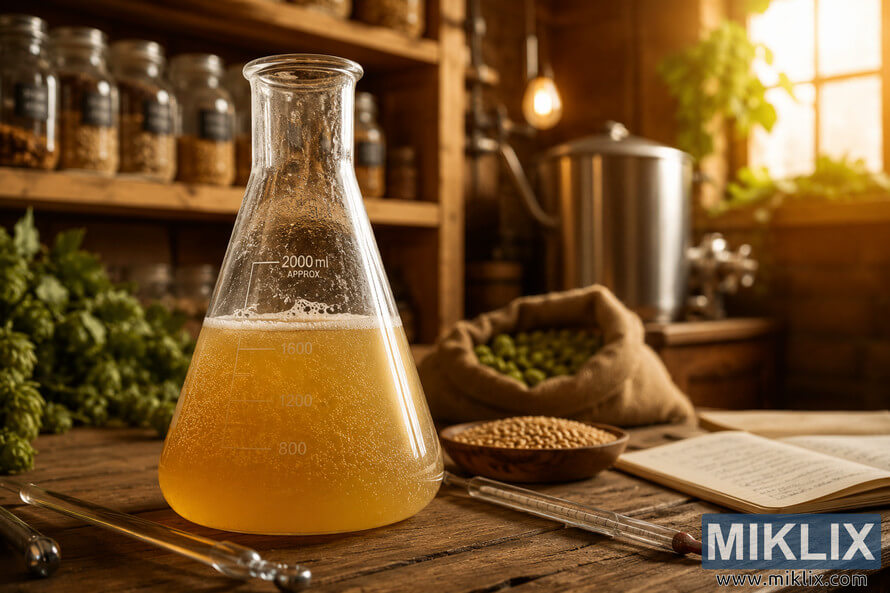
Making a starter for WLP090 enhances fermentation reliability and shortens lag time. It ensures adequate cell counts for healthy fermentation. This is crucial for higher-gravity worts, larger batch volumes, and older yeast packs. Proper preparation of liquid yeast before pitching reduces the risk of off-flavors and accelerates yeast activity.
When to make a starter and why it matters
Prepare a starter for worts over 1.060, batches of 5+ gallons, or vials older than three weeks. A starter increases viable cell counts, speeds fermentation, and minimizes diacetyl and other off-flavors. Only skip a starter for fresh packs sized for the target batch and gravity.
Calculating starter size based on gravity and batch volume
Use a yeast starter size calculator like White Labs, Mr. Malty, or Brewer’s Friend to determine cells per milliliter. A typical 5-gallon ale at OG 1.050 needs about a 1.0–1.5 L starter from a single vial. For worts at 1.065 and up, scale to 2–4 L or larger, depending on yeast age and desired pitch rate.
- For 5 gal, OG 1.050: 1.0–1.5 L starter
- For 5 gal, OG 1.065+: 2–4 L starter
- Increase volume if using older WLP090 packs or harvesting few cells
Step-by-step starter preparation and aeration methods
- Sanitize a flask or Erlenmeyer and any stirring equipment.
- Make starter wort at 1.030–1.040 SG. Use about 100–200 g DME per liter to hit that range.
- Boil the wort for 10 minutes, cool to room temperature, then transfer to the sanitized vessel.
- Pitch the WLP090 starter into the cooled wort. If the pack is old, add a pinch of yeast nutrient to support revival.
- Use aeration techniques to oxygenate the starter: vigorous shake twice daily, a magnetic stir plate for continuous oxygenation, or an aquarium pump with a sterile filter for steady airflow.
- Let the starter ferment until active krausen falls and yeast has compacted. Chill the starter and decant most of the spent wort before pitching the yeast slurry into the main batch.
Stir plates offer the fastest growth and healthiest cells, while shaking is a good low-cost option. When preparing liquid yeast, prioritize cleanliness and controlled aeration techniques. This ensures a robust WLP090 starter that minimizes lag and improves attenuation.
Klikoni ose prekni imazhin për më shumë informacion dhe rezolucione më të larta.
Pitching Rates and Techniques for Optimal Fermentation
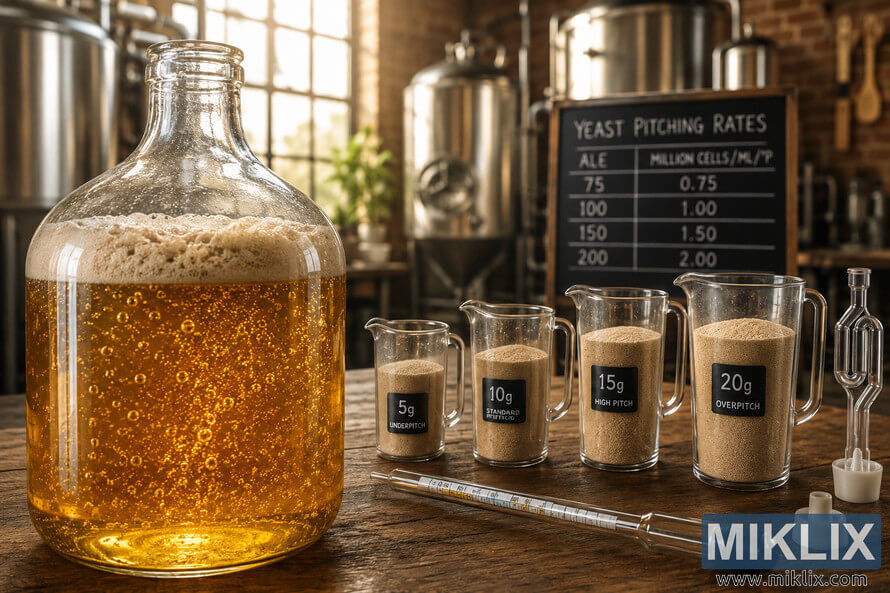
Optimizing yeast population and pitching method is crucial for a clean fermentation. This guide will help you achieve this by setting ale pitching rate targets, deciding between slurry and direct pitch, and reviving liquid yeast. It covers how to treat White Labs packs for rehydration or reviving chilled vials.
Recommended cells per milliliter for ales
For ales, aim for 0.75–1.5 million cells per milliliter per degree Plato. A common rule of thumb is 0.75–1.0 million cells/mL/°P. This translates to 100–150 billion cells for a 5-gallon batch at 1.050 (≈12°P). Use an online cell calculator for precise counts in high-gravity beers.
Pitching temperature and slurry vs direct pitch
Pitch WLP090 near your desired fermentation temperature. For San Diego-style ales, aim for 66–72°F. Pitching slightly cooler can reduce thermal shock and provide a gentler start.
Choosing between slurry and direct pitch depends on convenience and handling. Harvested slurry concentrates cells and saves money on future brews. It must be stored cold, handled with care, and kept sanitary to avoid contamination. Direct pitching from a White Labs vial or a fresh starter is simpler and lower risk for one-off batches.
How to rehydrate liquid yeast when necessary
White Labs liquid yeast is formulated for direct pitching. Traditional dry yeast rehydration steps do not apply. If a liquid pack is cold or sluggish, briefly warm it to room temperature before pitching. Alternatively, use it to build a small sanitized starter to revive activity. If a pack arrived warm, skip rehydration and opt for a starter instead of trying dry-yeast methods.
Practical checklist
- Estimate cells with an online calculator to match your ale pitching rate goal.
- Pitch WLP090 at or slightly below fermentation temp to reduce stress.
- Choose slurry for economy when you can maintain cold chain and sanitation.
- Use direct pitch or a small starter for reliability when brewing a single batch.
- Do not apply dry yeast rehydration procedures to liquid White Labs packs; revive with gentle warming or a starter if needed.
Klikoni ose prekni imazhin për më shumë informacion dhe rezolucione më të larta.
Fermentation Temperature Management with WLP090
Temperature control is crucial when fermenting with WLP090. Set a clear target before pitching. Good temperature practice ensures the yeast finishes cleanly, delivering the flavor you expect.
Recommended ranges and flavor impacts
- Typical working range: 64–72°F (18–22°C). Staying near 64–66°F yields a very clean, neutral character with low ester production.
- At 68–72°F, you may see brighter, fruitier esters and slightly higher attenuation.
- Temperatures above the top end raise the risk of fusel alcohols and harsh off-flavors. Follow White Labs guidance to avoid stress on the culture.
Active fermentation signs and temperature control tips
- Look for visible krausen, steady bubbling in the airlock, and rapid foam on the wort surface as signs of strong activity.
- Use a probe thermometer or stick-on strip to track actual wort temperature rather than relying on room ambient readings.
- When adjustments are needed, change ambient conditions slowly. Abrupt swings can shock yeast and stall fermentation.
Cooling and heating solutions for homebrewers
- Swamp coolers or ice baths work for short-term drops in temperature and can be effective for lighter ales. They are simple homebrew temp solutions.
- Fermentation fridges or chest freezers paired with digital controllers such as Inkbird or Johnson Controls offer precise yeast temperature control for multiple batches.
- Glycol jackets and circulating chillers provide lab-grade control when consistency matters for lagering or repeated IPA runs; they are ideal for serious fermentation heat management.
- For cold basements or winter brewing, heat belts, wrap-around heaters, or thermostat-controlled brew belts keep the wort above the low end without overheating.
Practical tips
- Plan for within-range variability. Insulate your fermenter to reduce swings during active krausen.
- Record temps in a fermentation log to refine your process over multiple batches.
- Prioritize gradual corrections. Small, steady changes protect yeast health and make fermentation heat management easier to predict.
Attenuation, Flocculation, and Expected Final Gravity
White Labs WLP090 is renowned for its reliable attenuation and clean finish. Brewers should anticipate a consistent sugar usage and final gravity that mirrors the wort's composition and fermentation practices. Below, we provide a concise overview of typical performance, the impact of yeast settling on clarity, and strategies for overcoming sluggish fermentation.
Typical attenuation
WLP090's attenuation usually ranges from the mid-70s to low-80s percent. White Labs and homebrew data both indicate a 75–82% range, influenced by mash profile, original gravity, and fermentation temperature. Use this range to estimate the expected final gravity for most pale ales and West Coast styles.
Yeast flocculation and beer clarity
WLP090 exhibits medium to medium-low yeast flocculation. This characteristic allows some yeast to remain suspended during primary fermentation.
Enhance beer clarity by extending conditioning time, performing a gentle cold crash, or adding finings like gelatin or Biofine. The flocculation level also influences mouthfeel and carbonation during bottle or keg conditioning.
Troubleshooting high FG and stuck fermentation
High FG or stuck fermentation can stem from underpitching, low fermentation temperature, poor oxygenation, lack of nutrients, or compromised yeast viability. Always confirm readings with a hydrometer or refractometer before taking action.
- Rouse the yeast by gently swirling the fermenter to resuspend cells.
- Raise temperature 2–4°F to revive sluggish activity if within style limits.
- Make and pitch a fresh starter or a warm, active culture when viability is in question.
- Add yeast nutrient per manufacturer guidance; avoid adding oxygen late in fermentation unless yeast are inactive and you plan a fresh pitch.
- Monitor gravity until you reach expected final gravity WLP090 or decide to repitch.
Adopt a measured approach: verify equipment, check sanitation history, and document gravity readings. Accurate diagnosis and targeted interventions will safeguard aroma and minimize the risk of prolonged stuck fermentation.
Flavor Contributions and Esters from WLP090
White Labs WLP090 San Diego Super Ale offers a clean fermentation canvas. This canvas highlights subtle esters and hop character. Brewers can adjust temperature, wort makeup, and pitching practices to control aroma. Small changes significantly impact WLP090 esters and the yeast aroma profile. Suggestions for hop pairing and malt selection for clean yeast-driven beers are provided.
At lower fermentation temperatures (64–66°F), expect a restrained, near-neutral profile with minimal fruity esters. Moving to moderate ranges (67–70°F), light citrus or tropical fruit notes can appear. Above about 72°F, esters rise more noticeably, and higher alcohols may form, masking delicate hop aromas.
Wort composition greatly affects ester formation. Higher mash temperatures increase dextrins and body, encouraging ester retention. High original gravity pushes yeast metabolism toward more esters and fusel alcohols. Underpitching leads to stress-induced ester production. Proper wort oxygenation and nutrient balance tame excess esters by supporting steady yeast health.
- Oxygen: correct dissolved oxygen before pitching helps control ester levels.
- Pitch rate: aim for adequate cells to avoid stress-related fruity esters.
- Nutrients: zinc and yeast nutrients reduce off-flavors and stabilize the yeast aroma profile.
Hop choices can complement or compete with yeast-derived esters. For beers where you want clear hop expression, choose varieties with bright citrus, floral, or tropical characters. Citra, Centennial, Mosaic, Amarillo, and Simcoe work well with a restrained yeast aroma profile.
When designing malt bills, use pale malt, Vienna, and light crystal to keep the palate dry. This allows hop and yeast notes to stand out. If you prefer more body, raise mash temperature for more dextrins but plan for slightly increased ester production. Adjust pitching and oxygenation accordingly.
- For a crisp, hop-forward IPA: use low mash temps, healthy pitching, and hops like Citra or Simcoe to let WLP090 esters remain subtle.
- For a fruit-forward pale ale: ferment at the upper moderate range and pair Mosaic or Amarillo with a lighter malt bill.
- For fuller mouthfeel: increase mash temp, accept a touch more ester, and balance with resiny hops such as Centennial.
Controlling fermentation temperature and wort chemistry gives brewers predictable WLP090 esters and a stable yeast aroma profile. Thoughtful hop pairing for WLP090 and deliberate malt selection for clean yeast help achieve the desired aroma balance in each recipe.
Dry Hopping and Post-Fermentation Treatments with This Yeast
Timing and gentle handling after active fermentation are crucial for the aroma, clarity, and mouthfeel of beers using WLP090. This strain exhibits moderate krausen and steady attenuation. Plan your dry hop additions and conditioning steps carefully to protect hop volatiles. This ensures yeast has time to clean up off-notes. Balance contact time against the risk of polyphenol extraction for the best results.
When to add hops for aroma
- Target dry hopping near or just after terminal gravity to maximize volatile retention. WLP090 dry hop timing of adding hops once primary fermentation subsides preserves delicate oils.
- Single additions of 3–7 days in contact work well for peak aroma. Short, late additions or hop stands give layered aroma without excess vegetal extraction.
- Avoid very long contact times. Extended dry hopping can pull polyphenols and increase astringency.
Krausen, conditioning, and cold handling
- Expect a moderate krausen with this strain. Allow krausen to fully subside before moving to conditioning steps.
- Allow several days to weeks of conditioning for diacetyl reduction and yeast settling. Gentle conditioning improves flavor stability and mouthfeel.
- For clarity, cold crash WLP090 at 1–4°C for 24–72 hours before packaging. A controlled cold crash helps yeast and haze particles drop out fast.
Fining choices and yeast behavior
- Finings like gelatin, isinglass, polyclar, or Irish moss in the kettle accelerate clarity when used correctly. Kettle finings lower the particulate load before conditioning.
- WLP090’s medium flocculation typically responds well to a cold crash plus fining agents interaction to reach bright beer. Combining methods shortens clarification time.
- Consider vegetarian or vegan preferences when selecting finings. Some agents are temperature-sensitive and work best after a brief chill.
Practical sequence for a clean, aromatic beer
- Complete primary fermentation and confirm near-terminal gravity.
- Dry hop for 3–7 days or use short late additions for layered aroma, mindful of WLP090 dry hop timing.
- Allow conditioning for several days to weeks for flavor maturation and diacetyl cleanup.
- Cold crash WLP090 at 1–4°C for 24–72 hours.
- Apply chosen fining agents, noting fining agents interaction with yeast and temperature.
These steps integrate hop handling and post-fermentation treatment into a clear plan. Careful timing and modest interventions preserve hop character while taking advantage of WLP090’s fermentation traits.
Using WLP090 in High-Gravity and IPA Recipes
WLP090 is versatile for IPA and high-OG projects with proper support. Brewers tackling big beers must plan for pitch rate, oxygenation, nutrients, and temperature control. This approach minimizes the risk of stuck fermentations and off-flavors. Below, we provide practical strategies and recipe-focused examples for using WLP090 in high-gravity IPAs.
Strategies for fermenting high-OG worts successfully
Start with a larger starter or step up to higher pitching rates before pitching. A robust cell count shortens lag time and boosts attenuation for big beers.
Aggressive oxygenation at pitch, using pure O2 for high OG worts, is crucial. It provides yeast with the necessary sterols and fatty acids for growth.
Implement staggered nutrient additions during early fermentation and gradually increase temperature after fermentation starts. Lower mash temperatures enhance fermentability for higher attenuation.
Nitrogen and nutrient additions to avoid stress
High gravity worts often lack free amino nitrogen. Yeast nutrients, including DAP and complex blends, supply FAN and trace minerals. Follow the manufacturer's dosing guidelines and consider multiple small additions in the first 24–48 hours.
For WLP090 high gravity batches, use a complex nutrient blend instead of DAP alone. This supports vitamin and micronutrient needs, reducing stress from sulfur or phenolic compounds.
Case studies: West Coast IPA and double IPA examples
West Coast IPA: Target OG 1.060 for a clean, hop-forward beer around 6.5% ABV. Use a moderate starter and pitch at 66–68°F to highlight Centennial and Citra hop character. Keep mash temp slightly lower to encourage fermentability and add a single nutrient dose at pitch.
Double IPA: Aim for OG 1.075–1.085. Build a 2–4 L starter or use harvested slurry to reach the needed cell count. Oxygenate heavily at pitch and schedule staggered nutrient additions in the first 24 hours. Maintain fermentation in the mid- to upper-60s°F and let temperature rise to 67–70°F if attenuation slows.
- Use lower mash temps for higher fermentability when brewing high-OG beers.
- Match oxygen and nutrient dosing to wort gravity; richer worts need more support.
- Monitor gravity closely and be ready to add nutrients early rather than late.
Yeast Health: Nutrients, Oxygenation, and Stress Prevention
Maintaining yeast health WLP090 begins with proper wort preparation and pitching techniques. These practices support a clean fermentation, reducing off-flavors and enhancing attenuation. Below, we provide guidelines on nutrients, oxygenation methods, and stress prevention in the cellar.
Approach yeast nutrients with a measured hand. Essential components include yeast hulls, diammonium phosphate (DAP), and complex nutrient blends. These provide vitamins and trace minerals. Adhere to package dosing ranges and avoid exceeding them to prevent harsh flavors or nutrient imbalances.
- Yeast hulls: enhance cell health and mitigate stress in high-gravity or repeated repitches. Follow supplier directions, typically 1–5 g per 5 gallons based on product.
- Diammonium phosphate (DAP): serves as a quick nitrogen source. Use small, controlled amounts as directed by the package; avoid overuse.
- Complex nutrient blends: offer vitamins, amino acids, and minerals. Adhere to label instructions for established dosing ranges.
Oxygenation methods are crucial for a vigorous fermentation start. For high gravity worts, pure oxygen with an O2 stone is standard, aiming for 8–12 ppm dissolved oxygen. For lower gravity beers, vigorous shaking or aeration with sterile air can achieve 6–8 ppm, sufficient for most.
- Pure oxygen via O2 stone: administer immediately before pitching for optimal uptake. Target higher DO for strong worts.
- Vigorous aeration or shaking: practical for lower gravity beers when an oxygen tank is not available.
- Measure dissolved oxygen when possible to verify levels and refine technique.
Be vigilant for signs of yeast stress to act promptly. Indicators include prolonged lag, sluggish fermentation, high terminal gravity, solvent-like or phenolic off-flavors, and unusual krausen collapse. Address these signs with measured corrections.
- Rouse and gently warm the fermenter by a few degrees to encourage activity.
- Pitch healthy fresh yeast or a starter if the original culture appears underpopulated.
- Add appropriate yeast nutrients according to label directions rather than guessing doses.
Avoid late oxygen additions to prevent oxidation and stale flavors. Use oxygen early and carefully to prevent yeast stress. Balance nutrient additions with proper oxygenation methods to maintain optimal yeast health WLP090.
Repitching WLP090: When and How to Reuse Slurry
Reusing yeast can be a cost-effective way to maintain a consistent flavor profile in homebrewing. White Labs WLP090 yeast is particularly suitable for repitching, provided it is handled correctly. This guide will outline the safe limits for yeast reuse, the proper methods for harvesting and storing yeast, and essential sanitation practices to safeguard future brews.
Typically, homebrewers can repitch WLP090 for 3–6 generations. This balance ensures both cost efficiency and yeast health. Commercial breweries might go beyond six generations, but they conduct regular viability tests and flavor assessments. Each repitch increases the risk of genetic mutations and contamination. Therefore, it's crucial to monitor the yeast's performance and replace it if off-flavors or slower fermentations occur.
Harvesting, storing, and revitalizing yeast slurry
- Harvesting: Collect clean yeast layers from the top of the trub ring or cone. Avoid heavy hop or protein-laden trub.
- Storing: Use sanitized, oxygen-free containers and refrigerate immediately. Short-term storage is best in days to weeks. For longer storage, prepare a fresh starter or create a slant culture.
- Revitalizing: Make a small starter to rebuild cell counts and vitality before pitching. Washing yeast is an option for advanced brewers, but it adds risk and handling steps.
- Record keeping: Log yeast generations, harvest date, and previous batch gravity. Simple notes help spot declines in performance tied to yeast generations.
Cross-contamination risks and sanitation best practices
Strict yeast sanitation is crucial when handling slurry. Sanitize all tools, surfaces, and containers that touch yeast or wort. Work quickly in a clean area to limit airborne contaminants.
Avoid introducing hop-heavy trub into your propagated slurry. Hop compounds and excess polyphenols can stress cells and carry microbes. If you suspect contamination, perform a viability count or microscope check before repitching.
Discard any slurry that smells sour, shows unusual colors, or produces unexpected films. Good sanitation and careful harvesting extend the useful life of WLP090 while protecting future batches.
Monitoring Fermentation: Tools and Measurements
Monitoring your WLP090 batch closely is crucial for early problem detection and maintaining flavor quality. Employ a variety of tools and observations to track fermentation from the krausen stage to conditioning.
Hydrometer and refractometer usage for progress checks
Sanitize samples for accurate specific gravity readings with a hydrometer. Ensure measurements are taken at a consistent temperature. Apply temperature corrections if necessary, aligning with your hydrometer's calibration point.
For quick, low-waste checks, a refractometer is ideal before alcohol levels rise. Note the distinction between hydrometer and refractometer readings when alcohol is present. Convert refractometer Brix to specific gravity using a calculator or formula once fermentation starts. Always sanitize your sampling tool and seal the sample container to prevent contamination.
Using fermentation logs and digital controllers
Maintain a detailed fermentation log. Include pitch date and time, wort gravity readings, temperature measurements, and notes on krausen and airlock activity. A well-kept log aids in troubleshooting and batch replication.
Integrate a digital controller or thermostat for consistent temperatures. Setpoints and temperature records help understand WLP090's behavior across different temperatures. Utilize a spreadsheet or app for logging, then analyze trends between batches.
Interpreting CO2 production and krausen behavior
CO2 monitoring provides a visual representation of fermentation activity. Expect vigorous CO2 production early, followed by a gradual decrease. A robust krausen and early bubbling are indicative of a healthy WLP090 ferment.
- Weak krausen or minimal CO2 production may suggest underpitching, low oxygen, or cooler temperatures.
- Prolonged CO2 activity or delayed decline could indicate high gravity stress, infection, or warm conditioning.
- Unusual pauses in CO2 monitoring warrant gravity checks with a hydrometer and a review of your fermentation log for recent changes.
Respond to deviations by checking gravity, confirming temperature control, and reviewing your fermentation log for any anomalies. Timely interventions can steer a WLP090 batch back on track.
Common Issues and Troubleshooting Guide for WLP090 Ferments
WLP090 is known for its reliability, yet brewers encounter recurring problems. This guide aims to troubleshoot WLP090 efficiently, ensuring your batches stay on track. Quick checks and targeted fixes can often rectify issues without compromising your beer.
Off-flavors can be a concern for novice brewers. Identifying the cause is crucial. Implementing preventive measures can help avoid these issues in the future.
- Diacetyl in ale: This off-flavor often arises when yeast is removed or fermentation occurs at low temperatures. A diacetyl rest, achieved by increasing the temperature 2–4°F near the end of fermentation, can help. Proper pitch rate, oxygenation, and conditioning time are also essential to prevent buttery notes.
- Sulfur: Sulfury aromas stem from yeast metabolism. Warm conditioning and sufficient time usually resolve these smells. It's important to avoid overusing stressed yeast and to ensure adequate nutrient and oxygen levels during pitching.
- Phenolics: Phenolic notes, reminiscent of cloves or medicinal scents, can result from wild contamination or specific yeast strains. Maintaining strict sanitation and selecting the right yeast can prevent these issues. If contamination is suspected, repitching with a fresh White Labs vial is advisable.
When faced with stalled or slow ferments, a methodical approach is necessary. Begin by gathering all relevant data before taking any action.
- Confirm the gravity with a hydrometer or refractometer to verify a true stall.
- Review the fermentation temperature history and oxygenation at pitch.
- Check yeast viability, especially if using an old slurry or a small starter.
After diagnosing the issue, apply these stuck fermentation fixes.
- Gently rouse the yeast by swirling the fermenter to resuspend cells.
- Increase the temperature by 2–4°F to stimulate sluggish yeast.
- Pitch a healthy, active starter or a robust Saccharomyces cerevisiae strain known for high attenuation.
- Add yeast nutrient when nitrogen deficiency is suspected.
Clarity issues can be categorized into chill haze and permanent haze. The appropriate treatment varies by type.
- Chill haze, resulting from protein-polyphenol bonds, can be resolved with cold conditioning or time. Cold crashing and extended lagering often clear it.
- Permanent haze, often due to high protein or unresolved yeast, requires finings, filtration, or recipe adjustments.
Practical solutions for beer haze include cold crashing and the use of fining agents like gelatin or isinglass. Filtration can remove stubborn particulates when clarity is paramount.
To minimize haze risks, consider adjusting your grist and mash. Opt for lower-protein base malts and modify mash temperatures to enhance conversion. A small adjunct of flaked barley or rice can also be beneficial. These changes reduce the protein-polyphenol load before fermentation.
Conclusion
This WLP090 summary reveals a yeast that ensures clean fermentation, allowing hop aroma and bitterness to shine. White Labs San Diego yeast review data and brewer feedback confirm its high attenuation and consistent performance. It's a top pick for American-style ales and hop-forward IPAs.
To achieve the best outcomes, follow key steps. Store packs in cold conditions, prepare a starter when necessary, and ensure adequate cell counts. Maintain fermentation temperatures within the recommended range. Oxygenate high-gravity worts and monitor gravity and aroma closely. These practices are crucial for avoiding issues like stalled fermentation or off-flavors.
The final verdict on WLP090 is clear. For U.S. homebrewers aiming for a yeast that enhances hop flavors in big beers, White Labs WLP090 San Diego Super Ale Yeast is an excellent choice. It requires proper pitching, nutrients, and temperature control. Begin with a trial batch and maintain detailed fermentation logs. This will help you refine your brewing process for future batches.
FAQ
What is White Labs WLP090 San Diego Super Ale Yeast and why choose it?
White Labs WLP090 is a liquid ale yeast strain designed for West Coast-style brewing. It ferments cleanly, with a neutral to lightly fruity ester profile. This highlights hop character. Homebrewers choose WLP090 for American Pale Ales, West Coast IPAs, Double IPAs, and other hop-forward beers.
What flavor contributions can I expect at different fermentation temperatures?
At the lower end of the range (around 64–66°F), WLP090 produces a very clean, neutral profile. In the mid-range (67–70°F), it may show light citrus or tropical fruit esters. Above ~72°F, esters and higher alcohols can increase, risking fusel notes. For clear hop expression, ferment in the lower-to-mid range.
What attenuation and flocculation are typical for WLP090?
WLP090 typically shows mid-to-high 70s to low 80s percent attenuation. This depends on mash fermentability and fermentation management. Flocculation is usually medium to medium-low, so beers may need conditioning, cold crash, or finings for clarity.
How should I store WLP090 and what packaging formats are available?
WLP090 is sold as liquid yeast in glass vials, smack packs, or larger liquid culture formats. Store refrigerated at about 34–40°F (1–4°C). Minimize temperature swings, keep packs upright, and use before the expiration date. For longer gaps, propagate a starter rather than relying on old packs.
When should I make a starter and how do I size it?
Make a starter when pitching older packs, brewing higher-gravity worts, or brewing 5+ gallon batches. Use a pitching calculator to determine cell count needs. A standard 5-gallon 1.050 ale often needs a 1–1.5 L starter from a vial; higher OG beers (1.065+) typically require 2–4 L or more.
What is the recommended pitching rate for WLP090?
Aim for roughly 0.75–1.5 million cells per mL per °Plato for ales. For a 5-gallon 1.050 ale, this equates to around 100–150 billion cells. Use online cell calculators for precision and increase starter size for higher gravities or older yeast.
Should I rehydrate WLP090 before pitching?
White Labs liquid yeast is intended for direct pitch or use after starter propagation. Traditional dry-yeast rehydration methods do not apply. If a pack is cold-stressed, bring it briefly to room temperature or propagate a small starter to revitalize the culture before pitching.
How do I oxygenate wort properly for WLP090?
For most ales, vigorous aeration by shaking, splashing, or using a sanitized pump works. For high-gravity worts, use pure oxygen with an O2 stone to target higher dissolved oxygen (monitoring if possible). Oxygenate immediately before pitching and avoid oxygen additions later in fermentation to prevent oxidation.
What temperature range should I ferment WLP090 at?
Typical working range is about 64–72°F (18–22°C). Lower temperatures give a cleaner profile; mid-range adds light fruitiness; higher temperatures risk fusels. Maintain stable temps, monitor with a probe, and make gradual adjustments if needed.
How do I troubleshoot a stuck or slow fermentation?
Check gravity to confirm stall, verify fermentation temperature, review pitching rate and oxygen/nutrient history, and smell for contamination. Remedies include gently rousing yeast, raising temperature 2–4°F, pitching a fresh active starter or a robust ale strain, and adding yeast nutrient if appropriate.
What signs indicate a compromised yeast pack?
Discard packs with putrid or solvent-like odors, visible mold, leakage, or excessive bloating at cool temperatures. Cloudy slurry without off-odors is normal. Do not use packs that have been warmed for long periods or are past the expiration date.
How long should I dry hop and when is the best timing?
Add dry hops after primary fermentation has mostly subsided—often near terminal gravity or shortly after—to preserve volatile hop aromas. Typical contact time is 3–7 days for single additions. Layered late additions or short contact times can enhance freshness while minimizing astringency from prolonged contact.
What fining and conditioning steps work best with WLP090?
WLP090 responds well to cold crash (1–4°C for 24–72 hours) and finings like gelatin or isinglass to accelerate clarity. Kettle finings (Irish moss) help during boil. Note vegetarian/vegan considerations with animal-derived finings and that medium flocculation may still require conditioning time to clear.
Can WLP090 handle high-gravity worts and how to manage them?
Yes, WLP090 can ferment high-OG worts but requires planning: larger starters or higher pitching rates, proper oxygenation, staggered nutrient additions, and possibly lower mash temps for greater fermentability. Ramp temperature gently if needed to finish fermentation.
What nutrients should I add and when?
Use complex yeast nutrients that provide FAN and trace minerals for high-OG or stressed fermentations. Dosing varies by product—follow manufacturer instructions. For very high gravities, consider staged nutrient additions early in fermentation to support yeast health.
How many times can I safely repitch WLP090?
For homebrewers, a conservative guideline is 3–6 generations for ales. Monitor viability and performance; maintain strict sanitation to avoid contamination. If slurry shows off-odors, discoloration, or declining performance, retire it and create a new starter from a fresh pack.
How should I harvest and store yeast slurry for repitching?
Harvest from a clean zone away from heavy trub, transfer to sanitized oxygen-free containers, and store refrigerated short-term (days to weeks). Revitalize stored slurry by making a starter before pitching. Washing yeast and long-term storage require experience and careful technique.
What tools should I use to monitor fermentation progress?
Common tools include a hydrometer for accurate SG readings, a refractometer for quick checks (with correction for alcohol), temperature probes or controllers (Inkbird, Johnson Controls), and fermentation logs or apps to record temps, gravity, and observations such as krausen and CO2 activity.
How do I interpret CO2 production and krausen behavior with WLP090?
Expect vigorous CO2 release early in fermentation with a moderate krausen. A weak krausen or very low activity can indicate underpitching, low temps, or yeast issues. Prolonged activity beyond the expected window may suggest contamination or re-fermentation; take readings and adjust as needed.
What common off-flavors might occur and how can I prevent them?
Diacetyl can arise from premature racking or low fermentation temperatures—prevent with proper fermentation temperature and a diacetyl rest. Sulfur often dissipates with conditioning. Phenolic notes usually stem from contamination or phenolic-producing strains—maintain good sanitation and yeast handling to prevent them.
How can I reduce haze and improve clarity in beers fermented with WLP090?
For clearer beer, cold crash before packaging, use finings (gelatin, isinglass), and consider filtration. Recipe changes—lower protein malts, optimized mash schedules—and kettle finings help reduce haze precursors. Distinguish chill haze from permanent haze and address accordingly.
Are there hop and malt pairings that work particularly well with WLP090?
Clean, expressive hop varieties like Citra, Centennial, Mosaic, Amarillo, and Simcoe pair well because WLP090 accentuates hop character. Pale base malts, Vienna, and light crystal let hops shine; adjust mash temps or add dextrins if more body is desired for balance in big IPAs.
What are practical temperature control solutions for homebrewers?
For simple cooling use swamp coolers or ice baths. For reliable control, use fermentation fridges/freezers with digital controllers (Inkbird, Johnson Controls). Heat belts, wrap-around heaters, or insulated jackets help in cold environments. Make changes gradually to avoid shocking yeast.
Where can I find authoritative references on WLP090 performance?
Manufacturer tech sheets from White Labs, articles and guides from the American Homebrewers Association, and community brew logs on sites like HomebrewTalk and Brewer’s Friend are reliable sources. Cross-referencing these helps validate pitching rates, attenuation ranges, and best practices.
Lexime të mëtejshme
Nëse ju pëlqeu ky postim, mund t'ju pëlqejnë edhe këto sugjerime:
- Fermentimi i birrës me maja CellarScience Kölsch
- Fermentimi i birrës me maja Fermentis SafAle T-58
- Fermentimi i birrës me maja gruri amerikane Wyeast 1010