
Imazh: Swiss Chard Portion Sizes and Nutritional Data
Publikuar:
Përditësimi i fundit: 12 shtator 2026 në 2:51:42 e pasdites, UTC
Explore a high-resolution visual guide to Swiss chard portion sizes and nutritional data, featuring fresh leaves and measuring tools that illustrate calorie, carbohydrate, and protein values for different serving amounts.
Swiss Chard Portion Sizes and Nutritional Data
Versionet e disponueshme të këtij imazhi
Skedarët e imazheve të disponueshëm për shkarkim më poshtë janë më pak të kompresuar dhe me rezolucion më të lartë - dhe si rezultat i kësaj, cilësi më të lartë - sesa imazhet e integruara në artikuj dhe faqe në këtë faqe interneti, të cilat janë më të optimizuara për madhësinë e skedarit në mënyrë që të zvogëlojnë konsumin e bandwidth-it.
Madhësi e rregullt (1,536 x 1,024)
Madhësi e madhe (3,072 x 2,048)
Madhësi shumë e madhe (4,608 x 3,072)
Madhësi shumë e madhe (6,144 x 4,096)
Madhësi komike e madhe (1,048,576 x 699,051)
- Duke u ngarkuar ende... ;-)
Përshkrimi i imazhit
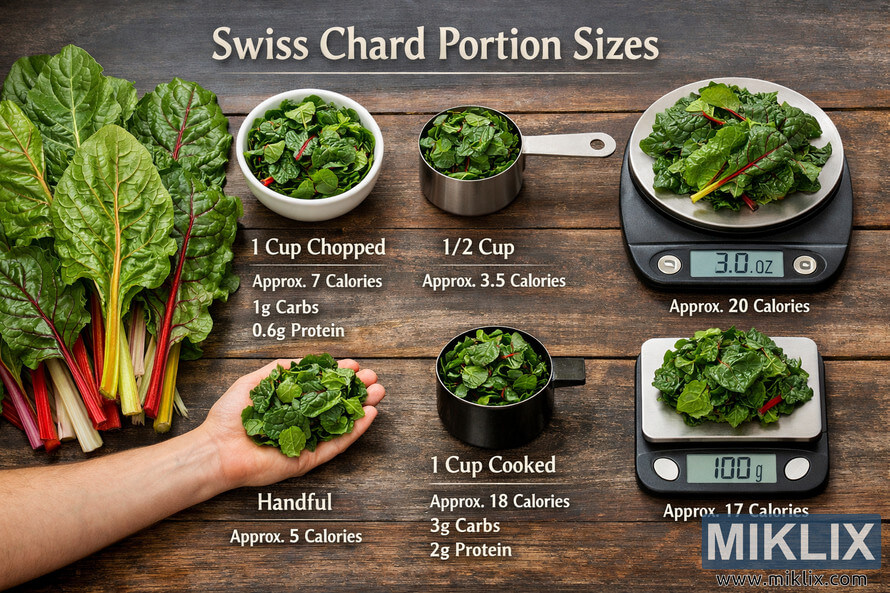
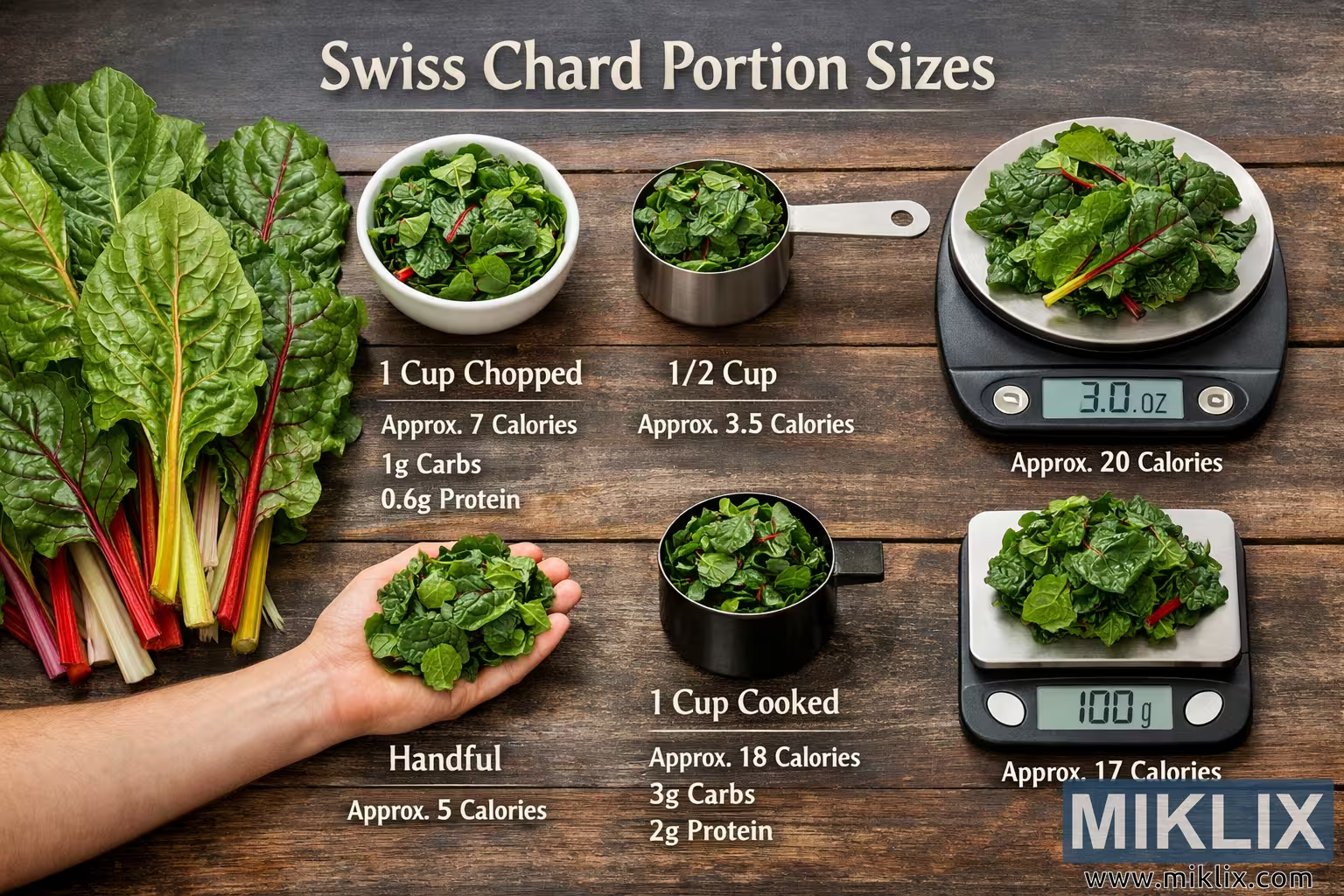
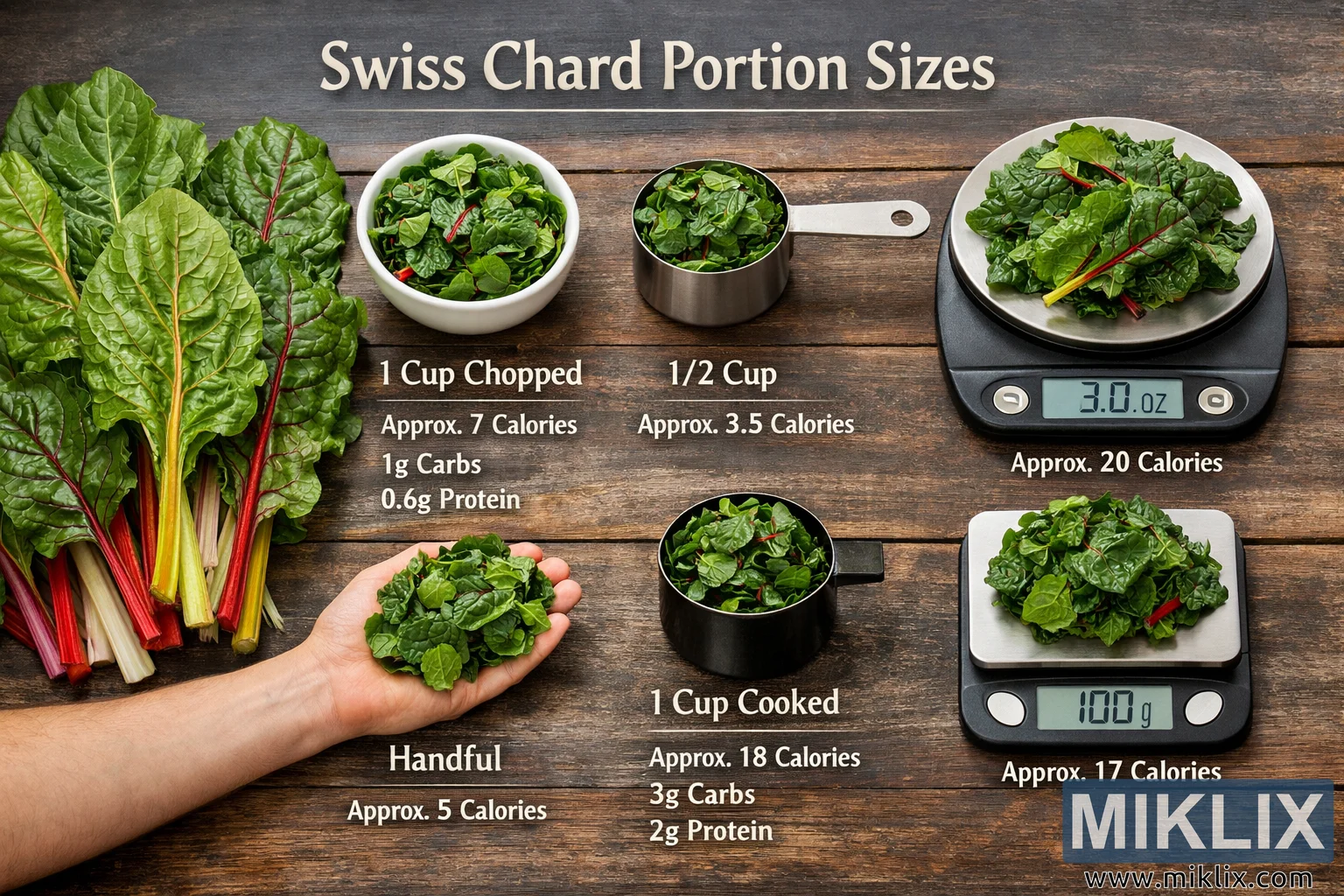
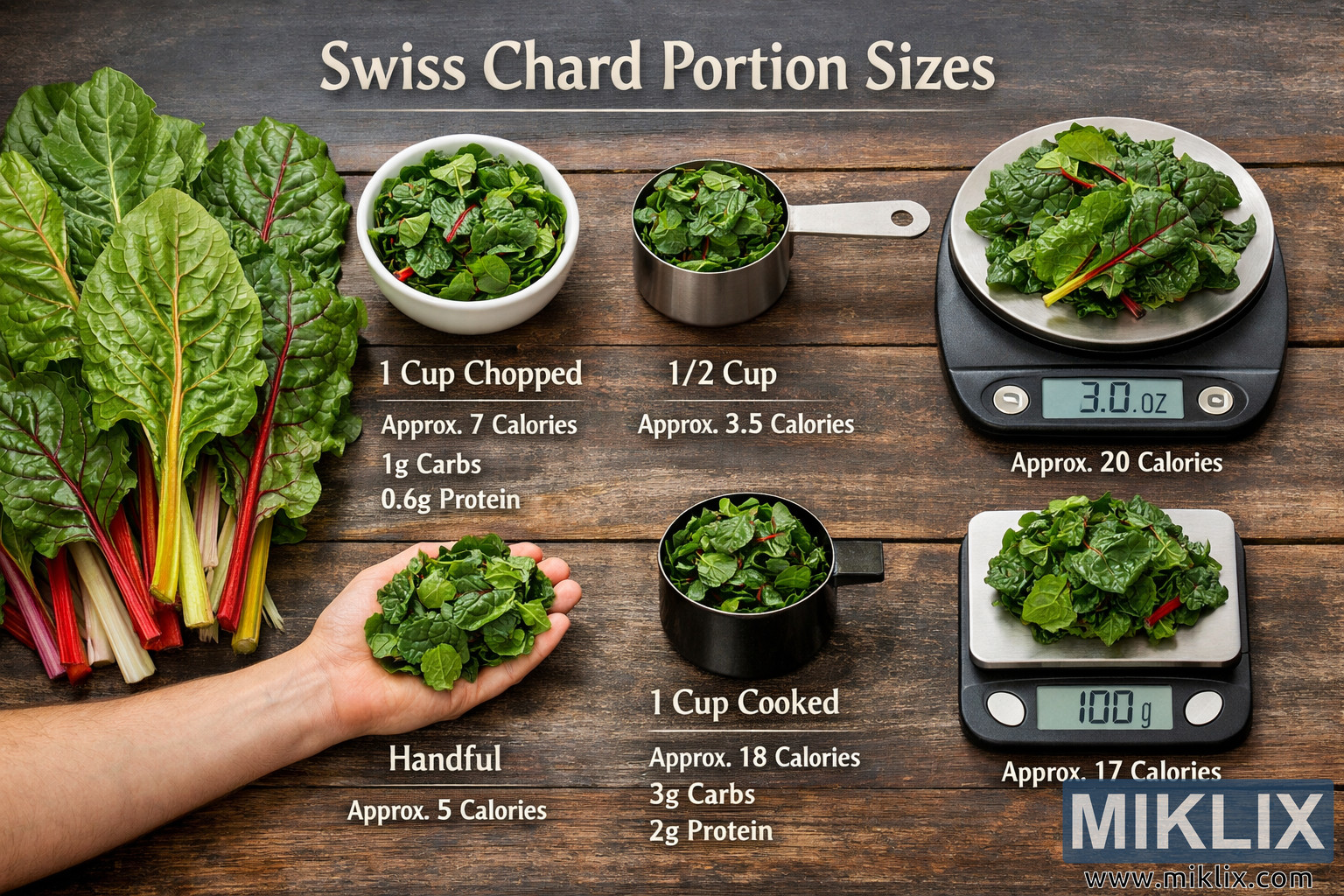
The image presents a meticulously arranged composition that blends culinary precision with nutritional education. On the left side of the frame, a vibrant bunch of Swiss chard dominates the scene. The leaves are large, glossy, and deeply textured, with veins of red, yellow, and white running through their emerald-green surfaces. Their stems, equally colorful, fan outward in a natural gradient that transitions from crimson to gold to ivory. The chard rests on a rustic wooden surface whose grain and warm tones evoke a sense of organic authenticity, grounding the image in a kitchen or farm-to-table setting.
To the right, a series of measuring tools and containers are carefully positioned to demonstrate portion sizes and their corresponding nutritional data. Each tool is distinct, representing a different way to quantify food portions. A small white bowl labeled “1 Cup Chopped” holds finely cut Swiss chard pieces, its bright greens contrasting against the neutral ceramic. Beneath the bowl, text indicates the nutritional values: approximately 7 calories, 1 gram of carbohydrates, and 0.6 grams of protein. This precise labeling immediately conveys the educational intent of the image.
Next to the bowl, a stainless steel measuring cup marked “1/2 Cup” gleams under soft lighting. It contains a smaller portion of chard, and the accompanying text reads “Approx. 3.5 Calories.” The reflective surface of the metal adds a modern touch, balancing the rustic background with a sense of scientific accuracy. Further to the right, a digital kitchen scale displays “3.0 oz” on its screen, with a neat pile of Swiss chard leaves resting on its round platform. The scale’s clean design and clear digital readout reinforce the theme of precision and measurement. Below it, the nutritional data reads “Approx. 20 Calories,” emphasizing how portion size directly affects caloric intake.
In the lower section of the image, additional measuring examples expand the viewer’s understanding of portion control. On the far left, an open hand holds a loose handful of Swiss chard, labeled “Handful.” The text beneath it reads “Approx. 5 Calories,” illustrating a more intuitive, everyday measure. The human element adds warmth and relatability, reminding viewers that nutrition is not only about numbers but also about practical habits.
At the center of the bottom row, a black measuring cup labeled “1 Cup Cooked” contains wilted Swiss chard, darker in color and more compact in volume. The accompanying nutritional data—approximately 18 calories, 3 grams of carbohydrates, and 2 grams of protein—highlights how cooking alters both texture and density. The contrast between raw and cooked portions provides a subtle educational insight into food transformation.
On the far right, another digital scale shows “100 g” on its display, with a tidy mound of Swiss chard leaves atop its platform. The text below reads “Approx. 17 Calories,” completing the visual spectrum of portion sizes from intuitive to precise. Each measuring tool is aligned neatly, creating a balanced composition that guides the viewer’s eye from left to right and top to bottom.
Above the measuring tools, the title “Swiss Chard Portion Sizes” appears in large, off-white letters against a slate-gray background. The typography is clean and professional, ensuring readability without distracting from the visual elements. The overall lighting is even and natural, emphasizing the freshness of the produce and the clarity of the instruments. Shadows are soft, enhancing depth without harsh contrast.
The image as a whole communicates a harmony between nature and science. The rustic wooden surface and organic textures of the chard evoke the earth and the farm, while the precise measuring tools and digital scales represent modern nutritional awareness. The juxtaposition of these elements creates a visually engaging and educational tableau that encourages mindful eating and portion control.
Every detail—from the subtle sheen on the leaves to the crisp digital readouts—contributes to a sense of authenticity and clarity. The viewer is invited not only to appreciate the aesthetic beauty of Swiss chard but also to understand its nutritional value in practical terms. This image could serve as an ideal visual aid for dieticians, culinary educators, or anyone interested in healthy eating. It transforms a simple vegetable into a symbol of balance, precision, and vitality, reminding us that even the smallest portion carries meaningful nutritional insight.
Imazhi ka të bëjë me: Swiss Chard: Why It Is One of the Healthiest Leafy Greens