
Picha: Corn Plant Under Heavy Aphid Infestation
Iliyochapishwa:
Mara ya mwisho kusasishwa: 13 Machi 2026, 20:38:45 UTC
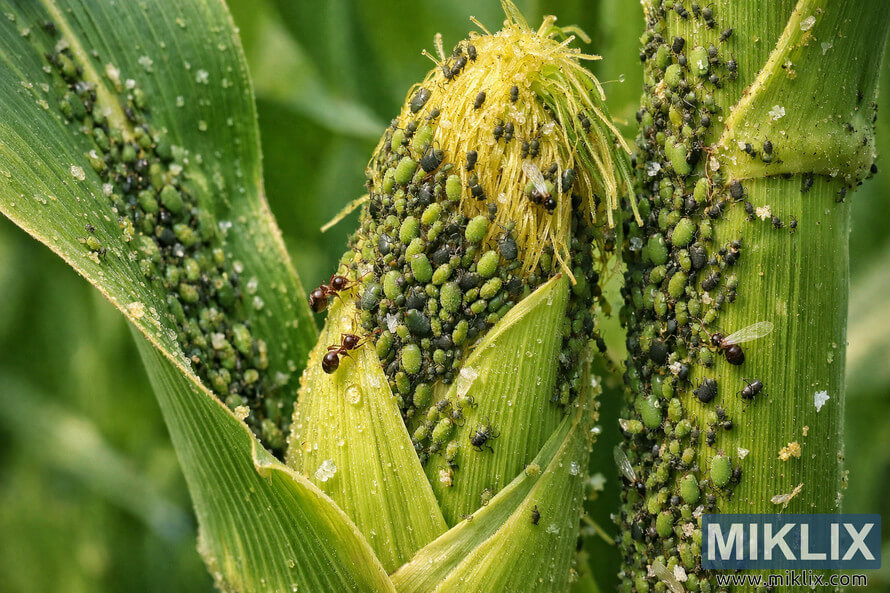
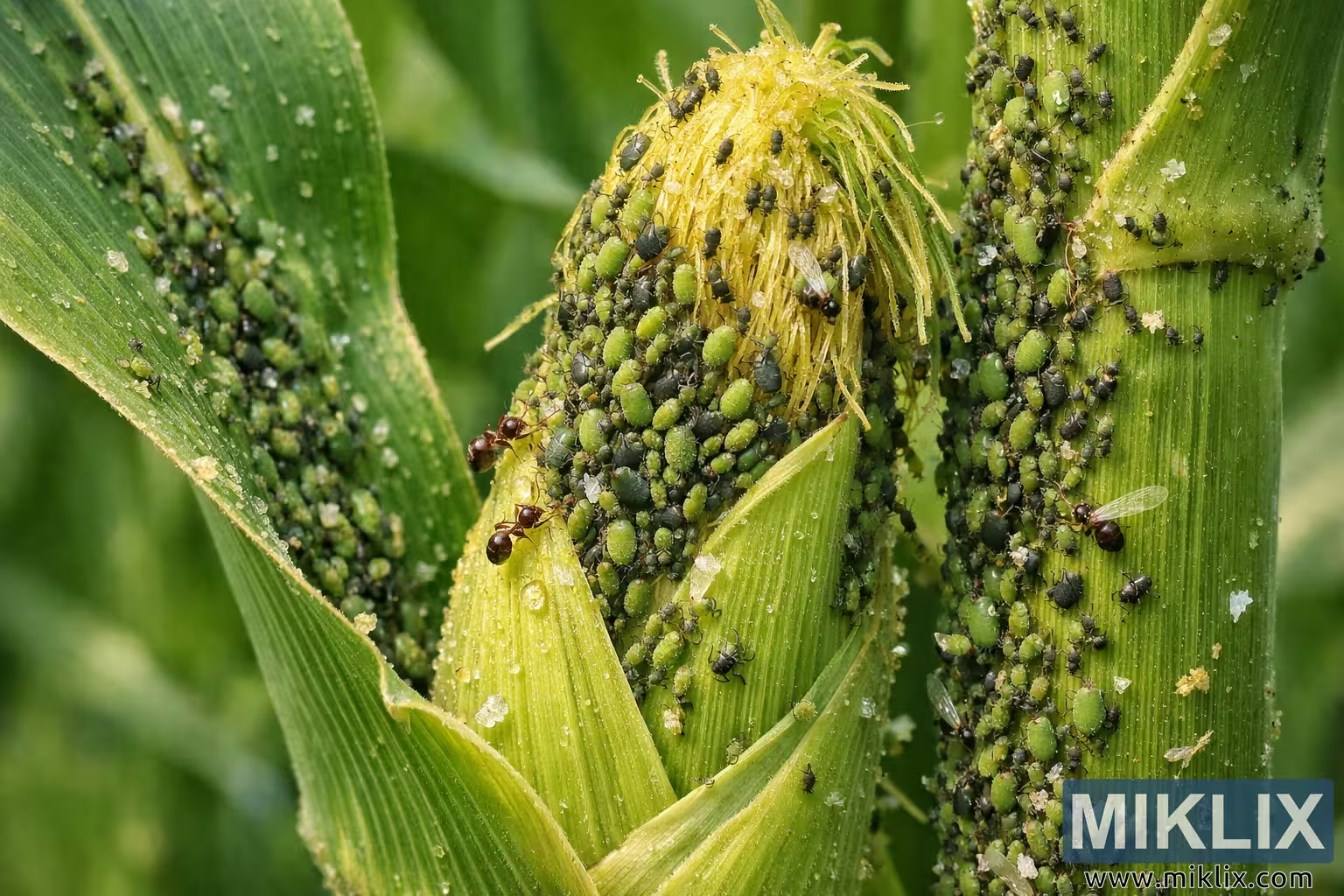
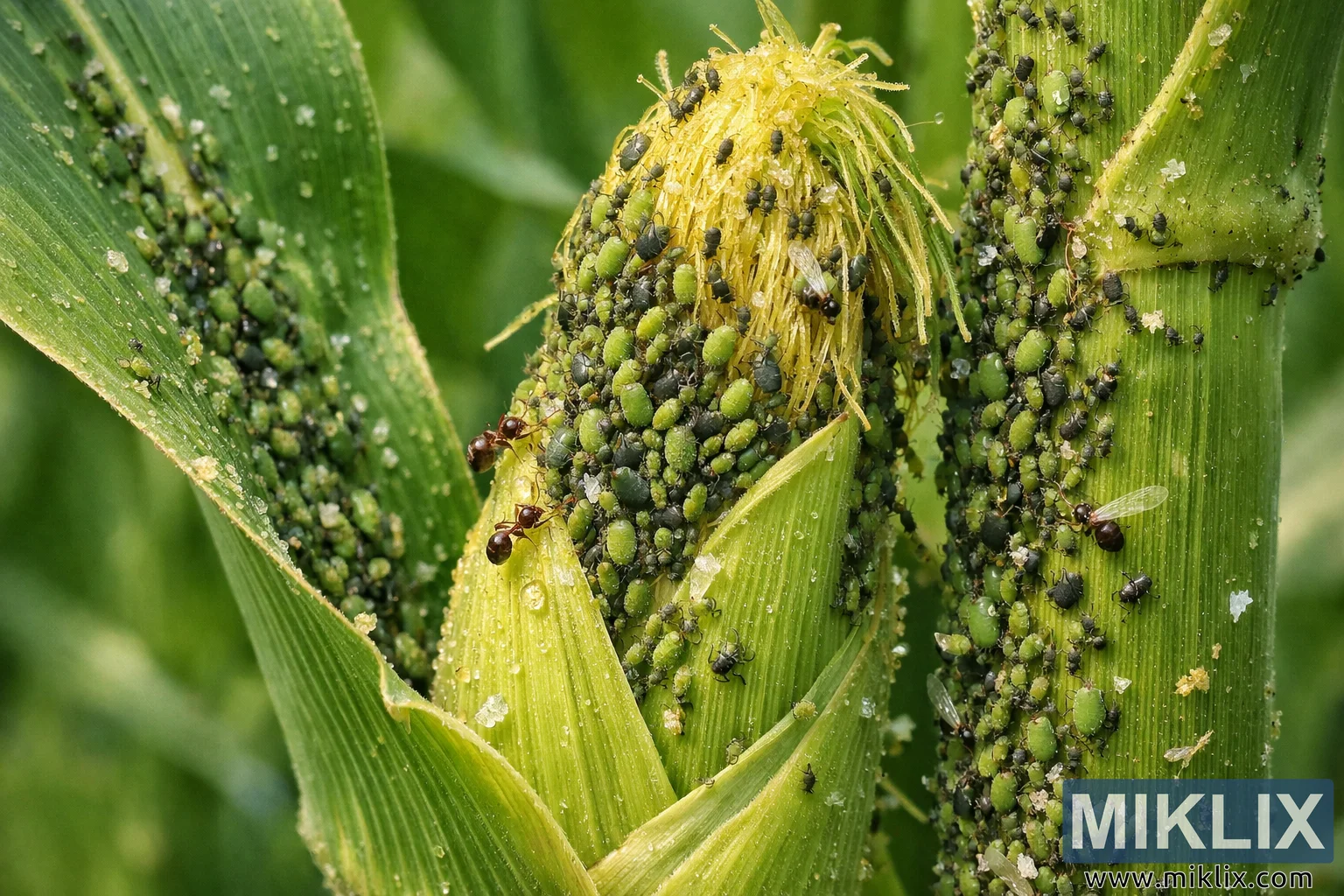
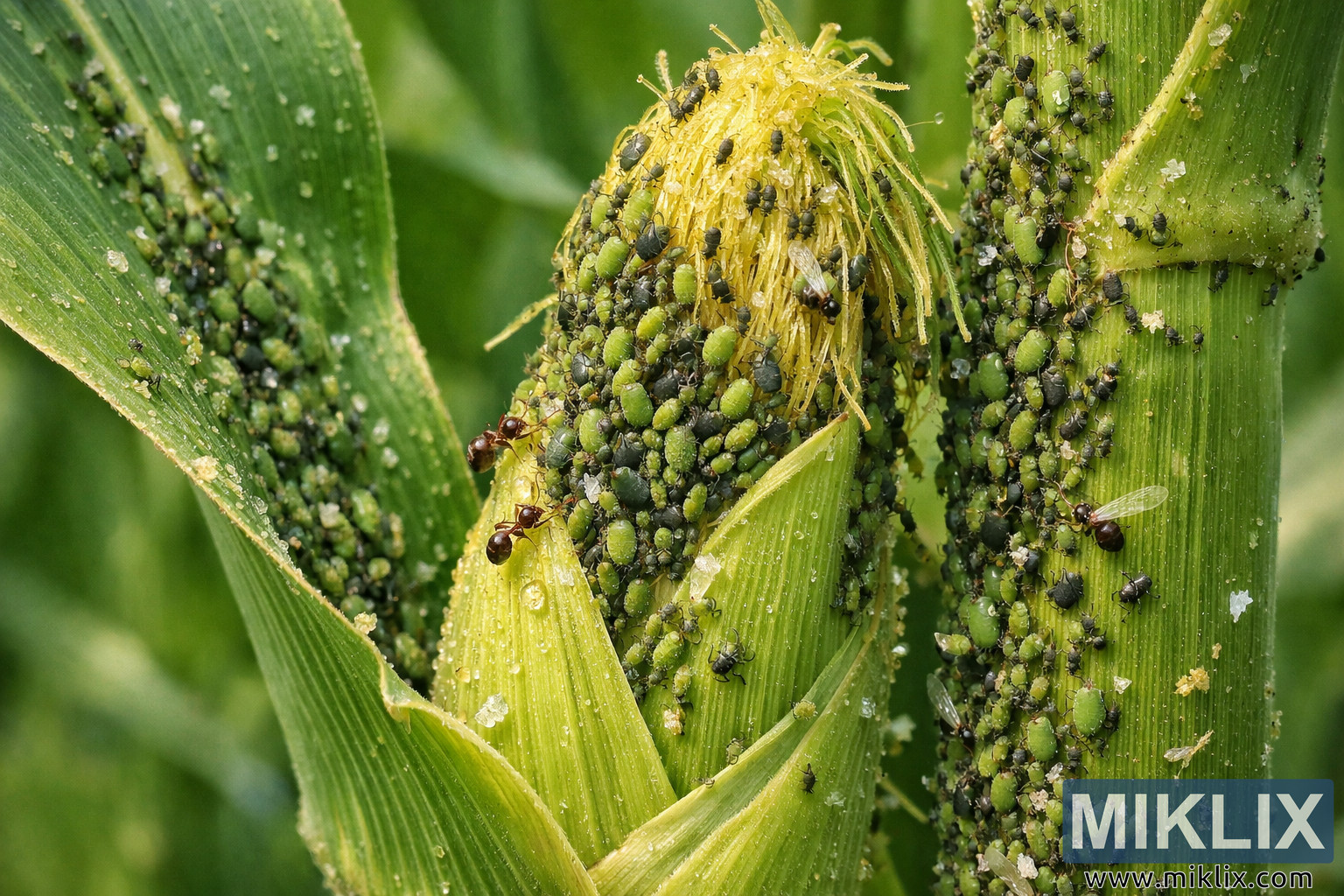
Detailed macro photograph showing a corn plant heavily infested with aphids clustered along the silk, husk, and leaves, with ants attracted to the sugary honeydew.
Corn Plant Under Heavy Aphid Infestation
Matoleo yanayopatikana ya picha hii
Faili za picha zinazopatikana kwa kupakuliwa hapa chini hazijabanwa sana na zina ubora wa juu zaidi - na kutokana na hilo, ubora wa juu zaidi - kuliko picha zilizopachikwa katika makala na kurasa kwenye tovuti hii, ambazo zimeboreshwa zaidi kwa ukubwa wa faili ili kupunguza matumizi ya kipimo data.
Ukubwa wa kawaida (1,536 x 1,024)
Ukubwa mkubwa (3,072 x 2,048)
Ukubwa mkubwa sana (4,608 x 3,072)
Ukubwa mkubwa zaidi (6,144 x 4,096)
Ukubwa mkubwa wa vichekesho (1,048,576 x 699,051)
- Bado inapakia... ;-)
Maelezo ya picha
A high-resolution macro photograph captures a corn plant experiencing a severe aphid infestation. The composition focuses on a developing ear of corn positioned near the center of the frame, partially wrapped in green husk leaves. Emerging from the top of the ear, a bundle of pale yellow corn silk strands spreads outward, forming a soft textured focal point. Covering nearly every visible surface of the silk, husk, and surrounding leaves are dense clusters of aphids in various shades of green and dark olive to black. The insects gather in tightly packed colonies, their small pear-shaped bodies overlapping as they feed on the plant’s sap.
The aphids are distributed across multiple parts of the plant. Large groups cluster along the ridges of the corn husk, while others blanket the silk strands at the top of the ear. Additional colonies spread along the adjacent leaf surfaces, especially where the leaves fold or curve toward the ear. The insects vary slightly in size and color, suggesting different developmental stages. Some individuals appear darker and more mature, while many are bright green and semi-translucent. Their tiny legs and antennae are visible in the close-up view, emphasizing the extreme level of detail in the macro shot.
Among the aphids, several ants can be seen moving across the plant. The ants appear glossy and dark brown, and they navigate between the aphid clusters while collecting sticky droplets of honeydew produced by the feeding insects. Small glistening droplets of this sugary residue are visible on the plant surface, especially along the husk and silk. These droplets catch the light and create subtle highlights across the textured green leaves.
The corn leaves themselves display strong linear veins and a smooth waxy surface typical of maize foliage. Their vibrant green color contrasts with the yellow silk and the darker insects. Some areas of the leaf show scattered pale specks or residue from aphid activity. The edges of the leaves curve inward, framing the ear and helping concentrate the viewer’s attention on the infestation.
In the background, the scene fades into a soft, blurred green environment created by shallow depth of field. This bokeh effect isolates the subject and enhances the clarity of the aphids, ants, and plant textures in the foreground. The overall lighting is natural and even, suggesting outdoor daylight conditions in a field or garden setting.
The image conveys both the biological complexity and the agricultural impact of aphid infestations on corn plants. By capturing the insects, plant structures, and symbiotic ant activity in sharp macro detail, the photograph illustrates how rapidly aphids can colonize a crop and dominate its surfaces.
Picha inahusiana na: Growing Corn: Your Complete Guide to Sweet Success in the Garden