
Picha: Parsnip Root Deformities and Growth Variations on Wooden Surface
Iliyochapishwa:
Mara ya mwisho kusasishwa: 18 Machi 2026, 20:43:50 UTC
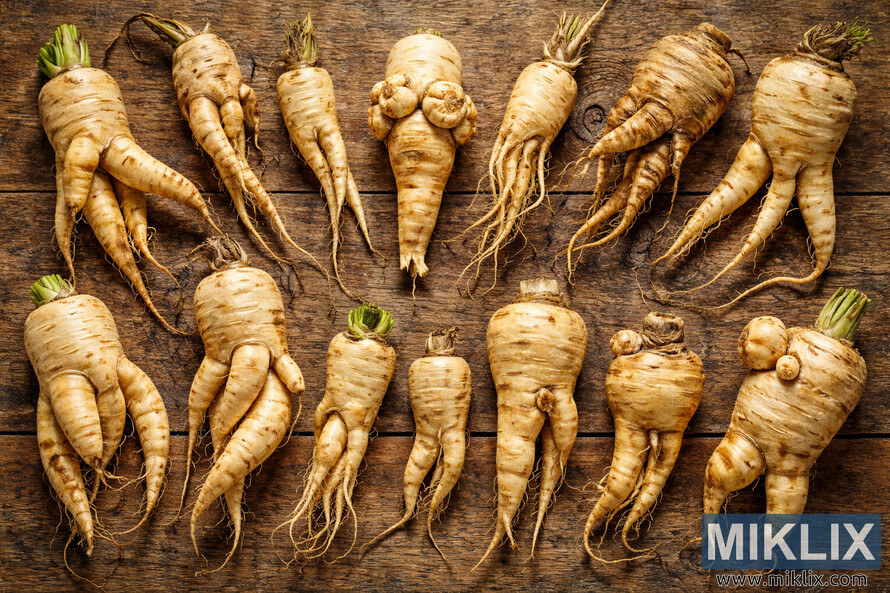
High-resolution image showing multiple parsnip root deformities including forked, knotted, and twisted growth patterns displayed on a wooden surface.
Parsnip Root Deformities and Growth Variations on Wooden Surface
Matoleo yanayopatikana ya picha hii
Faili za picha zinazopatikana kwa kupakuliwa hapa chini hazijabanwa sana na zina ubora wa juu zaidi - na kutokana na hilo, ubora wa juu zaidi - kuliko picha zilizopachikwa katika makala na kurasa kwenye tovuti hii, ambazo zimeboreshwa zaidi kwa ukubwa wa faili ili kupunguza matumizi ya kipimo data.
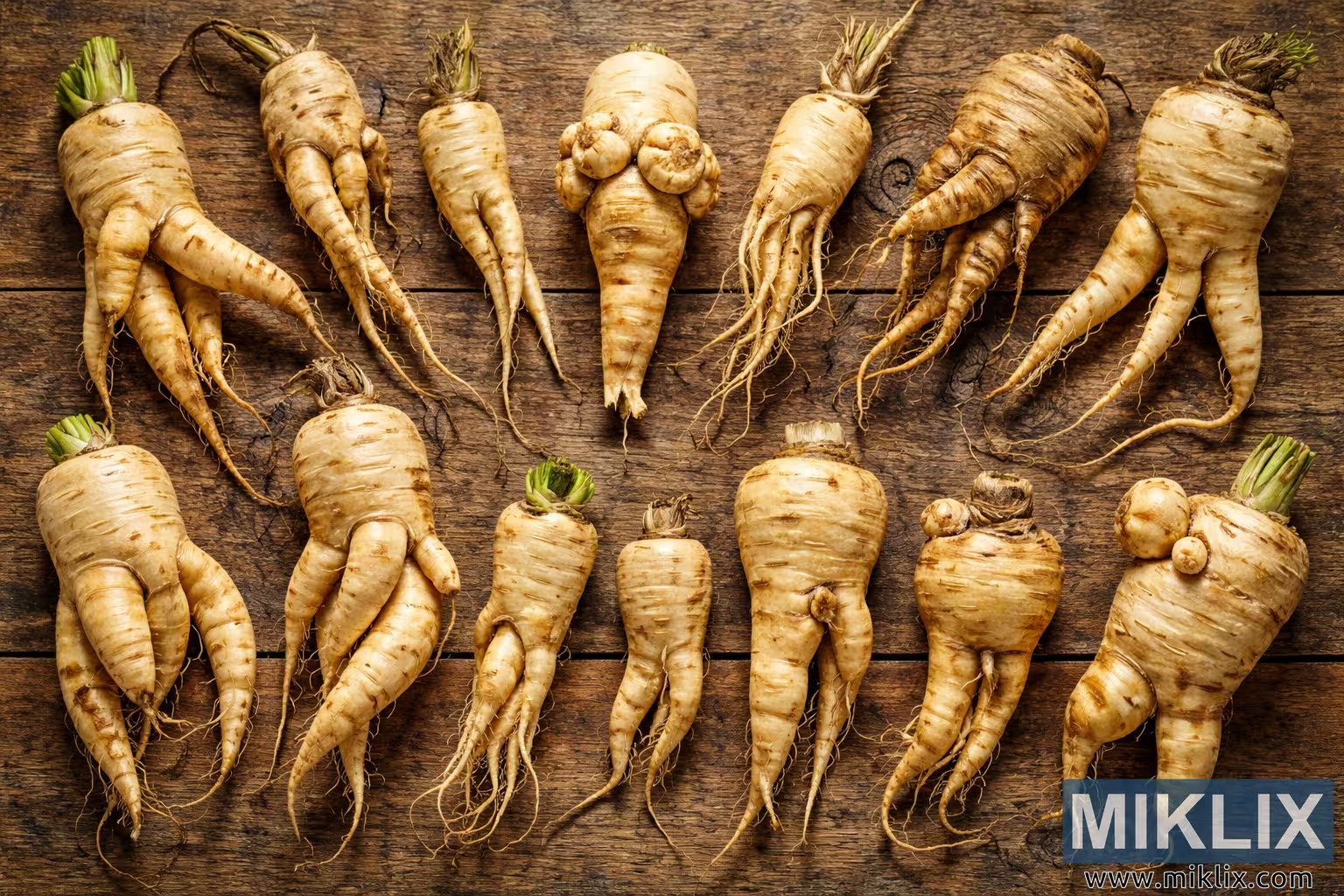
Ukubwa wa kawaida (1,536 x 1,024)
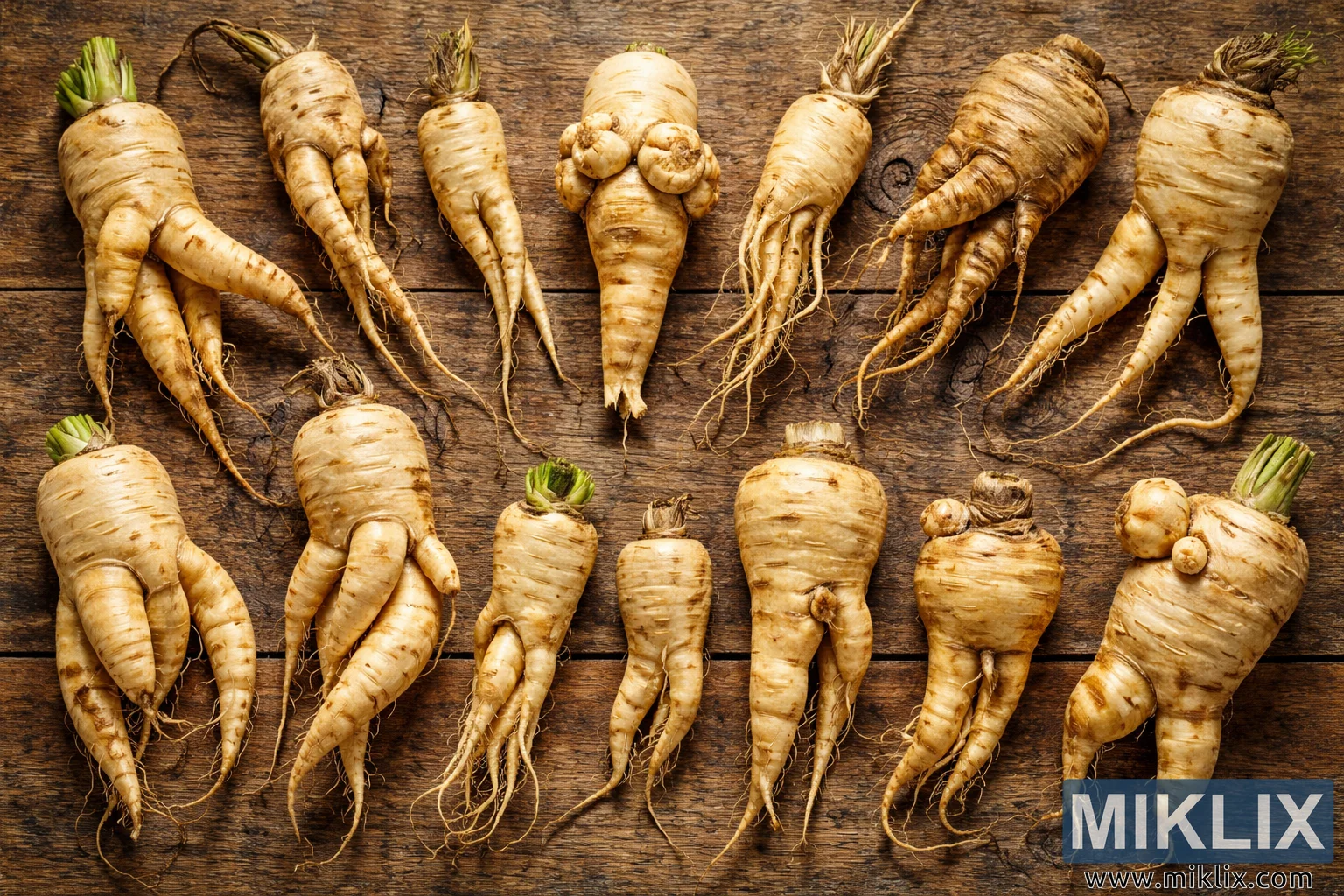
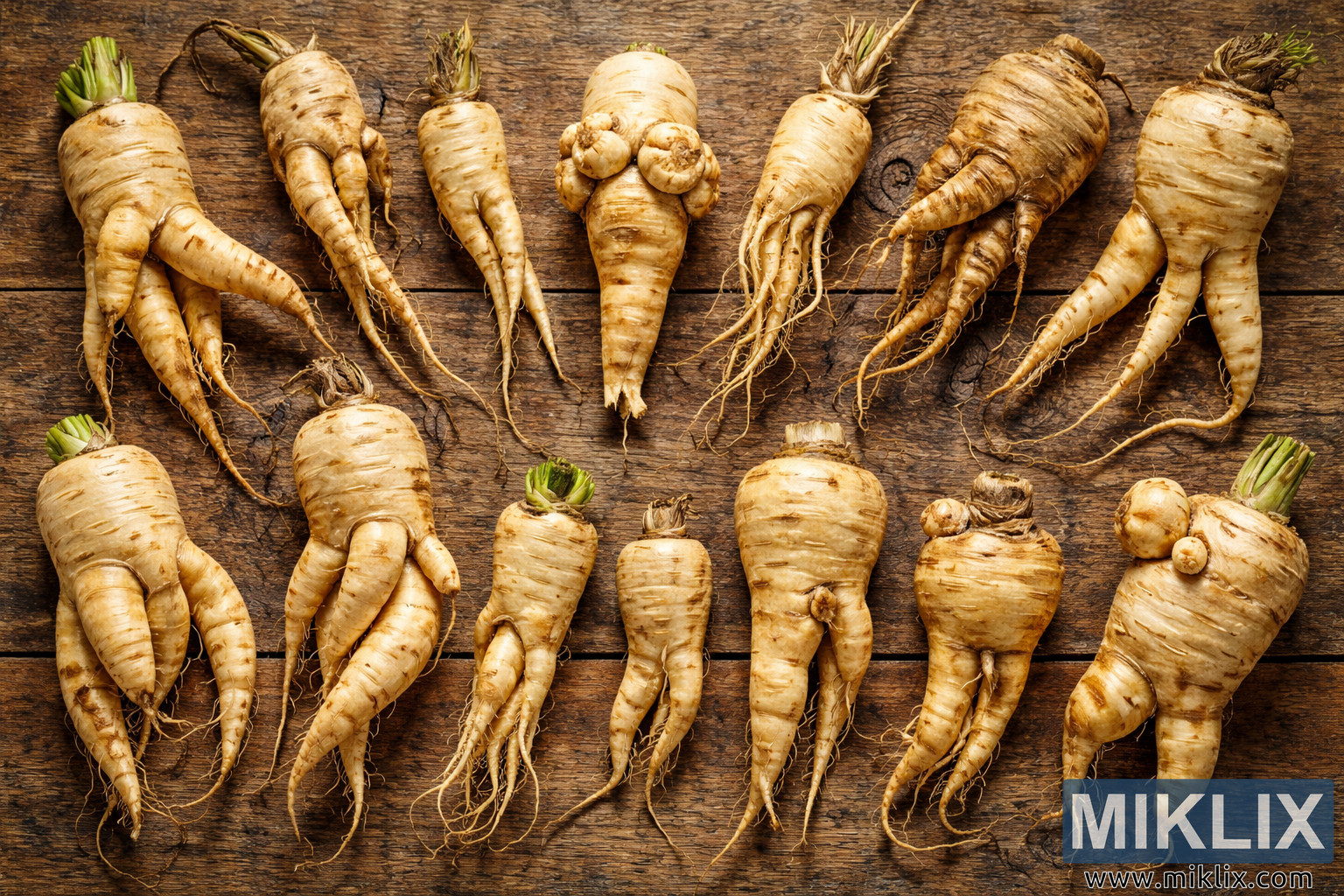
Ukubwa mkubwa (3,072 x 2,048)
Ukubwa mkubwa sana (4,608 x 3,072)
Ukubwa mkubwa zaidi (6,144 x 4,096)
Ukubwa mkubwa wa vichekesho (1,048,576 x 699,051)
- Bado inapakia... ;-)
Maelezo ya picha
A high-resolution landscape photograph displays a carefully arranged assortment of parsnip roots exhibiting a wide variety of deformities and unusual growth patterns. The vegetables are placed on a rustic wooden surface made of weathered boards with visible grain, cracks, and warm brown tones that contrast with the pale cream color of the roots. The composition is organized in rows, allowing viewers to easily compare the many different shapes and structures formed during abnormal root development.
Each parsnip displays distinctive morphological features. Some roots are strongly forked, splitting into two or more thick branches that resemble legs or prongs. Others show multiple thin rootlets extending from a central root body, creating tangled or whisker-like clusters. A few specimens appear swollen or bulbous at the crown, forming rounded masses with smaller protruding nodules or secondary roots emerging from the surface. Several roots curve or twist irregularly, suggesting growth interference within compacted or obstructed soil.
The upper portions of some parsnips still retain small remnants of green leaf bases, while others show trimmed stems where foliage has been removed. The skin texture varies slightly between roots, with faint ridges, shallow grooves, and patches of soil staining that highlight the natural irregularities of the crop. Subtle color variations range from pale ivory to light tan with occasional darker streaks where soil once adhered.
The wooden background provides a neutral yet visually rich surface that enhances the agricultural theme of the image. The boards run horizontally across the frame, and their rough texture emphasizes the organic character of the produce. Soft, even lighting illuminates the scene without harsh shadows, allowing the viewer to clearly observe each deformity and structural feature of the roots.
Overall, the image functions as a visual comparison of parsnip root abnormalities and growth variations. It demonstrates how environmental factors such as soil compaction, obstacles, nutrient imbalance, or pest damage can influence root morphology. By presenting many examples side by side, the photograph highlights the diversity of shapes that can occur when root crops develop under non-ideal conditions, making the image useful for educational, agricultural, or horticultural contexts.
Picha inahusiana na: Growing Parsnips: Your Complete Guide to Sweet, Homegrown Roots