
Picha: Healthy vs Underwatered vs Overwatered Citrus Leaves Comparison
Iliyochapishwa:
Mara ya mwisho kusasishwa: 25 Machi 2026, 19:06:04 UTC
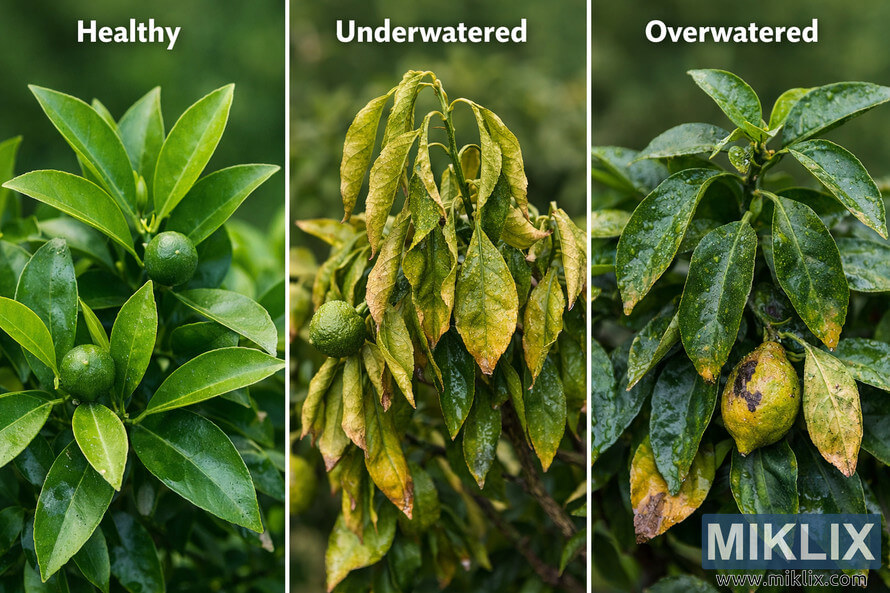
Visual comparison of healthy, underwatered, and overwatered citrus plant foliage, highlighting leaf color, structure, and fruit condition under different watering conditions.
Healthy vs Underwatered vs Overwatered Citrus Leaves Comparison
Matoleo yanayopatikana ya picha hii
Faili za picha zinazopatikana kwa kupakuliwa hapa chini hazijabanwa sana na zina ubora wa juu zaidi - na kutokana na hilo, ubora wa juu zaidi - kuliko picha zilizopachikwa katika makala na kurasa kwenye tovuti hii, ambazo zimeboreshwa zaidi kwa ukubwa wa faili ili kupunguza matumizi ya kipimo data.
Ukubwa wa kawaida (1,536 x 1,024)
Ukubwa mkubwa (3,072 x 2,048)
Ukubwa mkubwa sana (4,608 x 3,072)
Ukubwa mkubwa zaidi (6,144 x 4,096)
Ukubwa mkubwa wa vichekesho (1,048,576 x 699,051)
- Bado inapakia... ;-)
Maelezo ya picha
The image presents a high-resolution, landscape-oriented, side-by-side comparison of citrus plant foliage under three different watering conditions: healthy, underwatered, and overwatered. The composition is divided into three vertical panels of equal width, each clearly labeled at the top with bold white text identifying the condition shown. The background in all three panels consists of softly blurred green foliage, creating a natural garden setting that keeps the viewer’s focus on the citrus leaves in the foreground.
In the left panel, labeled "Healthy," the citrus plant displays vibrant, glossy green leaves with smooth surfaces and well-defined veins. The leaves are firm, slightly curved, and arranged in a balanced cluster around the stem, suggesting strong plant vitality. Small green citrus fruits are visible nestled among the leaves, round and intact with smooth skins. The foliage appears fresh and hydrated, with subtle highlights that indicate natural moisture and sunlight reflecting off the leaf surfaces. Overall, this section conveys a robust, well-maintained plant growing under optimal watering conditions.
The center panel, labeled "Underwatered," shows a citrus branch suffering from insufficient water. The leaves are noticeably wilted and drooping downward, with edges curling and folding inward. Their color has shifted from vibrant green to pale green and yellowish tones, and some leaves appear thin, wrinkled, or slightly browned near the tips. The overall texture of the foliage looks dry and fatigued. A small citrus fruit is still present but appears less healthy and slightly dull compared to the fruit in the healthy panel. The posture of the leaves conveys dehydration, making the plant appear stressed and weakened.
In the right panel, labeled "Overwatered," the citrus plant displays a different set of stress symptoms associated with excess water. The leaves remain relatively large and full but appear darker and heavier, with visible moisture droplets clinging to their surfaces. Several leaves show yellowing patches along the edges and tips, suggesting nutrient imbalance or root stress caused by overly saturated soil. A citrus fruit hangs beneath the leaves, displaying discoloration and dark blemishes that indicate possible rot or disease linked to excessive moisture. While the leaves are not wilted like those in the underwatered panel, their condition clearly indicates poor plant health.
Together, the three panels form an educational visual comparison illustrating how different watering practices affect citrus plant foliage and fruit. The clear labels, consistent framing, and contrasting leaf conditions help viewers easily identify the visual symptoms associated with proper hydration, drought stress, and overwatering.
Picha inahusiana na: Growing Tangerines: The Complete Guide to Sweet Success in Your Home Garden