
Picha: Okra Pods at Different Maturity Stages Comparison
Iliyochapishwa:
Mara ya mwisho kusasishwa: 17 Machi 2026, 21:38:12 UTC
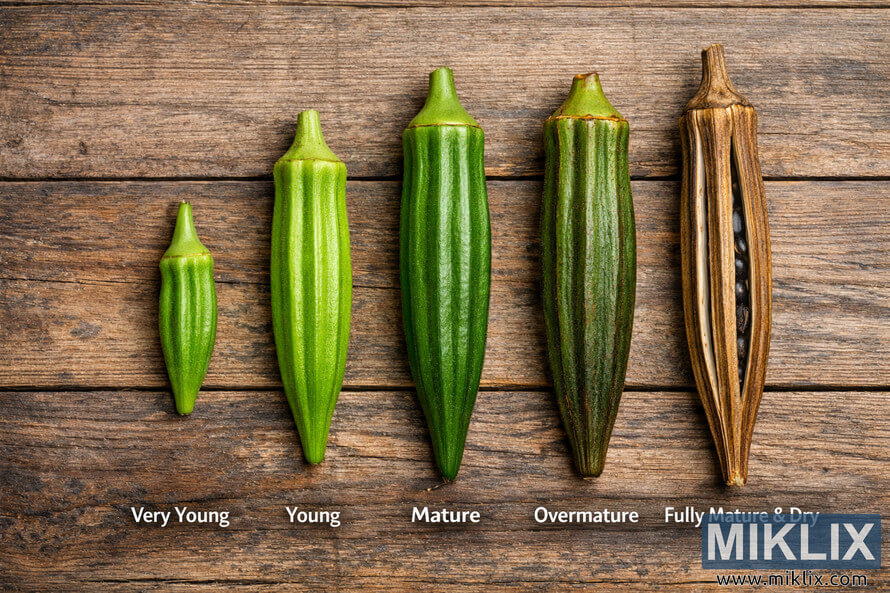
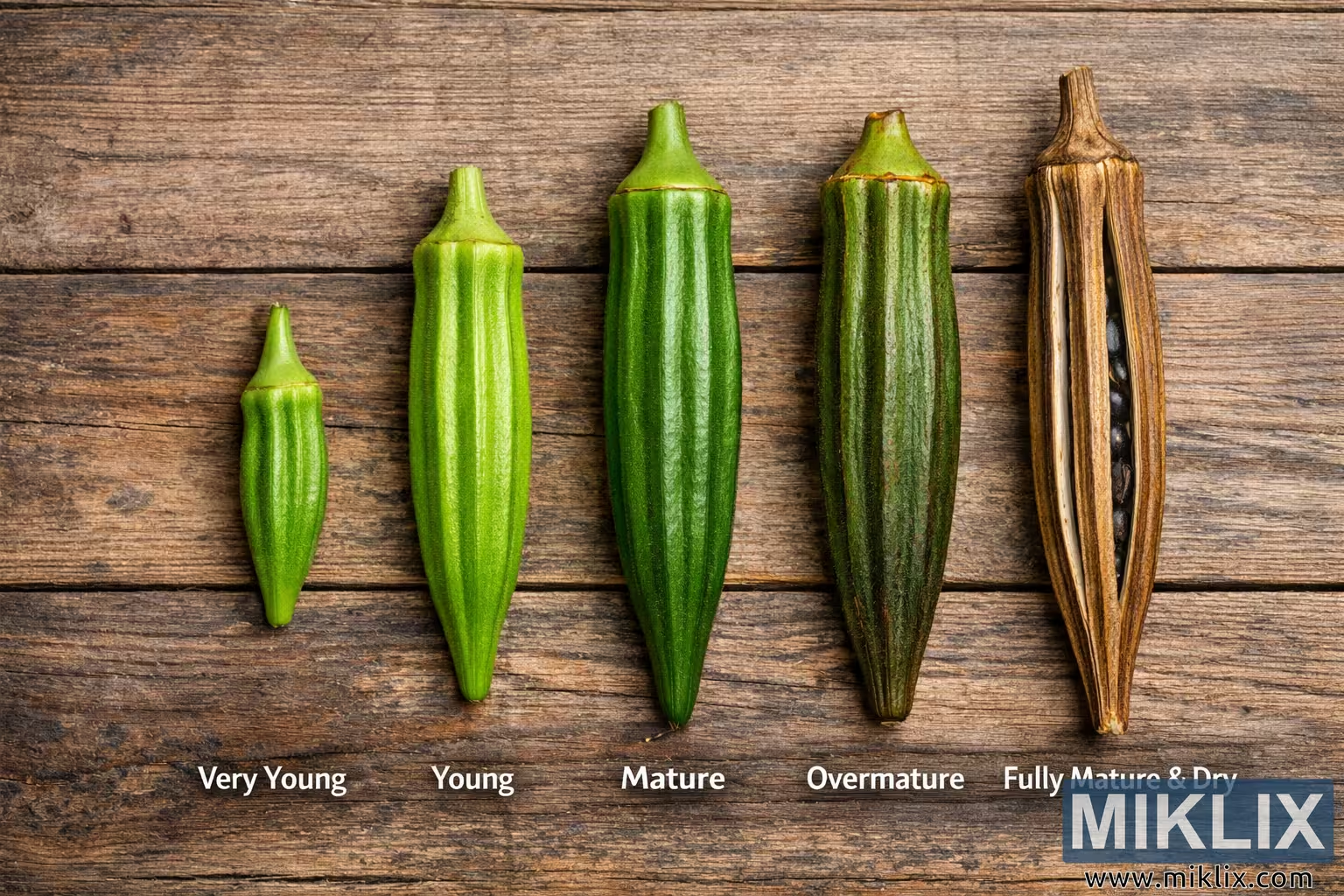
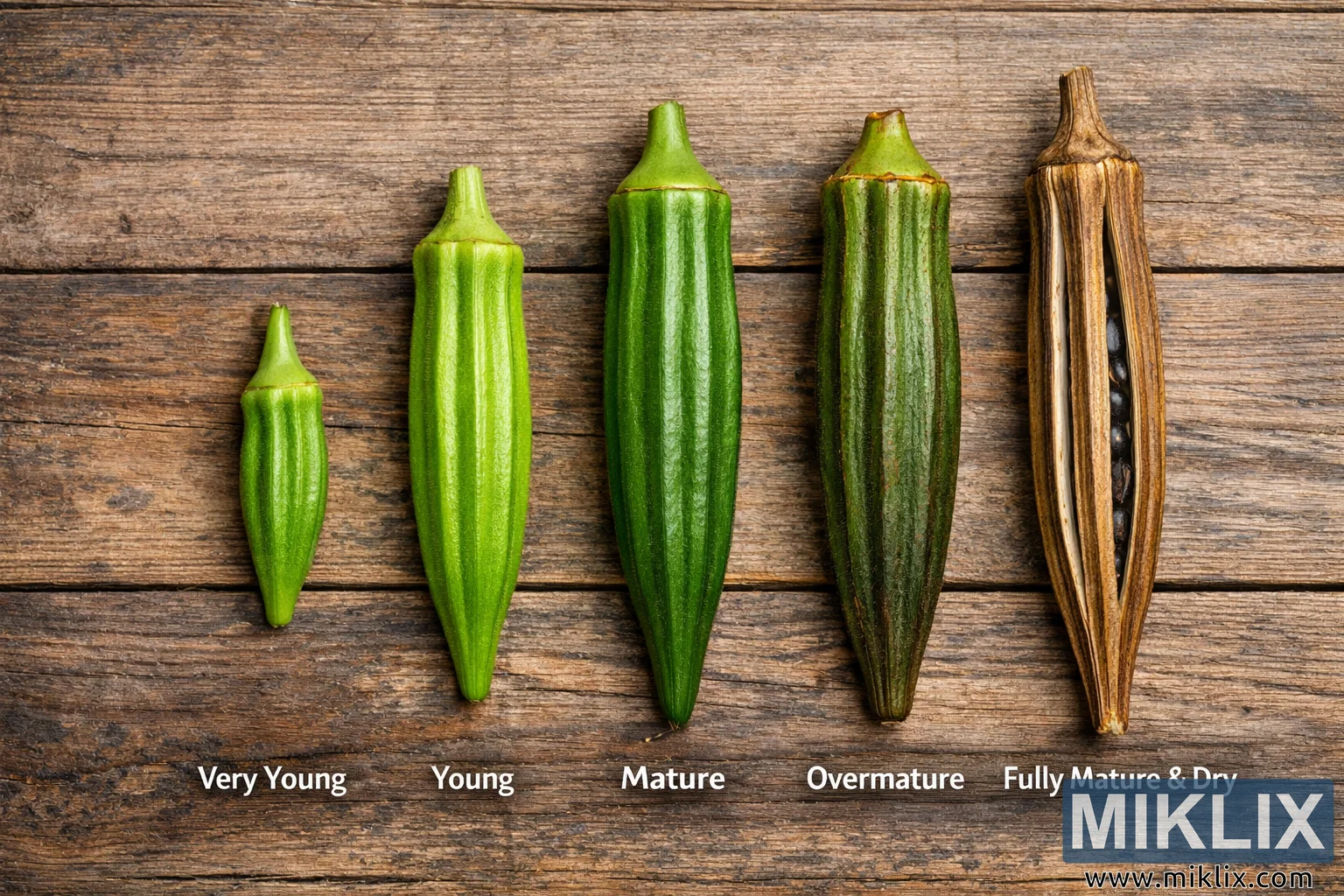
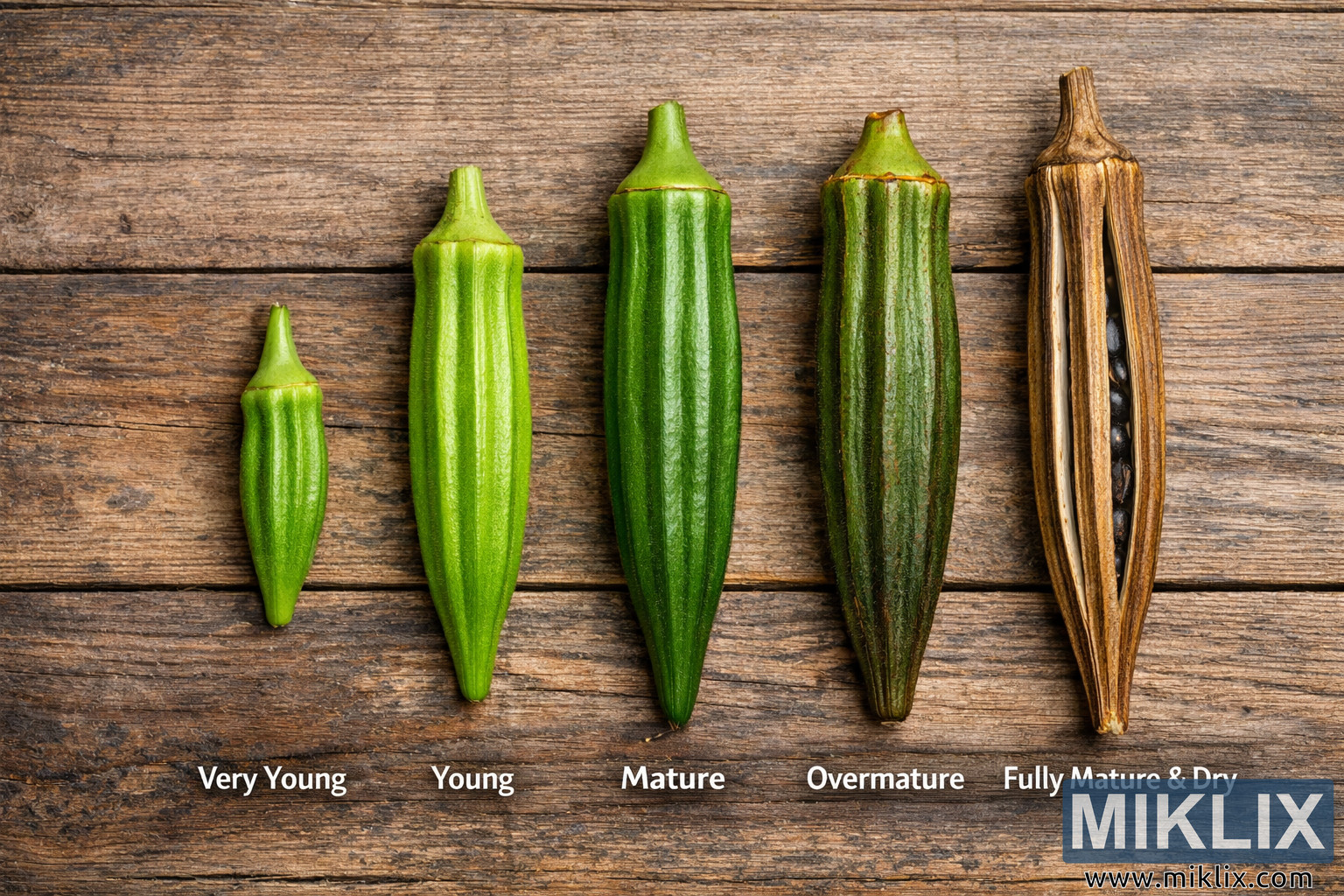
High-resolution comparison of okra pods at five maturity stages, illustrating changes in size, color, and texture from very young green pods to fully mature dry pods.
Okra Pods at Different Maturity Stages Comparison
Matoleo yanayopatikana ya picha hii
Faili za picha zinazopatikana kwa kupakuliwa hapa chini hazijabanwa sana na zina ubora wa juu zaidi - na kutokana na hilo, ubora wa juu zaidi - kuliko picha zilizopachikwa katika makala na kurasa kwenye tovuti hii, ambazo zimeboreshwa zaidi kwa ukubwa wa faili ili kupunguza matumizi ya kipimo data.
Ukubwa wa kawaida (1,536 x 1,024)
Ukubwa mkubwa (3,072 x 2,048)
Ukubwa mkubwa sana (4,608 x 3,072)
Ukubwa mkubwa zaidi (6,144 x 4,096)
Ukubwa mkubwa wa vichekesho (1,048,576 x 699,051)
- Bado inapakia... ;-)
Maelezo ya picha
This high-resolution landscape photograph presents a clear visual comparison of okra pods at five different maturity stages arranged horizontally from left to right on a rustic wooden surface. The background consists of weathered wooden planks with visible grain patterns, cracks, and warm brown tones that create a natural agricultural setting and provide contrast against the vibrant green pods. The composition is symmetrical and educational, with each pod carefully aligned and evenly spaced so viewers can easily observe the progression of growth and aging.
The first pod on the far left represents the "Very Young" stage. It is the smallest pod in the lineup, narrow and delicate, with a bright fresh green color and smooth surface. Its compact size and tender appearance suggest an early developmental stage shortly after the pod begins forming. The second pod labeled "Young" is slightly larger and fuller, still bright green but more defined in shape. Its ridges are slightly more pronounced and its length indicates the pod has continued developing while still remaining tender and suitable for harvest.
The third pod, labeled "Mature," is noticeably larger and thicker than the first two. It has a deeper green color and a more substantial, firm appearance. The ridges along the pod are well defined and the overall shape appears fully developed. This stage represents a typical harvest size where the pod is still edible but approaching peak maturity.
The fourth pod, labeled "Overmature," shows the beginning signs of aging. Its color has shifted to a darker green with subtle brownish tones, and the surface appears tougher and slightly dull compared to the earlier pods. The pod looks thicker and heavier, indicating that the seeds inside have begun to develop more fully and the outer shell has started to harden.
The final pod on the far right is labeled "Fully Mature & Dry." Unlike the others, it is brown and woody in appearance. The pod has split open lengthwise, revealing the dark seeds inside. Its dry, fibrous texture contrasts strongly with the smooth green pods earlier in the sequence, clearly illustrating the final stage of the plant's reproductive cycle when the pod has completely matured and dried for seed dispersal.
Beneath each pod is a simple label identifying its stage of development: "Very Young," "Young," "Mature," "Overmature," and "Fully Mature & Dry." The labels help transform the image into an educational comparison chart. Overall, the photograph effectively demonstrates how okra pods change in size, color, texture, and structure as they progress from early growth to full maturity and drying.
Picha inahusiana na: The Complete Guide to Growing Okra in Your Home Garden