
Hops in Beer Brewing: Lubelska-Pulawy
ప్రచురణ:
చివరిగా నవీకరించబడింది: 24 మే, 2026 3:43:49 PM UTCకి
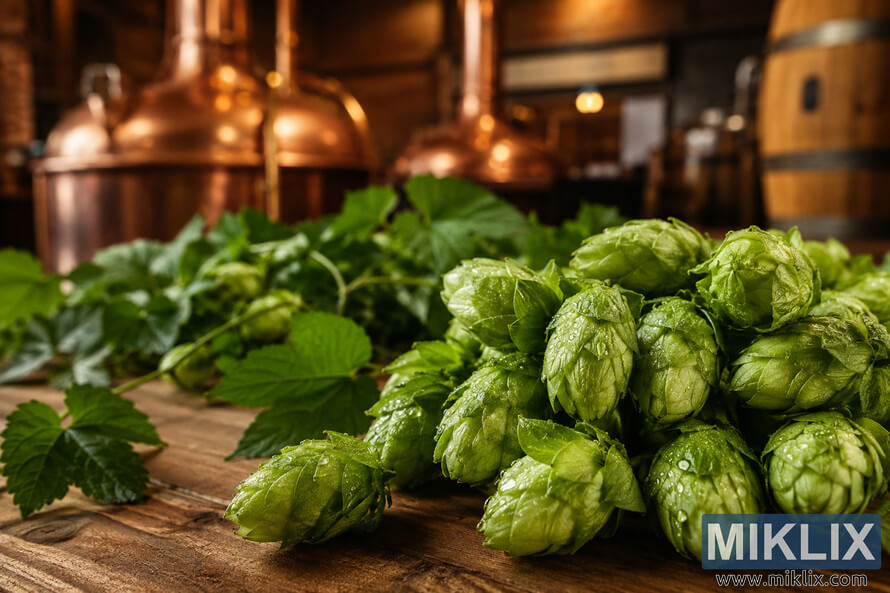
Lubelska-Pulawy, also known as Lubelski-Pulawy or Polish Lublin hops, is a classic Polish aroma variety. It was developed at the Hop Institute (IUNG) in Puławy. It entered commercial production in 1964. It is celebrated for its gentle noble character, floral lift, and suitability for late-boil and dry-hop additions.
Hops in Beer Brewing: Lubelska-Pulawy
మరింత సమాచారం మరియు అధిక రిజల్యూషన్ల కోసం చిత్రంపై క్లిక్ చేయండి లేదా నొక్కండి.
This Lubelska hop variety falls between Saaz lineage and modern European aroma types. Brewers appreciate Lubelska-Pulawy hops for their mild alpha acids and distinctive oil profile. This gives beers subtle magnolia and lavender notes without overpowering malt or yeast-driven flavors.
Key Takeaways
- Lubelska-Pulawy (Polish Lublin hops) originated at IUNG Puławy and began commercial production in 1964.
- The Lubelski-Pulawy profile favors aroma use: late-boil and dry-hop additions over heavy bittering.
- Total oil and alpha ranges make it a mild, noble-style option for lagers and light ales.
- Common substitutes include Brewer’s Gold, Nugget, and Glacier when Lubelska-Pulawy is unavailable.
- Availability in the U.S. and Canada is limited but possible through specialty suppliers and hop farms.
Introduction to Lubelska-Pulawy Hops
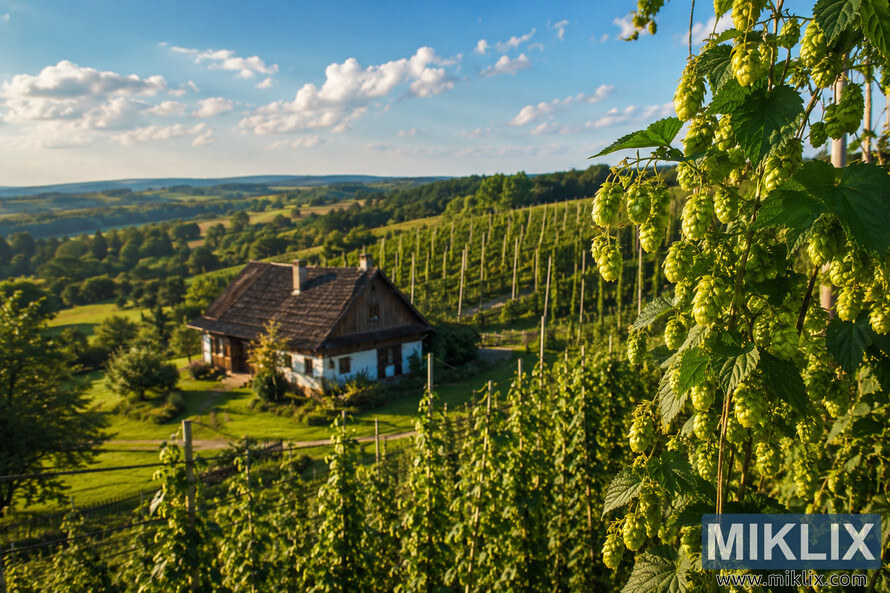
The Lubelska-Pulawy hop variety was bred to thrive in Polish soils and meet brewer demands. Its creation is linked to the Hop Institute in Puławy, known as IUNG Puławy. The goal was to preserve Saaz's noble aroma while enhancing alpha potential and climate adaptability.
First introduced in 1964, it was labeled as LUB. The history of Lubelski hop reveals a lineage from Saaz, with a focus on floral and delicate characteristics. Polish farmers widely adopted it in mainstream lagers and pilsners once it was available.
Brief history and origin
IUNG Puławy spearheaded the effort to adapt Czech genetics for Polish conditions. The aim was to create a Saaz descendant with a brighter, floral twist. Initial trials were successful, leading to increased production in the 1960s.
Growers refer to it as Lubelski, Lubelska-Pulawy, or Polish Lublin, depending on the context. It gained international acclaim and became a key ingredient in regional breweries. It also entered export catalogs for homebrewers and craft brewers worldwide.
Why Lubelska-Pulawy matters to brewers
Brewers value Lubelska-Pulawy for its subtle floral scent and clean bitterness. Its significance lies in enhancing lagers and pilsners without dominating malt or yeast flavors. It excels as a late-boil or dry-hop addition, where preserving aroma is crucial.
Its blend of noble heritage and Polish adaptation ensures consistent performance in both commercial and homebrew contexts. Brewers looking for a refined Saaz descendant often opt for Lubelska-Pulawy. It adds delicate floral notes while maintaining beer balance and drinkability.
మరింత సమాచారం మరియు అధిక రిజల్యూషన్ల కోసం చిత్రంపై క్లిక్ చేయండి లేదా నొక్కండి.
Lupulin and Oil Composition of Lubelska-Pulawy
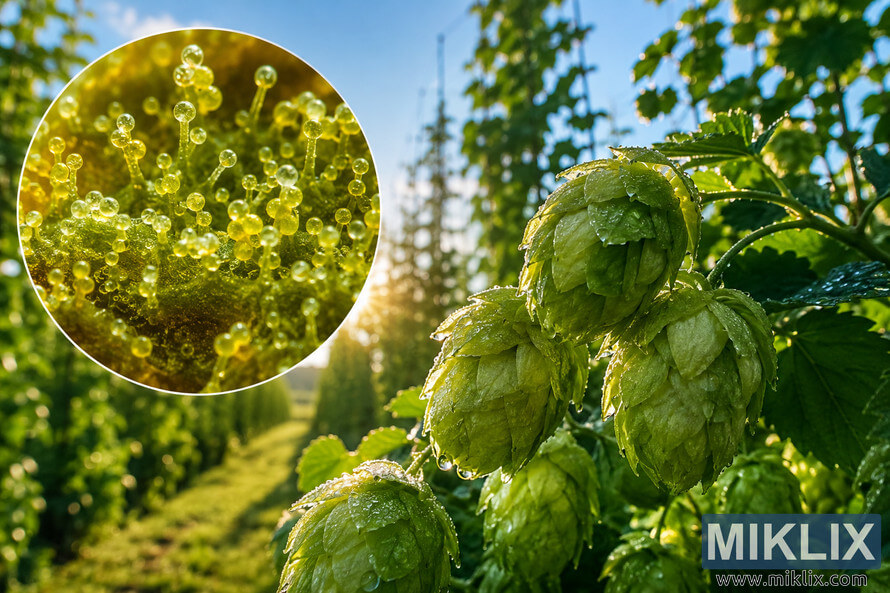
The lupulin of Lubelska-Puławy is the heart of the hop's aroma. It's known for its intense floral and green notes, especially when used in small amounts. This characteristic makes it a favorite for finishing hops, as both lab results and sensory feedback confirm.
Hop total oils in Lubelska-Puławy can vary, but one analysis shows about 0.88 mL/100g. Historical data suggests a range of 0.5 to 1.2 mL/100g, with an average around 0.9 mL/100g. This range helps explain the subtle noble aromas that persist during conditioning.
The volatile profile of Lubelska-Puławy presents two main views. One dataset shows myrcene at ~52%, humulene at ~14%, caryophyllene at 4–6%, and farnesene at about 12%. Another dataset gives a different breakdown, with myrcene at 22–35% (avg 28.5%), humulene at 30–40% (avg 35%), caryophyllene at 6–11% (avg 8.5%), and farnesene at 10–14% (avg 12%). Both views highlight the significant presence of farnesene, which contributes to floral and green notes.
In brewing, the percentages of myrcene, humulene, and farnesene are crucial. Higher myrcene levels contribute to a resinous, citrusy character. More humulene adds refined herbal and noble depth. Meanwhile, farnesene enhances the green and floral aspects, often described as magnolia or lavender-like.
- Total oil benchmarks: ~0.5–1.2 mL/100g, common report ~0.88–0.9 mL/100g.
- Typical terpene split examples: myrcene humulene farnesene percentages vary by crop and extraction method.
- Minor compounds (β-pinene, linalool, geraniol, selinene) can reach a combined share up to about 32% depending on year.
Growers at IUNG Puławy and many craft brewers focus on lupulin content Lubelska for aroma impact. This approach ensures that hop additions align with desired flavor profiles. Whether aiming for a delicate noble lift in a pilsner or a floral accent in a pale ale, lupulin content is key.
మరింత సమాచారం మరియు అధిక రిజల్యూషన్ల కోసం చిత్రంపై క్లిక్ చేయండి లేదా నొక్కండి.
Alpha and Beta Acid Profile for Brewing
Lubelska-Puławy's alpha acid range is modest, ideal for aroma-driven brewing and light bittering. Values typically range from 5% to 7%. Historical records and crop-year variations sometimes list lower figures, around 3%–5%. This variability necessitates checking current lot analysis before formulating IBUs.
Beta acid levels in Lubelska are often reported close to alpha values, between 3%–5%. Some datasets suggest beta levels are closer to 2.5%–4%. This near parity results in an alpha-beta ratio of 1:1 to 2:1, characteristic of noble-style hops. It aids in understanding long-term bitterness stability in beer.
The co-humulone percentage significantly impacts perceived bitterness. It typically ranges from 22% to 28%, with most samples around 23%–25%. A lower co-humulone percentage leads to smoother bitterness in pale lagers and pilsners. This is especially true when using Lubelska alpha acids for modest bittering.
Practically, treat Lubelska-Puławy as an aroma-first hop. Its hop bitterness profile is best suited for short-boil additions for clean, delicate bitterness. Later additions enhance aroma. When used for bittering, calculate conservatively. Rely on late additions or dry hopping to add character without harshness.
మరింత సమాచారం మరియు అధిక రిజల్యూషన్ల కోసం చిత్రంపై క్లిక్ చేయండి లేదా నొక్కండి.
Aroma and Flavor Characteristics
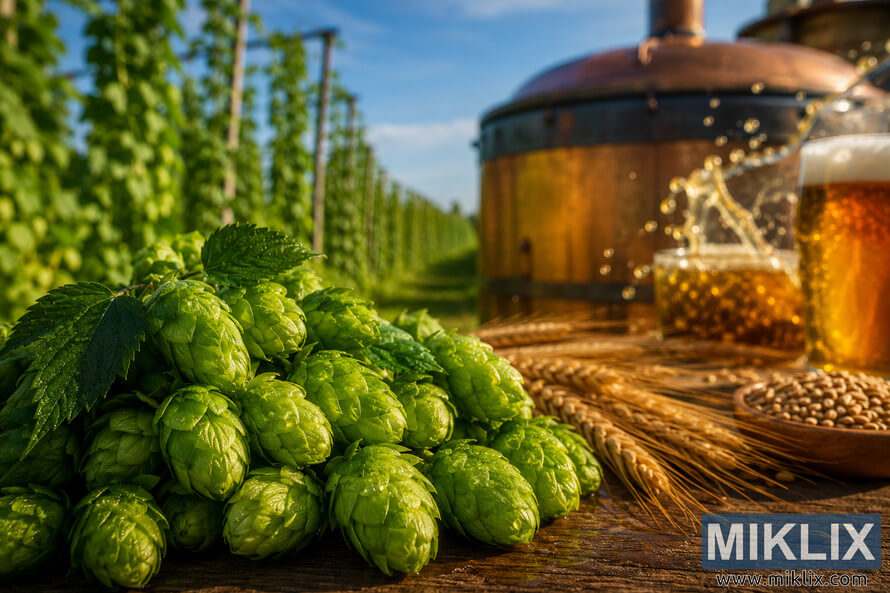
The Lubelska-Puławy hop is celebrated for its delicate aroma, a trait brewers cherish for its ability to enhance beer's finish. It offers floral and spicy notes that are perfect for late-boil and dry-hop additions. This hop is ideal for crafting pilsners, lagers, and lighter ales, where subtlety is key.
- Floral accents: The first sniff reveals magnolia lavender hops, with soft petals and sweet floral notes. These hints add a fresh bouquet to beers, standing out without overpowering malt or yeast.
- Noble hop characteristics: This hop embodies classic noble hop traits, such as a clean, European style clarity. It leans more floral than earthy, offering a lighter aroma that complements noble-focused lagers.
- Spice and herb: Brewers find a spicy herbal Lubelska element, with a mild pepper and green herb backbone. This adds depth and balances the floral side, creating a harmonious aroma in aroma-forward beers.
Trials and sensory panels highlight the hop's higher farnesene and lively lupulin scent. This enhances the fresh green and floral nuances, distinguishing Lubelska-Puławy from raw Saaz earthiness. Use brief late additions or a measured dry-hop to preserve the volatile magnolia lavender hops notes.
When crafting recipes, treat this hop as an aroma specialist. Add it in the final minutes or during conditioning to maintain the noble hop characteristics. A light touch will yield a beer with layered floral and spicy herbal Lubelska nuances, remaining elegant and drinkable.
మరింత సమాచారం మరియు అధిక రిజల్యూషన్ల కోసం చిత్రంపై క్లిక్ చేయండి లేదా నొక్కండి.
Brewing Uses: Aroma vs. Bittering
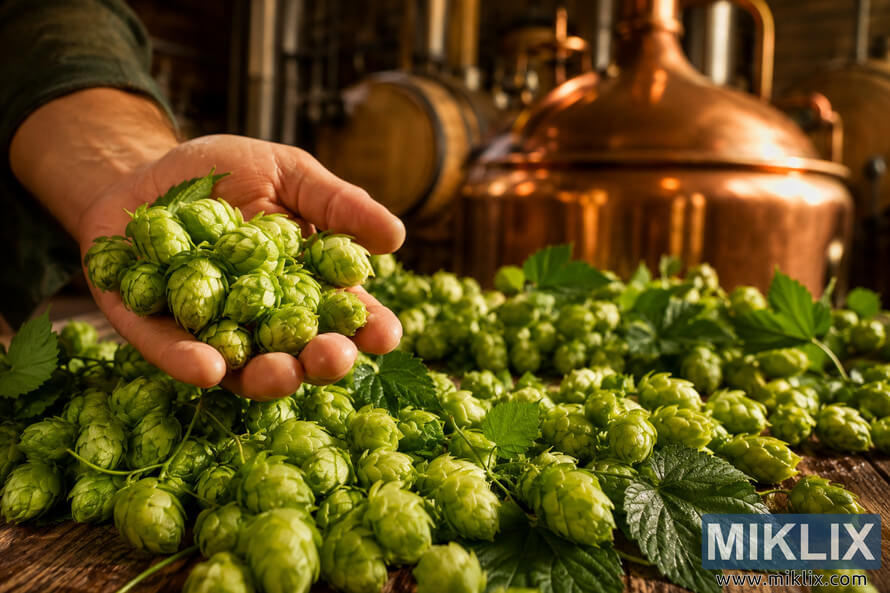
Lubelska-Puławy excels in brewing, especially when its floral and noble notes are highlighted. Its volatile oils are lost in long boils. Thus, using it for finishing and aroma preserves its delicate magnolia and lavender scents. Brewers employ late additions and post-fermentation techniques to capture these topnotes.
Timing and method are key to its use. Short late-boil additions, whirlpool rests at lower temperatures, and dry hopping showcase its essence. Used judiciously, late-boil Lubelska adds a refined floral lift without overpowering malt or yeast.
Consider these approaches:
- Late-boil or flameout additions to retain bright, volatile oils.
- Whirlpool at 70–80°C (158–176°F) for 15–30 minutes to extract aroma while limiting harsh vegetal notes.
- Dry hopping Lubelska during active fermentation (biotransformation) or in conditioning to layer fresh hop perfume.
Alpha levels allow for some bittering, especially when crops are higher. Most brewers don't rely on Lubelska for primary bitterness. Small early additions can provide a soft background bitterness. This is useful for a subtle backbone while focusing late additions on aroma.
Lubelska bittering recommendations are practical and conservative:
- Use modest early additions only when measured alpha supports it.
- Target most of the hop charge to the last 10–5 minutes, whirlpool, or dry hop stages.
- Adjust quantities to style; European lagers benefit from lighter bitterness and pronounced finishing aroma.
When crafting recipes, pair Lubelska with neutral lager yeasts or soft ale strains to let its noble profile shine. Blend with higher-alpha hops for bittering if a stronger IBU target is needed. Keep late-boil Lubelska and dry hopping Lubelska as the aroma anchors.
మరింత సమాచారం మరియు అధిక రిజల్యూషన్ల కోసం చిత్రంపై క్లిక్ చేయండి లేదా నొక్కండి.
Lubelska-Pulawy Hops and Beer Styles
Lubelska-Puławy hops introduce a delicate floral and spicy profile, ideal for a variety of European lagers and light ales. They are chosen for their subtle noble aroma and balanced bitterness. This hop variety is favored for its low alpha acids and refined oil composition, making it a staple in Polish hop styles and international pilsners.
For European lager hops, late additions or dry hopping are preferred to preserve the aroma. In pilsner brewing, Lubelska-Puławy shines as a finishing hop or for dry-hop treatment. It adds a magnolia-like floral note and a faint herbal spice, enhancing the clean malt backbone.
- Classic lagers: Mainstream Polish lagers and export pilsners benefit from light aromatic dosing to add character without shifting balance.
- Craft pilsners: Small-batch brewers use Lubelska-Puławy to create aromatic depth in modern pils designs while keeping crispness.
- Light ales: When a brewer needs a noble touch in a pale ale, a modest addition highlights nuance rather than citrus or tropical notes.
Beers for Lubelska-Pulawy include mass-market lagers like those from Perła and Żywiec-scale brewers when a floral signature is desired. Craft brewers often pair this hop with pilsner malts and lager yeast to showcase delicate spice and floral lift. Such pairings emphasize Polish hop styles while fitting clean European lager templates.
When planning a recipe, treat Lubelska-Puławy as an aroma hop first. Use it sparingly for bittering in recipes that need a gentle noble backbone. This approach ensures the character of these hops complements rather than competes with malt and yeast choices.
Growing and Agronomy of Lubelska-Pulawy
Lubelska-Pulawy was developed at the Hop Institute in Puławy to meet Poland’s climate and brewing needs. It comes from Czech Saaz and local Lublin lines. IUNG Puławy breeding aimed for aroma quality, disease resistance, and adaptability for regional farms.
Origin and breeding background
IUNG Puławy breeding created Lubelska-Pulawy for eastern Poland's reliable performance. The program started commercial releases in the 1960s. It aimed to supply both domestic and export markets. Local selection focused on noble hop character and stable growth under Polish conditions.
Field performance and yield notes
Growers find Lubelska yield modest compared to modern high-alpha varieties. Typical harvested figures near 340 kg per hectare (about 310 lbs per acre) reflect its quality focus. Management practices like balanced fertilization and trellis height can enhance cone set and harvest weight.
Seasonal timing and storability
Lubelska trends early in the harvest calendar. Early maturity simplifies scheduling on mixed hop farms and reduces overlap with later varieties. For storage, alpha retention drops over time; about 55% retention after six months at 20°C (68°F). Cold, dry storage and rapid processing after harvest help preserve the aroma profile.
Practical agronomy tips
- Monitor soil pH and potassium for consistent cone development.
- Maintain good air circulation to limit downy mildew and powdery mildew pressure.
- Plan harvest logistics around early seasonal maturity Lubelska to optimize timing.
- Use rapid cooling and vacuum packaging to slow alpha decline and protect aroma.
Harvesting, Storage, and Alpha Retention
Proper handling after pick influences oil profiles and bittering potential. Growers and brewers must treat Lubelska cones with care from field to cooler. Quick sorting, gentle handling, and fast cooling cut oxidation. These steps support aroma preservation hops while limiting alpha loss.
Alpha retention Lubelska data show about 55% of alpha acids remain after six months at 20°C (68°F). This level indicates a steady decline at ambient temperatures. Cold-chain storage preserves alpha and reduces degradation during transport to the United States and other markets.
Best hop harvesting Lubelska practices focus on timing and gentle processing. Harvest at mature but not overripe cone stage to maximize floral notes. Avoid bruising during collection and transfer. Rapid movement into breathable crates then refrigeration prevents volatile loss.
- Drying: Dry quickly to stable moisture but avoid high heat that strips oils.
- Packing: Use oxygen-minimizing packaging for whole-cone or pellet forms.
- Cold storage: Maintain low temperature and low oxygen to slow alpha decay.
For aroma preservation hops, late-kettle additions and dry hopping deliver the best floral expression. Total oil levels in Lubelska historically range from about 0.5–1.2 mL/100g. Those volatile fractions demand cool handling and minimal exposure to sunlight and heat during hop harvesting Lubelska and processing.
When planning inventory, account for alpha retention Lubelska and expected storage losses. Breweries should prioritize incoming stock for near-term use or invest in refrigerated storage. Proper Lubelska hop storage protects both aromatic character and the remaining alpha acids useful for balanced brewing.
Substitutes and Comparable Hops
When Lubelska-Puławy is scarce, brewers seek hops that replicate its soft, noble profile and modest alpha acids. They consider two categories: aroma-focused noble varieties and higher-alpha functional substitutes. Each choice alters the beer's character, so selection should align with desired aroma and bitterness levels.
Saaz is the closest match for delicate herbal and floral notes. It's often chosen as a Saaz alternative when original Saaz is hard to find. Tettnang, with its spicy-lime character, is another popular choice for brewers aiming for nuance over power.
- Saaz alternative: Ideal for light lagers and pilsners where noble perfume is essential. Its lower alpha acids ensure gentle bittering and classic aroma.
- Tettnang vs Lubelska: Opt for Tettnang if you desire a bit more herbal spice while maintaining a refined floral backbone.
For those needing higher alpha or greater availability, functional substitutes are effective. Brewer’s Gold, Nugget, and Glacier offer strong bittering with complementary herbal or resinous notes. These hops enhance the beer's bitterness but can also serve as Lubelska substitutes when needed.
- Brewer’s Gold substitute Lubelska: Employ measured amounts late in the boil or in middling additions to preserve some aromatic aspect while achieving target IBUs.
- Nugget and Glacier: Ideal when bittering is the main focus, then adjust late aroma additions to recover floral character.
Practical tips: prioritize matching substitution by aroma class first, then by alpha acid. When swapping between noble types or functional hops, adjust hop weight for higher-alpha choices. Boost late hop additions to recover the delicate Lubelska aroma.
Sensory Examples and Recipe Ideas
Lubelska-Pulawy shines when the malt bill is simple and the hop aroma takes center stage. Opt for pale pilsner or Vienna malts to create a clean base. Moderate mash temperatures prevent a heavy body that obscures the floral notes.
Focus on small, targeted recipes to emphasize magnolia and lavender. Late-kettle additions or short dry-hop periods capture delicate oils without harsh herbal flavors. A light bittering charge allows the noble spice to shine through.
- Dry-hop pale lager Lubelska: 5–10 g/L in secondary for 48–72 hours. Use a light pilsner base, 12–13°P original gravity, and neutral lager yeast such as Wyeast 2124 or Fermentis Saflager S-23.
- Light ale with Lubelska aroma: Single hop at whirlpool and dry-hop. Aim for 40–60 IBU from early additions and emphasize late additions for aroma.
Choosing the right pairings enhances the hop's subtlety. Malt pairings Lubelska should include Pilsner, Vienna, or a small portion of Munich for body. Avoid heavy caramel, roasted, or crystal malts that can overpower the floral notes.
Yeast selection is crucial. Clean lager strains highlight the noble tones. For ales, opt for neutral strains like White Labs WLP005 or Safale US-05 to keep esters low. Choose yeast strains for Lubelska that ferment clean and present a soft backbone rather than fruity complexity.
- Simple dry-hop lager Lubelska recipe idea: 5 kg Pilsner malt, 0.2 kg Vienna, single decoction or infusion mash, 10 IBU bittering, 15 g whirlpool, 8 g/L dry-hop.
- Light ale example: 4.5 kg pale malt, 0.3 kg light crystal (10L max), 25 IBU early, 10 g whirlpool, 6 g/L dry-hop with a neutral ale yeast.
Use these sensory ideas as starting points for Lubelska recipes. Test small batches, note aroma shifts with timing and dose, and refine malt pairings Lubelska and yeast strains for Lubelska to match your desired floral and spicy profile.
Comparative Analysis: Lubelska-Pulawy vs. Lubelski / Lublin
This comparison delves into family ties, growing influence, and measurable chemistry. It's a question brewers and hop buyers often ponder: how does Lubelska-Pulawy compare to older Lubelski or Lublin clones? The answers are crucial for recipe formulation and consistency.
Genetic and regional notes
- Lubelska-Pulawy originates from the classic Saaz lineage, sharing genetic ties with Czech Saaz and Polish Lubelski. This lineage explains many aroma similarities.
- Regional naming can complicate cataloging. A Lublin hop comparison often reveals the same cultivar called Lubelski or Polish Lublin in different seed registries.
Chemical and alpha variability
- Crop-to-crop numbers vary. Alpha acids for Lubelska and related Lubelski strains range roughly from 3% to 7%, which affects bittering choices.
- Lubelska chemical profile differences include total oil ranges near 0.5–1.2 mL/100g. This range changes perceived aroma intensity and hop utilization.
Aroma emphasis and sensory drift
- Saaz descendant differences show in scent: some Lubelski/Lublin clones lean more floral with lavender and magnolia tones.
- Other Saaz-like plants, including Lubelska-Pulawy, can show earthier or spice hints depending on terroir and harvest year.
Practical brewing implications
- When a brewer faces Lubelska vs Lubelski choices, late additions and dry hopping favor aroma clarity from higher oil samples.
- For bittering, selecting batches with consistent alpha values matters; Lublin hop comparison across suppliers helps maintain target IBUs.
Checklist for buyers
- Request batch analysis for alpha and oil totals before scaling a recipe.
- Compare sensory notes from suppliers to spot Saaz descendant differences that suit the beer style.
- Adjust hop timing if Lubelska chemical profile differences show higher or lower myrcene or farnesene numbers.
Polish Hop Breeding and the Role of IUNG Puławy
IUNG Puławy has revolutionized Polish hop breeding by merging Central European genetics with Poland’s climate. Breeders aimed to enhance alpha potential, disease resistance, and aroma stability. This approach has led to hops that cater to both macro and craft breweries, regardless of the season.
Polish hop breeding combines traditional selection with targeted crosses. Starting with Saaz lineage, breeders selected plants that maintained noble character while increasing yield and alpha. This effort has resulted in a set of dependable cultivars, well-suited for local soils and international markets.
Key Polish hop varieties include those from the Lubelska family. Sybilla and Marynka were bred for dual-purpose use. Sybilla offers moderate alpha and floral aroma. Marynka, with higher alpha, brings distinct earthy and licorice tones, ideal for bittering and aroma balance.
- Junga: a cross involving Marynka, prized for high alpha used in bittering.
- Puławski: released in 2012, with floral and herbal notes and solid alpha.
- Lomic and Magnat: aromatic daughters of Northern Brewer and local lines.
- Tomyski and Oktawia: examples of older and newer cultivars from ongoing programs.
These Polish hop varieties cater to a wide range of brewing objectives. Brewers can opt for aroma-forward Lubelska descendants or high-alpha lines for cost-effective bittering. IUNG Puławy hops are pivotal in Poland’s quest to supply adaptable, flavorful hops globally.
Lubelska-Pulawy hops
Here's a brief technical overview and practical advice for brewers using Lubelska-Puławy. It's a handy guide for formulating, hopping, and understanding aroma contributions.
- Technical spec sheet: Alpha acids range from 5%–7%, beta acids from 3%–5%, and co-humulone is about 23%–25%. These numbers are common on Lubelska spec sheets, setting the stage for bittering potential.
- Oil summary: Total oil averages around 0.88 mL/100g. Myrcene is typically 52%, humulene 14%, caryophyllene 4%–6%, and farnesene 12% in most reports.
- Variability note: Crop years alternate, showing alpha acids 3%–5% and oils 0.5–1.2 mL/100g. Myrcene and humulene levels vary. Always check the latest Lubelska technical specs before dosing.
Practical brewing notes for those focusing on aroma
- Use late-kettle additions and dry-hop for noble aromas like magnolia and lavender. Lubelska brewing notes emphasize aroma over bittering.
- Small early additions can add gentle bitterness if the alpha is confirmed. Use the Lubelska spec sheet to estimate IBU contributions before setting bittering rates.
- Pair with neutral Pilsner or Vienna malts and clean lager or neutral ale yeasts. This lets floral and herbal notes shine.
Handling and selection tips
- Expect early maturity and yields around 340 kg/ha. Store hops cold and sealed to preserve aroma. Alpha retention is about 55% after six months at 20°C (68°F).
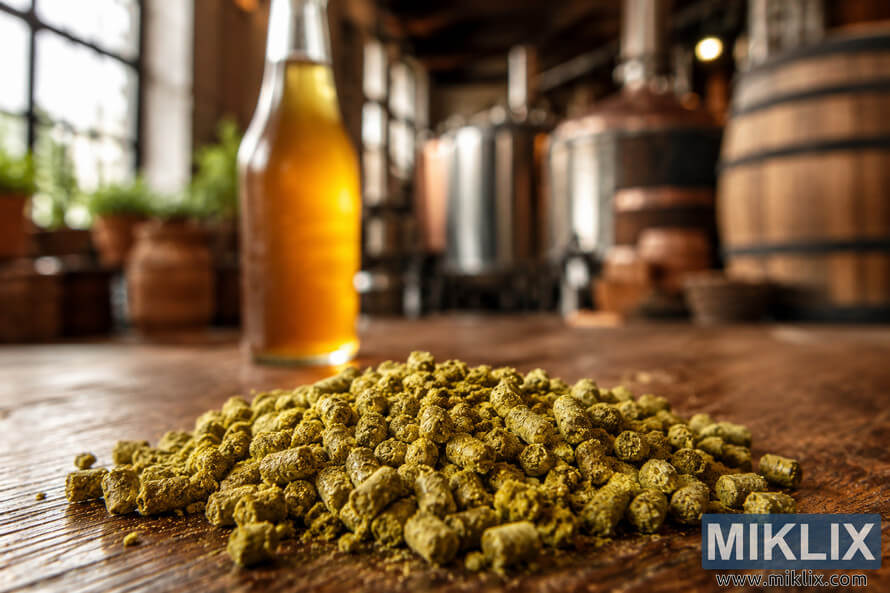
- No major processors offer lupulin powder for this variety. For concentrated oil, plan hop additions and use whole cone or pellet forms listed in the Lubelska spec sheet.
- Consult Lubelska oil numbers and lab certificates from suppliers to adjust recipes across different harvests. This ensures consistent results.
Conclusion
Lubelska-Pulawy emerges as a standout Polish Saaz-descended aroma hop, crucial in today's brewing scene. It boasts low-to-moderate alpha acids and a rich oil profile. This combination brings out magnolia and lavender notes, perfect for European lagers, pilsners, and light craft ales. This summary underscores its importance in late-boil and dry-hop additions, preserving floral and spicy aromas.
It's essential for brewers to consider crop-year variations and verify lab certificates for accurate alpha and oil content. IUNG Puławy's breeding efforts place Lubelska-Pulawy among the most trusted Polish Lublin hops. Both large-scale brewers and small craft producers rely on it. The absence of lupulin powder means handling whole-cone or pellets is standard.
For U.S. brewers aiming for a noble floral character, the approach is straightforward. Opt for restrained malt and yeast choices. Favor late additions and dry hopping. Always confirm the supplier's analysis. When used with care, Lubelska-Pulawy adds a refined, continental aroma. It enhances clean lager and pale ale profiles without overpowering the base beer.
FAQ
What is Lubelska‑Puławy and where did it originate?
Lubelska‑Puławy, also known as Lubelski or Polish Lublin, is a Polish aroma hop. It was developed at the Institute of Soil Science and Plant Cultivation (IUNG) in Puławy. This hop was bred as a Saaz/Lublin derivative, suited for Polish conditions. It entered commercial production in 1964 and has been widely used in Polish brewing.
What are the typical alpha and beta acid levels for Lubelska‑Puławy?
Alpha acids for Lubelska‑Puławy vary, commonly between 3% and 7%. Many technical specs list it at 5%–7%. Beta acids are usually around 2.5%–5%, with averages near 3%–3.3%. Brewers should confirm the alpha and beta acid levels for a specific harvest.
How much total oil does Lubelska‑Puławy contain and why does it matter?
Total oil in Lubelska‑Puławy is typically between 0.5–1.2 mL/100g, with averages near 0.88–0.9 mL/100g. The total oil level affects the aroma intensity. Because oils are volatile, late-kettle additions and dry hopping are recommended to preserve Lubelska’s floral and noble topnotes.
What is the typical essential oil breakdown (myrcene, humulene, caryophyllene, farnesene)?
The essential oil breakdown for Lubelska‑Puławy shows significant variability. Myrcene ranges from ~22%–52%, humulene from roughly 14%–40%, caryophyllene about 4%–11%, and farnesene commonly near 10%–14% (often ~12%). Higher farnesene is notable and contributes green/floral nuance.
How would you describe Lubelska‑Puławy’s aroma and flavor profile?
Lubelska‑Puławy exhibits noble, floral characteristics—magnolia and lavender are commonly cited—plus subtle spicy and herbal notes. It’s generally perceived as a milder, more floral alternative to Czech Saaz, with less earthy or cinnamon character.
When should I use Lubelska‑Puławy in the brew schedule?
Use Lubelska‑Puławy primarily for late-kettle additions, whirlpool (short steep), and dry hopping to preserve volatile floral oils. Because alpha levels can be modest, early long boils are discouraged unless you want to sacrifice aroma for subdued bitterness.
Can Lubelska‑Puławy be used for bittering?
It can provide light bittering when the crop shows higher alpha (near the upper reported range), but variability and lower alpha often make it a conservative bittering choice. Brewers sometimes add a small early charge for background bitterness, then rely on late additions for signature aroma.
What beer styles work best with Lubelska‑Puławy?
European lagers and pilsners are the classic matches, where clean malt and restrained yeast let floral noble notes shine. It also suits light ales and pale lagers that benefit from delicate magnolia/lavender topnotes without heavy specialty malts or estery yeast strains.
How does Lubelska‑Puławy compare to Saaz, Tettnang, and other noble hops?
Genetically related to Saaz, Lubelska‑Puławy is often more floral with higher farnesene and fewer earthy/cinnamon tones than Czech Saaz. Tettnang and Saaz are close noble alternatives; Brewer’s Gold, Nugget, and Glacier are listed as functional substitutes when alpha or supply considerations apply.
What are practical recipe ideas or pairings for Lubelska‑Puławy?
Try a dry‑hopped pale lager or light ale with a neutral Pilsner or Vienna malt base and a clean lager or neutral ale yeast. Keep the grain bill simple to highlight floral topnotes, and use late kettle or dry‑hop additions to showcase magnolia and lavender character.
Who supplies Lubelska‑Puławy and in what forms is it available?
Availability is seasonal and can vary by harvest year. Suppliers that have carried Polish Lubelska varieties include Hop Alliance (USA), Northwest Hop Farms (Canada), and U.S. homebrew retailers such as Beer & Wine Supply. It is typically sold as whole cones or pellets; major processors (Yakima Chief, BarthHaas, Hopsteiner) have not offered a lupulin powder form for this variety.
What agronomy and yield characteristics are associated with Lubelska‑Puławy?
The variety matures early and was bred to fit Polish climates. Example yields reported around 340 kg/hectare (≈310 lbs/acre) for certain crops. Yield and alpha content vary by terroir and season, so regional differences can affect brewing values.
How well does Lubelska‑Puławy store and retain alpha acids?
Lubelska‑Puławy can lose alpha acids relatively quickly at ambient temperatures; one measured storability figure shows about 55% alpha retention after six months at 20°C (68°F). Cold storage and quick processing help preserve both alpha and volatile oils.
What harvesting and handling practices preserve Lubelska‑Puławy’s aroma?
Harvest at proper cone maturity to maximize lupulin intensity, handle cones gently to avoid bruising and oxidation, and use cold storage and expedited transport for export. Minimize long, high‑temperature holds that accelerate oil loss to retain magnolia and lavender topnotes.
Are there notable related Polish varieties from IUNG Puławy?
Yes. IUNG Puławy has bred several Polish hops including Sybilla, Marynka, Junga, Puławski, and others. These varieties range from aromatic to higher‑alpha dual‑purpose types and reflect Poland’s active hop‑breeding program.
Where can I find precise alpha and oil numbers for a specific batch of Lubelska‑Puławy?
Request a recent lab analysis from the supplier or checking the harvest‑year lot sheet is the best practice. Reported ranges vary by crop (alpha 3%–7%, total oil 0.5–1.2 mL/100g), so current certificates of analysis give the reliable numbers for formulation.
మరింత చదవడానికి
మీరు ఈ పోస్ట్ను ఆస్వాదించినట్లయితే, మీరు ఈ సూచనలను కూడా ఇష్టపడవచ్చు: