
Hops in Beer Brewing: Pioneer
ที่ตีพิมพ์:
ปรับปรุงล่าสุด : 29 กรกฎาคม 2026 เวลา 21 นาฬิกา 33 นาที 19 วินาที UTC
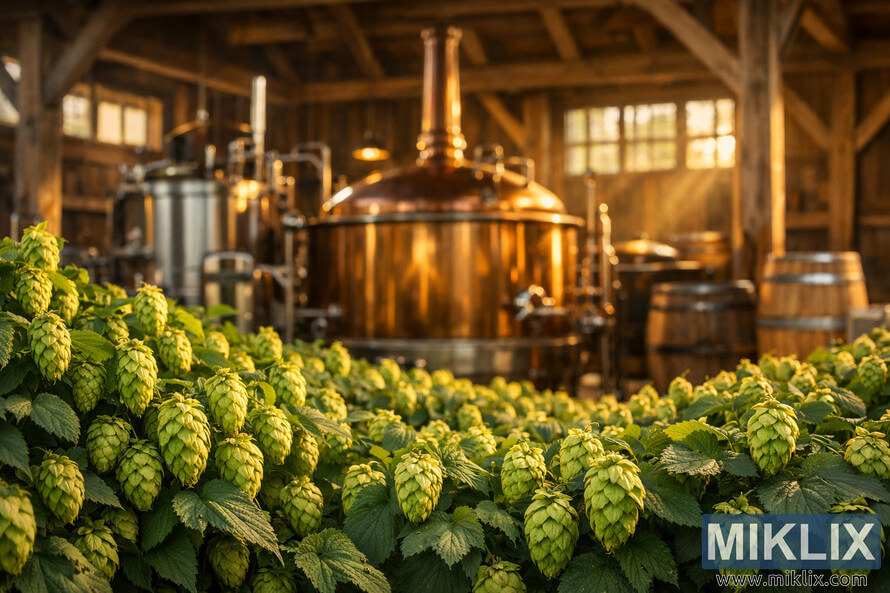
Pioneer hops hold a significant role in today's craft brewing scene. They are favored for their consistent bitterness, subtle aroma, and versatility across various beer styles.
Hops in Beer Brewing: Pioneer
คลิกหรือแตะที่ภาพเพื่อดูข้อมูลเพิ่มเติมและภาพความละเอียดสูงขึ้น
Key Takeaways
- Pioneer hops bring distinct citrus, floral, and spice notes ideal for American ales.
- Use whole-cone, pellets, or extracts depending on shelf life and recipe goals.
- Timing—bittering, whirlpool, and dry-hop additions—shapes Pioneer hops beer character.
- Water chemistry and yeast choice play a big role in highlighting Pioneer hop aroma.
Introduction to Pioneer hops and its place in craft brewing
Pioneer hops hold a significant role in today's craft brewing scene. They are favored for their consistent bitterness, subtle aroma, and versatility across various beer styles. This brief overview sets the stage for a deeper exploration of Pioneer hops' characteristics, their appeal to homebrewers, and a comparison with more renowned varieties.
Overview of hop composition and sensory notes
Pioneer hops typically exhibit an alpha acid range of 4.5–7.5% and beta acids in the low single digits. These values are often provided by suppliers. The oil profile is characterized by moderate myrcene, humulene, caryophyllene, and a hint of farnesene. This composition contributes to a balanced bitterness and a subtle aroma.
The sensory profile of Pioneer includes notes of citrus, floral, and mild spice. Brewers describe its aroma as clean and moderate, falling between the classic American and noble hop spectrums. This positioning makes Pioneer's aroma reliable and unobtrusive in recipes.
Why homebrewers reach for Pioneer
Pioneer's appeal lies in its dual functionality as both a bittering and aroma hop. Homebrewers appreciate its versatility in pale ales and lagers. Its balanced bitterness allows for a clear hop presence without overpowering the brew.
For single-hop experiments, Pioneer offers a platform for brewers to explore hop-forward ideas without overwhelming malt or yeast flavors. This versatility underscores Pioneer's importance in American homebrewing, where predictability and adaptability are highly valued.
How Pioneer stacks up against popular varieties
When comparing Pioneer to Cascade, the differences are evident. Cascade is known for its grapefruit and pine notes, with a more pronounced citrus bite. Pioneer, on the other hand, presents milder citrus and a more subtle spice, making it less assertive in the glass.
Compared to Centennial, Pioneer is gentler; Centennial offers an intense floral-citrus punch. Citra, meanwhile, leans heavily towards tropical and citrus flavors, while Saaz remains earthy and noble. Pioneer finds its place as a moderate American aroma hop, blending slight noble and spice undertones.
- Typical alpha/beta and oil makeup that supports balanced use
- Flexible roles: bittering, flavor, aroma, or single-hop trials
- Recipe fit: when you want American character without aggressive citrus
คลิกหรือแตะที่ภาพเพื่อดูข้อมูลเพิ่มเติมและภาพความละเอียดสูงขึ้น
Pioneer hops
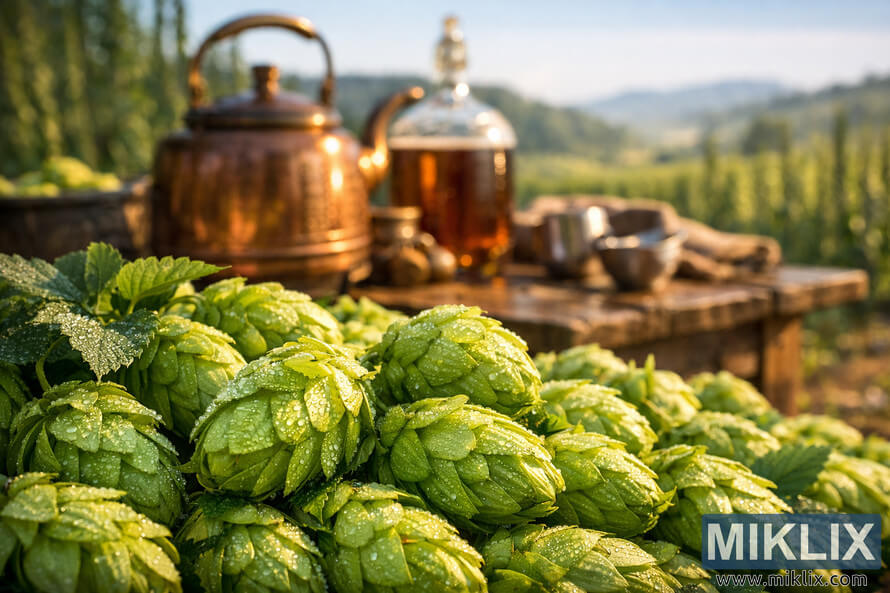
Pioneer hops are prized for their straightforward character and consistent alpha acids. This section explores their botanical background, common sensory notes, and the beer styles where they excel.
Botanical background and origin of Pioneer hops
The Pioneer hop's history begins in Japanese breeding programs of the mid-20th century. Breeders focused on disease resistance and stable yields. This lineage connects to East Asian hop trials, later introduced to global markets for commercial production.
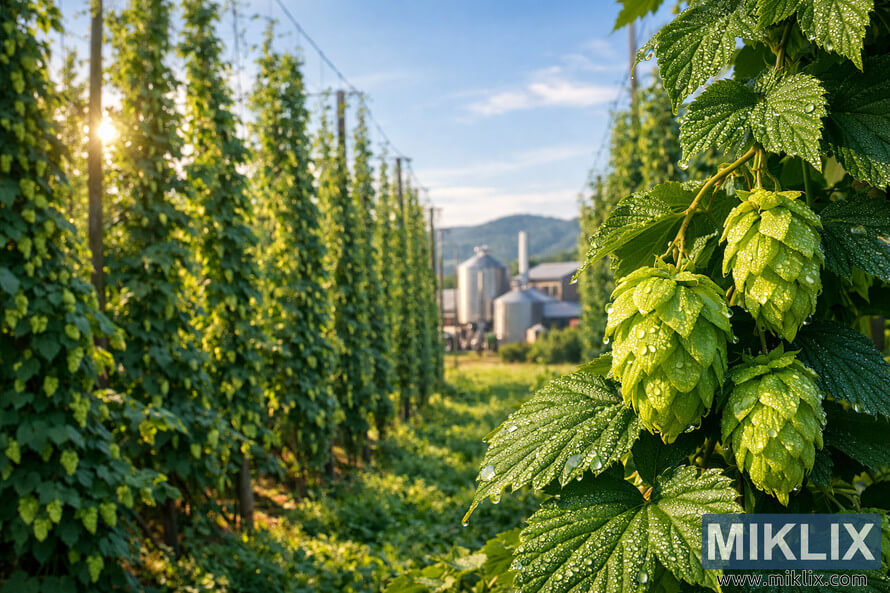
U.S. brewers source Pioneer hops from established Japanese farms and Pacific Northwest contract growers. This origin and cultivation blend shapes Pioneer's availability to American brewers.
Common aroma and flavor descriptors for Pioneer hops
Pioneer hops are known for their mild citrus notes, like lemon and orange peel. They also offer floral blossom tones and light herbal or grassy hints. These contribute to a fresh, balanced flavor without overpowering the beer.
Subtle spice, such as black pepper or earthy undertones, emerges in cooler fermentations. A resinous backbone supports the aroma. Alpha acids contribute to bitterness, especially in bittering additions.
Typical usage in beer styles
Pioneer hops are versatile. They're used for bittering in ales and as an aroma hop in lighter styles. Their dual-purpose nature is ideal for recipes needing both reliable alpha acids and a gentle aroma lift.
- American Pale Ales and session IPAs benefit from its citrus and floral notes.
- Amber ales gain a balanced hop presence without overwhelming malt character.
- Lagers and pilsners can use small doses for a mild aromatic lift.
- Belgian hybrids accept Pioneer hops beer styles when a subtle citrus-floral accent is desired.
คลิกหรือแตะที่ภาพเพื่อดูข้อมูลเพิ่มเติมและภาพความละเอียดสูงขึ้น
Flavor and aroma profile of Pioneer hops
Pioneer hops offer a subtle American aroma, combining citrus brightness with floral and spice nuances. They are favored by brewers seeking a balanced hop presence. This presence should enhance malt and yeast without overpowering them.
Citrus, floral, and spice notes explained
The citrus notes in Pioneer hops lean towards lemon peel and a hint of orange zest. These impressions are crisp and not overly sweet, contributing to a beer's freshness and vivacity. The floral aspect manifests as delicate blossoms or potpourri, enhancing the aroma without dominating it.
Spice in Pioneer hops is understated, with a light pepper or herbal note that complements the citrus and floral elements. This combination creates a balanced aroma hop, ideal for pale ales, session beers, and lighter IPAs.
How terroir and harvest timing affect Pioneer hop character
Hop terroir significantly influences the balance of essential oils. Soil and climate conditions affect myrcene, humulene, and other oils, shaping the aroma. Warmer valley sites often enhance citrus and myrcene, intensifying lemon and orange notes.
Mountain-grown hops, in contrast, tend to preserve floral and humulene qualities. This can accentuate the Pioneer floral spice character, resulting in a more complex aromatic profile in the finished beer.
- Early-harvest hops exhibit greener, more herbal tones and less ripe citrus.
- Peak harvest yields the best-balanced aromatic oils for the typical Pioneer hop aroma profile.
- Late harvest tends to increase alpha acids while reducing delicate aromatics.
Always check the harvest timing of hops on supplier labels. Taste small samples when possible. This ensures that the chosen hop lot aligns with your batch goals, preserving the intended Pioneer citrus and floral spice in your beers.
คลิกหรือแตะที่ภาพเพื่อดูข้อมูลเพิ่มเติมและภาพความละเอียดสูงขึ้น
Choosing the right Pioneer hop forms for brewing
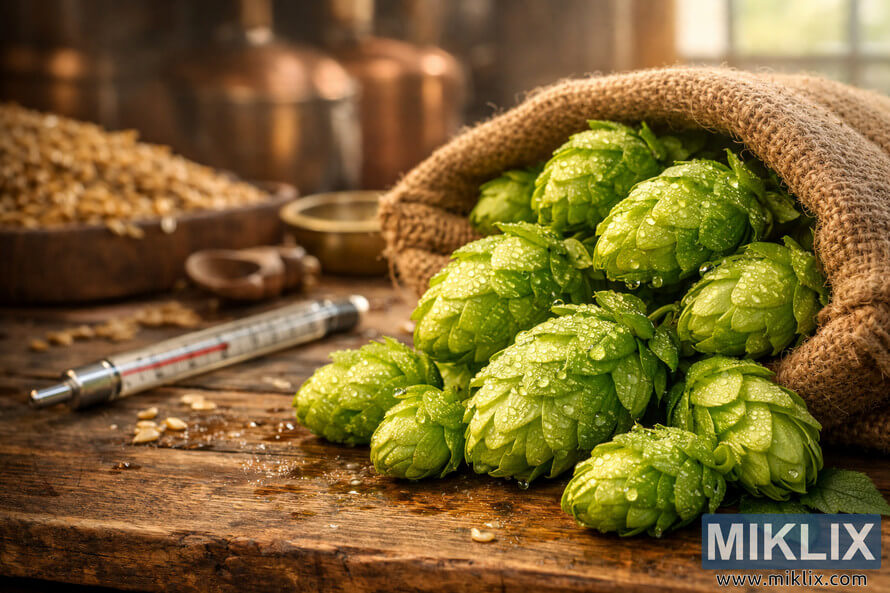
Choosing the right hop format is crucial for flavor, efficiency, and handling on brew day. Brewers consider aroma retention, dosing accuracy, and the amount of vegetal matter in the kettle. Below, we compare common forms and provide tips for hop storage and preserving freshness.
Whole cone Pioneer
- Whole cone hops retain lupulin pockets, offering a unique mouthfeel and clearer beer. They may add more trub, requiring careful filtering when kegging or bottling.
- Whole cones seem fresher when harvested recently. They have lower packing density, requiring more fridge/freezer space than pellets.
Pioneer hop pellets
- Pellets are convenient for weighing, storing, and dosing. They improve utilization for bittering and are more space-efficient when vacuum-sealed.
- Pellets shed less vegetal matter, enhancing clarity. They have a longer shelf life when sealed properly.
Hop extracts and oils
- Pioneer hop extract and distilled hop oils concentrate compounds. CO2 extracts and pre-isomerized iso-alpha blends provide consistent bittering without debris.
- Distilled hop oils offer intense aroma per gram, ideal for small batches or keg additions. Extracts reduce oxygen pickup and grassy notes from whole hops.
Trade-offs to consider
Whole cones excel in aroma-forward dry hops for small batches. Pellets are better for large-scale bittering and efficient whirlpool additions. Extracts offer repeatable bitterness and potent aroma with minimal solids.
Hop storage and preserving hop freshness
Proper hop storage extends their life. Use vacuum-sealed, opaque bags with oxygen scavengers. Freezing at -18°C slows degradation. Store both pellets and whole cones away from light and heat.
Handling hops without oxygen exposure is key. Use sealed scoops, transfer to smaller vacuum bags, or purge containers with nitrogen. Pellets can last longer than whole cones under these conditions.
Practical shelf-life guide
- Pioneer hop pellets: keep sealed and frozen for 12–24 months for best alpha retention.
- Whole cone Pioneer: best used within 6–12 months when frozen and sealed to preserve volatiles.
- Pioneer hop extract: follows manufacturer dates but remains stable longer than leaf material if kept airtight.
Follow these choices and storage habits to protect aroma, control bitterness, and maintain hop character in your recipes.
Best beer styles to showcase Pioneer hops
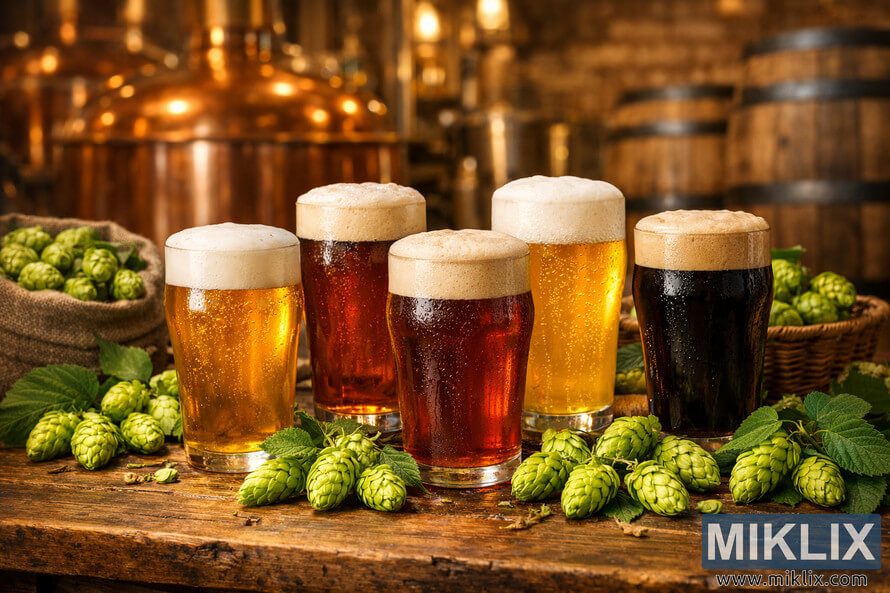
Pioneer hop styles truly come alive when paired with the right recipes and yeast. Brewers aiming to highlight Pioneer's aroma and flavor will find these templates and tips invaluable. The goal is to achieve balance, timing, and the right yeast choice. This ensures the best expression of Pioneer hops in IPA, pale ale, Belgian ale, and lager.
Follow these outlines to craft recipes that showcase Pioneer's unique character without overwhelming the base beer.
American Pale Ale and IPA templates
- Target gravities for APA are 1.045–1.060, and for IPA, 1.056–1.070. Use a pale malt base and a touch of crystal or Vienna for balance. This maintains a medium body.
- Hop schedules should focus on late kettle, whirlpool, and dry hop additions. This approach captures the citrus and floral notes, enhancing the aroma and flavor of IPAs and pale ales.
- Dry hop dosing should be moderate to generous, depending on desired intensity. Cold contact at 50–60°F for 3–5 days extracts volatile aromatics while minimizing vegetal compounds.
Belgian and hybrid recipes
- Use Pioneer in Belgian ale as a finishing hop to elevate citrus and floral notes above yeast esters. Lower hopping rates preserve the yeast-driven complexity.
- Choose neutral to fruity Belgian yeast strains. Add Pioneer late in the boil or in the fermenter to let yeast esters interplay with hop aromatics.
- For Belgian-IPA hybrids, use Pioneer sparingly to complement spicy phenols. Aim for aroma enhancement rather than bitterness for the best results.
Pilsners and lagers
- In lager applications, use Pioneer as a subtle finishing hop. Low to moderate dosing adds a gentle citrus lift without masking malt and clean lager yeast profiles.
- Timing is crucial for preserving delicate terpenes. Use whirlpool or late kettle additions at lower temperatures. Extended cold conditioning smooths hop edges and retains nuance.
- Dosage should be restrained. A little Pioneer can refresh Pilsners, keeping the overall beer crisp and clean.
Across styles, aim for hop balance that complements malt and yeast. Test small batches and adjust late additions to find the perfect balance for your interpretation of Pioneer hop styles.
คลิกหรือแตะที่ภาพเพื่อดูข้อมูลเพิ่มเติมและภาพความละเอียดสูงขึ้น
Recipe development using Pioneer hops
Creating recipes with Pioneer hops requires careful consideration of malt, hop partners, and testing. It's essential to allow Pioneer's citrus and spice notes to shine while the malt provides a clean backdrop. Small-batch trials and split-batch comparisons are key to quick learning and minimizing risks.
When balancing malt and Pioneer hops, start with gravity and malt bill decisions. For session beers, aim for original gravities near 1.040 and IBUs in the 25–35 range. This keeps bitterness gentle. For full-strength ales, use 1.055–1.065 gravities with IBUs around 40–55 to match stronger malt bodies.
Use a pale malt base to highlight hop aromatics. Add 5–10% light crystal malt for extra body when needed, without masking hop character.
Choosing complementary hop varieties for blends adds depth. Cascade enhances grapefruit and bright citric top notes. Willamette brings earth and floral tones that soften Pioneer's sharp edges. Centennial adds citrus punch and resin for more bite. Saaz supplies noble spice contrast for restrained lagers.
Begin with a 60% Pioneer, 40% complementary ratio for balanced interplay. Then, adjust by 10% increments as needed.
Creating single-hop vs. blend-focused recipes helps to isolate and expand on Pioneer traits. A single-hop Pioneer recipe is perfect for profiling aroma and flavor across dry-hop, whirlpool, and late additions. Use a straightforward pale malt base and limit other hops to bittering.
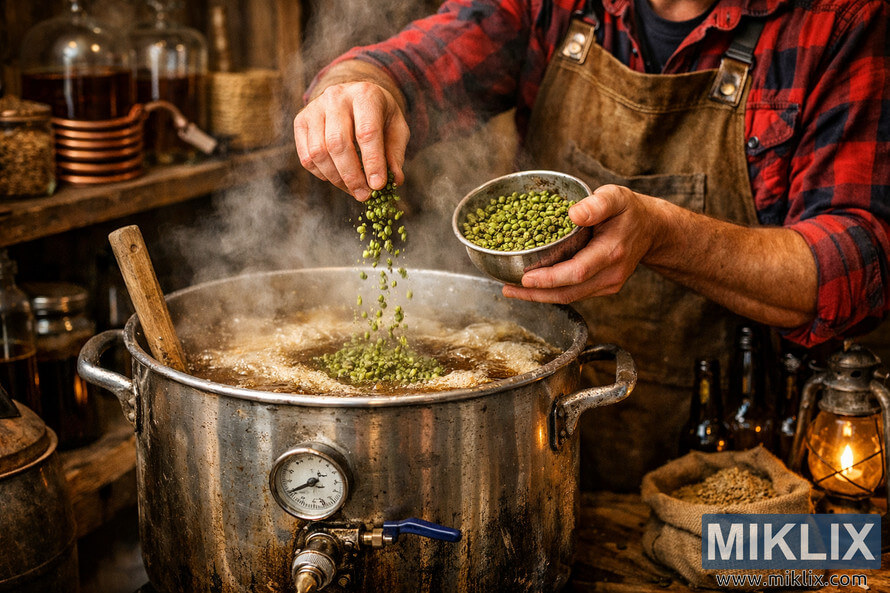
For blend-focused recipes, layer hops across the schedule. Use a neutral high-alpha hop for early bittering, Pioneer for whirlpool, and a complementary variety for dry hop.
- Single-hop Pioneer schedule: bittering hop at 60 minutes, whirlpool 15–20 minutes at 170°F, and dry hop for 3–5 days.
- Blend schedule example: neutral bittering hop 60 minutes, 70% Pioneer + 30% Centennial at whirlpool, dry hop 50% Pioneer + 50% Willamette.
- Testing method: brew 1–3 gallon split batches, keep water chemistry and yeast constant, vary only the malt percentage or blending ratio.
Record sensory notes for each trial and compare aroma intensity, bitterness perception, and mouthfeel. Use these notes to refine malt and Pioneer balance across target styles. Repeatable documentation ensures scaling up to 5–10 gallon batches is predictable and efficient.
คลิกหรือแตะที่ภาพเพื่อดูข้อมูลเพิ่มเติมและภาพความละเอียดสูงขึ้น
Hop timing and additions for optimal Pioneer expression
Pioneer hops can serve as a dual-purpose variety, providing clean bitterness and bright aromatic lift when used correctly. The timing of their addition can significantly shape the beer's bitterness, flavor, and aroma. Even small adjustments in timing or temperature can influence which oils and acids end up in the final product.
- 60-minute bittering additions: add Pioneer at the start of the boil for stable IBUs and a firm backbone. This is where alpha acids isomerize and contribute bitterness without much aroma.
- 15–30 minute flavor additions: add Pioneer in this window to pull mid-volatiles that give citrus and light spice without losing all delicate top notes.
- 5–0 minute aroma additions: late kettle hops maximize floral and bright citrus character. Drop additions in the last five minutes or at flameout to preserve volatile oils.
Whirlpool and hop stand techniques
Target 160–180°F (70–82°C) for hop stand Pioneer to extract volatile oils while limiting additional isomerization. Gentle whirlpooling encourages even contact without brutal agitation that can extract grassy phenols.
- Contact time: 15–60 minutes depending on desired intensity. Short stands favor freshness. Long stands build a fuller aromatic envelope.
- Whirlpool Pioneer additions: add at whirlpool to layer soft citrus and floral top notes over your bittering base. Cool slowly to lock in the most fragile compounds.
Late additions and dry hopping strategies
Late kettle additions and dry hop Pioneer tactics preserve top-note aromatics with minimal vegetal extraction. Use staggered dry hop dosages to keep aroma fresh through the life of the beer.
- Dosage guidance: for a 5-gallon (19 L) batch, start with 1–2 oz (28–56 g) total for a subtle profile, 3–6 oz (85–170 g) for a prominent hop character, split across additions.
- Staggered dry hop: add half early in fermentation rest and half after fermentation for persistent aroma and reduced biotransformation risk.
- dry hop Pioneer considerations: keep contact time 3–7 days at cooler temperatures (50–60°F / 10–15°C) to cut vegetal notes while extracting oils.
Practical tips
- Match bittering goals with Pioneer hop addition timing to avoid harshness in the finish.
- Use hop stand Pioneer when you want a rounder, less harsh hop presence than flashing big late additions.
- When planning dry hop Pioneer, control oxygen and temperature to protect bright citrus and floral aromatics.
Dry hopping with Pioneer hops
Dry hopping brings Pioneer hops' bright aromatics to the forefront. To achieve clean, lively aroma without vegetal notes, use clear targets for dosage, temperature, hop contact time Pioneer, and oxygen control.
Dosage guidelines for different batch sizes
For a standard 5-gallon (19 L) batch, follow these ranges for Pioneer dry hop dosage:
- Light: 0.5–1 oz (14–28 g)
- Moderate: 1–3 oz (28–85 g)
- Assertive: 3–6 oz (85–170 g)
Scale proportionally for larger batches. High-gravity beers often stand up to higher rates, so add toward the upper end of the range for strong IPAs and imperial ales.
Temperature, contact time, and oxygen management
Best practice for dry hopping Pioneer is to time additions near the end of active fermentation or during a slow decline in yeast activity. Aim for beer temperatures around 50–68°F (10–20°C) depending on the yeast and style.
Typical hop contact time Pioneer ranges from 2–7 days for active aroma extraction. Extend to 10 days only when needed. Cold crash after the dry hop to drop particulates and lock in aroma.
Minimize oxygen pickup when adding hops. Purge headspace with CO2, use closed transfers, and add hops through a dedicated port when possible. Low oxygen preserves hop freshness and prevents staling.
Preventing grassy or vegetal off-flavors
To prevent grassy hops, avoid long warm contact times and too-large hop loads. Use T-90 pellets or hop extracts to reduce vegetal matter and trub. Placing hops in a sanitized hop bag can contain debris and ease removal.
When dry hopping Pioneer, monitor aroma frequently. If grassy or green notes appear, shorten future hop contact time Pioneer and lower the dry hop dosage. Careful handling and oxygen control keep the aroma focused and clean.
Water chemistry and yeast choices for Pioneer-forward beers
Optimizing water and yeast is crucial for showcasing Pioneer hops. The right brewing water and mineral balance enhance bitterness and aroma. Meanwhile, yeast selection and fermentation conditions determine whether the beer's citrus and spice notes shine or get overshadowed by esters.
Begin by adjusting the water profile to favor hop clarity. For hop-forward pale ales, aim for a sulfate-to-chloride ratio that boosts bitterness and crispness. This means about 150–200 ppm sulfate and 50–100 ppm chloride. For lagers, reduce sulfate and maintain moderate chloride levels to preserve malt character.
Adjusting brewing water involves a few key steps:
- Start with a water report to measure initial ions.
- Add gypsum to increase sulfate for a drier taste.
- Use calcium chloride to enhance maltiness when needed.
- Target total hardness suitable for the style, avoiding extremes.
Choose yeast that complements Pioneer hops, allowing their aroma to dominate. Opt for clean American ale strains like Wyeast 1056, White Labs WLP001, or Safale US-05. These strains produce minimal esters and high attenuation, perfect for showcasing hop character. For more complex flavors, select Belgian or ester-forward strains in hybrid or Belgian-influenced recipes.
Consider the impact of yeast attenuation and flocculation on the beer's body and hop presence. A yeast with high attenuation will thin the beer, making hops seem brighter. However, high-flocculation yeast clears faster but may retain some hop oils.
Control fermentation temperature to preserve hop aromas. For American ale strains, ferment between 64–68°F (18–20°C). This range helps limit fruity esters and preserves the citrus and floral notes from Pioneer hops.
Follow these fermentation tips:
- Ensure a temperature-stable environment and use a reliable controller.
- Properly pitch yeast and oxygenate the wort for clean fermentation.
- Lower temperatures slightly during high ester risk periods for lager or delicate hop beers.
By carefully selecting water, yeast, and controlling fermentation temperature, you can create a beer that showcases Pioneer hops' bright character. This approach ensures a balanced and memorable drinking experience.
Carbonation and serving to highlight Pioneer attributes
Proper carbonation and serving techniques bring out Pioneer hops' citrus and floral notes. Small adjustments to CO2 levels, glassware, pouring method, and temperature all impact aroma and mouthfeel. These practical steps enhance the serving of Pioneer beer, making it a delight for the senses.
For most American ales, aim for 2.2–2.7 volumes of CO2. This level enhances aroma and creates a lively mouthfeel without overpowering the hop character. Belgian styles might require a bit more, but excessive carbonation can overwhelm the hop aroma. If the beer seems flat, try lowering the CO2 and let it rest at serving temperature before pouring.
Glassware and pouring techniques to boost aroma delivery
Select glassware that amplifies aromatics. Tulip glasses, IPA-specific stems, or tulip pints are ideal for focusing hop oils near the nose. This enhances the citrus and floral notes. Always rinse glasses with cool water to remove dust and oils that could dampen the aroma.
- Use a slow, controlled pour to build a 1–1.5 inch head. The head traps and releases aromatics with each sip.
- Begin by tilting the glass and finish upright to form a crown that delivers aroma on the pour.
- Avoid over-agitation; rough pours flood the surface and can flatten aroma delivery.
Serving temperature
Serve ales at 44–50°F (7–10°C) to highlight hop aromatics while keeping the beer refreshing. Colder temperatures can mute volatile notes, which is not ideal for hop-forward beers like Pioneer. Allow bottles or kegs to rest at the target temperature for a brief period before pouring.
By following these steps, you ensure the carbonation Pioneer hops need to shine. This approach guarantees that serving Pioneer beer showcases its best qualities. It also leverages glassware and pouring techniques to maximize the sensory experience.
Troubleshooting common issues when brewing with Pioneer hops
When brewing with Pioneer hops, start by addressing haze, oxidation, and bitterness. Making small tweaks on brew day and choosing the right storage can significantly impact your beer. Below, we outline practical fixes and preventive measures for hop-forward beers.
Managing haze and clarity in hop-forward beers
Hop haze is common in heavily dry-hopped beers, especially in styles like New England IPAs. These beers often have a cloudy appearance. However, for clear pale ales, specific clarification steps are necessary.
- Cold crash beers at 32–40°F for 24–72 hours to help solids drop out.
- Use fining agents: gelatin or Biofine for post-fermentation clearing, Irish moss during the boil to reduce kettle haze.
- Consider filtration when clarity is essential, choosing a pore size that preserves hop aroma.
- Monitor yeast strain choice and dry-hop rates; some strains and heavy dry hopping increase permanent haze.
Off-flavors linked to hop oxidation and how to avoid them
Hop oxidation can introduce stale cardboard or sherry notes, ruining the hop character. The best way to prevent this is to use fresh hops and control oxygen levels.
- Store hops cold and vacuum-sealed or in nitrogen-purged Mylar bags to slow degradation.
- Minimize oxygen exposure during transfers, kegging, and packaging by using CO2 purges and gentle handling.
- Use fresh hops when possible and check harvest dates and alpha acid labels to reduce risk of hop oxidation.
- Avoid long headspace in containers; fill vessels to limit air contact.
Dealing with excessive bitterness or harshness
Excessive bitterness can stem from calculation errors, long boil times, or high alpha acids. Corrective actions can address these issues both short-term and for future batches.
- Blend with a fresh wort or a lower-IBU beer to dilute harshness without losing balance.
- In styles that allow it, a slight back-sweetening can soften perceived bitterness.
- For next brews, adjust mash profile and water chemistry: raise chloride and lower sulfate to round bitterness and improve mouthfeel.
- Review boil time and alpha acid math to avoid overshooting IBUs; hop utilization charts help prevent mistakes.
Pioneer hops troubleshooting involves both prevention and remediation. Proper storage, careful oxygen control, and mindful recipe adjustments can fix harsh bitterness and preserve the hop character you desire.
Experimenting and scaling Pioneer hop recipes
Exploring Pioneer hops at various strengths and times is key to understanding their impact on beer. Begin with small batches, meticulously documenting each step. This approach allows for the identification of consistent patterns. Such detailed notes are essential for refining recipes when scaling up.
Small batches are ideal for comparing the effects of aroma and bitterness without excessive ingredient waste. Opt for batches ranging from 1–3 gallons (4–12 L) for initial experiments. This size supports quick iteration and discernible flavor variations.
- Start with 1–3 gallon batches for Pioneer testing to explore different hop rates, timings, and dry-hop dosages.
- Conduct A/B comparisons to evaluate single-hop versus blends and varying dry-hop amounts.
- Save a bottle from each test for later comparison after conditioning.
Split-batch experiments reveal nuanced effects without necessitating full recipe revisions. Divide a single wort to test two distinct hop schedules. This method controls variables like malt and yeast, isolating the impact of hops.
- Split-batch trials allow for the comparison of late addition timing or whirlpool versus dry-hop influence.
- Ensure each split is clearly labeled and record sensory notes at 1, 2, and 4 weeks.
Scaling recipes requires careful attention to maintain balance. Calculate hop mass based on weight per volume, not percentage of the recipe. This ensures IBU targets remain consistent across batch sizes.
- Consider kettle geometry and boil vigor differences when scaling from 3 gallons to 10+ gallons.
- Adjust hop utilization expectations; larger kettles and stronger boils can alter bittering efficiency.
- Increase dry-hop amounts proportionally by weight per liter to preserve aroma intensity when scaling.
Effective documentation is crucial for replicable results. Utilize a simple template for brew-day notes to capture all variables influencing flavor.
- Malt bill and mash schedule.
- Water profile and any salts added.
- Hop additions with weight, alpha acid, and timing.
- Yeast strain, pitch rate, and fermentation temperatures.
- Dry-hop schedule and contact time.
- Tasting notes at fixed intervals and final impressions.
Keep your brew-day notes concise yet comprehensive. Iterative refinements based on detailed records empower scaling Pioneer recipes with confidence and consistency.
Conclusion
Pioneer hops summary: Pioneer stands out as a versatile, moderately aromatic hop. It excels in American Pale Ales, IPAs, Belgian hybrids, and even delicate lagers. Its balanced citrus and floral notes, with a mild spicy backbone, make it suitable for both lead aroma hops and blending varieties. Brewers seeking subtlety will appreciate Pioneer's ability to enhance complexity without dominating malt or yeast flavors.
Brewing with Pioneer hops conclusion: To take action, conduct single-hop trials and split-batch comparisons. This will reveal how timing affects its expression. Experiment with whirlpool and hop-stand additions for ripe citrus and floral notes. Then, compare dry-hop-only approaches to capture fresher top notes. Always monitor harvest dates and store hops cold and vacuum-sealed to prevent oxidation and preserve its intended profile.
Pioneer hop final thoughts: Prioritize clean yeast strains and matched water profiles to highlight hop nuance. Small-batch experimentation and detailed recipe notes will aid in scaling successful brews. With careful handling and targeted timing, both American homebrewers and craft brewers can reliably incorporate Pioneer. This will add balanced, aromatic character to a broad spectrum of styles.
FAQ
What are Pioneer hops and why should American homebrewers consider them?
Pioneer hops are a dual-purpose variety known for their balanced flavor. They offer a mix of citrus, floral notes, and light spice. This versatility makes them ideal for both bittering and aroma in homebrews and small craft breweries. Pioneer hops fit between bold American varieties and noble hops, perfect for pale ales, session IPAs, and more.
What is the typical alpha acid range and oil profile for Pioneer hops?
Pioneer hops have a mid-range alpha acid percentage, as indicated on the label. Their oil profile includes myrcene, humulene, caryophyllene, and farnesene. These components contribute to their citrus, floral, herbal, and mild spice aromas. Always refer to the supplier's certificate of analysis for precise data.
How does terroir and harvest timing affect Pioneer hop character?
Terroir, including soil and climate, influences the hop's essential oil balance. Warmer regions enhance citrus and myrcene, while cooler areas favor floral and humulene. Harvest timing also impacts flavor, with early picks being greener and herbal, and late harvests more balanced. Taste samples and check harvest dates for the best quality.
Which hop form should I buy: whole cones, pellets, or extracts?
Pellets are convenient and offer higher utilization for bittering. They also store longer. Whole cones preserve more lupulin and can affect mouthfeel and clarity. Hop extracts provide concentrated flavor with less vegetal matter. Choose pellets for everyday brewing, whole cones for traditional methods, and extracts for precision.
How should I store Pioneer hops to preserve freshness?
Store hops in vacuum-sealed or oxygen-barrier bags with oxygen scavengers. Keep them cold, ideally frozen, and opaque to limit light. Use sealed containers for dosing and consider freezing large quantities to avoid air exposure. Always use the newest-crop hops for the best aroma.
What beer styles best showcase Pioneer hops?
Pioneer hops shine in American Pale Ales and session IPAs, especially with late-kettle and dry-hop additions. They also complement Belgian hybrids and add subtle notes to Pilsners and lagers. Use a balanced malt backbone to let Pioneer's aromatics shine.
How should I build a recipe around Pioneer hops?
Choose a malt bill that supports the hop aromatics without overpowering them. Target IBUs suitable for the style. For blends, pair Pioneer with Cascade for grapefruit, Willamette for earthy notes, Centennial for citrus, or Saaz for spice. Test single-hop batches to understand Pioneer's profile before blending.
What hop timing produces the best Pioneer expression?
Use Pioneer as a dual-purpose hop: 60-minute additions for base IBUs, 15–30 minutes for flavor, and 5–0 minutes for aroma. For aromatics, rely on whirlpool/hop-stand at 160–180°F (70–82°C) for 15–60 minutes and late additions or dry hopping to preserve top notes. Adjust timing for desired brightness or bitterness.
What are recommended dry-hop dosages and schedules for Pioneer?
For a 5-gallon batch, use light dry hop 0.5–1 oz, moderate 1–3 oz, and assertive 3–6 oz. Scale up for higher-gravity beers. Dry hop at 50–68°F (10–20°C) and limit contact to 2–7 days. Staggered additions help preserve freshness.
How do I avoid grassy or vegetal off-flavors when dry hopping Pioneer?
Minimize oxygen exposure by purging vessels with CO2 and using closed transfers. Keep contact times moderate and avoid warm temperatures. Use T-90 pellets or hop extracts to reduce vegetal matter. Cold-crash after dry hopping to drop particulates and yeast.
Which water profile and yeast strains best complement Pioneer-forward beers?
For pale ales, use a higher sulfate-to-chloride ratio to accentuate hop crispness. For rounder malt presence, increase chloride. Clean American ale strains like Wyeast 1056 or Safale US-05 highlight Pioneer's delicate aromatics. For Belgian hybrids, choose ester-prone yeasts but keep fermentation controlled.
What fermentation temperatures preserve Pioneer hop aroma?
Keep fermentation stable and modest to avoid excessive esters: 64–68°F (18–20°C) for American ale strains. Cooler fermentations for lagers preserve hop clarity. Controlled temperatures ensure yeast doesn't overpower Pioneer's citrus and floral notes.
How should I carbonate and serve beers brewed with Pioneer to highlight aroma?
Carbonate American ales around 2.2–2.7 volumes CO2 to lift aroma and maintain lively mouthfeel. Choose aromatic glassware and pour to generate an appropriate head. Serve ales at roughly 44–50°F (7–10°C) to highlight hop aromatics.
What common issues arise when brewing with Pioneer and how do I fix them?
Haze is common in heavily dry-hopped beers; use cold crashing, finings, or filtration to clarify. Hop oxidation yields cardboard or stale notes—prevent this with cold storage and minimizing oxygen exposure. If bitterness is harsh, consider blending with fresh wort and adjusting water chemistry.
Where can U.S. brewers source Pioneer hops and what should they check when buying?
Buy from reputable homebrew retailers like MoreBeer and Northern Brewer, national distributors, or regional hop farms and brokers. Check packed-on/harvest dates, alpha acid percentages, lot numbers, and COAs when available. For larger usage, consider buying in bulk and portioning into frozen, vacuum-sealed packs.
How can I experiment with Pioneer hops and scale recipes reliably?
Run small-batch trials or split-batch comparisons to test rates and timings. When scaling, calculate hop mass per volume and account for kettle geometry and boil vigor. Keep detailed brew-day notes to ensure repeatability and refine recipes.
อ่านเพิ่มเติม
หากคุณชอบโพสต์นี้ คุณอาจชอบคำแนะนำเหล่านี้ด้วย: