
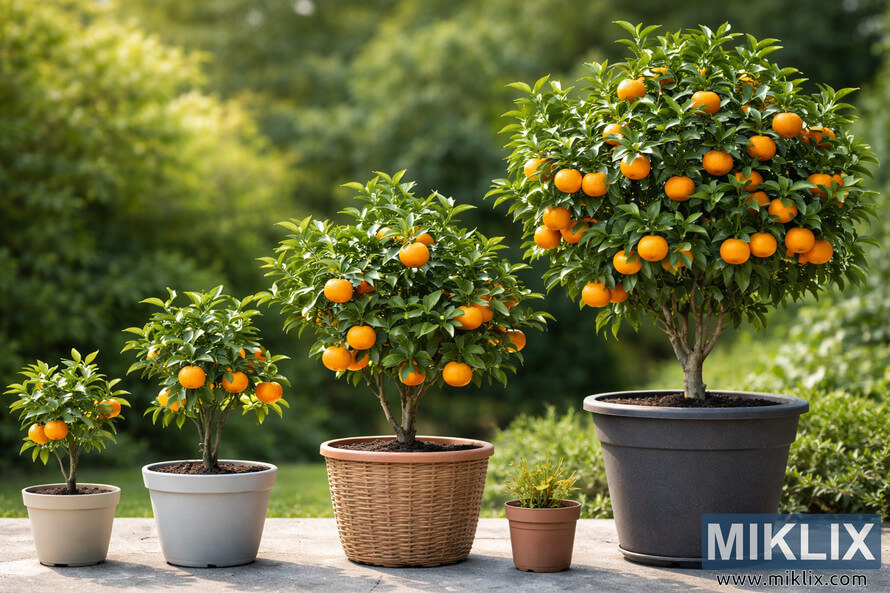
ภาพ: Tangerine Trees in Different Container Sizes at Various Growth Stages
ที่ตีพิมพ์:
ปรับปรุงล่าสุด : 25 มีนาคม 2026 เวลา 19 นาฬิกา 05 นาที 58 วินาที UTC
High-resolution landscape image showing several mature tangerine trees growing in containers of different sizes, illustrating how pot size relates to tree growth stages.
Tangerine Trees in Different Container Sizes at Various Growth Stages
เวอร์ชันต่างๆ ของภาพนี้
ไฟล์ภาพที่สามารถดาวน์โหลดได้ด้านล่างนี้ มีการบีบอัดน้อยกว่าและมีความละเอียดสูงกว่า ส่งผลให้มีคุณภาพสูงกว่าภาพที่ฝังอยู่ในบทความและหน้าเว็บต่างๆ บนเว็บไซต์นี้ ซึ่งได้รับการปรับขนาดไฟล์ให้เหมาะสมเพื่อลดการใช้แบนด์วิดท์
ขนาดปกติ (1,536 x 1,024)
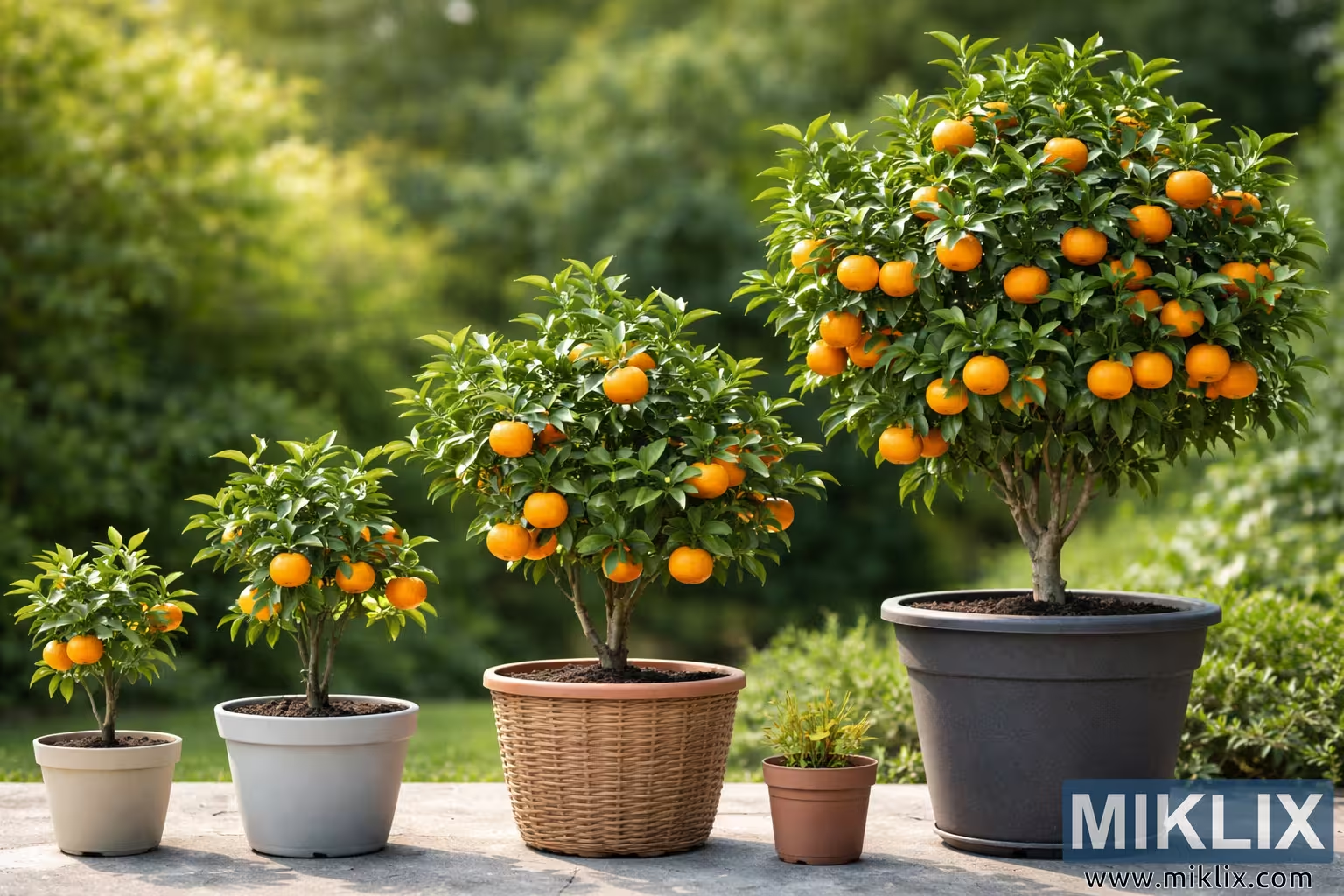

ขนาดใหญ่ (3,072 x 2,048)
ขนาดใหญ่มาก (4,608 x 3,072)
ขนาดใหญ่พิเศษ (6,144 x 4,096)
ขนาดใหญ่เกินจริงอย่างน่าขัน (1,048,576 x 699,051)
- กำลังอัปโหลดอยู่... ;-)
คำอธิบายภาพ
A high-resolution landscape photograph displays a series of potted tangerine trees arranged in a neat row outdoors, each tree representing a different growth stage and planted in a container of distinct size and style. The containers progress gradually from small to large from left to right, visually illustrating the relationship between root space and plant development. The smallest tree sits in a compact, light-colored pot, its delicate trunk and modest canopy supporting only a few glossy green leaves and a small number of bright orange tangerines. Despite its smaller stature, the fruit appears ripe and vibrant, providing an early glimpse of the productivity citrus trees can achieve even in relatively small containers.
Next to it stands a slightly larger tree planted in a medium ceramic pot. Its foliage is denser and more rounded, and the branches support a greater number of fruits. The leaves appear thick, waxy, and richly green, typical of healthy citrus plants. The progression continues with a larger container that holds a more mature tree with a fuller canopy. This tree’s branches spread outward in a balanced shape, dotted with numerous tangerines that contrast vividly against the dark green leaves. The container itself is textured and wider, suggesting increased soil volume and root space that supports the plant’s expanded growth.
Further along the row, an even larger pot supports a robust, mature tangerine tree with a thicker trunk and a well-developed canopy. The tree is heavily laden with fruit, each bright orange sphere catching the soft natural light. The leaves overlap densely, creating a lush, rounded crown. Finally, at the far right, the largest container holds the most mature specimen in the lineup. This tree appears the tallest and fullest, with a sturdy trunk rising from the soil and branching into a symmetrical canopy rich with foliage and abundant fruit.
The background of the scene is softly blurred greenery, suggesting a garden or landscaped outdoor environment. Sunlight illuminates the trees evenly, highlighting the vibrant color of the tangerines and the healthy sheen of the leaves. The shallow depth of field keeps attention focused on the row of containers and their trees, reinforcing the visual comparison between container size and plant growth stage. The arrangement creates a clear educational visual: as the containers increase in size, the tangerine trees become larger, fuller, and more productive, demonstrating how container gardening can support citrus trees at different phases of development.
รูปภาพนี้เกี่ยวข้องกับ: Growing Tangerines: The Complete Guide to Sweet Success in Your Home Garden