
ภาพ: Proper Fertilizer Application Zone Under a Citrus Tree Canopy | Citrus Tree Care Diagram
ที่ตีพิมพ์:
ปรับปรุงล่าสุด : 25 มีนาคม 2026 เวลา 19 นาฬิกา 05 นาที 58 วินาที UTC
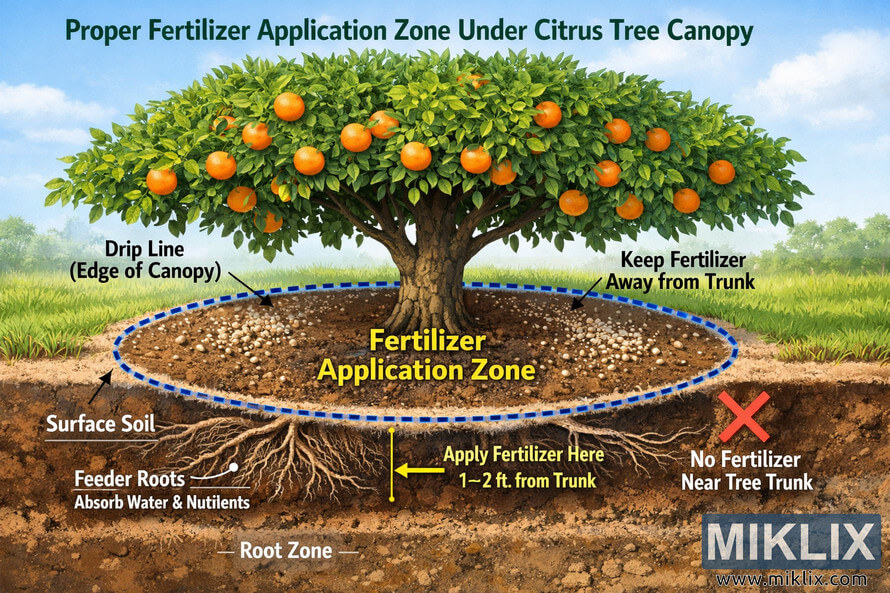
Educational citrus tree care diagram showing where to apply fertilizer under the canopy, around the drip line and feeder roots, while keeping fertilizer away from the trunk.
Proper Fertilizer Application Zone Under a Citrus Tree Canopy | Citrus Tree Care Diagram
เวอร์ชันต่างๆ ของภาพนี้
ไฟล์ภาพที่สามารถดาวน์โหลดได้ด้านล่างนี้ มีการบีบอัดน้อยกว่าและมีความละเอียดสูงกว่า ส่งผลให้มีคุณภาพสูงกว่าภาพที่ฝังอยู่ในบทความและหน้าเว็บต่างๆ บนเว็บไซต์นี้ ซึ่งได้รับการปรับขนาดไฟล์ให้เหมาะสมเพื่อลดการใช้แบนด์วิดท์
ขนาดปกติ (1,536 x 1,024)
ขนาดใหญ่ (3,072 x 2,048)
ขนาดใหญ่มาก (4,608 x 3,072)
ขนาดใหญ่พิเศษ (6,144 x 4,096)
ขนาดใหญ่เกินจริงอย่างน่าขัน (1,048,576 x 699,051)
- กำลังอัปโหลดอยู่... ;-)
คำอธิบายภาพ
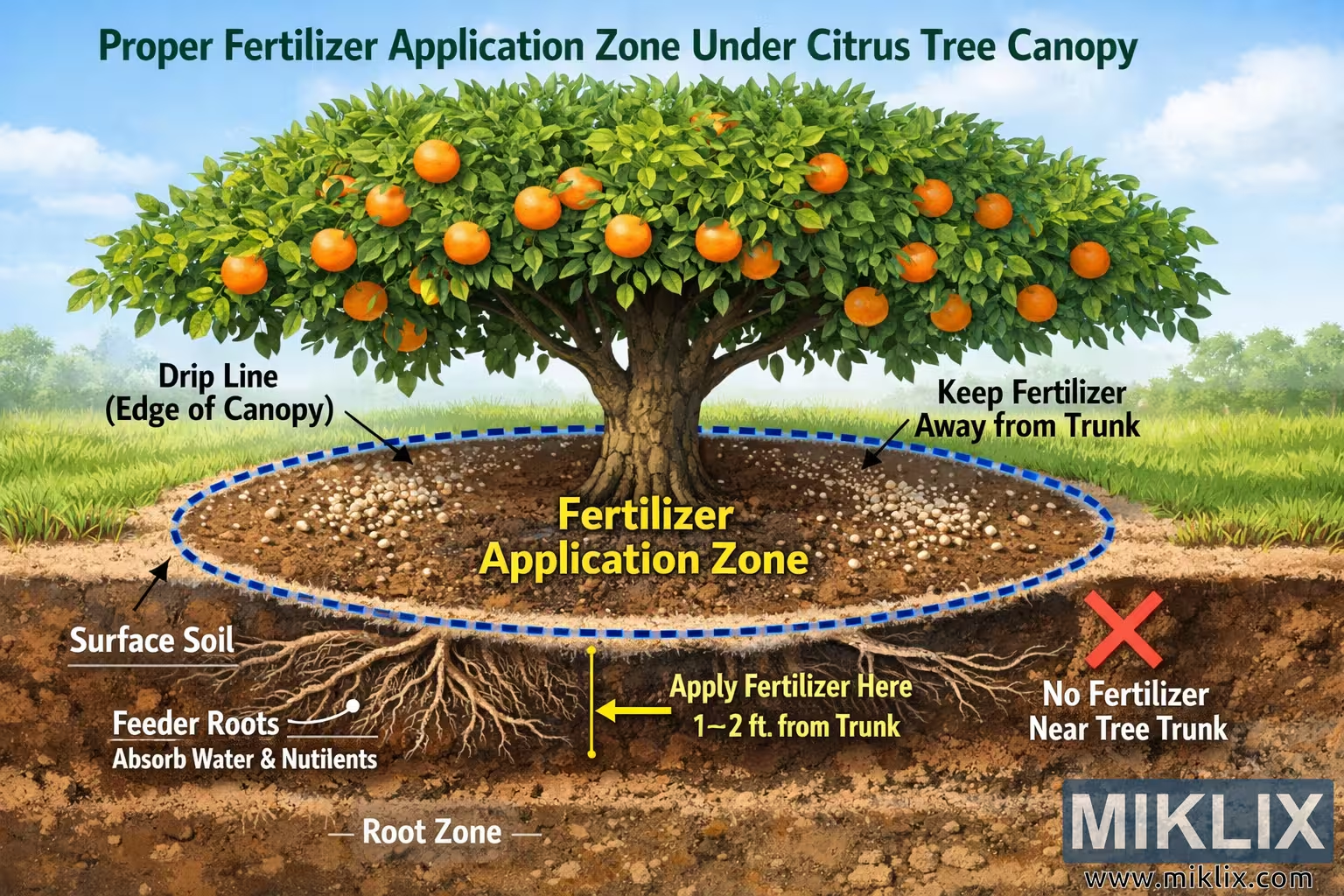
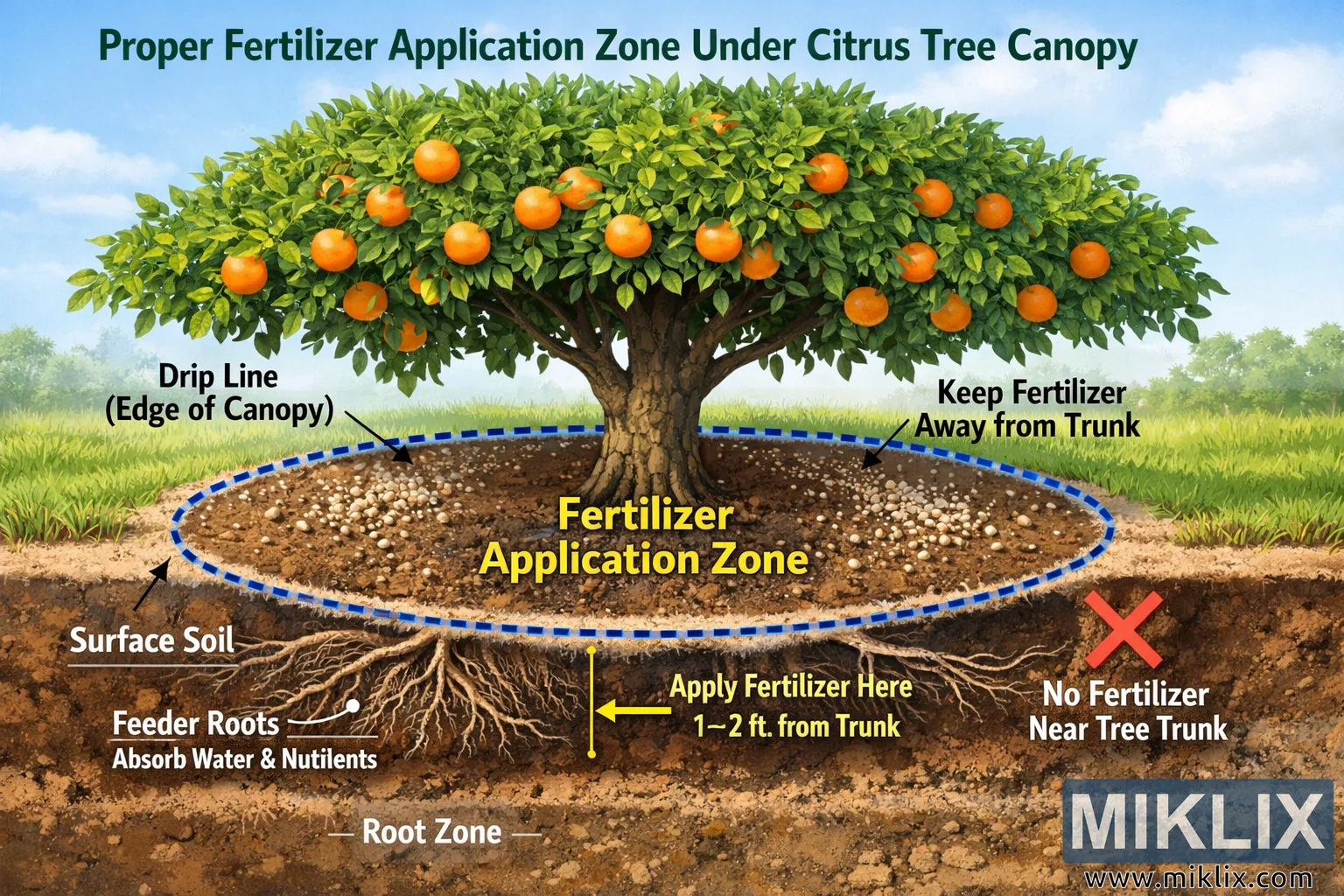
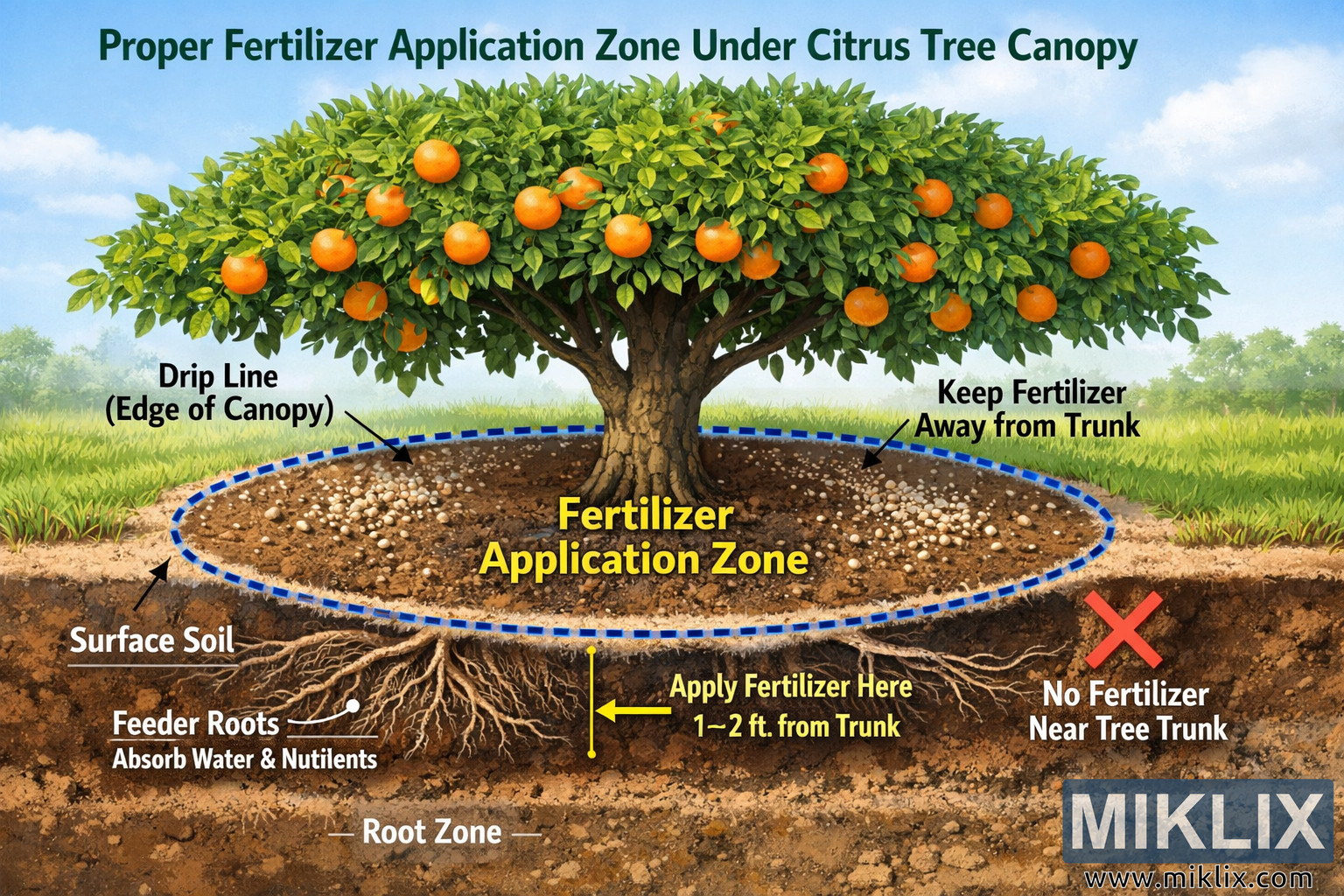
Landscape-format educational diagram illustrating the proper fertilizer application zone beneath a mature citrus tree canopy. The image shows a fruiting orange tree viewed from the side, with a broad, dense green canopy filled with bright orange fruit. The trunk stands at the center, and the ground beneath the tree is cut away in a cross-sectional view so both the surface area and the root zone below can be seen. A large oval area under the canopy is highlighted with a blue dashed outline to indicate the recommended fertilizer application zone. This zone extends broadly beneath the outer portion of the canopy and aligns with the drip line, emphasizing that fertilizer should be spread over the feeder-root area rather than concentrated at the base of the trunk.
Several instructional labels are placed around the illustration. At the left side, a label identifies the “Drip Line (Edge of Canopy),” pointing to the outer boundary of the recommended treatment area. Another label marks the “Surface Soil,” and below it the visible root network is identified as “Feeder Roots,” with a note explaining that these roots absorb water and nutrients. The lower portion of the soil profile is labeled “Root Zone,” reinforcing the below-ground context. In the center of the highlighted oval, large bold text reads “Fertilizer Application Zone,” clearly signaling the main lesson of the diagram.
Additional guidance appears on the right side and lower center of the image. A callout reading “Keep Fertilizer Away from Trunk” points toward the inner edge of the application area, while another instruction states “Apply Fertilizer Here 1–2 ft. from Trunk,” directing attention to the proper starting distance from the tree base. On the lower right, a large red X accompanies the warning “No Fertilizer Near Tree Trunk,” visually emphasizing the area to avoid. The soil cross-section reveals a spreading pattern of shallow, lateral roots beneath the highlighted zone, helping explain why fertilizer should be distributed under the canopy where feeder roots are most active.
The background features a lightly blurred outdoor orchard or garden setting with grass and sky, keeping the focus on the tree and instructional overlays. Overall, the image functions as a practical horticultural teaching graphic: it explains that fertilizer for citrus trees should be applied broadly under the canopy near the drip line and feeder-root area, while avoiding direct placement against the trunk. The design combines realistic tree imagery, soil anatomy, arrows, labels, and warning symbols to communicate best practices for citrus fertilization in a clear and accessible way.
รูปภาพนี้เกี่ยวข้องกับ: Growing Tangerines: The Complete Guide to Sweet Success in Your Home Garden