
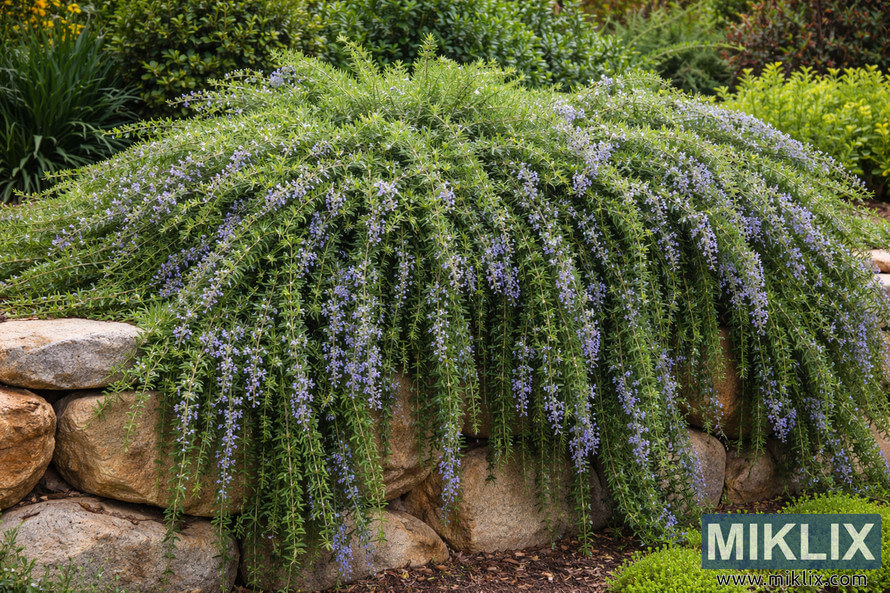
ภาพ: Prostrate Rosemary Cascading Over Garden Stones
ที่ตีพิมพ์:
ปรับปรุงล่าสุด : 8 เมษายน 2026 เวลา 20 นาฬิกา 30 นาที 37 วินาที UTC
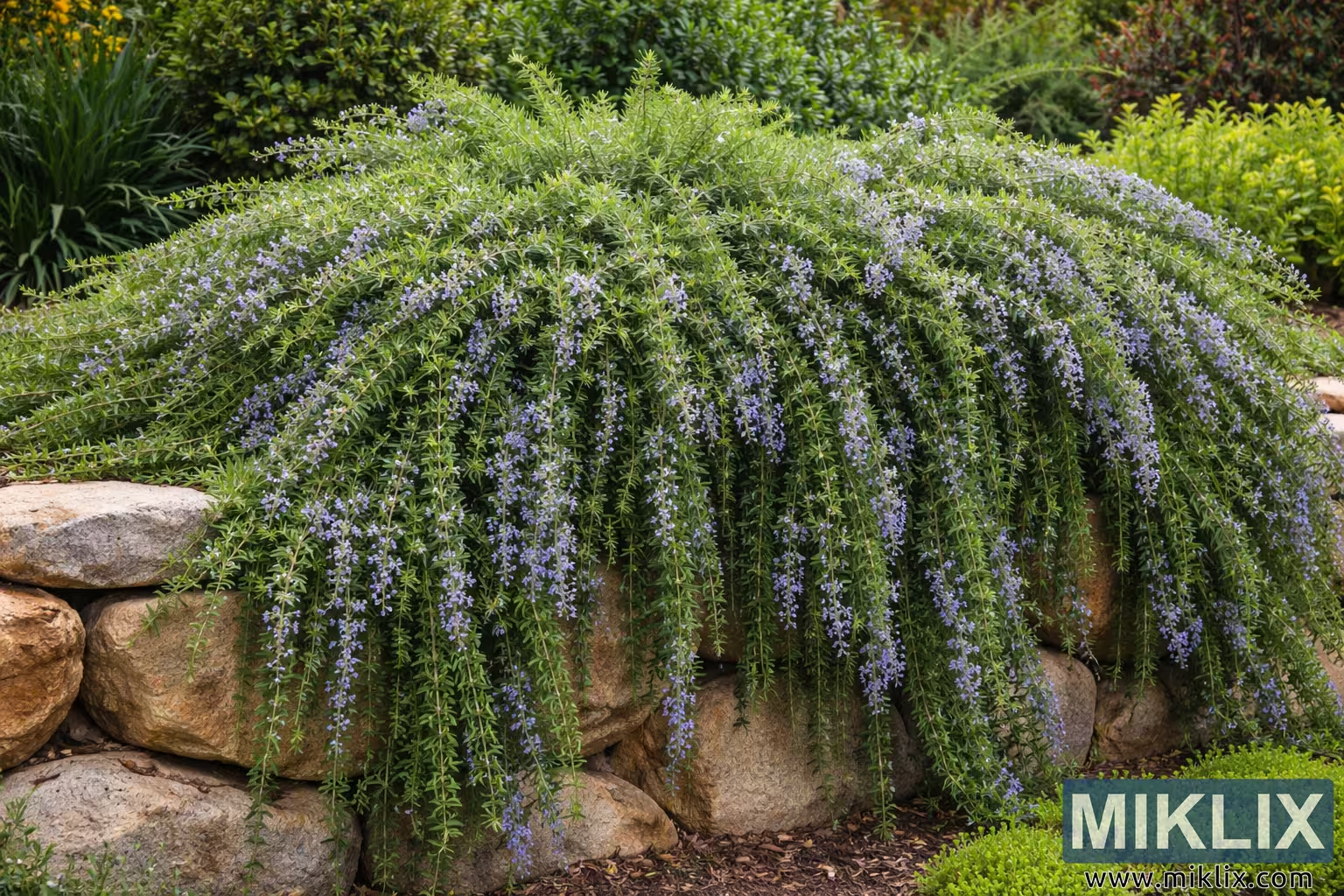
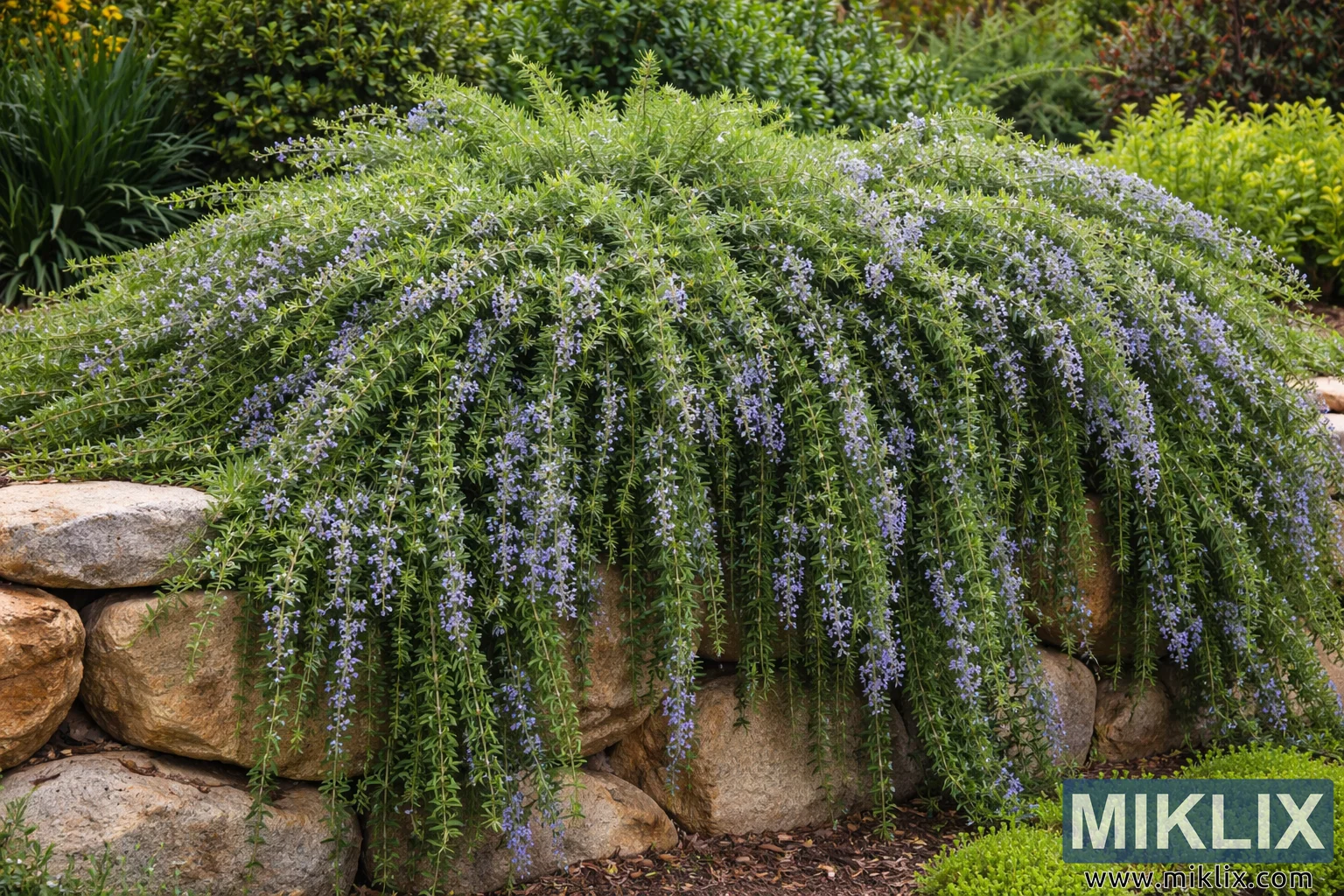
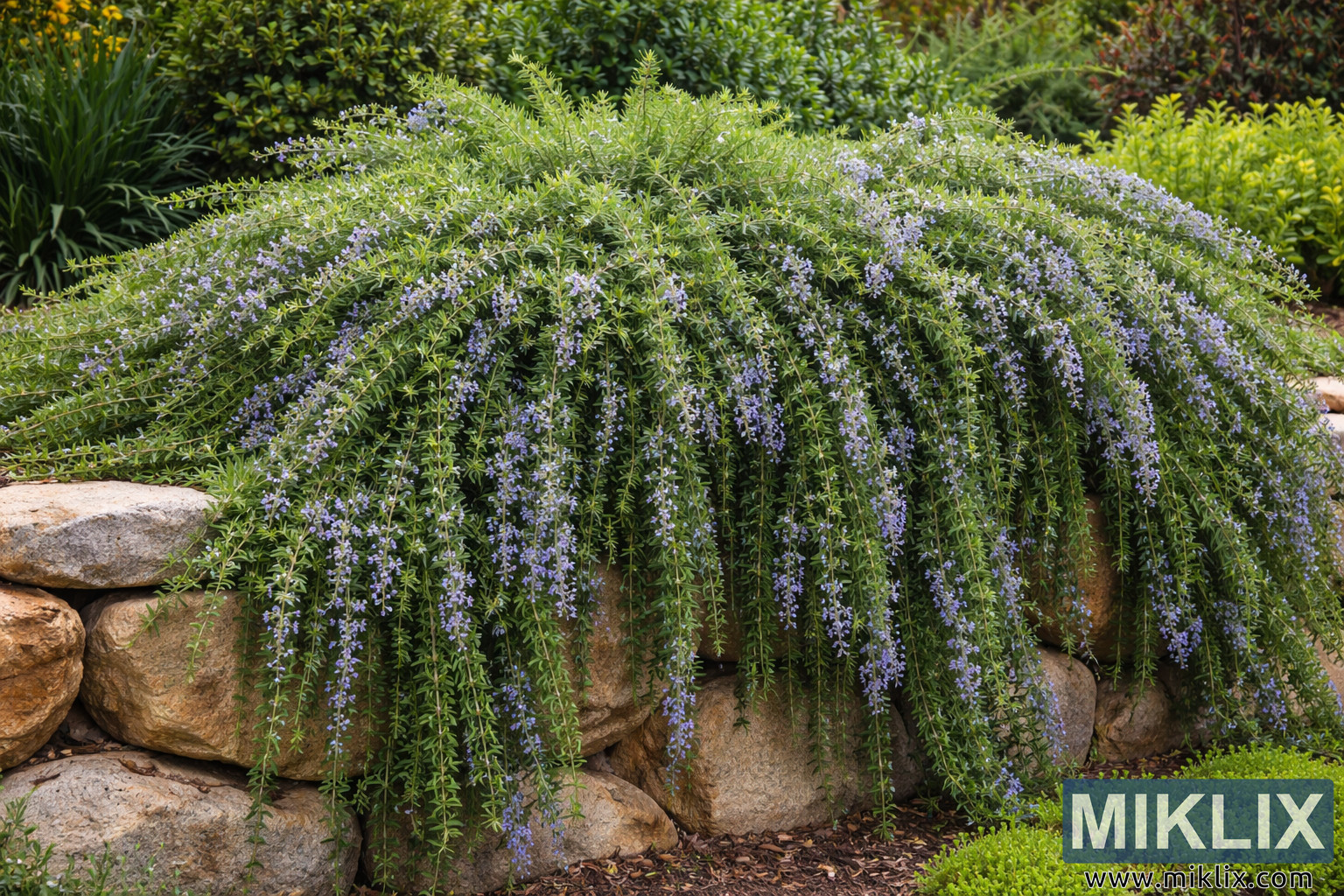
High-resolution garden photograph of prostrate rosemary with trailing growth habit, cascading over a natural stone wall and covered with delicate purple blooms.
Prostrate Rosemary Cascading Over Garden Stones
เวอร์ชันต่างๆ ของภาพนี้
ไฟล์ภาพที่สามารถดาวน์โหลดได้ด้านล่างนี้ มีการบีบอัดน้อยกว่าและมีความละเอียดสูงกว่า ส่งผลให้มีคุณภาพสูงกว่าภาพที่ฝังอยู่ในบทความและหน้าเว็บต่างๆ บนเว็บไซต์นี้ ซึ่งได้รับการปรับขนาดไฟล์ให้เหมาะสมเพื่อลดการใช้แบนด์วิดท์
ขนาดปกติ (1,536 x 1,024)
ขนาดใหญ่ (3,072 x 2,048)
ขนาดใหญ่มาก (4,608 x 3,072)
ขนาดใหญ่พิเศษ (6,144 x 4,096)
ขนาดใหญ่เกินจริงอย่างน่าขัน (1,048,576 x 699,051)
- กำลังอัปโหลดอยู่... ;-)
คำอธิบายภาพ
A high-resolution landscape photograph shows a lush prostrate rosemary plant (Rosmarinus officinalis ‘Prostratus’) spreading broadly across the top of a natural stone retaining wall in a garden setting. The plant displays its characteristic trailing growth habit, forming a dense mound at the top and sending numerous long, flexible stems cascading downward over the stacked stones. Each stem is covered with slender, needle-like evergreen leaves in a rich gray-green tone, creating a soft, feathery texture that contrasts beautifully with the warm, rough surfaces of the stones beneath it.
Small clusters of delicate, pale blue to violet flowers appear intermittently along the trailing stems. These blossoms add subtle color highlights across the greenery, giving the plant a lively and ornamental appearance while suggesting its value as a nectar source for pollinators such as bees. The flowers are distributed naturally throughout the foliage, creating a scattered pattern that draws the eye across the cascading form of the plant.
The rosemary’s stems drape gracefully over the edge of the wall, some reaching nearly to the base of the stones. Their downward growth emphasizes the plant’s prostrate nature, producing a flowing curtain of greenery and blooms that softens the rigid geometry of the masonry. The retaining wall itself is composed of irregularly shaped stones stacked in layers, with warm earthy hues of beige, tan, and light brown that complement the cool green tones of the rosemary.
Behind the plant, a softly focused garden background contains a mixture of shrubs and leafy plants in varying shades of green. This layered planting provides depth and context, suggesting a well-maintained ornamental garden. The surrounding vegetation frames the rosemary without distracting from it, allowing the cascading form of the plant to remain the central visual feature of the image.
At the bottom edge of the scene, the garden bed is covered with mulch and small plants, further emphasizing the natural landscape setting. Soft daylight illuminates the foliage evenly, highlighting the texture of the leaves and the gentle curves of the trailing stems without harsh shadows. The lighting also accentuates the subtle sheen of the rosemary leaves, reinforcing the plant’s healthy and vigorous appearance.
Overall, the photograph captures the ornamental beauty and distinctive growth habit of prostrate rosemary. The plant’s cascading structure, delicate flowers, and evergreen foliage combine to create a visually rich garden focal point that demonstrates how this Mediterranean herb can function both as a culinary plant and as an attractive groundcover or wall-spilling landscape feature.
รูปภาพนี้เกี่ยวข้องกับ: How to Grow Rosemary: Your Complete Growing Guide