
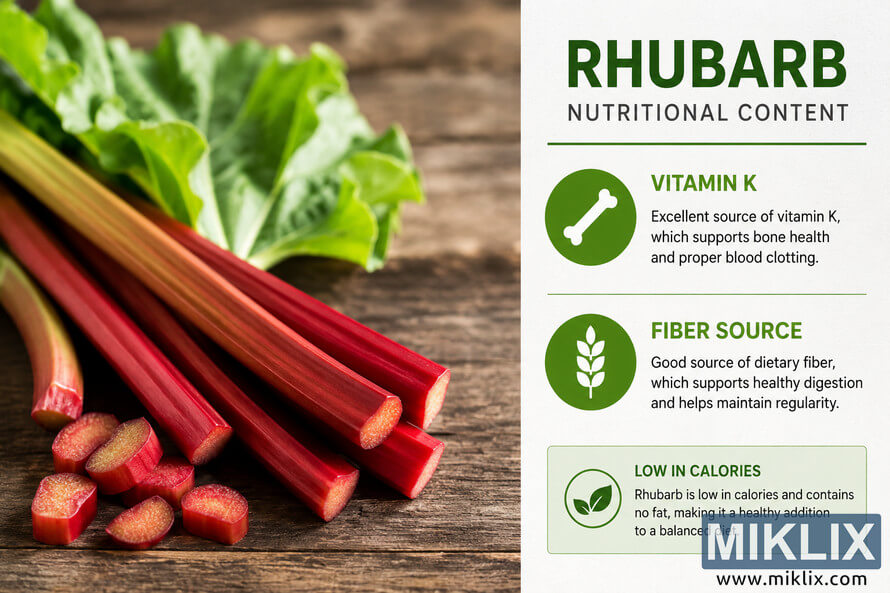
ภาพ: Rhubarb Nutritional Content Infographic Featuring Vitamin K and Fiber Benefits
ที่ตีพิมพ์:
ปรับปรุงล่าสุด : 7 มิถุนายน 2026 เวลา 19 นาฬิกา 13 นาที 01 วินาที UTC
High-resolution landscape infographic featuring rhubarb nutritional content, emphasizing vitamin K and fiber benefits alongside low-calorie information. The design combines fresh rhubarb photography with a clean modern nutrition facts layout.
Rhubarb Nutritional Content Infographic Featuring Vitamin K and Fiber Benefits
เวอร์ชันต่างๆ ของภาพนี้
ไฟล์ภาพที่สามารถดาวน์โหลดได้ด้านล่างนี้ มีการบีบอัดน้อยกว่าและมีความละเอียดสูงกว่า ส่งผลให้มีคุณภาพสูงกว่าภาพที่ฝังอยู่ในบทความและหน้าเว็บต่างๆ บนเว็บไซต์นี้ ซึ่งได้รับการปรับขนาดไฟล์ให้เหมาะสมเพื่อลดการใช้แบนด์วิดท์
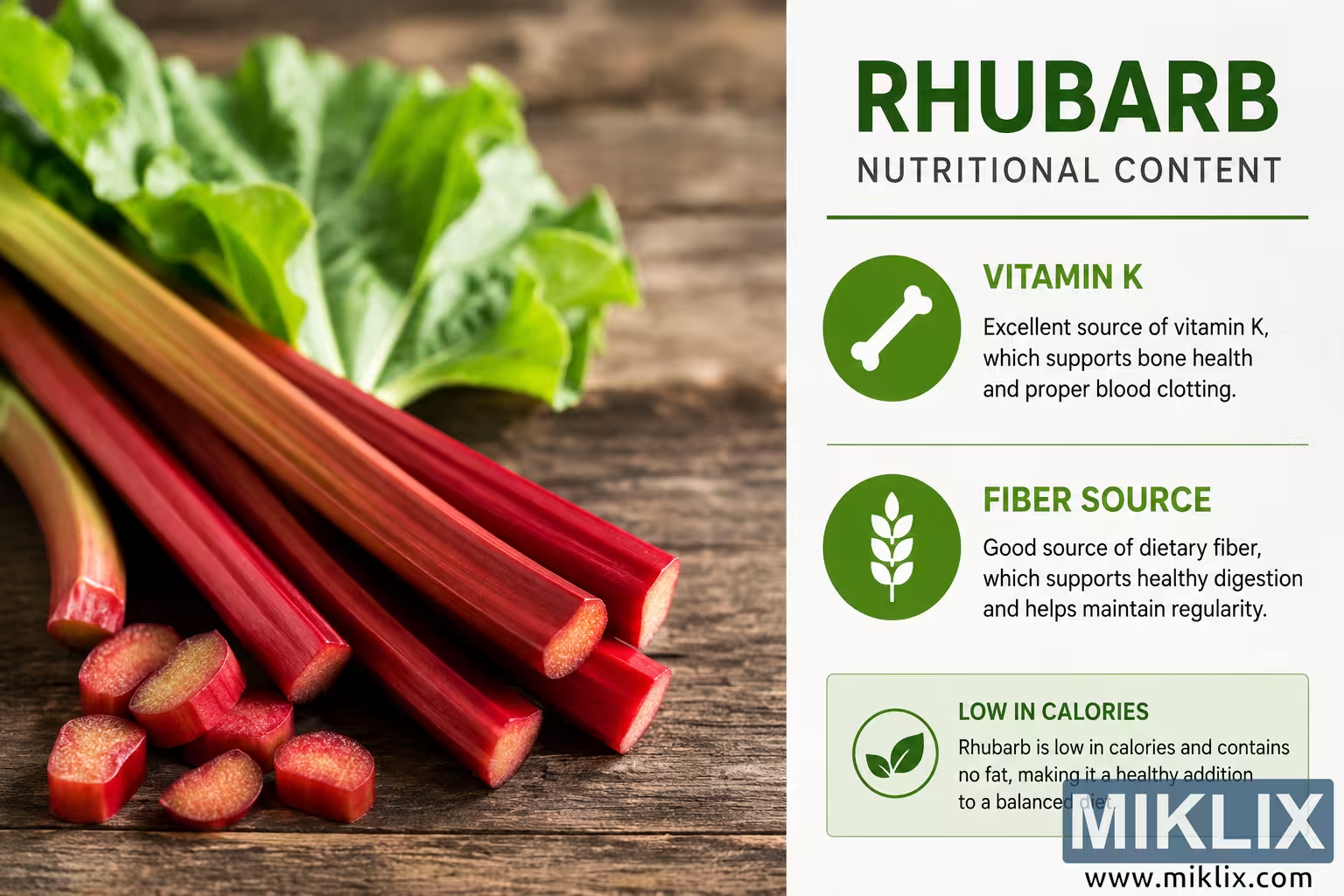
ขนาดปกติ (1,536 x 1,024)
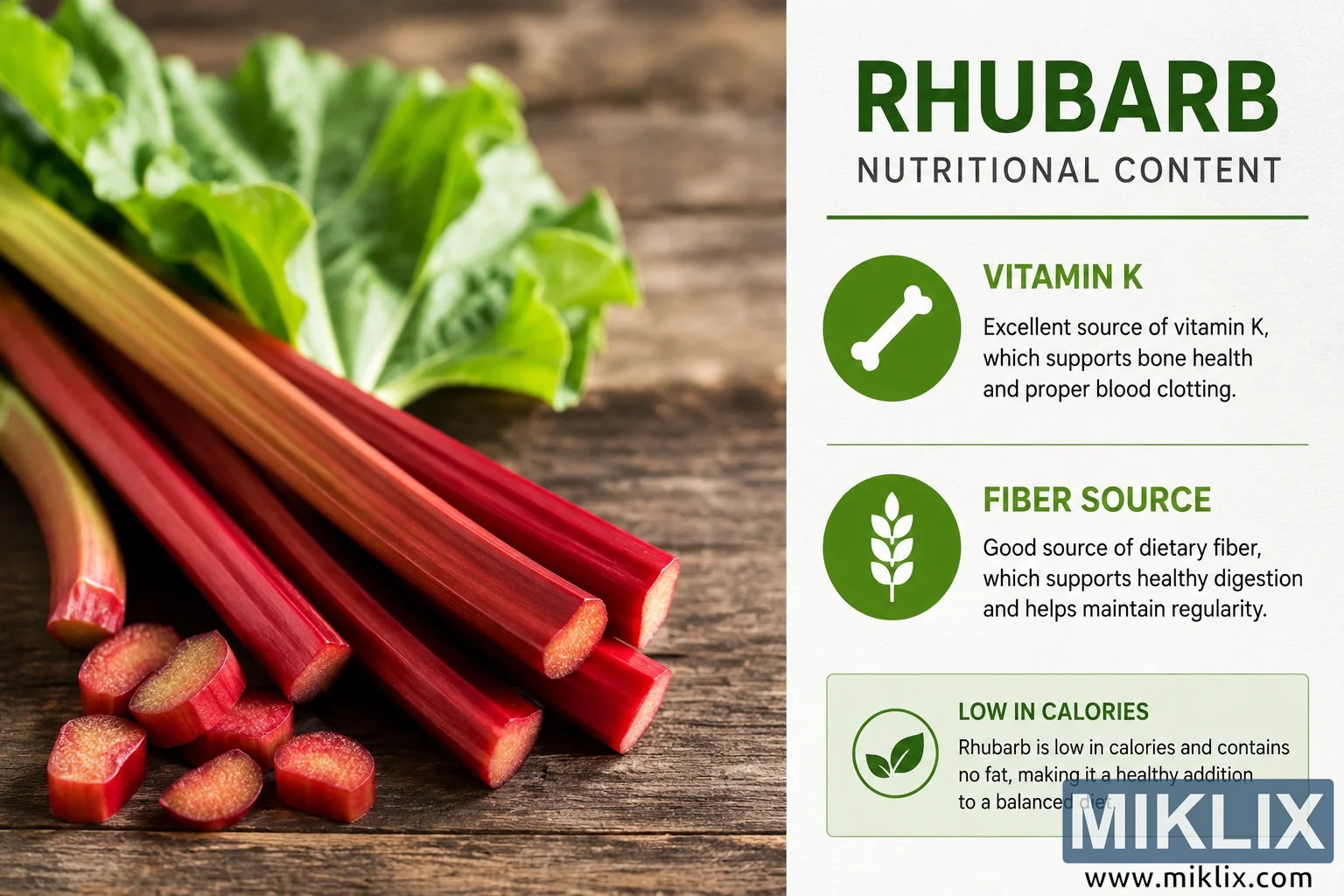
ขนาดใหญ่ (3,072 x 2,048)
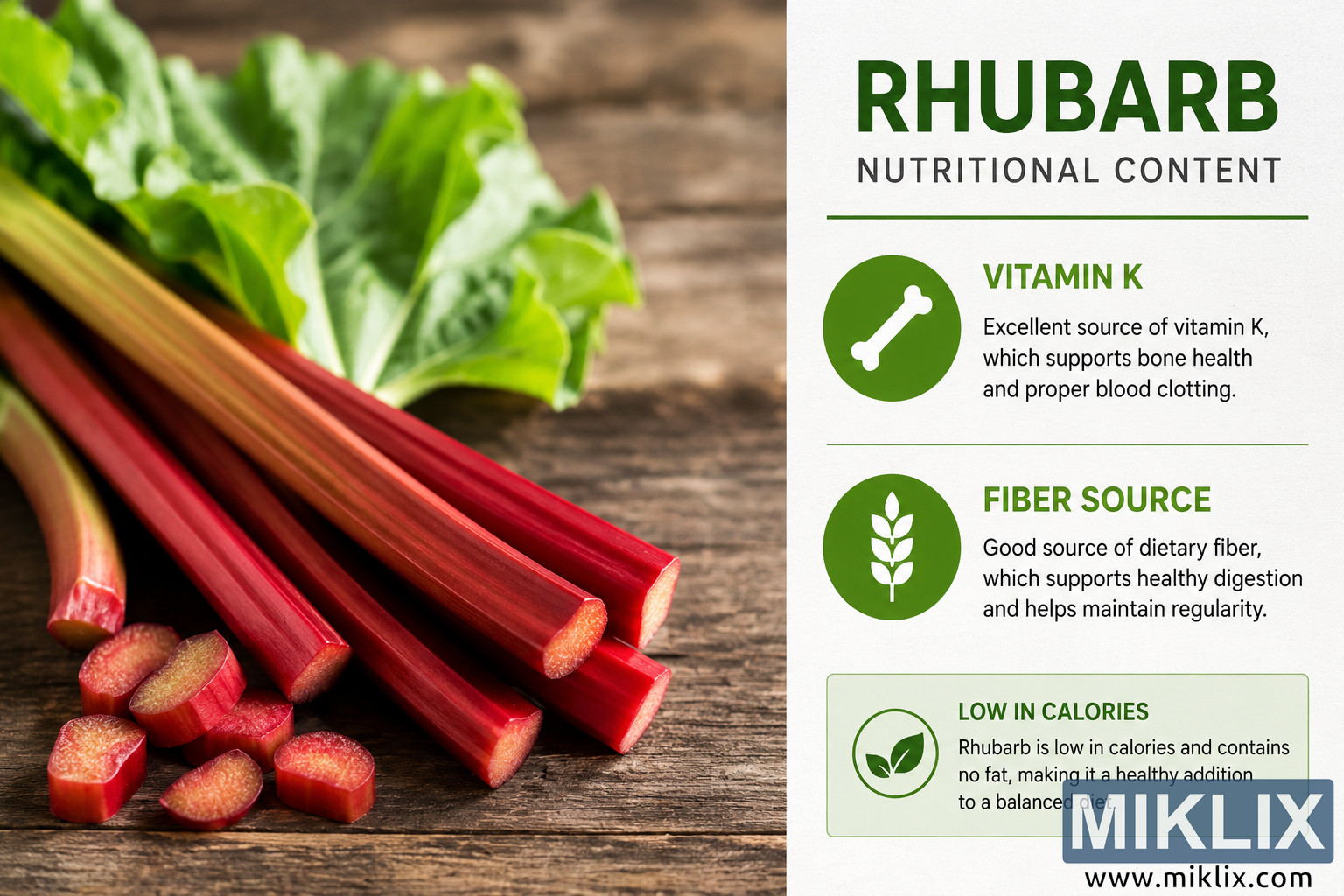
ขนาดใหญ่มาก (4,608 x 3,072)
ขนาดใหญ่พิเศษ (6,144 x 4,096)
ขนาดใหญ่เกินจริงอย่างน่าขัน (1,048,576 x 699,051)
- กำลังอัปโหลดอยู่... ;-)
คำอธิบายภาพ
This high-resolution landscape infographic presents a visually appealing and educational overview of rhubarb nutritional content in a modern split-layout composition. The image is divided into two primary sections that balance food photography with clean informational design. On the left side of the composition, several fresh rhubarb stalks are arranged diagonally across a rustic wooden tabletop. The rhubarb stalks display vivid shades of deep red, crimson, and soft pink with natural gradients along the stems. Their freshly cut ends reveal pale interiors with subtle texture and moisture detail, enhancing the realistic appearance of the produce. Near the base of the stalks, several circular slices of rhubarb are scattered naturally across the wooden surface, adding depth and texture to the composition.
Behind the stalks, large green rhubarb leaves spread outward with soft organic curves and visible veins. The leaves provide a vibrant contrast against the warm wood background and the red tones of the stalks. The background itself is softly blurred with shallow depth of field, creating a professional food-photography effect that keeps visual attention focused on the rhubarb while still maintaining a warm rustic atmosphere. The wood surface contains visible grain patterns, scratches, and earthy brown tones that reinforce the natural and wholesome presentation of the vegetable.
The right side of the infographic features a clean vertical nutritional information panel with a light neutral background and modern typography. At the top of the panel, the title “RHUBARB NUTRITIONAL CONTENT” is displayed prominently in bold uppercase letters using dark green text. The typography is crisp, highly legible, and styled in a contemporary sans-serif font that complements the modern infographic design.
Below the title, the infographic is divided into multiple nutritional highlight sections separated by thin green divider lines. The first section emphasizes vitamin K content. A circular green icon containing a simplified white bone graphic visually represents bone health and nutrient support. Adjacent to the icon, bold green text reads “VITAMIN K,” followed by a concise explanatory paragraph describing rhubarb as an excellent source of vitamin K that supports bone health and healthy blood clotting. The clean layout ensures the information is easy to scan and visually balanced.
The second section focuses on dietary fiber. Another green circular icon contains a stylized white grain or wheat symbol, representing digestion and fiber content. Beside the icon, the heading “FIBER SOURCE” appears in bold green lettering. Supporting text explains that rhubarb is a good source of dietary fiber, helping support healthy digestion and regularity. The typography remains consistent throughout the design, maintaining a polished and professional aesthetic.
Near the bottom of the information panel, a rectangular highlighted box presents an additional nutritional benefit related to low calorie content. Inside the box is a minimal green leaf icon enclosed within a circular outline, reinforcing the healthy and plant-based theme of the infographic. The accompanying text states that rhubarb is low in calories and contains no fat, making it suitable for a balanced diet. The soft green border surrounding this section subtly differentiates it from the other informational areas while preserving the cohesive visual identity.
The overall color palette combines natural greens, earthy browns, warm reds, and soft neutral whites to communicate freshness, nutrition, and wellness. The composition is carefully balanced between photographic realism and clean graphic design. Lighting throughout the image is soft and natural, with gentle highlights along the rhubarb stalks and subtle shadows adding dimensionality without overpowering the scene. The infographic contains no commercial branding or product logos, maintaining a neutral educational presentation suitable for health websites, recipe blogs, nutrition articles, educational materials, and food-related publications.
The image communicates a wholesome, informative, and visually inviting message centered on the health benefits of rhubarb, especially its vitamin K content and fiber contribution. The modern infographic styling, combined with realistic produce photography, creates a polished presentation that is both educational and aesthetically engaging.
รูปภาพนี้เกี่ยวข้องกับ: A Guide to the Health Benefits of Rhubarb