
ภาพ: GMO Corn Versus Organic Corn Comparison on Rustic Wooden Table
ที่ตีพิมพ์:
ปรับปรุงล่าสุด : 22 กรกฎาคม 2026 เวลา 13 นาฬิกา 32 นาที 50 วินาที UTC
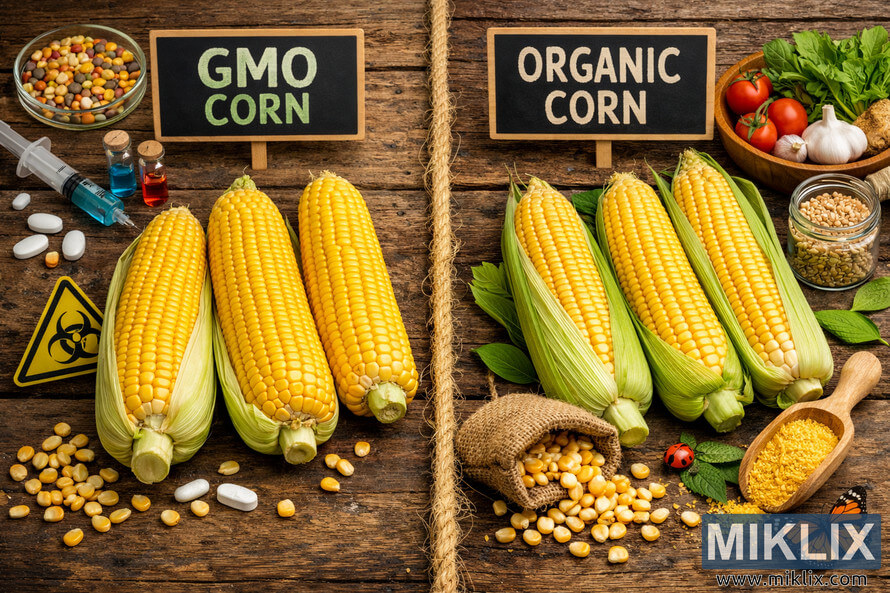
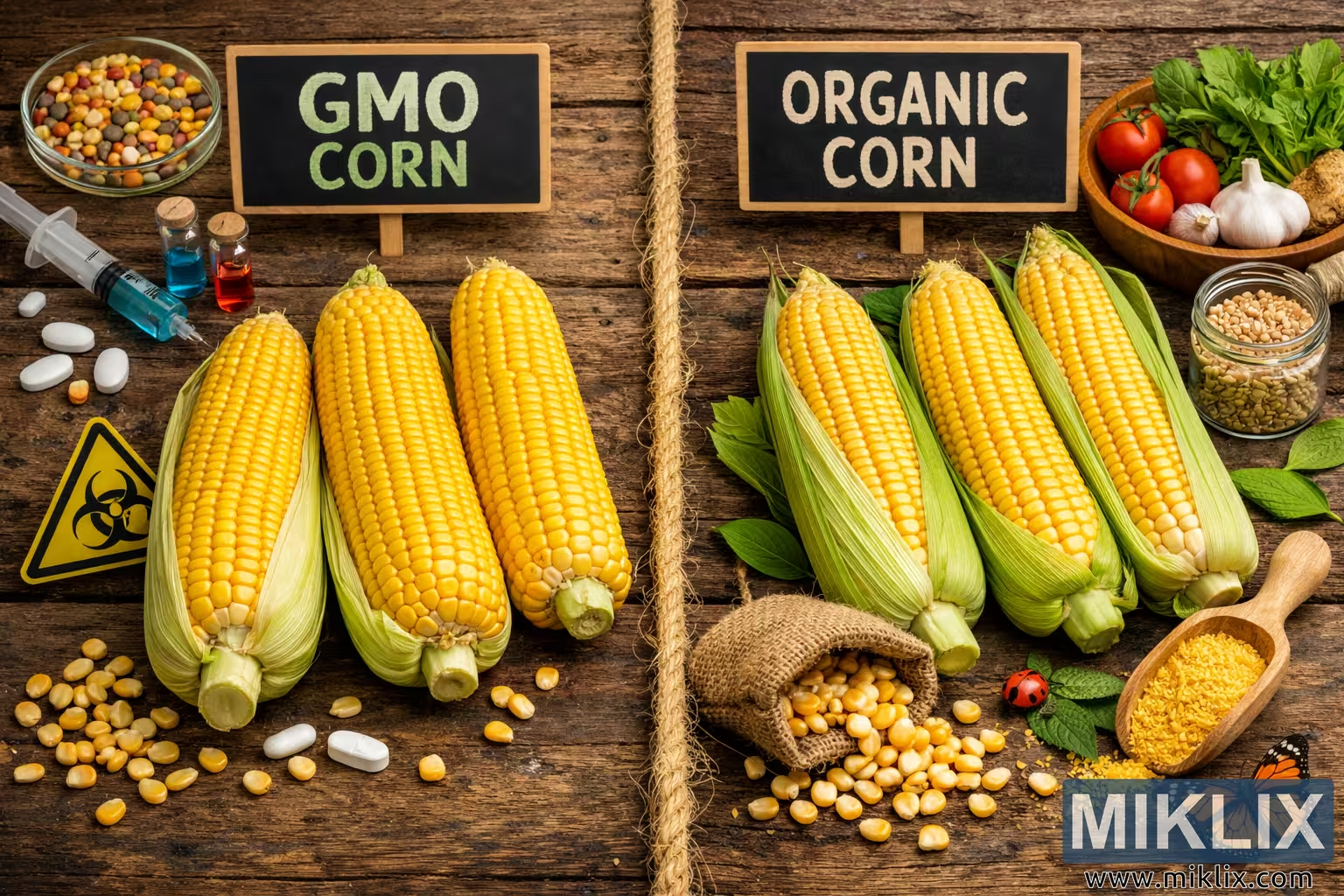
High-resolution landscape image comparing GMO corn and organic corn on a rustic wooden table. The GMO side shows uniform, bright yellow corn alongside laboratory items, a syringe, colored vials, pills, and a biohazard warning sign, symbolizing scientific intervention and genetic modification. The organic side features irregular, naturally colored corn surrounded by fresh vegetables, grains, cornmeal, a burlap sack, a wooden bowl of kernels, a ladybug, and a butterfly, highlighting traditional farming, biodiversity, and natural food choices. A frayed jute rope divides the two sides, visually representing the contrast between industrial and organic approaches to food production.
GMO Corn Versus Organic Corn Comparison on Rustic Wooden Table
เวอร์ชันต่างๆ ของภาพนี้
ไฟล์ภาพที่สามารถดาวน์โหลดได้ด้านล่างนี้ มีการบีบอัดน้อยกว่าและมีความละเอียดสูงกว่า ส่งผลให้มีคุณภาพสูงกว่าภาพที่ฝังอยู่ในบทความและหน้าเว็บต่างๆ บนเว็บไซต์นี้ ซึ่งได้รับการปรับขนาดไฟล์ให้เหมาะสมเพื่อลดการใช้แบนด์วิดท์
ขนาดปกติ (1,536 x 1,024)
ขนาดใหญ่ (3,072 x 2,048)
ขนาดใหญ่มาก (4,608 x 3,072)
ขนาดใหญ่พิเศษ (6,144 x 4,096)
ขนาดใหญ่เกินจริงอย่างน่าขัน (1,048,576 x 699,051)
- กำลังอัปโหลดอยู่... ;-)
คำอธิบายภาพ
This high-resolution landscape photograph presents a visually striking and symbolic comparison between GMO corn and organic corn, arranged side by side on a rustic wooden surface. The composition is carefully divided down the center by a frayed jute rope running vertically, creating a clear boundary between the two contrasting food choices. On the left side of the image, the GMO corn section is characterized by bright, uniform, and highly controlled elements, while the right side, representing organic corn, emphasizes natural textures, earthy tones, and traditional food imagery.
At the top of the frame, two small chalkboard-style signs immediately clarify the theme of the image. On the left, above the GMO corn, a rectangular black chalkboard sign displays the words "GMO CORN" in bold, capitalized, greenish-white letters. The lettering is slightly stylized but clean and modern, suggesting a scientific or industrial association. On the right side, above the organic corn, a similar black chalkboard sign reads "ORGANIC CORN" in bold, capitalized, off-white letters. The typography here feels slightly more rustic and natural, complementing the organic theme and reinforcing the idea of traditional, farm-grown produce.
Below the GMO sign, three ears of GMO corn are arranged in a neat row. They are partially husked, revealing bright yellow kernels that are plump, glossy, and extremely uniform in size and shape. The husks are pulled back just enough to showcase the kernels, and the overall appearance of the corn is almost idealized, hinting at genetic modification and controlled growing conditions. The kernels catch the light evenly, giving them a polished, almost synthetic sheen. Scattered around the ears of corn are loose yellow kernels, some of which spill toward the lower left corner of the image, adding texture and visual interest.
Surrounding the GMO corn are various laboratory and synthetic elements that visually communicate the concept of genetic modification and scientific intervention. To the left of the corn, a syringe filled with a vivid blue liquid lies on the wooden surface, angled slightly toward the corn. The syringe suggests injection or experimentation, reinforcing the idea of laboratory involvement in the production of GMO crops. Near the upper left area, a glass petri dish holds multicolored corn kernels, arranged in a small cluster. The colors range from yellow to red and blue, implying testing, chemical exposure, or experimental varieties.
Further back on the GMO side, two small glass vials stand upright, each containing a brightly colored liquid—one blue and one red. Their presence evokes the image of chemical solutions or laboratory reagents used in genetic engineering or crop treatment. Nearby, a small container holds mixed colored pills, adding another layer of synthetic association and hinting at the intersection of food, pharmaceuticals, and biotechnology. In the lower left portion of the GMO side, a triangular yellow warning sign with a black biohazard symbol is prominently placed. This symbol immediately conveys caution and potential risk, visually suggesting that GMO foods may be associated with controversy, safety concerns, or unknown long-term effects. A few white pills are scattered among the loose corn kernels, further emphasizing the theme of artificial intervention and scientific manipulation.
In contrast, the right side of the image, dedicated to organic corn, presents a warmer, more inviting, and natural atmosphere. Below the "ORGANIC CORN" sign, three ears of organic corn are arranged in a similar row, partially husked to reveal their kernels. Unlike the GMO corn, the organic kernels are slightly irregular in size and color, ranging from rich yellow to lighter yellow tones. The husks are greener and more textured, with strands of silk visible, giving the corn a freshly harvested appearance. The organic corn looks less polished but more authentic, emphasizing the natural variability found in traditionally grown crops.
Behind the organic corn, the background is filled with wholesome, rustic food elements that reinforce the idea of natural, farm-to-table produce. A wooden bowl brimming with fresh vegetables—such as red tomatoes, garlic bulbs, and leafy greens—sits slightly out of focus, suggesting a broader context of organic farming and diverse, healthy food choices. Nearby, a glass jar filled with grains stands as a symbol of whole foods and traditional storage methods. A wooden scoop overflowing with cornmeal rests on the table, its pale yellow texture contrasting with the smooth kernels and adding a tactile, artisanal feel to the scene.
Closer to the foreground on the organic side, a small burlap sack lies on its side, spilling golden corn kernels onto the wooden surface. The rough texture of the burlap and the scattered kernels evoke images of harvest, manual labor, and simple, traditional handling of food. Next to the sack, a wooden bowl filled with kernels adds to the rustic charm, reinforcing the idea of natural abundance and careful, hands-on preparation. On a green corn leaf, a tiny ladybug is visible, symbolizing biodiversity, ecological balance, and the presence of beneficial insects in organic farming environments. Near the lower right corner, a butterfly with orange and black wings appears, adding a delicate, lively touch and further emphasizing the harmony between organic crops and the surrounding ecosystem.
The dividing jute rope running vertically down the center of the image serves as a strong visual metaphor. Its frayed fibers and natural texture contrast with the smooth, controlled surfaces of the laboratory items on the GMO side and blend more seamlessly with the rustic elements on the organic side. The rope acts as a boundary between two philosophies of food production: one driven by scientific modification and industrial processes, and the other rooted in traditional agriculture, biodiversity, and natural growth.
The lighting in the photograph is even and well-balanced, illuminating both sides clearly without casting harsh shadows. This balanced lighting ensures that every detail—from the glossy GMO kernels and glass vials to the textured organic husks and burlap sack—is visible and sharply defined. The color palette on the GMO side leans toward cooler, more synthetic tones, with blues, reds, and bright yellows dominating the scene. In contrast, the organic side features warmer, earthy hues, including greens, browns, and soft yellows, creating a sense of comfort and naturalness.
Overall, the image is a carefully constructed visual narrative about food choices, inviting viewers to reflect on the differences between GMO and organic corn. The juxtaposition of laboratory tools, warning symbols, and uniform kernels against rustic bowls, natural insects, and irregular organic corn highlights the tension between technological advancement and traditional farming. The photograph does not explicitly endorse one side over the other but instead presents a rich, detailed comparison that encourages thoughtful consideration of how food is produced, processed, and ultimately consumed.
รูปภาพนี้เกี่ยวข้องกับ: Health Benefits of Corn: Your Complete Guide to This Nutritious Whole Grain