
تصویر: Fresh Whitbread Golding Hops Glistening with Morning Dew in Warm Natural Light
شائع شدہ:
آخری بار اپ ڈیٹ کیا گیا: 5 اگست، 2026 کو 10:31:52 PM UTC
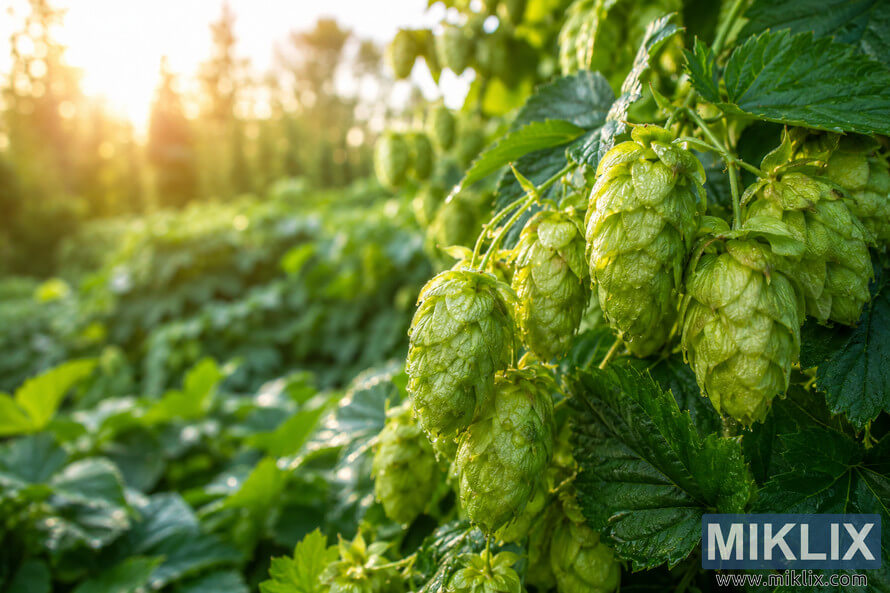
Detailed close-up of fresh Whitbread Golding hops with vibrant green cones, morning dew, lush foliage, shallow depth of field, and warm natural sunlight creating an inviting garden atmosphere ideal for brewing and botanical content.
Fresh Whitbread Golding Hops Glistening with Morning Dew in Warm Natural Light
اس تصویر کے دستیاب ورژن
ذیل میں ڈاؤن لوڈ کے لیے دستیاب تصویری فائلیں کم کمپریسڈ اور زیادہ ریزولیوشن ہیں - اور اس کے نتیجے میں، اعلیٰ معیار - اس ویب سائٹ کے مضامین اور صفحات میں سرایت کردہ تصاویر سے، جو کہ بینڈوتھ کی کھپت کو کم کرنے کے لیے فائل کے سائز کے لیے زیادہ موزوں ہیں۔
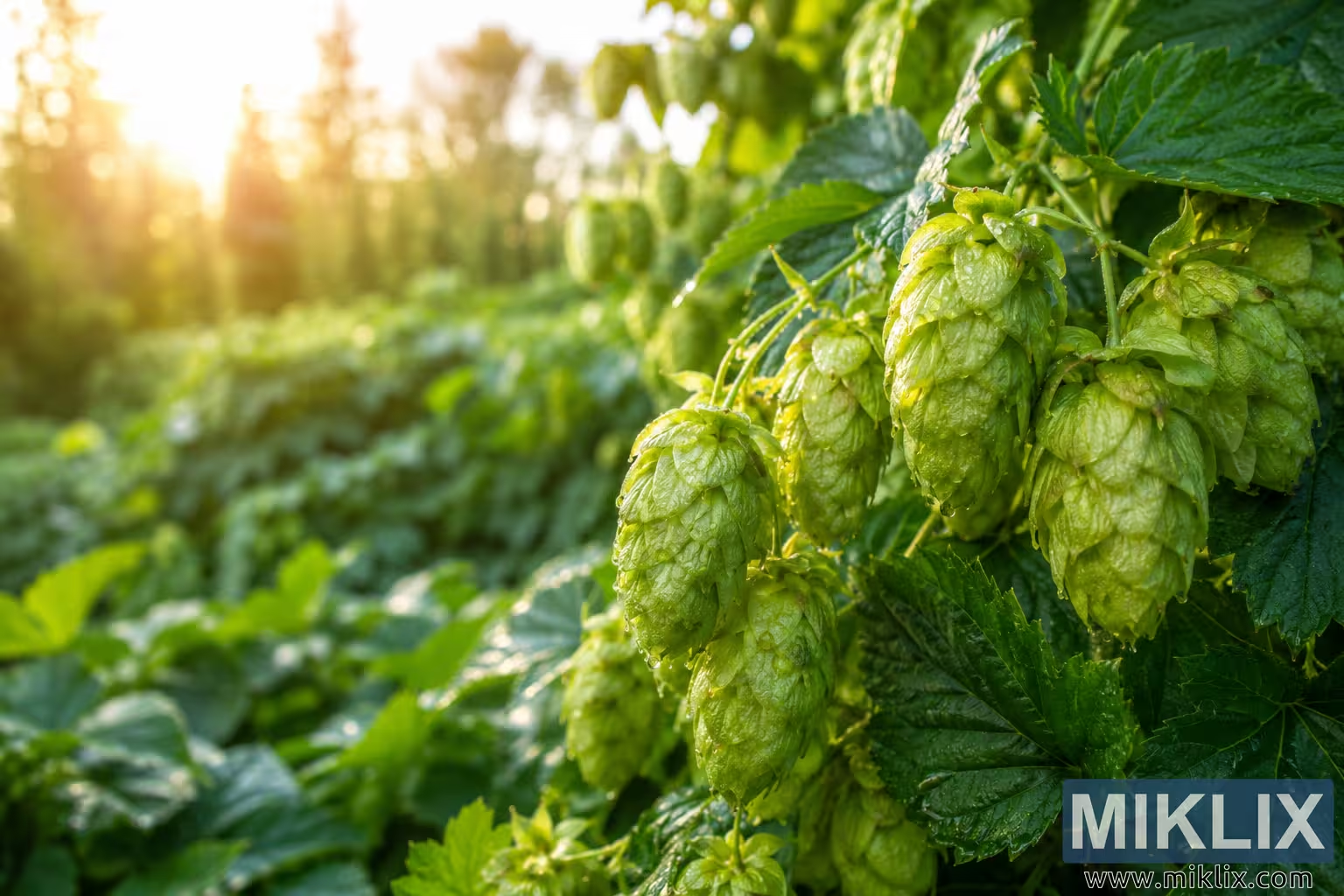
باقاعدہ سائز (1,536 x 1,024)
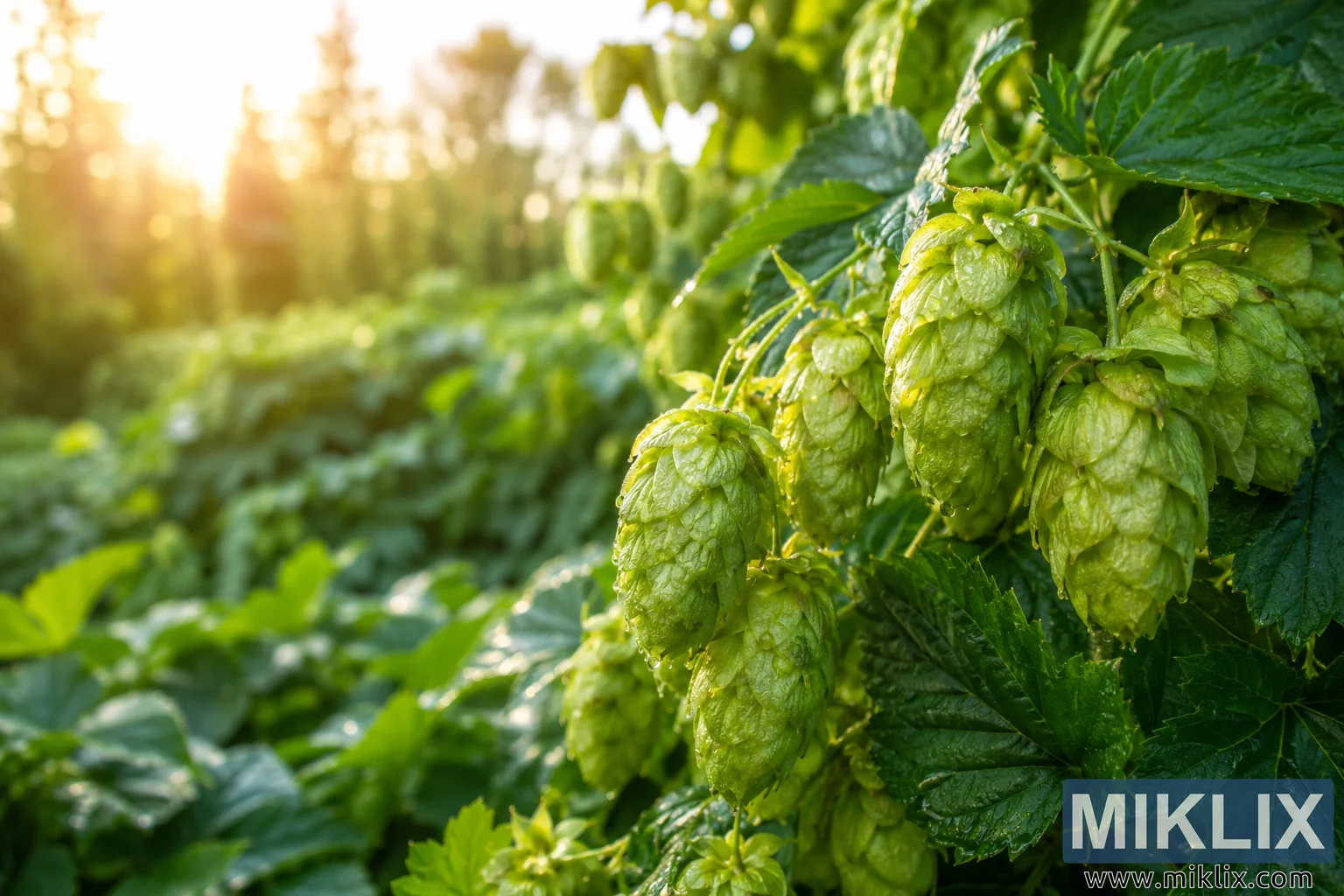
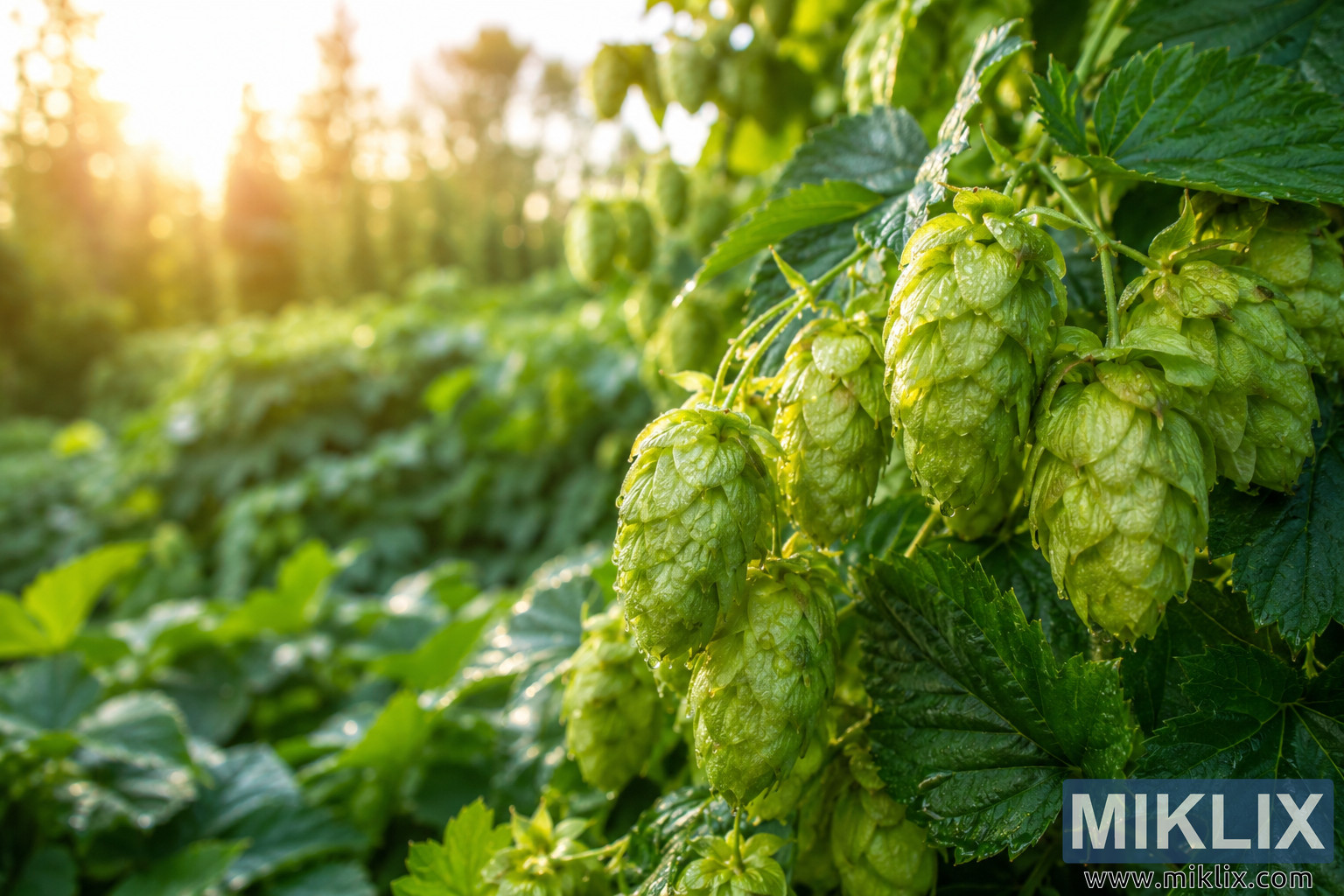
بڑا سائز (3,072 x 2,048)
بہت بڑا سائز (4,608 x 3,072)
اضافی بڑا سائز (6,144 x 4,096)
مزاحیہ طور پر بڑا سائز (1,048,576 x 699,051)
- ابھی بھی اپ لوڈ ہو رہا ہے... ;-)
تصویر کی تفصیل
This image presents a highly detailed, close-up view of a thriving cluster of fresh Whitbread Golding hops growing naturally on the vine in a lush garden environment. Captured in a wide landscape composition with a shallow depth of field, the scene immediately draws the viewer's attention to the prominent hop cones occupying the foreground. Each cone displays the distinctive layered, overlapping bracts characteristic of mature hops, forming an elegant, tapered shape that symbolizes freshness and quality. The vibrant green coloration varies subtly from bright lime highlights to deeper emerald tones, revealing the natural variation found within healthy plants. Tiny droplets of morning dew cling delicately to the surface of the cones and surrounding leaves, catching the soft sunlight and producing sparkling highlights that emphasize the freshness of the scene.
The foreground is dominated by several mature hop cones hanging gracefully from slender stems. Their richly textured surfaces reveal intricate veining and tightly layered scales, while the moisture resting upon them enhances both realism and visual appeal. Large serrated hop leaves frame the cones from multiple directions, their glossy surfaces reflecting the warm morning light. Fine veins spread across each leaf, adding another level of botanical detail that contributes to the overall realism. The leaves overlap naturally, creating an organic composition that feels both abundant and carefully balanced.
Moving into the middle ground, additional hop vines continue across the frame, extending the impression of a flourishing hop garden. Numerous leaves and smaller hop cones become progressively softer in focus, guiding the viewer's eye naturally through the image while preserving a convincing sense of depth. The gradual transition from crisp foreground details to increasingly blurred vegetation creates a pleasing visual separation that is characteristic of professional macro and close-up photography. The repeating forms of the hop cones establish rhythm throughout the composition without distracting from the primary focal cluster.
The background dissolves into a soft bokeh filled with lush greenery and warm golden sunlight filtering through distant foliage. Individual plants are intentionally rendered out of focus, producing smooth circles of light and gentle gradients that enhance the image's tranquil atmosphere. The warm glow entering from the left side of the frame suggests the early hours of the morning, when sunlight is naturally softer and more diffused. This directional lighting gently illuminates the edges of the hop cones and leaves, producing subtle highlights and delicate shadows that enhance the three-dimensional appearance of every botanical element.
The overall color palette is dominated by vibrant natural greens complemented by warm golden-yellow highlights. This harmonious balance between cool vegetation and warm sunlight creates an inviting atmosphere that evokes freshness, vitality, and the natural environment in which hops flourish. The careful exposure preserves fine detail throughout the illuminated foliage while maintaining soft transitions within the shaded regions, resulting in a realistic and visually pleasing representation of healthy hop plants.
The composition demonstrates strong photographic techniques through its use of shallow depth of field, selective focus, and balanced framing. The primary cluster of hop cones is positioned slightly off-center, allowing negative space and softly blurred foliage to contribute to a natural visual flow. Dew-covered surfaces introduce additional texture and visual interest, while the interplay between light, shadow, and organic forms reinforces the image's premium, artisistic appearance.
Overall, the scene conveys freshness, craftsmanship, and the agricultural beauty associated with hop cultivation. It captures the essence of healthy Whitbread Golding hops at their peak, emphasizing their distinctive cone structure, vibrant foliage, and natural growing environment. The combination of detailed botanical textures, warm natural illumination, shallow depth of field, and serene garden surroundings creates an image that feels both authentic and visually elegant, making it well suited for editorial, educational, or brewing-related visual content where freshness and quality are central themes.
تصویر سے متعلق ہے: Hops in Beer Brewing: Whitbread Golding