
تصویر: Roll of Black Plastic Mulch Unfurling Across Prepared Garden Soil
شائع شدہ:
آخری بار اپ ڈیٹ کیا گیا: 13 مارچ، 2026 کو 8:38:42 PM UTC
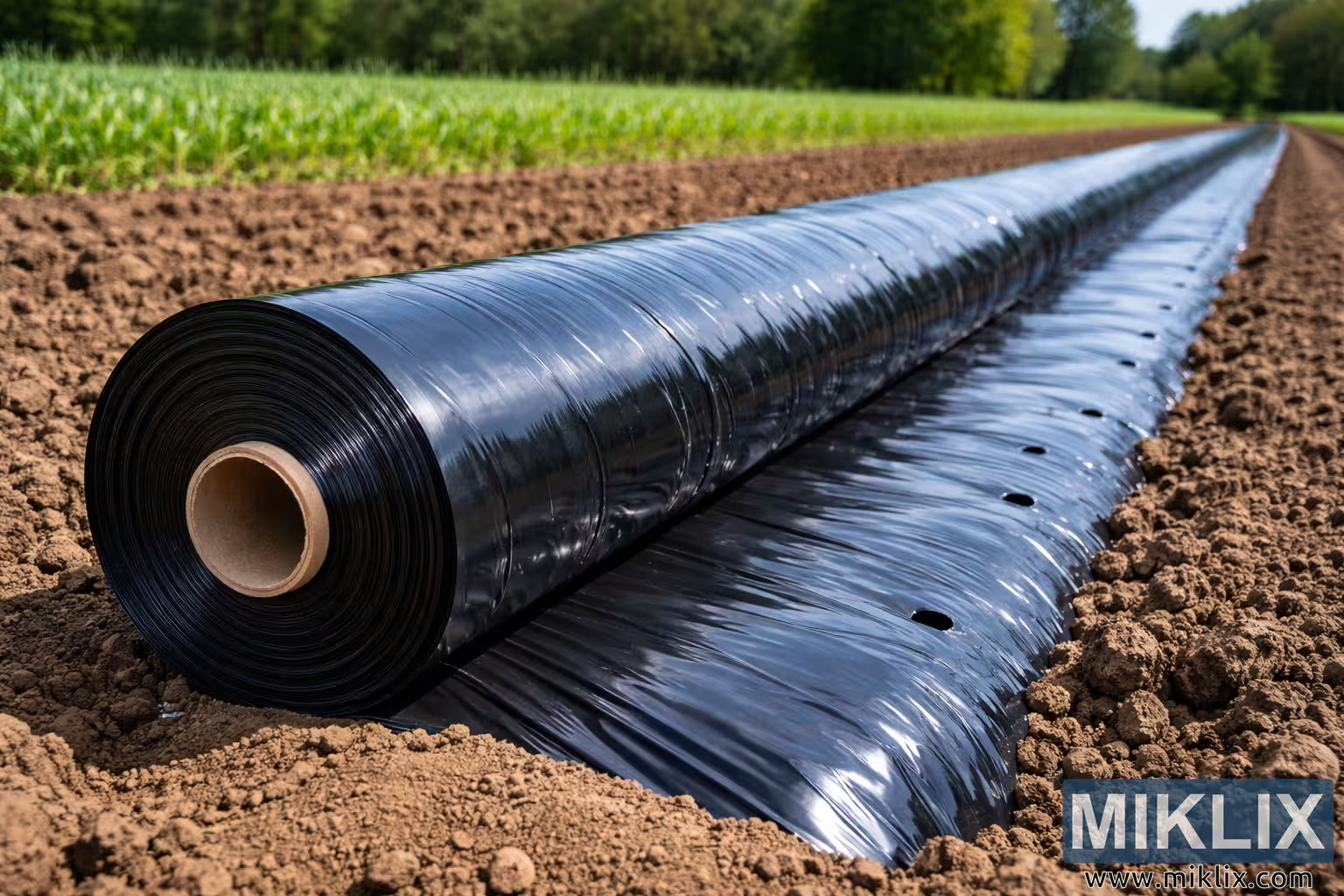
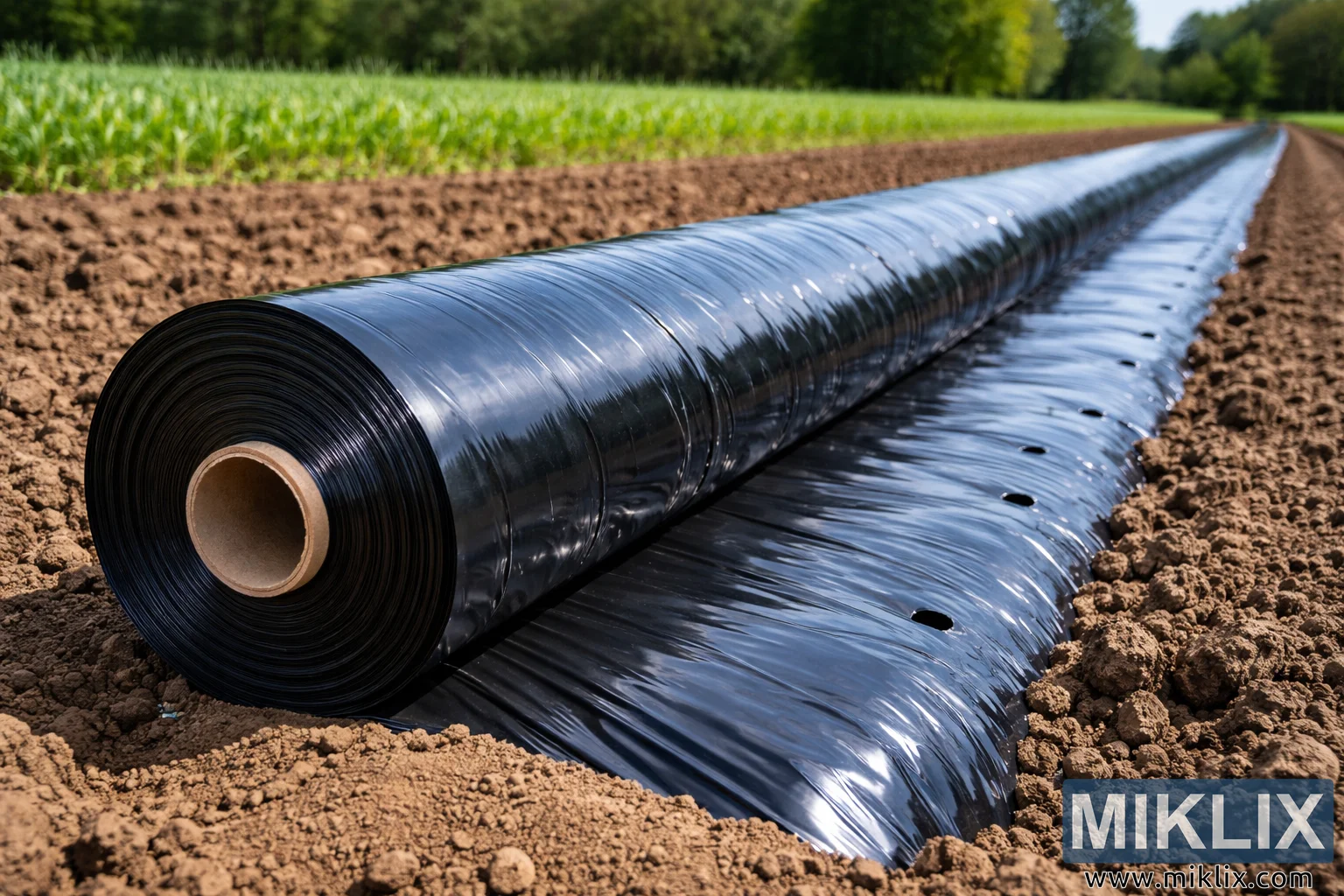
High-resolution photo of a roll of black plastic mulch laid across freshly prepared soil beds, commonly used in agriculture for soil warming, moisture retention, and weed control.
Roll of Black Plastic Mulch Unfurling Across Prepared Garden Soil

اس تصویر کے دستیاب ورژن
ذیل میں ڈاؤن لوڈ کے لیے دستیاب تصویری فائلیں کم کمپریسڈ اور زیادہ ریزولیوشن ہیں - اور اس کے نتیجے میں، اعلیٰ معیار - اس ویب سائٹ کے مضامین اور صفحات میں سرایت کردہ تصاویر سے، جو کہ بینڈوتھ کی کھپت کو کم کرنے کے لیے فائل کے سائز کے لیے زیادہ موزوں ہیں۔
باقاعدہ سائز (1,536 x 1,024)

بڑا سائز (3,072 x 2,048)
بہت بڑا سائز (4,608 x 3,072)
اضافی بڑا سائز (6,144 x 4,096)
مزاحیہ طور پر بڑا سائز (1,048,576 x 699,051)
- ابھی بھی اپ لوڈ ہو رہا ہے... ;-)
تصویر کی تفصیل
A high-resolution landscape photograph shows a large roll of black plastic mulch positioned on freshly tilled soil in an agricultural field. The cylindrical roll sits prominently in the left foreground, its tightly wound layers of glossy black plastic reflecting sunlight and revealing subtle ridges formed by the rolled material. The cardboard core at the center of the roll is visible, giving a sense of scale and indicating that the plastic sheet can be continuously unrolled along the field. From the roll, the plastic mulch extends smoothly toward the right side of the frame, covering a raised bed of soil.
The mulch sheet is stretched flat across the top of the soil row, creating a sleek, reflective surface that contrasts with the rough texture of the surrounding earth. Small circular planting holes are spaced at regular intervals along the center of the plastic, suggesting that seedlings or transplants will be placed through these openings. Along both sides of the plastic strip, loose soil has been mounded slightly to secure the edges of the mulch in place, a common agricultural practice that prevents wind from lifting the material and helps maintain a tight seal over the soil.
The soil itself appears freshly cultivated, with visible clods and crumbly texture indicating recent preparation. Its rich brown color stands in sharp contrast to the deep black sheen of the plastic mulch. Parallel rows of soil stretch across the midground, reinforcing the organized structure of the field and guiding the viewer’s eye toward the distance.
In the background, rows of green crops grow in neat lines, their leaves forming a soft band of vibrant color that separates the cultivated soil from the natural surroundings. Beyond the crop rows, a line of leafy trees forms a dense green border along the horizon. The trees are slightly out of focus, emphasizing the foreground subject while adding depth and context to the rural environment.
Above the landscape, a clear blue sky fills the upper portion of the image, suggesting bright daytime conditions. The sunlight highlights the glossy surface of the plastic mulch and casts gentle shadows in the folds and contours of the soil. The overall scene conveys a practical agricultural moment: a roll of mulch being laid out to warm the soil, conserve moisture, and suppress weeds before planting. The composition combines strong foreground detail with a broad agricultural setting, illustrating both the material itself and the farming environment in which it is used.
تصویر سے متعلق ہے: Growing Corn: Your Complete Guide to Sweet Success in the Garden