
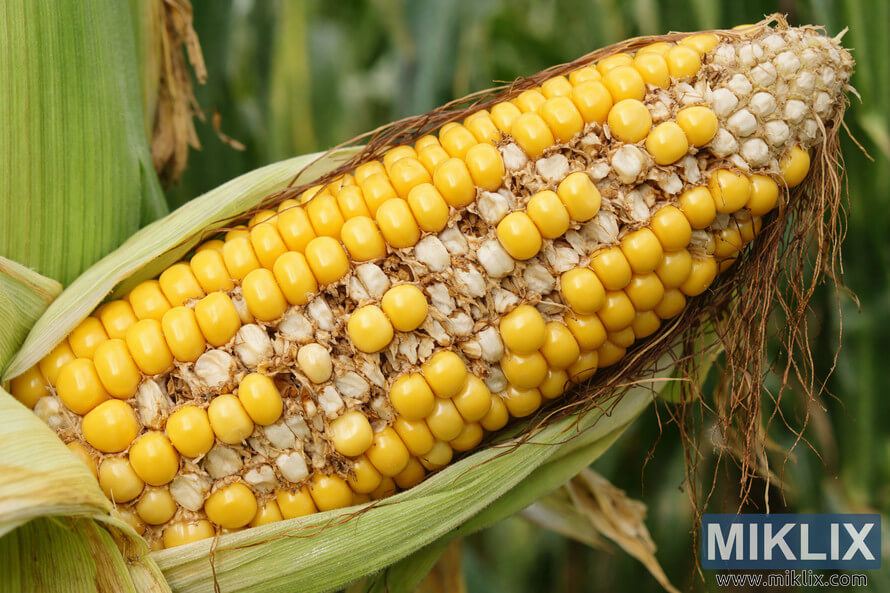
تصویر: Corn Ear with Incomplete Kernel Fill Showing Pollination Failure
شائع شدہ:
آخری بار اپ ڈیٹ کیا گیا: 13 مارچ، 2026 کو 8:38:42 PM UTC
Detailed close-up of a corn ear displaying incomplete kernel fill and missing kernels, a visual symptom of pollination problems in maize.
Corn Ear with Incomplete Kernel Fill Showing Pollination Failure
اس تصویر کے دستیاب ورژن
ذیل میں ڈاؤن لوڈ کے لیے دستیاب تصویری فائلیں کم کمپریسڈ اور زیادہ ریزولیوشن ہیں - اور اس کے نتیجے میں، اعلیٰ معیار - اس ویب سائٹ کے مضامین اور صفحات میں سرایت کردہ تصاویر سے، جو کہ بینڈوتھ کی کھپت کو کم کرنے کے لیے فائل کے سائز کے لیے زیادہ موزوں ہیں۔
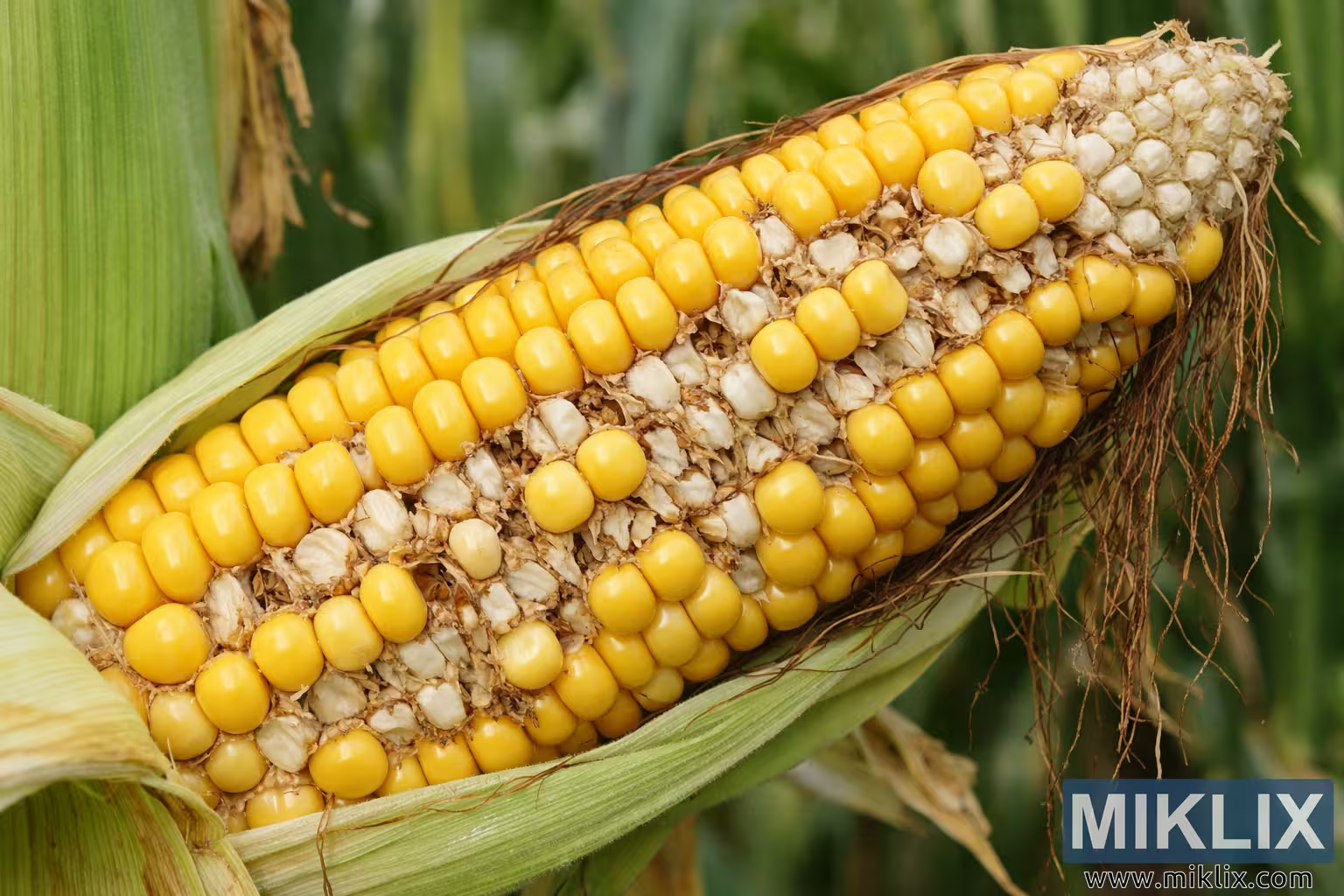
باقاعدہ سائز (1,536 x 1,024)
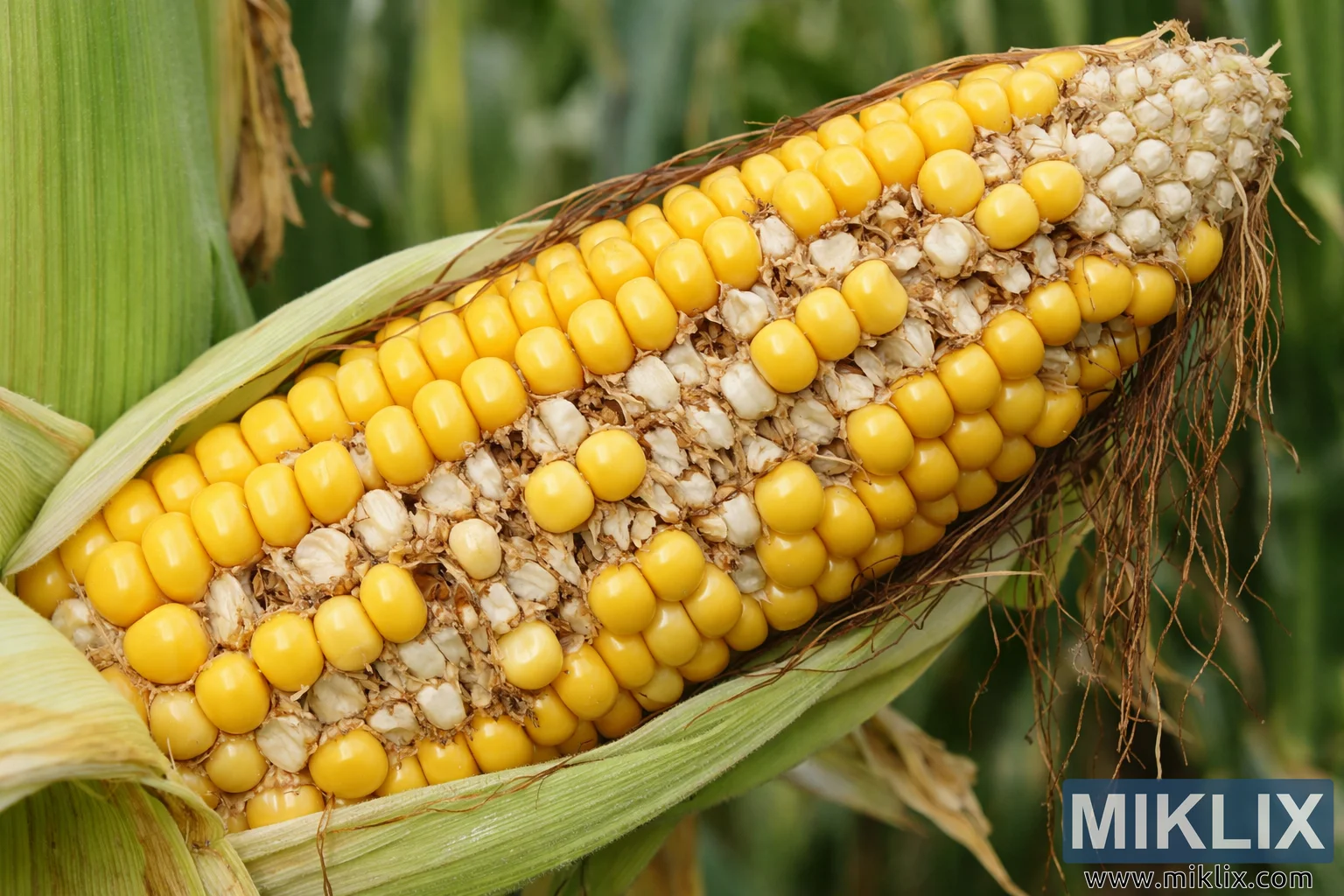
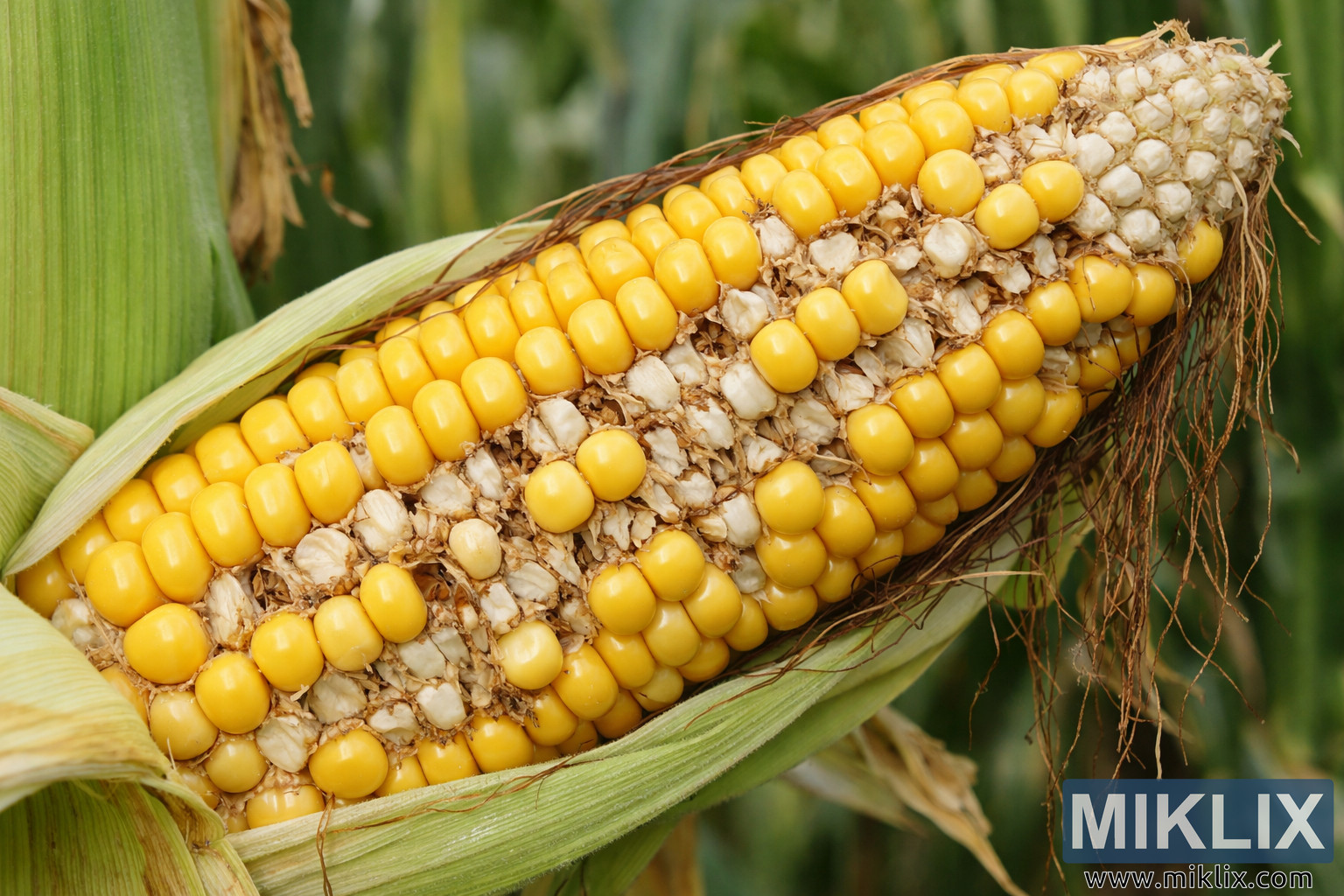
بڑا سائز (3,072 x 2,048)
بہت بڑا سائز (4,608 x 3,072)
اضافی بڑا سائز (6,144 x 4,096)
مزاحیہ طور پر بڑا سائز (1,048,576 x 699,051)
- ابھی بھی اپ لوڈ ہو رہا ہے... ;-)
تصویر کی تفصیل
A high-resolution landscape-oriented close-up photograph shows a partially husked ear of corn still attached to the plant in a field. The image focuses tightly on the ear, which runs diagonally across the frame from the lower left toward the upper right, while the background is softly blurred with green corn leaves and stalks, indicating a mature maize crop growing outdoors during daylight. The ear’s husk has been peeled back to expose the cob and kernels, revealing a clear example of incomplete kernel fill caused by pollination problems.
At the upper portion of the ear, the kernels appear relatively well developed. They are plump, glossy, and bright yellow, arranged in neat rows typical of healthy maize ears. The kernels are rounded and tightly packed, reflecting successful fertilization of those individual ovules. However, as the viewer’s eye moves along the length of the cob toward the center and lower sections, the uniform pattern begins to break down. Large gaps and irregular patches appear where kernels failed to develop properly.
In these areas, instead of full yellow kernels, there are small, shriveled, pale, or undeveloped structures. Some spots show only the exposed cob tissue where kernels never formed at all, creating noticeable empty spaces between the remaining kernels. Other areas contain misshapen or partially formed kernels that look dry and whitish, contrasting strongly with the surrounding healthy yellow kernels. The irregularity gives the ear a mottled and uneven texture.
Brown, dried corn silk strands hang from the tip of the ear and along the exposed cob, curling and tangling around the kernels. These silks represent the pathways through which pollen must travel to fertilize each kernel, visually reinforcing the pollination theme of the image. Their presence, along with the pattern of missing kernels, suggests that some silks likely did not receive pollen or were fertilized too late for proper kernel development.
The green husk leaves frame the ear from below and along the sides. They are partially peeled back and slightly curved, revealing the cob while still attached to the plant. The husk texture is fibrous and matte, with subtle veins visible along the leaf surfaces. Behind the ear, the out-of-focus background shows vertical corn stalks and leaves in varying shades of green, producing a natural agricultural setting while keeping attention centered on the damaged ear.
Overall, the photograph clearly illustrates a classic agronomic symptom of poor or uneven pollination in maize. The contrast between healthy yellow kernels and missing or underdeveloped ones highlights the consequences of insufficient pollen transfer, environmental stress during silking, or other pollination disruptions. The detailed macro perspective makes the structural differences highly visible, making the image useful for educational, agricultural, or diagnostic contexts where identifying pollination-related kernel fill issues in corn is important.
تصویر سے متعلق ہے: Growing Corn: Your Complete Guide to Sweet Success in the Garden