
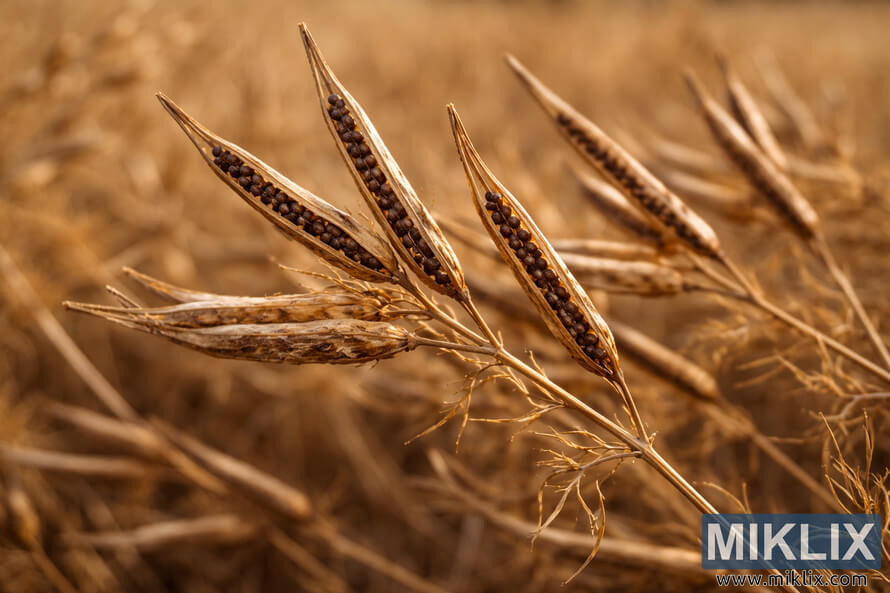
تصویر: Mature Brown Mustard Seed Pods Ready for Harvest
شائع شدہ:
آخری بار اپ ڈیٹ کیا گیا: 7 مارچ، 2026 کو 6:30:10 PM UTC
High-resolution landscape photo of mature brown mustard seed pods on plant stalks, split open and filled with dark seeds, ready for harvest in a golden field.
Mature Brown Mustard Seed Pods Ready for Harvest
اس تصویر کے دستیاب ورژن
ذیل میں ڈاؤن لوڈ کے لیے دستیاب تصویری فائلیں کم کمپریسڈ اور زیادہ ریزولیوشن ہیں - اور اس کے نتیجے میں، اعلیٰ معیار - اس ویب سائٹ کے مضامین اور صفحات میں سرایت کردہ تصاویر سے، جو کہ بینڈوتھ کی کھپت کو کم کرنے کے لیے فائل کے سائز کے لیے زیادہ موزوں ہیں۔
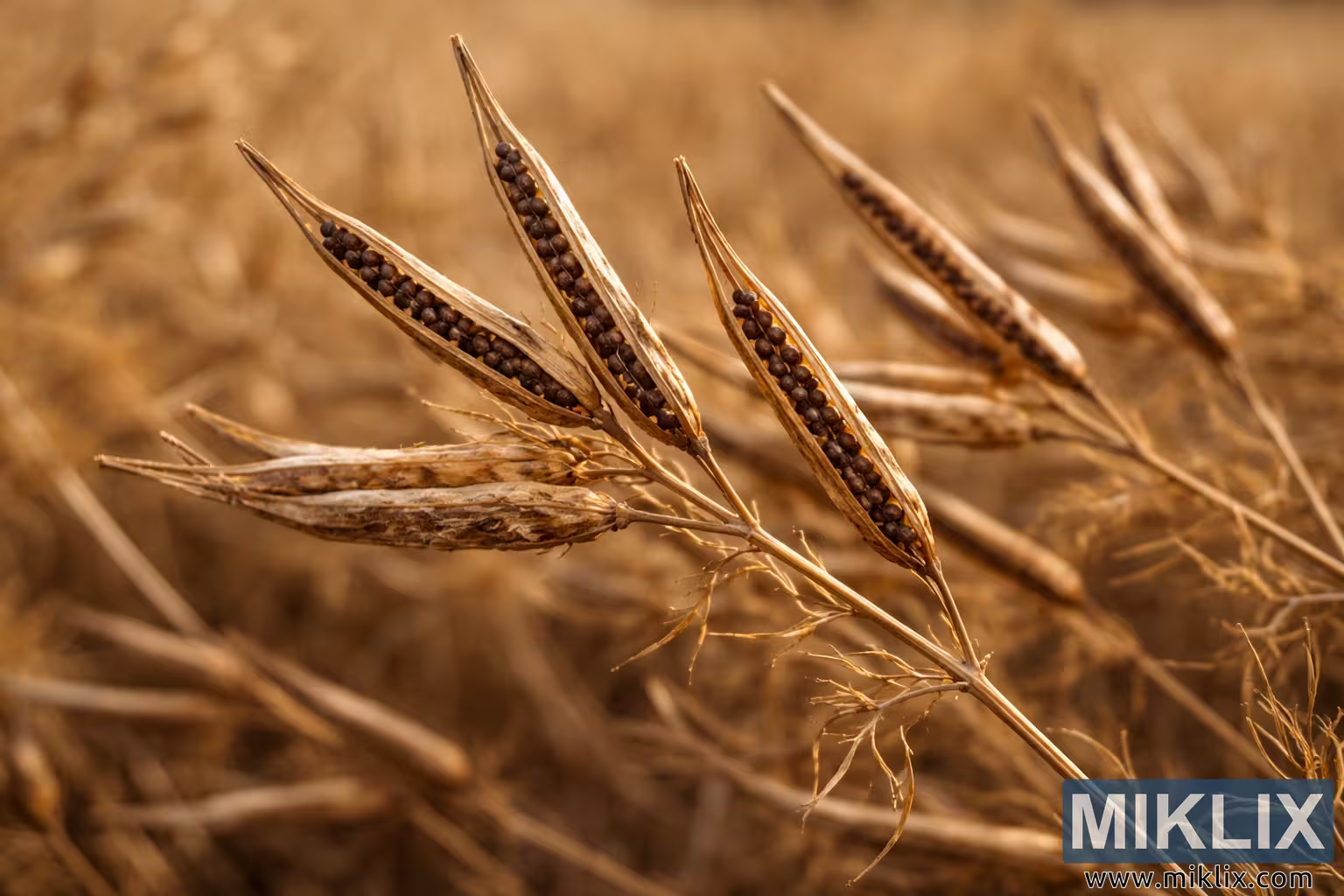
باقاعدہ سائز (1,536 x 1,024)
بڑا سائز (3,072 x 2,048)
بہت بڑا سائز (4,608 x 3,072)
اضافی بڑا سائز (6,144 x 4,096)
مزاحیہ طور پر بڑا سائز (1,048,576 x 699,051)
- ابھی بھی اپ لوڈ ہو رہا ہے... ;-)
تصویر کی تفصیل
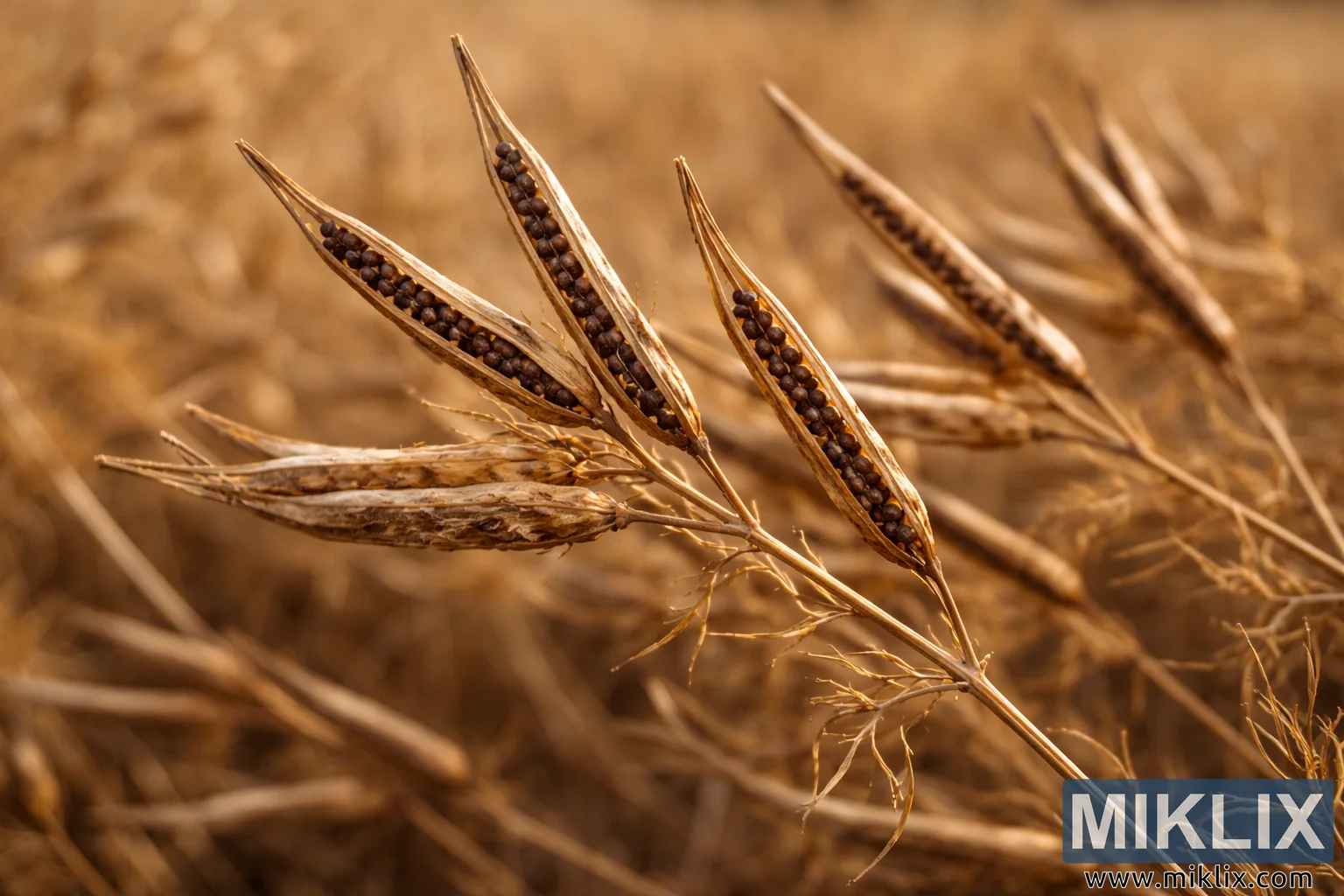
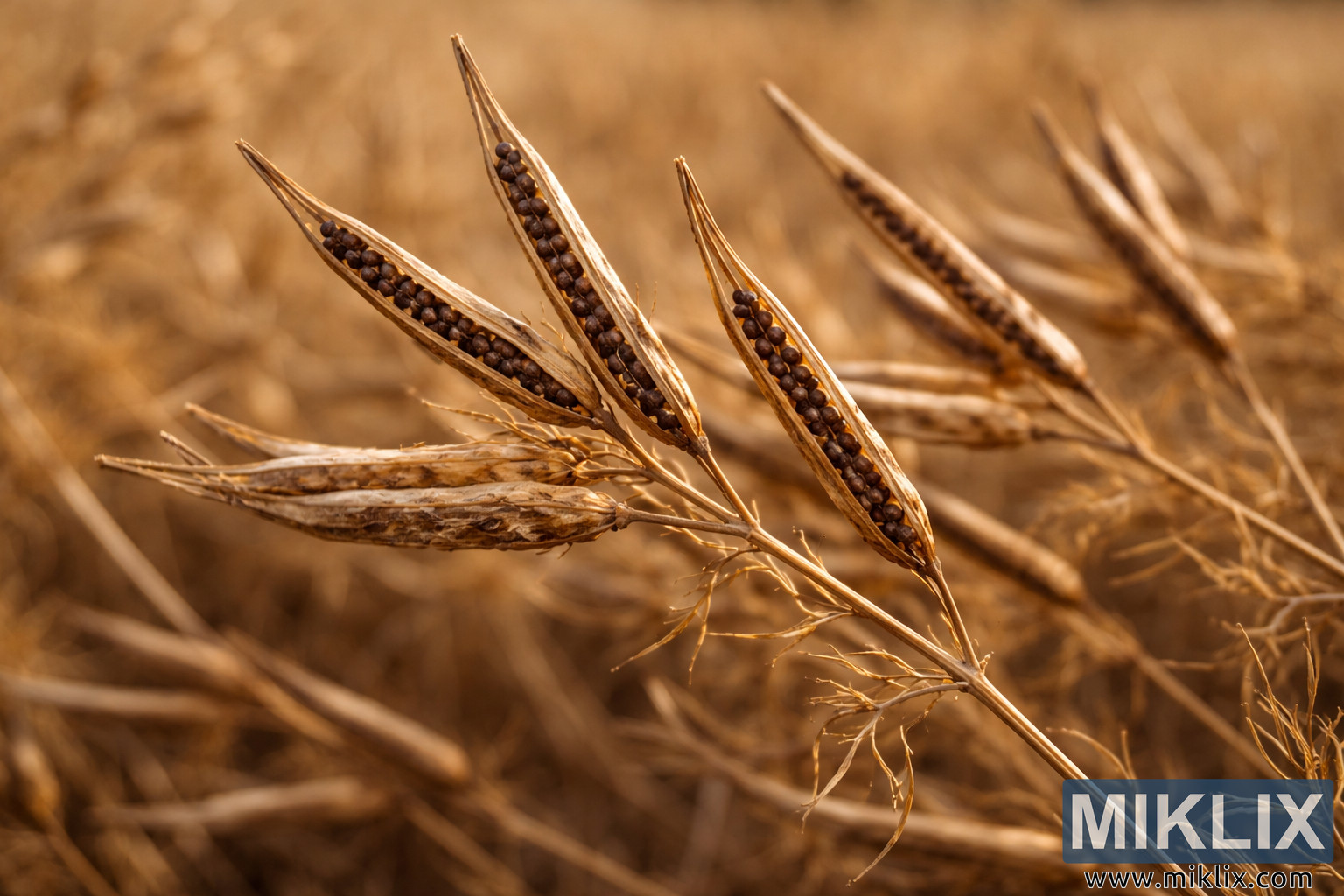
This high-resolution landscape photograph captures a close-up view of mature brown mustard seed pods ready for harvest, set against the warm, golden tones of a sunlit field. The composition centers on several elongated, dried pods attached to slender, pale-brown plant stalks. The pods have naturally split open along their seams, revealing tightly packed rows of small, round, dark brown mustard seeds nestled inside. Their smooth, spherical surfaces contrast subtly with the dry, fibrous texture of the pod walls.
The primary cluster of pods is positioned slightly off-center in the frame, drawing the viewer’s attention to the intricate details of the harvest-ready seeds. Each pod is narrow and tapered at the ends, with a slightly twisted form that suggests natural drying under late-season conditions. The outer shell appears brittle and parchment-like, displaying delicate veins and subtle variations in tone ranging from sandy beige to deeper caramel brown. The seeds inside are uniform in size and color, appearing glossy and dense, indicative of full maturity.
Soft, natural light illuminates the scene from the side, casting gentle highlights along the edges of the pods and creating mild shadows that enhance depth and dimensionality. The warm lighting suggests late afternoon or early evening, a time often associated with harvest activities. The background is rendered in a pleasing blur, producing a shallow depth-of-field effect that isolates the foreground subject while still conveying the presence of a broader field of dried mustard plants. Hints of additional stalks and pods can be seen in the distance, out of focus, contributing to a sense of abundance and agricultural scale.
Fine details such as thin branching stems and delicate remnants of dried leaves add texture and authenticity to the composition. The overall color palette is dominated by earthy hues—golden browns, muted tans, and deep seed browns—evoking the dryness and readiness of late-season crops. The image communicates both the fragility and resilience of the plant structure at the final stage of its growth cycle.
As a whole, the photograph conveys a sense of seasonal transition and agricultural productivity. It highlights the natural beauty of mustard plants at maturity, emphasizing the tactile contrast between the crisp pod shells and the compact seeds within. The landscape orientation allows the viewer to appreciate both the detailed foreground cluster and the softly blurred field beyond, creating a balanced and immersive visual experience that reflects the essence of harvest time.
تصویر سے متعلق ہے: Complete Guide to Growing Your Own Mustard Plants