
تصویر: Dandelion Preparations: Nature’s Versatile Herb in Detail
شائع شدہ:
آخری بار اپ ڈیٹ کیا گیا: 22 مئی، 2026 کو 6:03:38 PM UTC
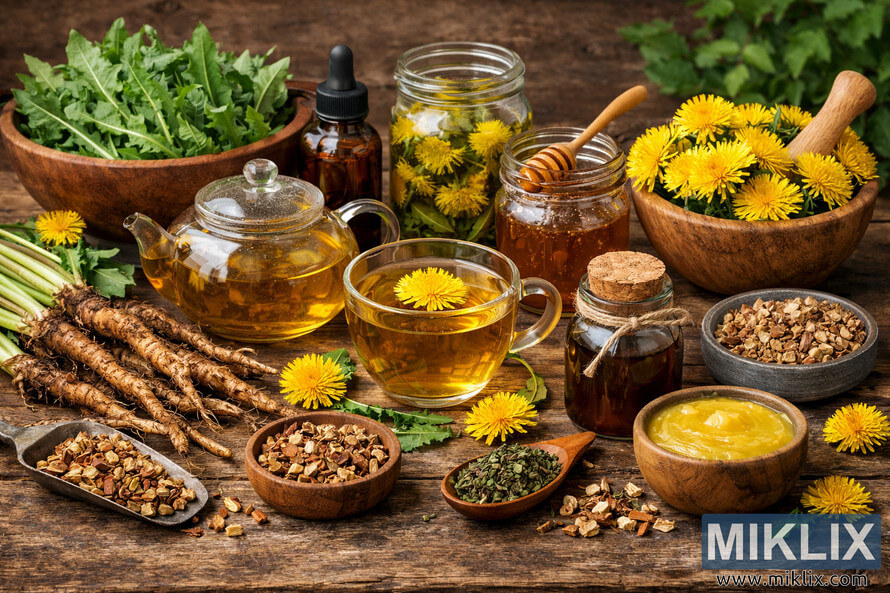
Explore the diverse uses of dandelion in this detailed image featuring leaves, roots, flowers, and herbal preparations such as tea, oil, honey, and salve, beautifully arranged on a rustic wooden surface.
Dandelion Preparations: Nature’s Versatile Herb in Detail
اس تصویر کے دستیاب ورژن
ذیل میں ڈاؤن لوڈ کے لیے دستیاب تصویری فائلیں کم کمپریسڈ اور زیادہ ریزولیوشن ہیں - اور اس کے نتیجے میں، اعلیٰ معیار - اس ویب سائٹ کے مضامین اور صفحات میں سرایت کردہ تصاویر سے، جو کہ بینڈوتھ کی کھپت کو کم کرنے کے لیے فائل کے سائز کے لیے زیادہ موزوں ہیں۔
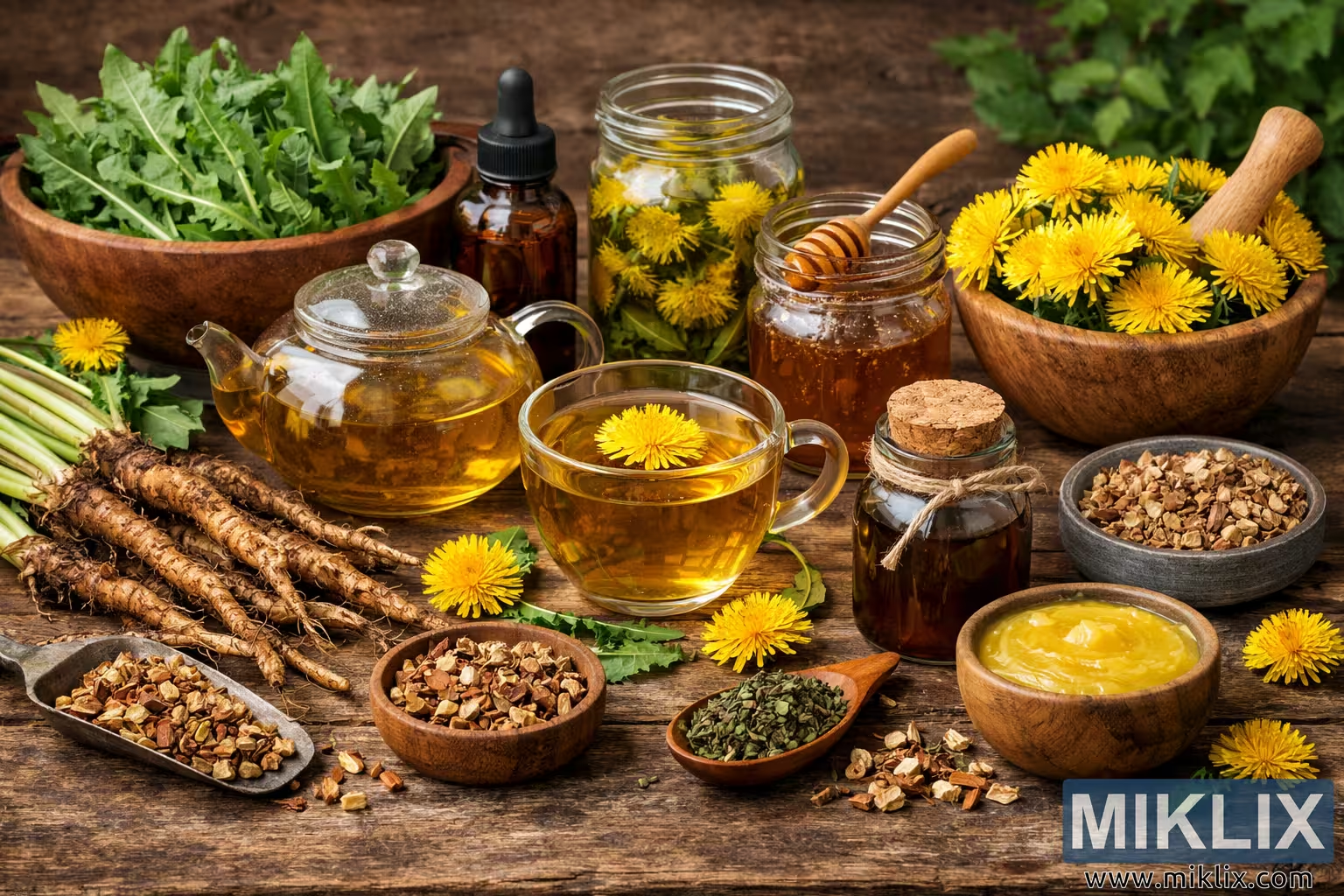
باقاعدہ سائز (1,536 x 1,024)
بڑا سائز (3,072 x 2,048)
بہت بڑا سائز (4,608 x 3,072)
اضافی بڑا سائز (6,144 x 4,096)
مزاحیہ طور پر بڑا سائز (1,048,576 x 699,051)
- ابھی بھی اپ لوڈ ہو رہا ہے... ;-)
تصویر کی تفصیل
The image presents a richly detailed, high-resolution landscape composition that celebrates the multifaceted nature of the dandelion plant—Taraxacum officinale—in its various forms of preparation and use. The scene is set upon a rustic wooden table, whose textured grain and warm brown tones evoke a sense of natural simplicity and traditional craftsmanship. Every element in the frame contributes to a harmonious depiction of dandelion’s botanical beauty and its role in herbal medicine, culinary arts, and natural wellness.
On the left side of the composition, a large wooden bowl brims with freshly harvested dandelion leaves. Their jagged edges and vibrant green hues contrast beautifully with the earthy tones of the table. The leaves appear crisp and slightly moist, suggesting they were gathered moments before the photograph was taken. Beneath the bowl, a cluster of dandelion roots lies across the surface—long, fibrous, and still dusted with soil. Their rough texture and natural imperfections highlight the authenticity of the scene. A small wooden bowl nearby contains chopped, dried root pieces, light brown and irregularly shaped, representing the plant’s transformation from raw material to herbal ingredient.
Moving toward the center, the focus shifts to the liquid preparations that showcase dandelion’s versatility. A transparent glass teapot filled with golden dandelion tea glows warmly under soft natural light. The tea’s color—amber with hints of yellow—reflects the infusion of dandelion flowers and leaves. Beside the teapot, a matching glass cup holds the same tea, with a single yellow dandelion flower floating gracefully on its surface. This delicate detail adds a poetic touch, symbolizing the union between the plant’s aesthetic charm and its nourishing properties. Behind the teapot, an amber glass bottle with a dropper stands upright, suggesting tincture or extract use. Next to it, a jar of dandelion-infused oil gleams with submerged yellow blossoms, their petals suspended in translucent liquid like preserved sunlight.
To the right of the oil jar, a small glass container of dandelion honey captures attention with its rich golden color and viscous texture. A wooden honey dipper rests across the jar’s rim, a thin thread of honey glistening as it drips back into the jar. This subtle motion adds life to the still composition. Further right, a wooden bowl overflows with fresh dandelion flowers—bright yellow, fully open, and arranged in a way that feels spontaneous yet balanced. Their cheerful color dominates the right side of the image, creating a visual anchor that draws the viewer’s gaze.
In the foreground, several smaller vessels display other forms of dandelion preparations. A small glass jar filled with dark brown tincture is sealed with a cork and tied with rustic twine, evoking old apothecary traditions. Beside it, a ceramic dish holds a smooth yellow salve, its glossy surface reflecting light softly. A wooden mortar and pestle filled with dandelion flowers sits nearby, suggesting the process of grinding petals into herbal mixtures. Scattered across the table are loose flowers, dried root fragments, and a metal scoop containing chopped roots—each item reinforcing the theme of transformation from plant to product.
The background is softly blurred, revealing hints of green foliage that suggest an outdoor garden or natural setting. This gentle blur enhances depth and keeps the viewer’s focus on the foreground details. The lighting throughout the image is even and natural, with subtle highlights on glass surfaces and warm shadows beneath wooden objects. The overall color palette—greens, yellows, browns, and golds—creates a cohesive visual harmony that feels both organic and inviting.
Symbolically, the image embodies the holistic philosophy of herbalism: the idea that every part of a plant can serve a purpose. The leaves represent nourishment and detoxification; the roots symbolize grounding and resilience; the flowers stand for vitality and renewal. Together, they form a tableau of balance between nature’s raw beauty and human ingenuity.
This composition not only documents the physical attributes of dandelion preparations but also conveys a deeper narrative of sustainability and respect for natural resources. It invites viewers to appreciate the plant’s humble origins and its remarkable adaptability across culinary, medicinal, and cosmetic domains. The meticulous arrangement of objects, the interplay of textures, and the warm, earthy tones all contribute to a sense of calm and reverence. The image ultimately serves as both an educational and aesthetic celebration of one of nature’s most underestimated yet powerful herbs.
تصویر سے متعلق ہے: A Guide to the Health Benefits of Dandelions