
تصویر: Scientific Illustration of Vitamin C and Vitamin A Molecular Structures
شائع شدہ:
آخری بار اپ ڈیٹ کیا گیا: 16 جولائی، 2026 کو 8:44:52 PM UTC
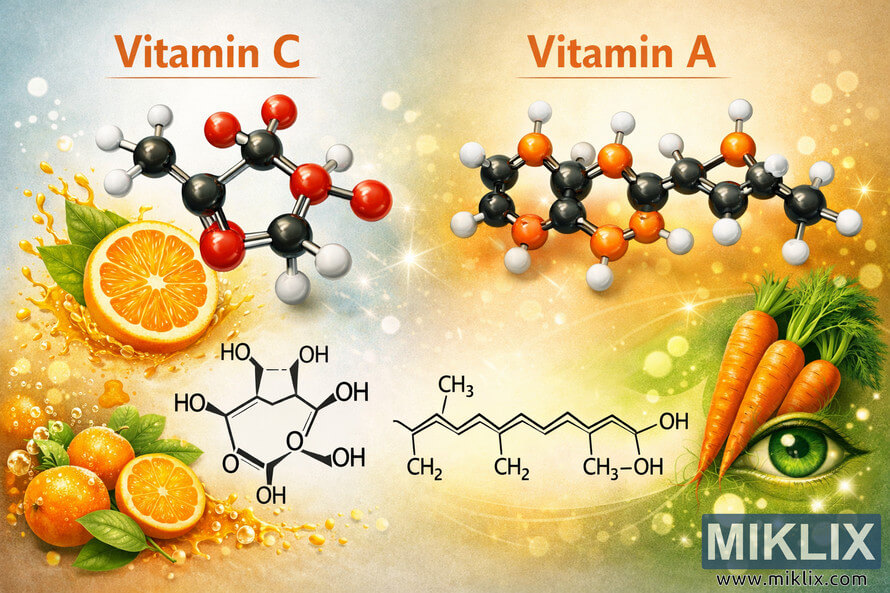
Detailed scientific illustration of Vitamin C and Vitamin A molecular structures, featuring 3D models, 2D chemical diagrams, and natural food sources such as citrus fruits and carrots. Ideal for educational, nutritional, and health-related content highlighting the roles of these essential vitamins.
Scientific Illustration of Vitamin C and Vitamin A Molecular Structures
اس تصویر کے دستیاب ورژن
ذیل میں ڈاؤن لوڈ کے لیے دستیاب تصویری فائلیں کم کمپریسڈ اور زیادہ ریزولیوشن ہیں - اور اس کے نتیجے میں، اعلیٰ معیار - اس ویب سائٹ کے مضامین اور صفحات میں سرایت کردہ تصاویر سے، جو کہ بینڈوتھ کی کھپت کو کم کرنے کے لیے فائل کے سائز کے لیے زیادہ موزوں ہیں۔
باقاعدہ سائز (1,536 x 1,024)
بڑا سائز (3,072 x 2,048)
بہت بڑا سائز (4,608 x 3,072)
اضافی بڑا سائز (6,144 x 4,096)
مزاحیہ طور پر بڑا سائز (1,048,576 x 699,051)
- ابھی بھی اپ لوڈ ہو رہا ہے... ;-)
تصویر کی تفصیل
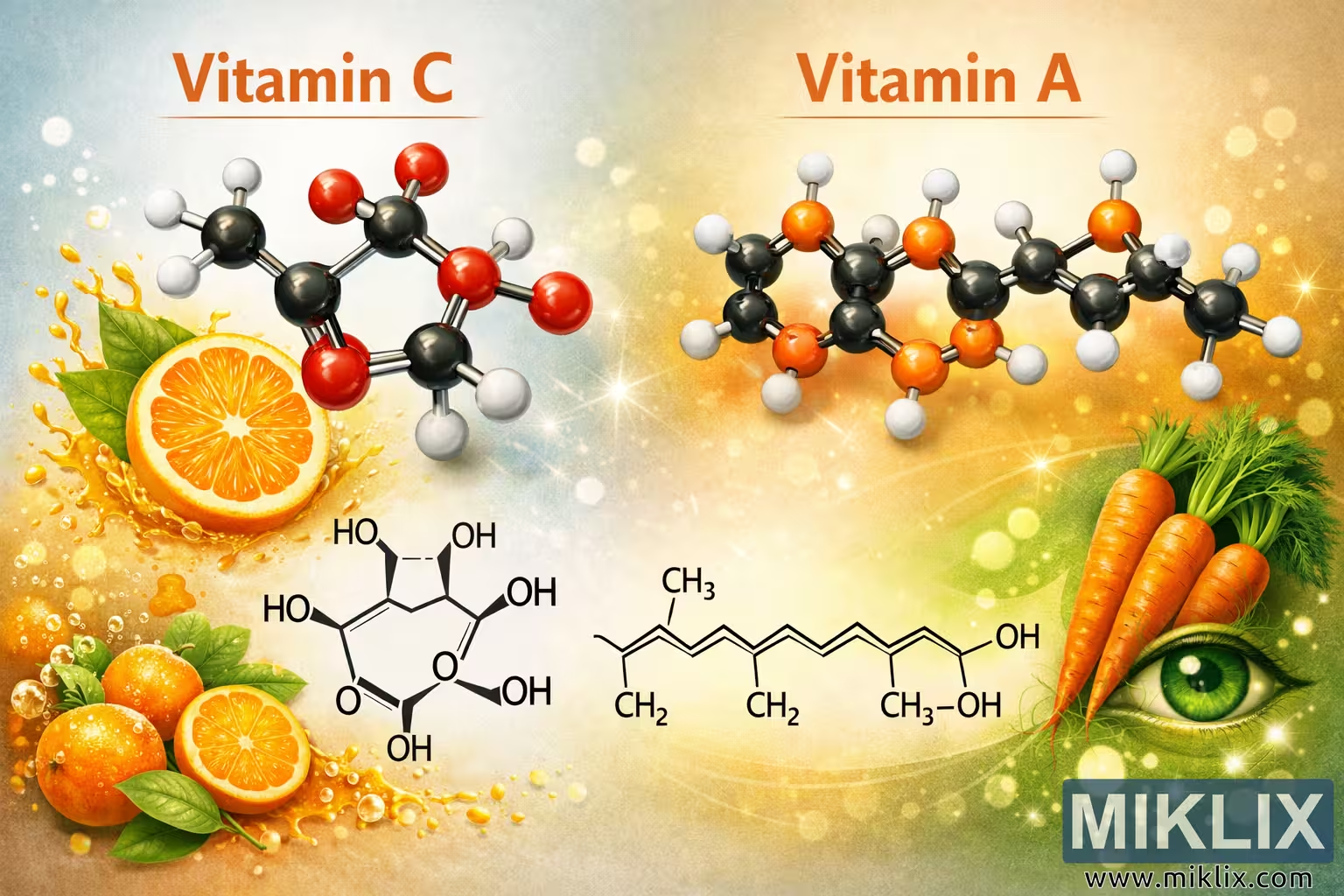
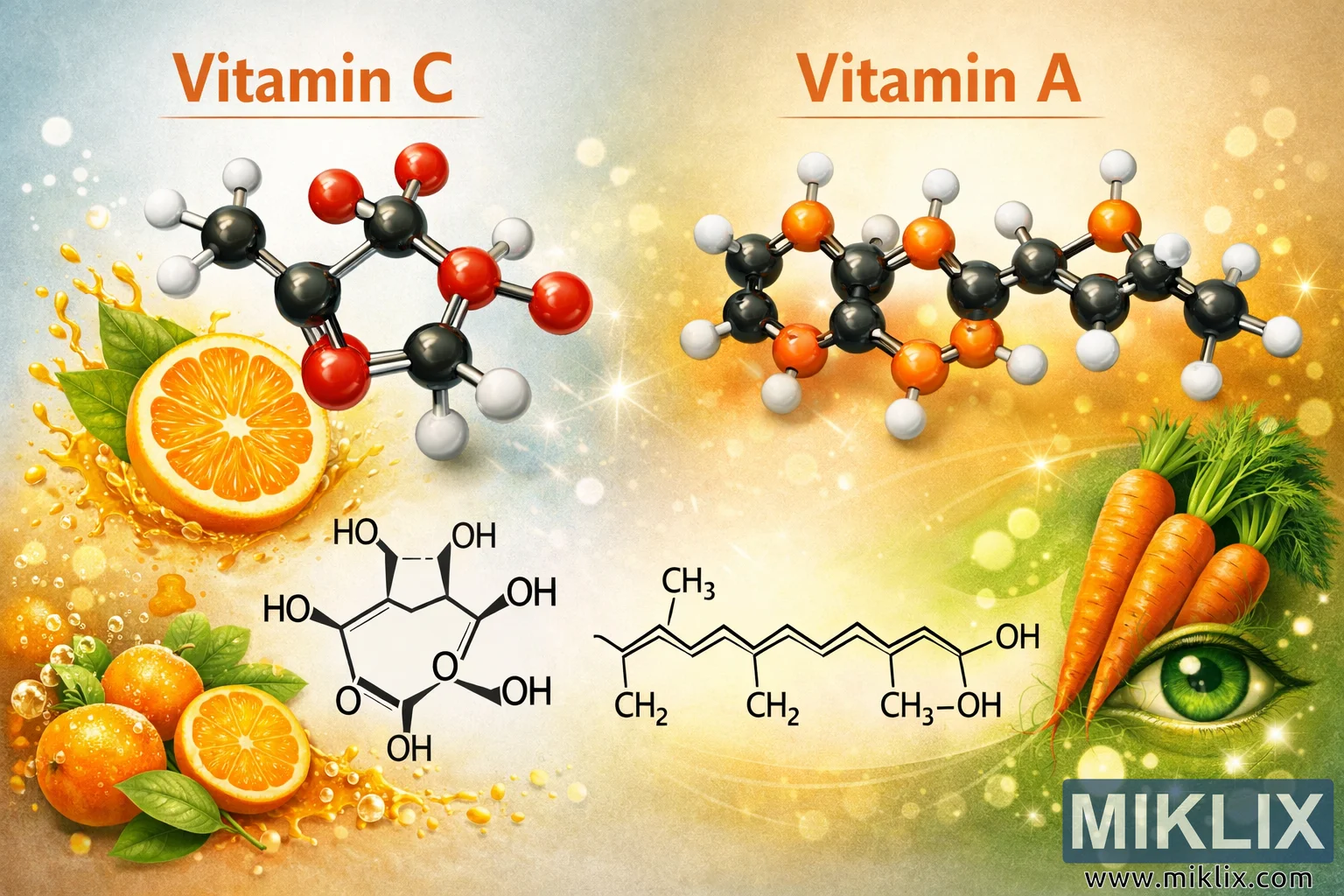
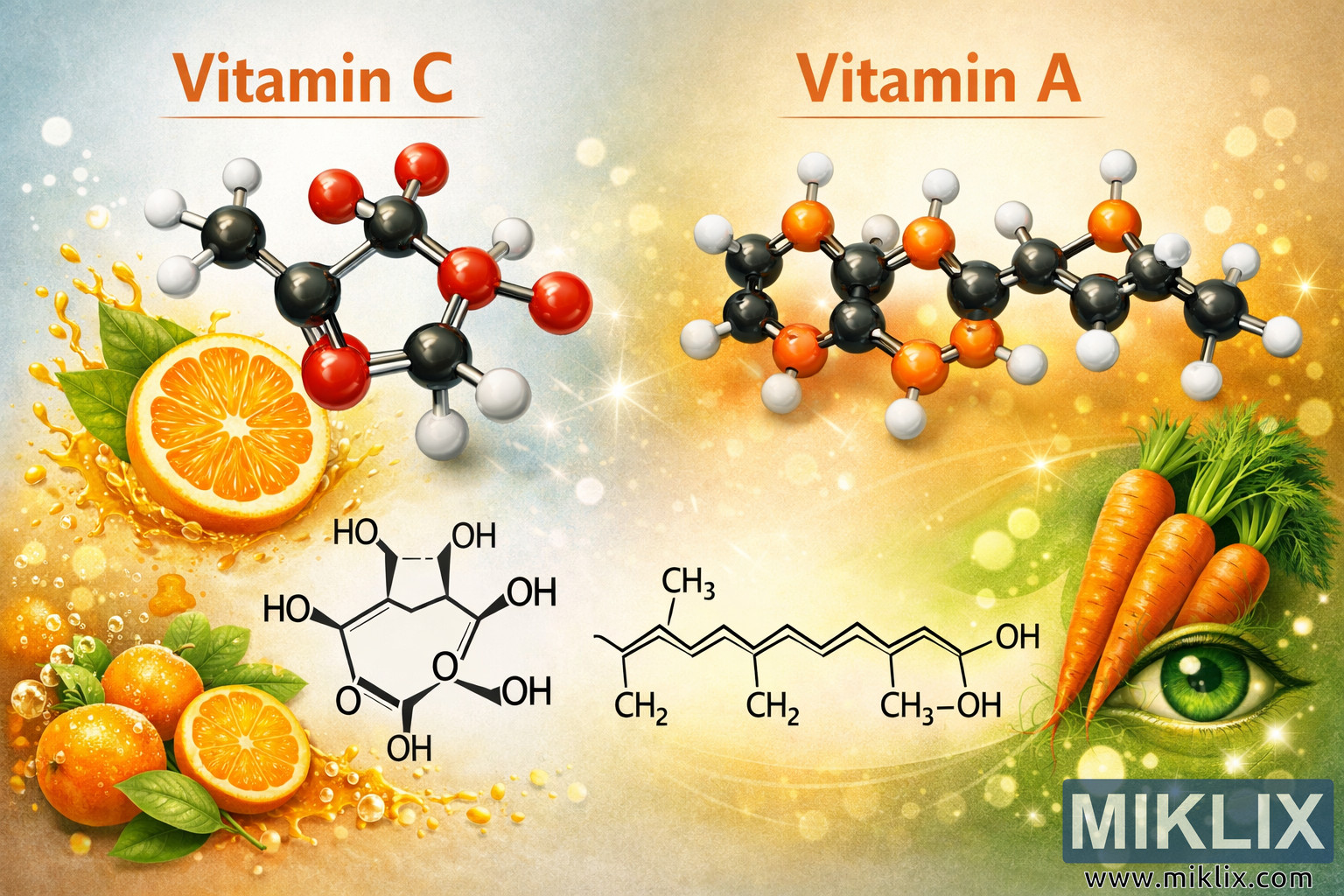
This image presents a detailed, visually rich scientific illustration that compares and highlights the molecular structures and natural sources of Vitamin C and Vitamin A side by side. The composition is arranged in a clean, landscape orientation, divided into two main sections: the left side dedicated to Vitamin C and the right side dedicated to Vitamin A. Both sections are unified by a softly glowing, abstract connection in the center, suggesting an overall theme of nutritional synergy and biochemical harmony.
On the left, the Vitamin C section begins with the heading "Vitamin C" rendered in bold, vibrant orange text at the top, immediately signaling the focus of this half of the illustration. Beneath the heading, a three-dimensional molecular model of Vitamin C (ascorbic acid) is displayed. The model uses colored spheres connected by thin, precise lines to represent atoms and bonds. Black spheres stand for carbon atoms, red spheres represent oxygen atoms, and white spheres indicate hydrogen atoms. The arrangement of these spheres forms a compact, slightly irregular cluster, visually conveying the complexity of the molecule while remaining clear and approachable for educational purposes.
Directly below the 3D molecular model, a two-dimensional chemical structure diagram of Vitamin C is shown. This diagram uses standard chemical notation, including letters, lines, and symbols to represent atoms and bonds. Hydroxyl groups are labeled with "HO" and "OH" notations, and a lactone ring is depicted with a central carbon double-bonded to an oxygen atom. The structure is expressed in a linear textual form as "HO-CH₂-C(=O)-C-OH-CH₂-OH" with an additional oxygen double-bonded to the central carbon, emphasizing the functional groups that contribute to the molecule’s antioxidant properties. The diagram is drawn with crisp lines and clear labels, making it suitable for students, educators, or health professionals who want to visually connect the molecular formula with its structural representation.
To the left of the molecular and structural diagrams, the illustration incorporates vivid imagery of citrus fruits to represent natural sources of Vitamin C. A large, juicy orange slice is shown with droplets of water and dynamic splashes, suggesting freshness and vitality. Behind the slice, a green leaf adds a natural, organic touch, reinforcing the association with whole foods. Below this, an arrangement of whole and sliced oranges is depicted, surrounded by effervescent bubbles that give a sense of energy and brightness. The warm orange tones and subtle glow around the fruit imagery visually reinforce the idea that Vitamin C is commonly found in citrus and plays a role in supporting immune function and overall health.
On the right side of the image, the Vitamin A section mirrors the structure of the left, creating a balanced and symmetrical composition. At the top, the heading "Vitamin A" appears in bold, orange text, matching the style of the Vitamin C heading and maintaining visual consistency. Beneath this heading, a three-dimensional molecular model of Vitamin A (retinol) is displayed. As with the Vitamin C model, black spheres represent carbon atoms, while orange spheres represent hydrogen atoms, and a single white sphere indicates an oxygen atom. The molecular model is elongated and more linear compared to the compact Vitamin C structure, reflecting the characteristic chain-like structure of retinol. The spheres are connected by thin lines that trace the backbone of the molecule, highlighting the alternating pattern of single and double bonds.
Below the 3D model, a two-dimensional chemical structure diagram of Vitamin A is presented. This diagram shows a sequence of carbon atoms connected by alternating single and double bonds, culminating in a hydroxyl group at one end. The structure is written in a linear form as "CH₃-CH=CH-CH₂-CH=CH-CH₂-CH=CH-CH₂-CH₃-OH," clearly illustrating the conjugated double-bond system and the terminal OH group. The diagram is rendered with sharp lines and legible labels, making it easy to follow the progression of the carbon chain and understand the chemical nature of retinol.
To the far right of the Vitamin A section, the illustration includes imagery of carrots with green tops, symbolizing a common dietary source of Vitamin A precursors such as beta-carotene. The carrots are depicted in a stylized yet realistic manner, with bright orange bodies and lush green leaves, set against a softly glowing backdrop. Near the carrots, a green eye icon appears, subtly glowing, to suggest the well-known association between Vitamin A and eye health, particularly its role in vision and maintaining the integrity of the retina. The combination of carrots and the eye symbol visually reinforces the functional benefits of Vitamin A in a way that is both intuitive and scientifically grounded.
Across both sections, the background features gentle light effects and bokeh-style highlights, creating a modern, digital aesthetic that enhances the scientific content without overwhelming it. The colors are predominantly warm—rich oranges and soft yellows—balanced by cooler greens and subtle bluish glows. This palette creates a sense of vitality and wellness, aligning with the theme of essential vitamins and their roles in human health. The central area of the image contains a faint, glowing connection between the Vitamin C and Vitamin A sections, symbolizing the idea that different vitamins work together within the body’s complex biochemical systems.
Overall, the illustration combines accurate molecular representations, clear chemical diagrams, and evocative imagery of natural food sources to create a comprehensive visual narrative about Vitamin C and Vitamin A. It is suitable for use in educational materials, health-related presentations, scientific articles, or nutritional infographics. The image successfully bridges the gap between abstract molecular science and everyday dietary understanding, making the concepts accessible to both experts and non-specialists.
تصویر سے متعلق ہے: Health Benefits of Chives: Nature's Nutritional Powerhouse