
تصویر: Gut Bacteria and Microbiome Health Visualization Featuring Fresh Okra
شائع شدہ:
آخری بار اپ ڈیٹ کیا گیا: 30 جولائی، 2026 کو 6:37:56 PM UTC
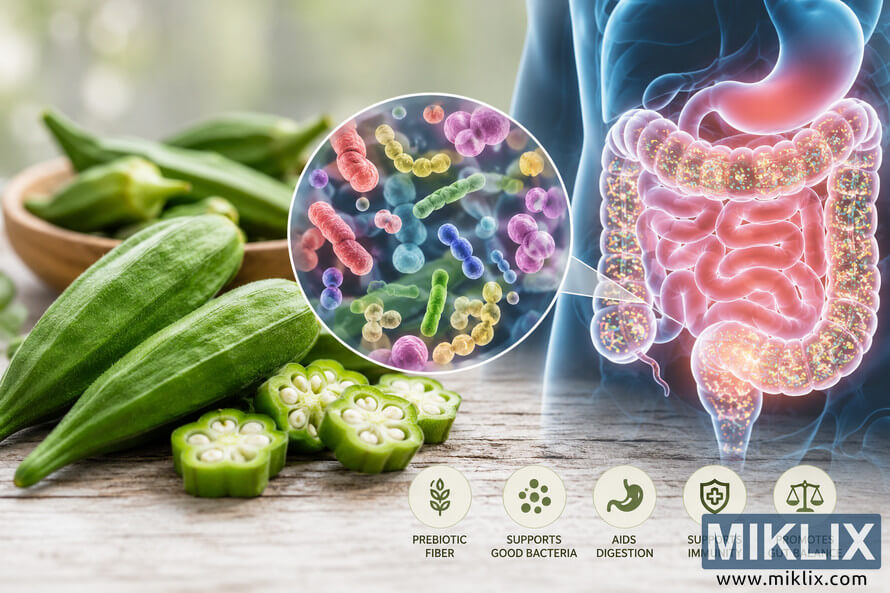
Detailed landscape illustration of fresh okra, a magnified gut microbiome, and a glowing digestive system conceptually representing digestive wellness, beneficial bacteria, prebiotic fiber, and overall microbiome health.
Gut Bacteria and Microbiome Health Visualization Featuring Fresh Okra
اس تصویر کے دستیاب ورژن
ذیل میں ڈاؤن لوڈ کے لیے دستیاب تصویری فائلیں کم کمپریسڈ اور زیادہ ریزولیوشن ہیں - اور اس کے نتیجے میں، اعلیٰ معیار - اس ویب سائٹ کے مضامین اور صفحات میں سرایت کردہ تصاویر سے، جو کہ بینڈوتھ کی کھپت کو کم کرنے کے لیے فائل کے سائز کے لیے زیادہ موزوں ہیں۔
باقاعدہ سائز (1,536 x 1,024)
بڑا سائز (3,072 x 2,048)
بہت بڑا سائز (4,608 x 3,072)
اضافی بڑا سائز (6,144 x 4,096)
مزاحیہ طور پر بڑا سائز (1,048,576 x 699,051)
- ابھی بھی اپ لوڈ ہو رہا ہے... ;-)
تصویر کی تفصیل
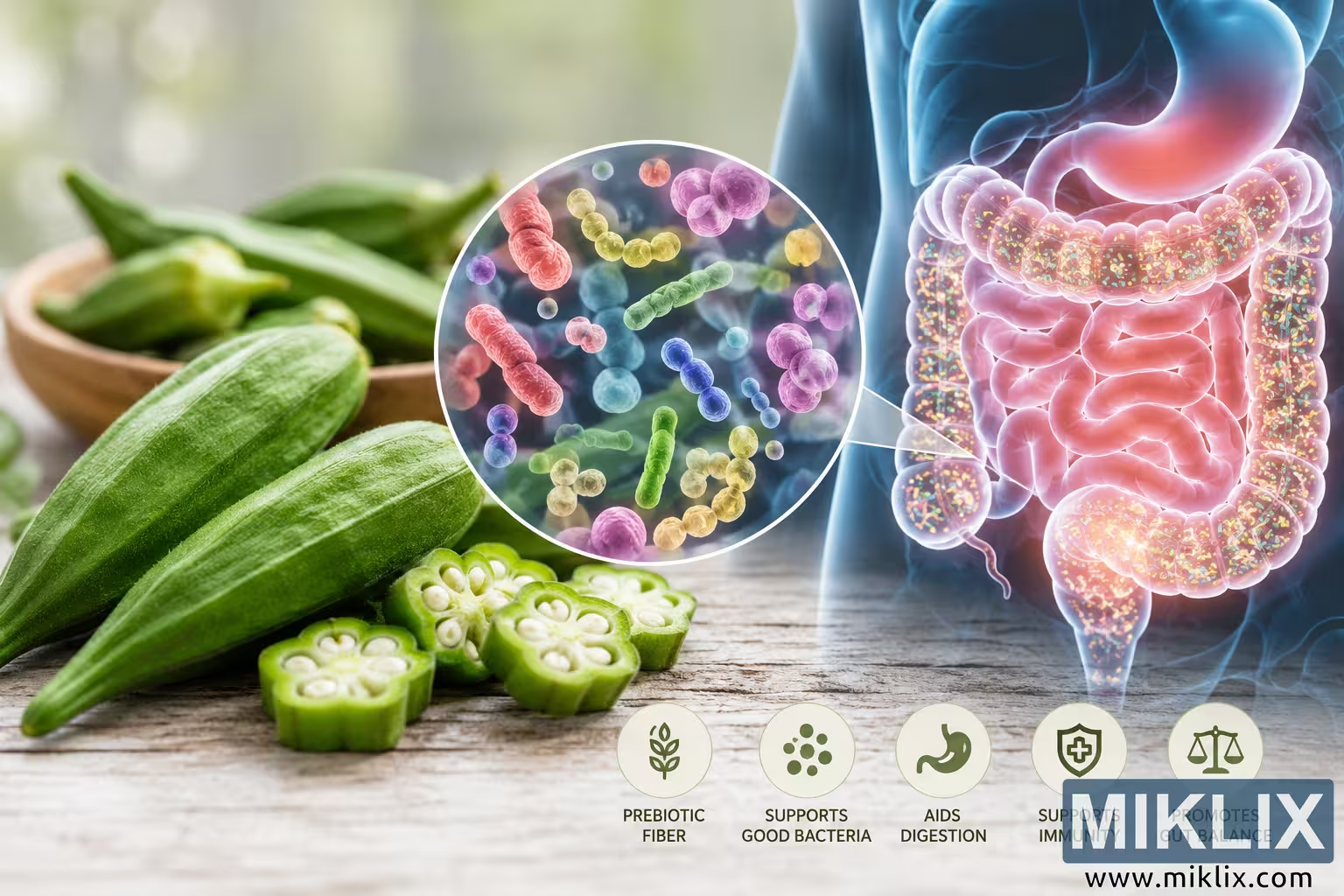
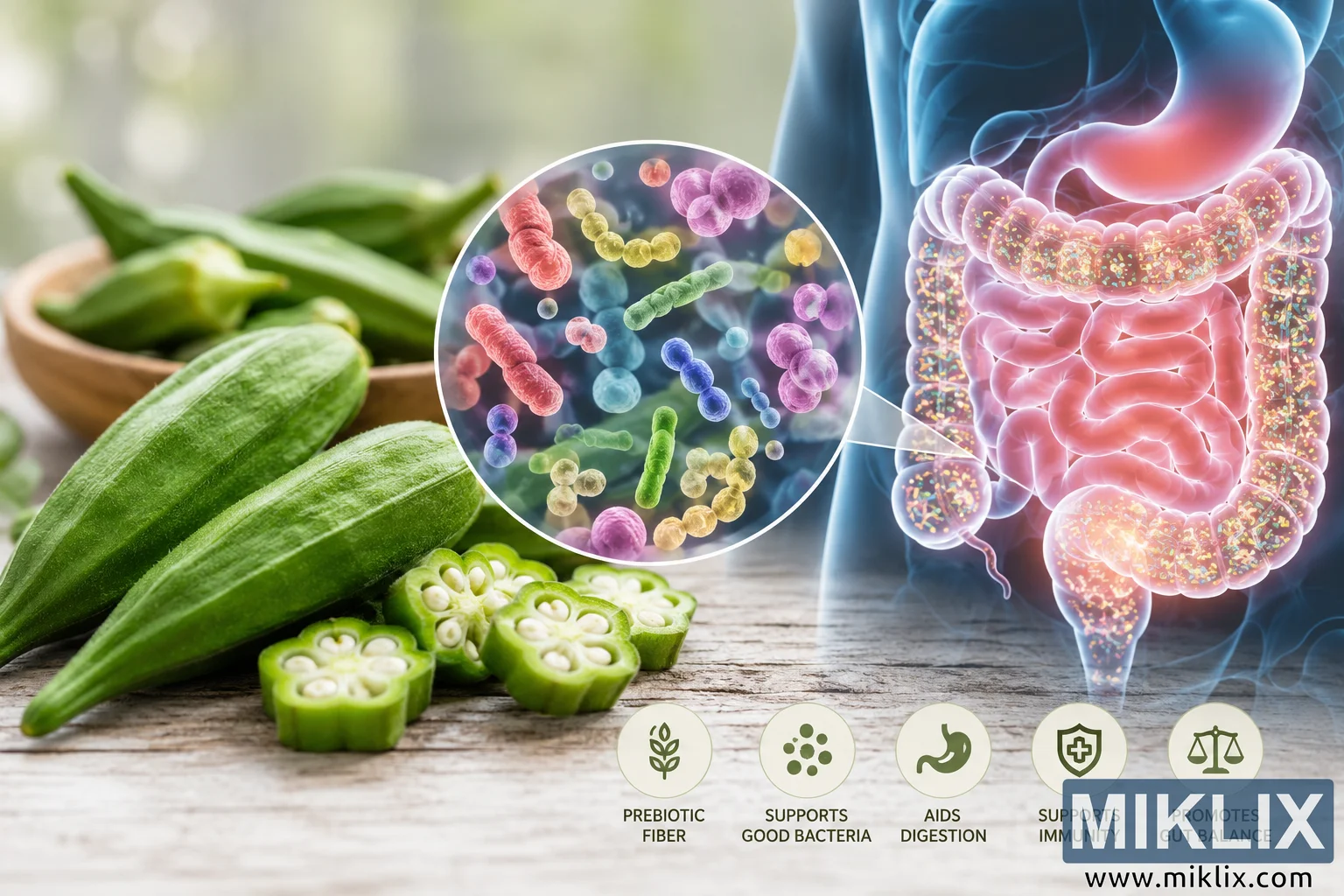
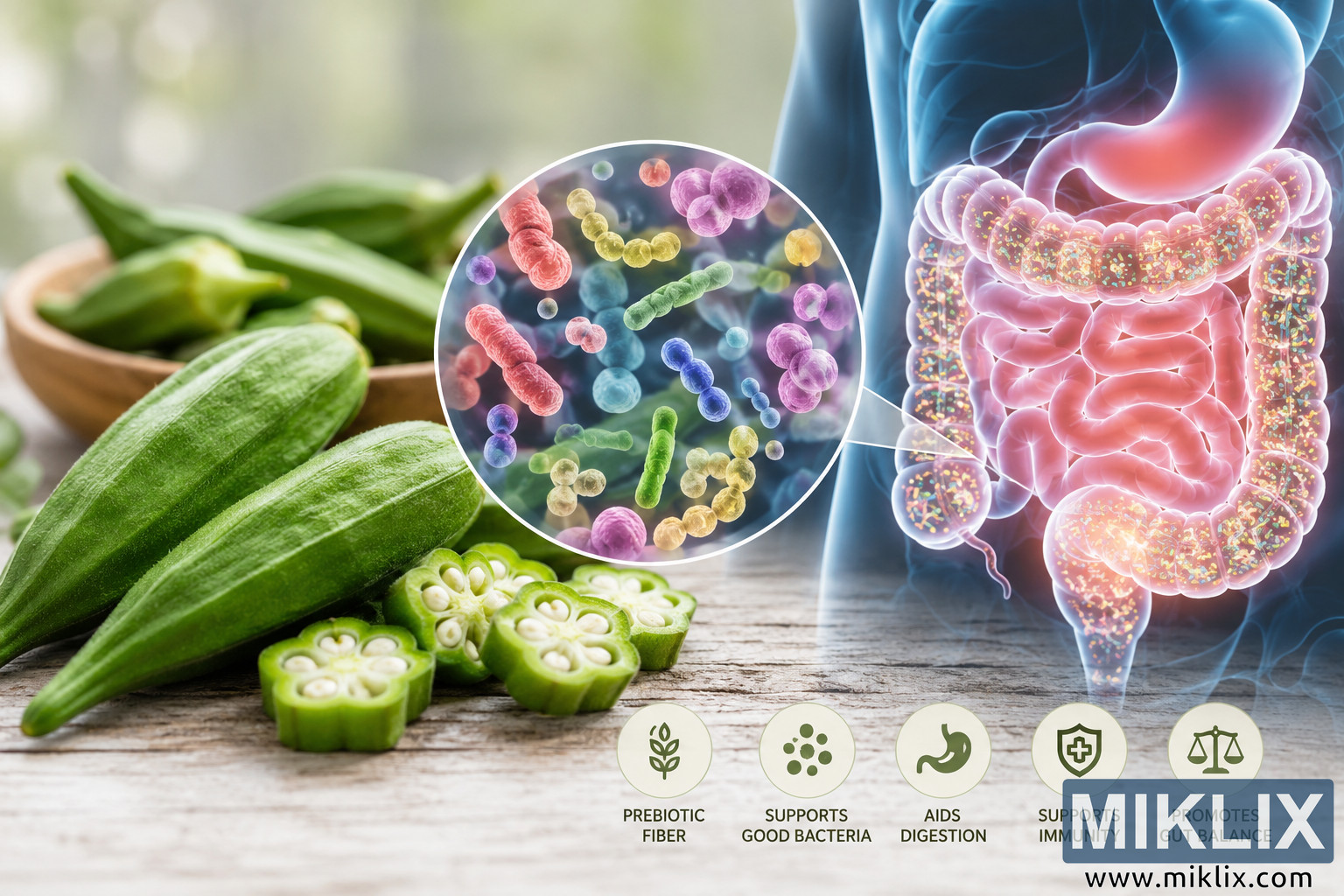
This landscape-oriented health illustration presents a visually engaging conceptual representation of gut bacteria, digestive wellness, and microbiome health with fresh okra serving as the featured natural food. The composition is divided into several interconnected visual elements that collectively communicate the relationship between diet and the microbial ecosystem of the digestive tract. On the left side of the image, several fresh green okra pods are prominently displayed on a rustic wooden tabletop. Their vibrant green color, smooth ridged surfaces, and tapered ends emphasize freshness and natural quality. In front of the whole pods, multiple cross-sectional slices reveal the vegetable's distinctive star-shaped interior with pale seeds arranged in symmetrical chambers. A softly blurred wooden bowl containing additional okra appears in the background, reinforcing the agricultural and wholesome theme while maintaining depth through shallow focus.
The center of the composition features a large circular magnified inset representing the microscopic world of the gut microbiome. Within this circular window, numerous stylized microorganisms float against a softly illuminated bluish background. The microorganisms vary in color, size, and shape, including elongated rod-like bacteria, spherical cocci arranged individually or in clusters, and rounded microbial forms rendered in bright shades of green, blue, purple, yellow, pink, and coral. The diversity of shapes and colors conveys the richness and complexity of the intestinal microbial ecosystem without depicting any identifiable real-world species. Soft lighting, subtle transparency, and gentle depth-of-field effects create a modern scientific visualization while remaining aesthetically approachable.
On the right side of the image, a semi-transparent anatomical rendering of the upper torso and digestive tract occupies nearly half of the composition. The stomach and intestines glow with warm pink and orange illumination, contrasting against the cool translucent blue outline of the body. The intestines are carefully illustrated with recognizable folds and curves, while thousands of tiny glowing particles distributed throughout the intestinal tract symbolize the presence of microorganisms and microbial activity. Fine connecting lines visually link the magnified microbial circle to the intestinal region, reinforcing the conceptual relationship between the microscopic bacteria and their location within the digestive system.
The background employs a soft natural color palette consisting primarily of muted greens, warm beige tones, and subtle gray highlights. This restrained backdrop allows the brighter foreground elements to stand out while maintaining an overall clean, modern healthcare aesthetic. The shallow depth of field further isolates the primary subjects and contributes to a premium, photorealistic appearance despite the scientific visualization elements.
Along the lower portion of the image appears a horizontal row of simple circular icons accompanied by concise labels. These icons symbolically represent themes associated with digestive wellness, including plant-derived fiber, beneficial bacteria, digestion, immune support, and balanced gut function. The icons use a minimalist line-art style with earthy green tones that harmonize with the fresh okra imagery. Together they provide an infographic-inspired visual summary without overwhelming the central composition.
The lighting throughout the image is bright and evenly balanced. Gentle highlights accentuate the texture of the okra pods, while soft reflections and glow effects emphasize the anatomical illustration and microscopic bacteria. The overall color palette combines natural greens with cool blues and warm pinks to establish a connection between nutrition, biology, and health. The composition guides the viewer's eye from the fresh vegetable on the left to the microbial ecosystem in the center and finally to the digestive tract on the right, creating a clear visual narrative about the relationship between dietary fiber, gut microorganisms, and digestive health.
The illustration is entirely free of recognizable commercial branding, product packaging, or corporate logos. Instead, it relies on universally recognizable scientific and natural imagery to communicate its educational message. The scene is suitable for use in health education materials, wellness articles, nutrition blogs, medical presentations, healthcare websites, scientific communication, digestive health campaigns, microbiome awareness content, or editorial discussions about dietary fiber and gastrointestinal wellness. Overall, the image blends photorealistic food photography with polished medical visualization techniques to create an informative and visually compelling representation of the gut microbiome and the conceptual role of fiber-rich vegetables such as okra in supporting digestive system health.
تصویر سے متعلق ہے: Okra Benefits: How This Nutritious Vegetable Supports Your Health