
تصویر: Step-by-Step Radicchio Preparation Showing Safe Cutting Techniques
شائع شدہ:
آخری بار اپ ڈیٹ کیا گیا: 8 ستمبر، 2026 کو 8:40:42 AM UTC
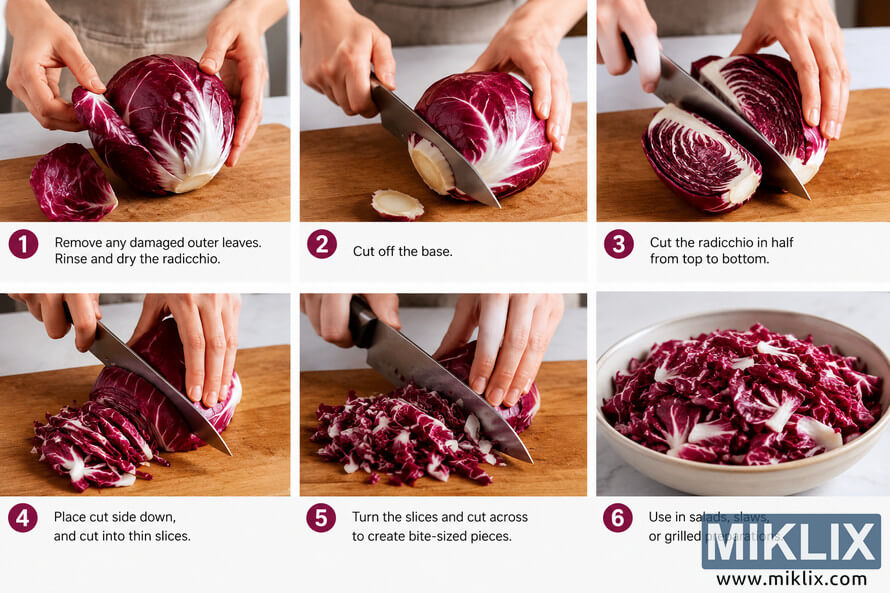
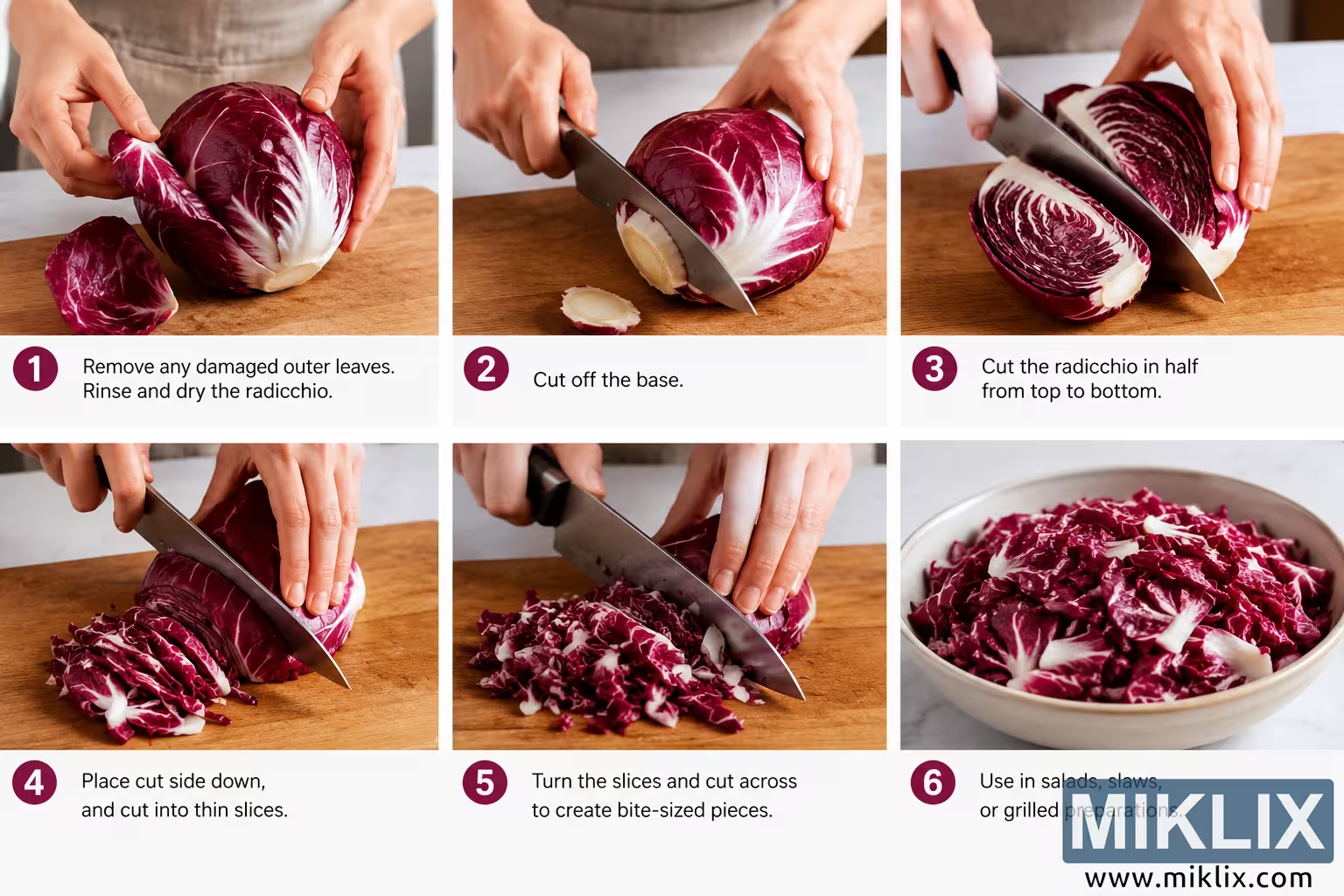
Step-by-step instructional collage demonstrating how to prepare radicchio, including trimming, halving, slicing, chopping, and serving techniques with clear numbered visuals in a bright kitchen setting.
Step-by-Step Radicchio Preparation Showing Safe Cutting Techniques
اس تصویر کے دستیاب ورژن
ذیل میں ڈاؤن لوڈ کے لیے دستیاب تصویری فائلیں کم کمپریسڈ اور زیادہ ریزولیوشن ہیں - اور اس کے نتیجے میں، اعلیٰ معیار - اس ویب سائٹ کے مضامین اور صفحات میں سرایت کردہ تصاویر سے، جو کہ بینڈوتھ کی کھپت کو کم کرنے کے لیے فائل کے سائز کے لیے زیادہ موزوں ہیں۔
باقاعدہ سائز (1,536 x 1,024)
بڑا سائز (3,072 x 2,048)
بہت بڑا سائز (4,608 x 3,072)
اضافی بڑا سائز (6,144 x 4,096)
مزاحیہ طور پر بڑا سائز (1,048,576 x 699,051)
- ابھی بھی اپ لوڈ ہو رہا ہے... ;-)
تصویر کی تفصیل
This image presents a wide, landscape-oriented instructional collage designed to demonstrate the preparation of a fresh head of radicchio through a clear sequence of cutting techniques. The composition is divided into six evenly sized panels arranged in two horizontal rows of three images each. Every panel combines a close-up food-preparation photograph with a numbered instructional label positioned beneath the image, creating an easy-to-follow visual guide suitable for cooking education. The background throughout the collage is bright and clean, emphasizing a modern kitchen environment with a neutral color palette that keeps the viewer's attention focused on the vegetable, the cutting board, and the hands performing each task.
The subject of the tutorial is a round head of radicchio distinguished by its rich burgundy-purple leaves contrasted by prominent white ribs and veins. The vegetable appears fresh, firm, and glossy, with tightly packed leaves that display natural variation in color and texture. The preparation is shown exclusively through close-up views of human hands without revealing a person's face, helping the viewer concentrate on the cutting process rather than the individual performing it. The hands hold the radicchio securely while using a plain, unbranded chef's knife with a metallic blade and a simple dark handle. The knife contains no visible logos, trademarks, or decorative branding.
The first panel illustrates the initial inspection and cleaning stage. The hands gently separate an outer leaf from the head of radicchio, visually suggesting the removal of damaged or wilted leaves before preparation. The vegetable rests on a light wooden cutting board placed on a clean countertop. The accompanying instruction explains that damaged outer leaves should be removed and that the radicchio should be rinsed and dried before cutting.
The second panel demonstrates trimming the base. The radicchio lies horizontally while the knife slices away a thin portion of the stem end. The cut is shown with precision, leaving the vegetable largely intact while removing only the tough bottom section. A small trimmed piece rests beside the main head, clearly illustrating what has been removed. The associated text identifies this as the step where the base is cut off.
The third panel focuses on halving the radicchio. The knife passes vertically through the center from top to bottom, revealing the intricate layered structure inside. The exposed cross-section displays alternating purple leaves and thick white ribs arranged in a striking natural pattern. The instruction beneath the image explains that the radicchio should be cut in half from top to bottom.
The fourth panel demonstrates slicing. One half of the radicchio is positioned cut-side down on the wooden board to improve stability during cutting. The knife creates a series of thin, even slices that accumulate neatly to one side. The cutting technique emphasizes consistent thickness and controlled hand positioning suitable for salads, sautés, and other culinary uses. The instructional caption notes that the cut side should face downward before slicing into thin strips.
The fifth panel shows cross-cutting. Previously sliced strips are gathered together, and the knife cuts perpendicular to the original slices to create smaller, bite-sized pieces. The chopped radicchio forms a loose pile on the cutting board, displaying a mixture of purple leaf fragments and white rib sections. The text explains that the slices are turned and cut across to produce evenly sized pieces appropriate for recipes requiring chopped vegetables.
The sixth and final panel displays the completed preparation. A shallow light-colored bowl contains the finished chopped radicchio, with irregular but consistently sized pieces filling the dish. The vibrant purple and white colors remain visually appealing, emphasizing freshness. The accompanying instruction indicates that the prepared radicchio can be used in salads, slaws, or grilled dishes, connecting the cutting process to practical culinary applications.
Across the entire collage, each instructional step is identified with a bold circular number marker, progressing sequentially from one through six. The typography is modern, clean, and highly legible against white backgrounds, making the educational content easy to scan. The layout maintains consistent spacing, alignment, lighting, and photographic style between all six panels. Soft, diffuse lighting minimizes harsh shadows while highlighting the texture of the leaves, the smooth grain of the cutting board, and the reflective surface of the knife blade. The overall aesthetic resembles a professional cookbook illustration or culinary training guide intended for beginner and intermediate home cooks. The image communicates food preparation techniques clearly through visual storytelling without relying on complex backgrounds or distracting decorative elements. No commercial branding, logos, product packaging, watermarks, or identifiable trademarks appear anywhere within the composition, allowing the focus to remain entirely on the radicchio preparation process and the sequence of safe, organized cutting techniques.
تصویر سے متعلق ہے: Radicchio: The Bitter Leaf with Sweet Health Benefits