
تصویر: Fresh Rainbow Swiss Chard on Wooden Cutting Board
شائع شدہ:
آخری بار اپ ڈیٹ کیا گیا: 12 ستمبر، 2026 کو 2:51:09 PM UTC
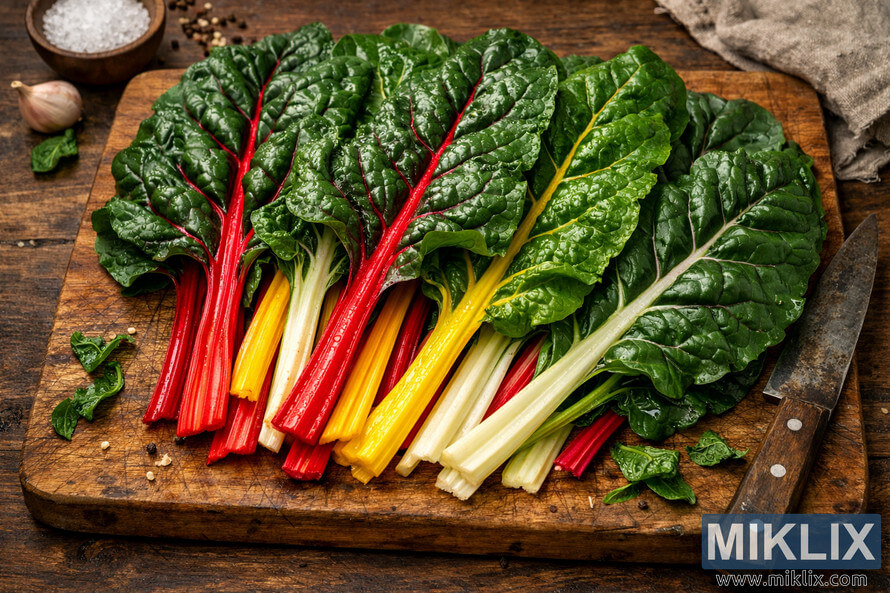
A high-resolution photo of fresh rainbow Swiss chard leaves with colorful stems and dark green leaves displayed on a wooden cutting board, highlighting natural textures and vibrant hues.
Fresh Rainbow Swiss Chard on Wooden Cutting Board
اس تصویر کے دستیاب ورژن
ذیل میں ڈاؤن لوڈ کے لیے دستیاب تصویری فائلیں کم کمپریسڈ اور زیادہ ریزولیوشن ہیں - اور اس کے نتیجے میں، اعلیٰ معیار - اس ویب سائٹ کے مضامین اور صفحات میں سرایت کردہ تصاویر سے، جو کہ بینڈوتھ کی کھپت کو کم کرنے کے لیے فائل کے سائز کے لیے زیادہ موزوں ہیں۔
باقاعدہ سائز (1,536 x 1,024)
بڑا سائز (3,072 x 2,048)
بہت بڑا سائز (4,608 x 3,072)
اضافی بڑا سائز (6,144 x 4,096)
مزاحیہ طور پر بڑا سائز (1,048,576 x 699,051)
- ابھی بھی اپ لوڈ ہو رہا ہے... ;-)
تصویر کی تفصیل
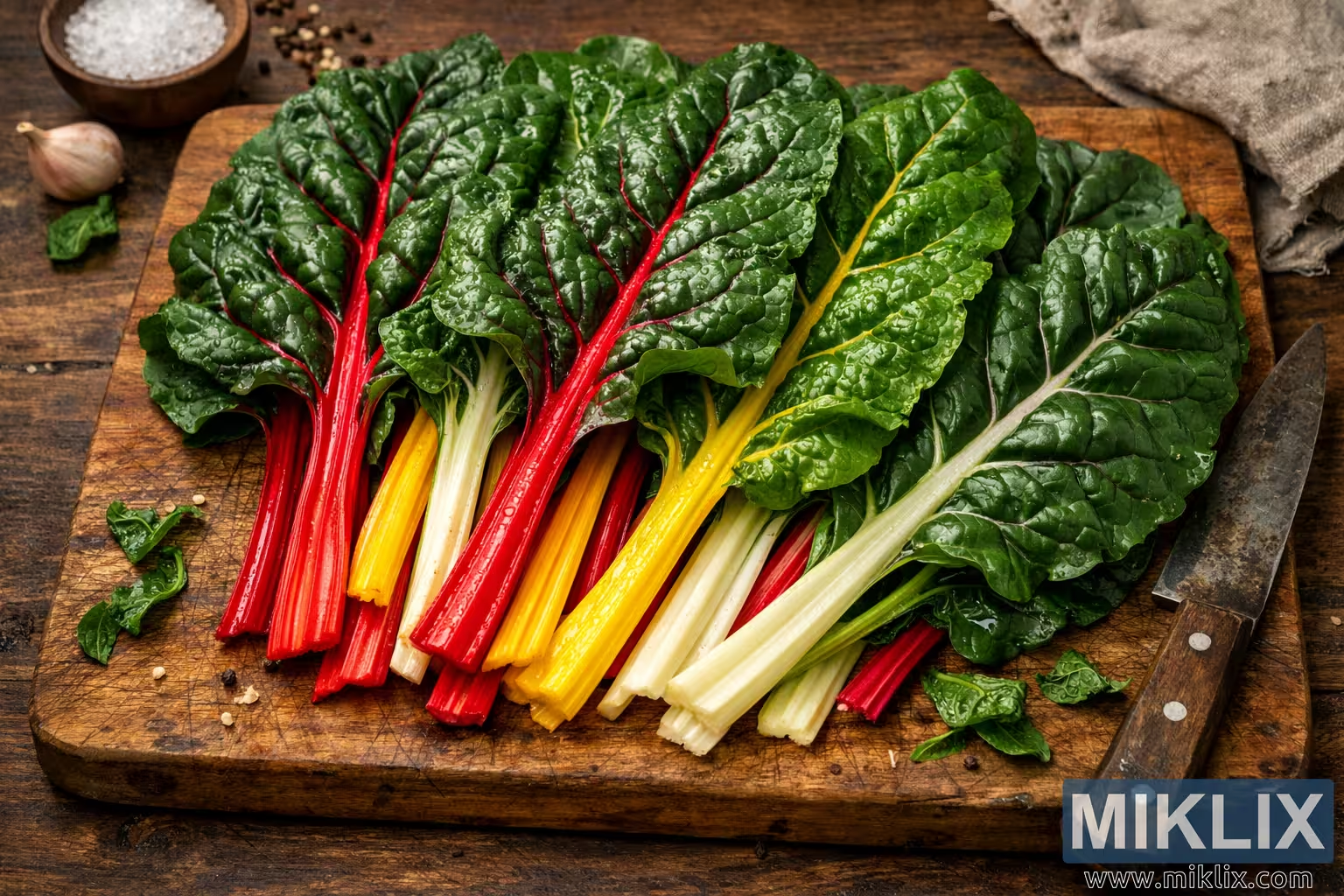
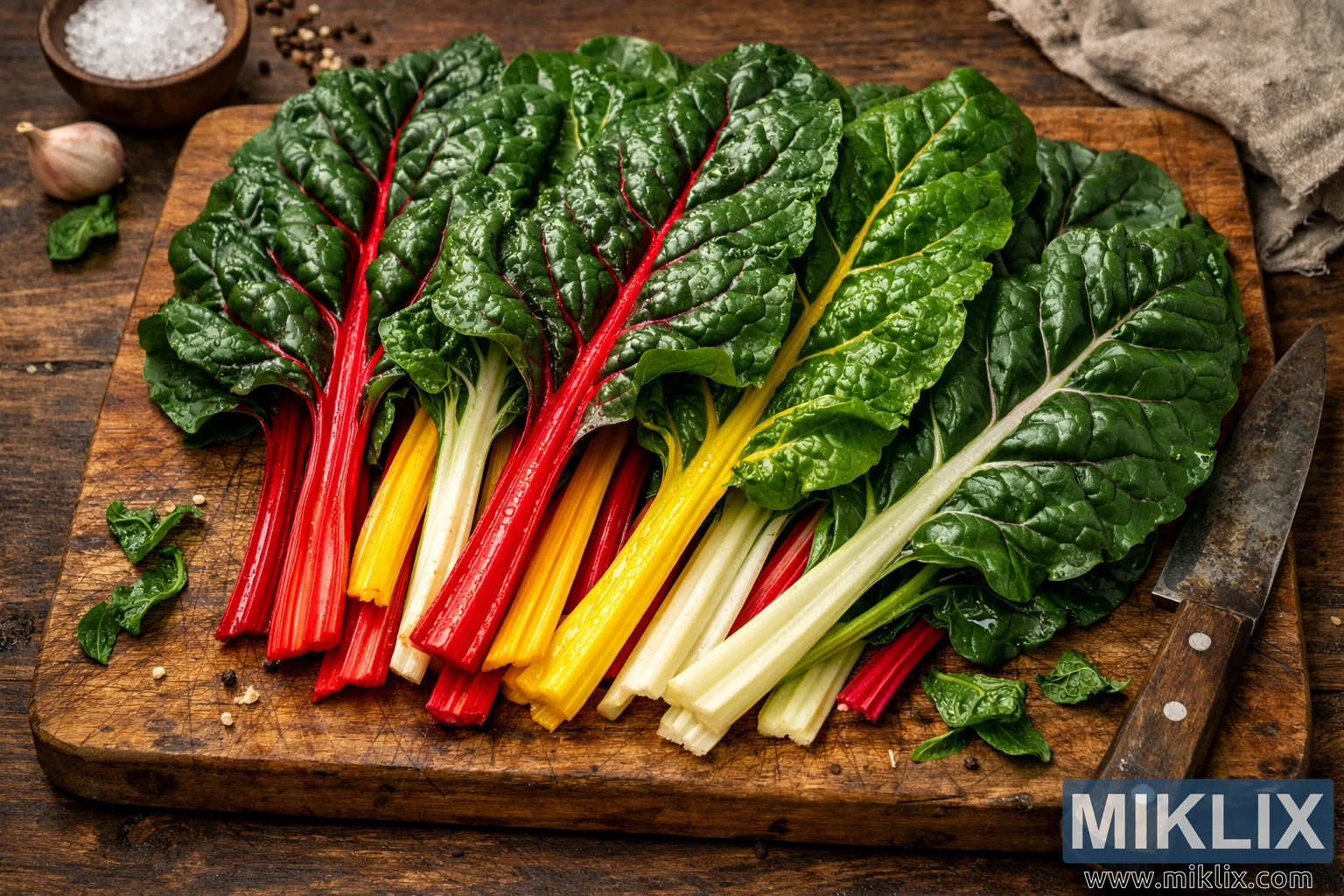
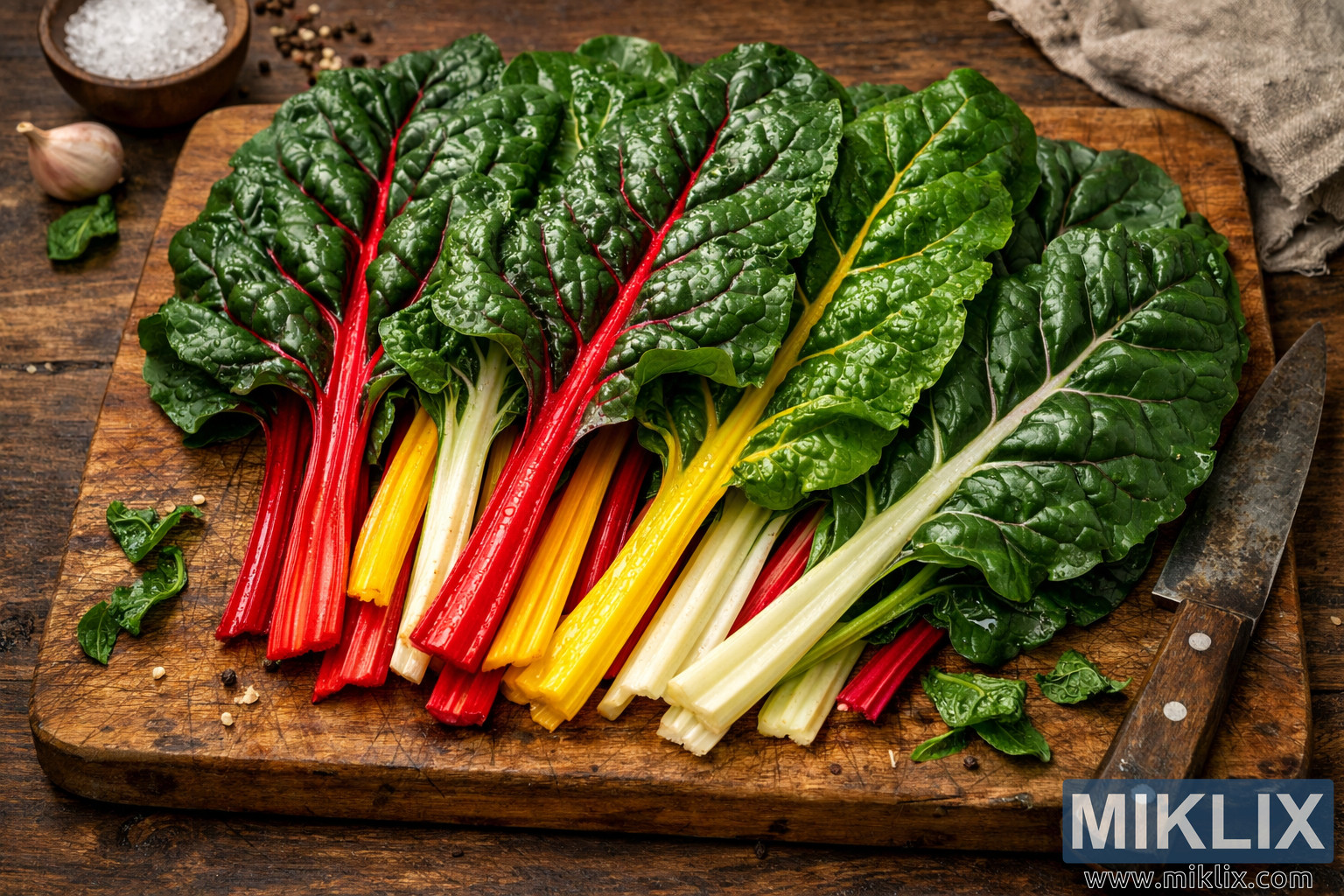
The image presents a meticulously composed, high-resolution photograph of freshly harvested rainbow Swiss chard leaves arranged on a rustic wooden cutting board. Each leaf displays a stunning array of colors, with stems ranging from deep crimson red to bright golden yellow and pure white. The stems transition gracefully into the dark green leaves, which are large, crinkled, and slightly glossy, revealing intricate vein patterns that branch out from the colorful stalks. The leaves are fanned out in an orderly manner, creating a natural gradient of color across the board.
The cutting board itself is made of aged wood, rich in tone and texture, with visible knife marks and a slightly rough surface that adds authenticity and warmth to the composition. The board’s grain runs horizontally, complementing the vertical alignment of the chard stems. Tiny droplets of water cling to the leaves, suggesting freshness and recent washing. The moisture catches the light, creating subtle highlights that enhance the visual depth and realism of the scene.
To the left of the chard, a small wooden bowl filled with coarse salt sits near the upper corner, accompanied by scattered peppercorns that add a touch of culinary context. A single garlic clove rests nearby, its pale skin contrasting with the darker tones of the board. A folded linen cloth, soft and neutral in color, lies partially in the background, contributing to the rustic kitchen atmosphere.
On the right side of the cutting board, a well-used knife with a mottled steel blade and a wooden handle featuring metal rivets is positioned diagonally. The knife’s presence introduces a sense of preparation and purpose, implying that the chard may soon be chopped or cooked. A few trimmed leaf pieces and stem fragments are scattered around, reinforcing the authenticity of a working kitchen scene.
The lighting is natural and balanced, likely diffused daylight from a nearby window. It illuminates the chard evenly, emphasizing the vivid hues of the stems and the rich greens of the leaves without harsh shadows. The interplay of light and texture creates a harmonious composition that feels both vibrant and serene. The color palette is earthy yet lively — the greens, reds, yellows, and whites of the chard contrast beautifully with the warm brown of the wooden board and the muted tones of the background elements.
The photograph captures not only the visual beauty of the Swiss chard but also its tactile qualities. The viewer can almost feel the crispness of the leaves, the smooth firmness of the stems, and the rough grain of the cutting board. The arrangement is deliberate yet organic, evoking a sense of freshness and farm-to-table authenticity.
Overall, the image conveys a celebration of natural produce and culinary artistry. It highlights the vibrant diversity found in simple vegetables and transforms an everyday kitchen moment into a visually captivating still life. The composition, lighting, and textures work together to create a timeless depiction of wholesome ingredients, inviting the viewer to appreciate the beauty of food in its purest form.
تصویر سے متعلق ہے: Swiss Chard: Why It Is One of the Healthiest Leafy Greens