
تصویر: Medication Interactions and Watermelon Potassium Content
شائع شدہ:
آخری بار اپ ڈیٹ کیا گیا: 16 اگست، 2026 کو 7:10:14 PM UTC
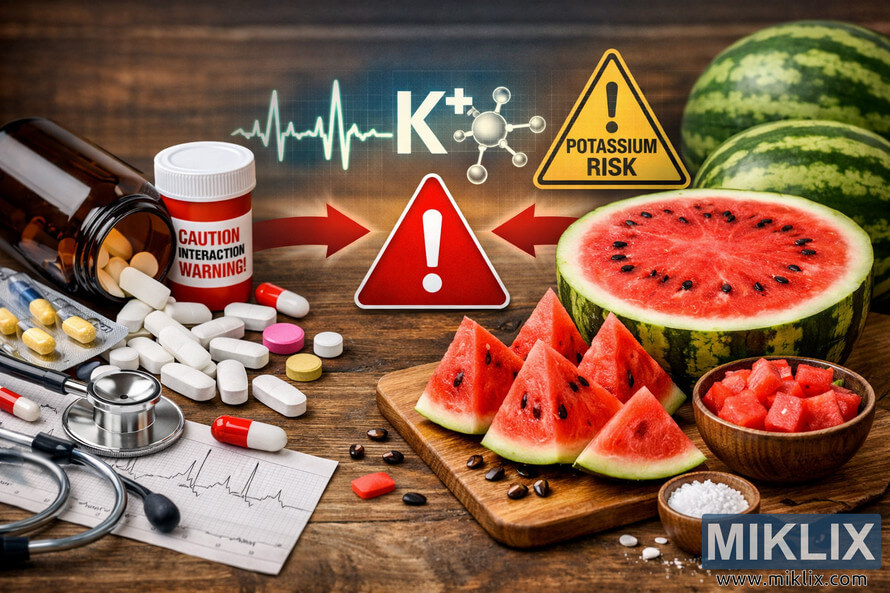
A detailed high-resolution image illustrating the potential interaction between medications and watermelon due to potassium content, featuring pills, warning labels, and ripe watermelon slices.
Medication Interactions and Watermelon Potassium Content
اس تصویر کے دستیاب ورژن
ذیل میں ڈاؤن لوڈ کے لیے دستیاب تصویری فائلیں کم کمپریسڈ اور زیادہ ریزولیوشن ہیں - اور اس کے نتیجے میں، اعلیٰ معیار - اس ویب سائٹ کے مضامین اور صفحات میں سرایت کردہ تصاویر سے، جو کہ بینڈوتھ کی کھپت کو کم کرنے کے لیے فائل کے سائز کے لیے زیادہ موزوں ہیں۔
باقاعدہ سائز (1,536 x 1,024)
بڑا سائز (3,072 x 2,048)
بہت بڑا سائز (4,608 x 3,072)
اضافی بڑا سائز (6,144 x 4,096)
مزاحیہ طور پر بڑا سائز (1,048,576 x 699,051)
- ابھی بھی اپ لوڈ ہو رہا ہے... ;-)
تصویر کی تفصیل
This high-resolution landscape photograph presents a vivid and educational depiction of the potential interactions between medications and the potassium content found in watermelon. The composition is carefully balanced, with the left side dominated by pharmaceutical elements and the right side showcasing the natural vibrancy of watermelon fruit. The image is designed to communicate a cautionary message about how certain medications may interact adversely with foods high in potassium, such as watermelon, which can influence electrolyte balance and cardiovascular health.
On the left side of the image, a wooden surface serves as the base for an assortment of medications. A brown pill bottle lies on its side, spilling white oblong tablets across the table. Surrounding the bottle are blister packs containing yellow capsules and blue-and-white capsules, along with loose pills in various shapes and colors: red-and-white capsules, a round yellow pill, a pink tablet, and a small white pill. A stethoscope with a silver chest piece rests nearby, symbolizing medical oversight and the importance of professional guidance. Partially beneath the medications lies an electrocardiogram (ECG) printout with jagged lines, representing heart rhythm monitoring and the potential cardiac implications of potassium imbalance.
A red prescription pill bottle stands upright with a bold warning label that reads “CAUTION INTERACTION WARNING!” in red capital letters. The label also features a triangular warning sign with an exclamation mark, reinforcing the theme of caution. Above and behind the medications, a glowing digital illustration of a heartbeat line runs horizontally across the image, intersecting with a potassium symbol “K+” and a molecular structure diagram of a potassium ion. These scientific visual elements emphasize the biochemical nature of the interaction being depicted.
At the center of the composition, a large red warning triangle with an exclamation mark acts as the focal point. Two red arrows extend outward from the triangle, one pointing toward the medications on the left and the other toward the watermelon on the right. This visual connection symbolizes the interaction pathway between pharmaceutical compounds and dietary potassium intake. Behind the triangle, the glowing heartbeat line continues, merging the medical and nutritional themes into a unified visual narrative.
On the right side of the image, the natural beauty of watermelon contrasts sharply with the sterile medical environment on the left. A large half of a ripe watermelon sits on a wooden table, its red flesh and black seeds glistening under soft light. Several triangular slices are arranged neatly on a wooden cutting board, and a small bowl filled with cubed watermelon adds texture and depth to the scene. In the background, two whole watermelons with green striped rinds provide a sense of abundance and freshness. A small wooden bowl filled with salt and a few scattered watermelon seeds complete the tableau, grounding the composition in everyday realism.
Above the watermelon, a yellow triangular sign reads “POTASSIUM RISK” in bold black letters, accompanied by a potassium symbol “K+” and a stylized electrocardiogram line. This sign mirrors the warning label on the medication bottle, visually linking the two halves of the image. The juxtaposition of the warning symbols and the natural fruit highlights the paradox of health: foods that are generally beneficial can pose risks under certain medical conditions or when combined with specific drugs.
The lighting throughout the image is even and well-balanced, ensuring that both the medical and natural elements are clearly visible. The color palette is rich and deliberate—the cool tones of the pills and medical instruments contrast with the warm reds and greens of the watermelon. The red warning triangle and yellow caution sign stand out vividly, drawing the viewer’s attention to the central message of caution and awareness.
The overall composition is symmetrical yet dynamic, with the warning triangle serving as the visual anchor. The image conveys a sense of scientific precision and public health awareness, making it suitable for educational materials, medical articles, or nutrition guides. It effectively communicates the importance of understanding how dietary choices can influence medication efficacy and safety, particularly in relation to potassium levels and cardiovascular function.
Every element in the photograph—from the spilled pills and ECG printout to the glowing potassium symbol and ripe watermelon slices—contributes to a cohesive narrative about the intersection of medicine and nutrition. The image invites viewers to consider the delicate balance between natural foods and pharmaceutical interventions, reminding them that even healthy foods can have unintended consequences when combined with certain treatments. The result is a visually striking, informative, and thought-provoking representation of a complex health topic.
تصویر سے متعلق ہے: Watermelon: The Hydrating Superfruit You Should Eat More Often