
Hình ảnh: Close-Up of Quince Leaves Affected by Leaf Spot Disease
Đã xuất bản:
Cập nhật lần cuối: lúc 21:48:09 UTC 5 tháng 3, 2026
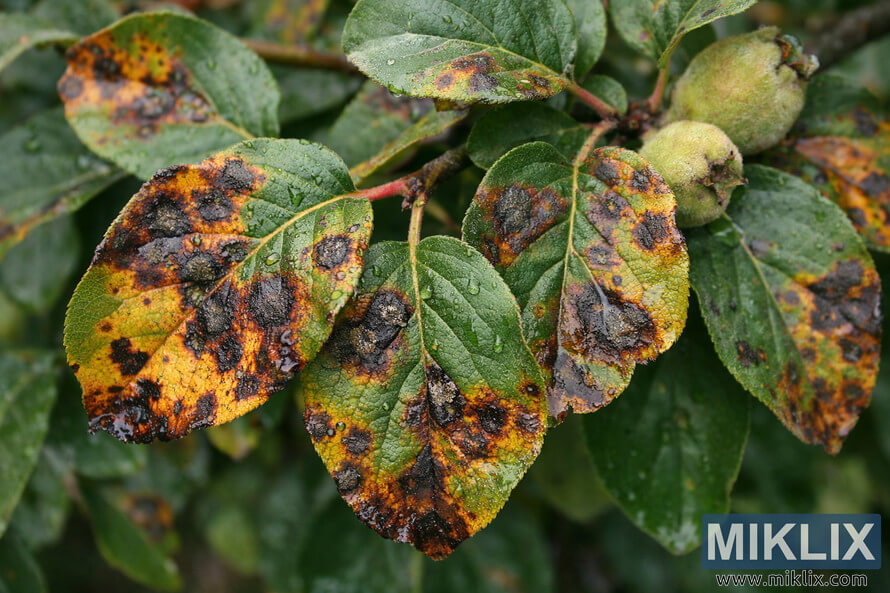
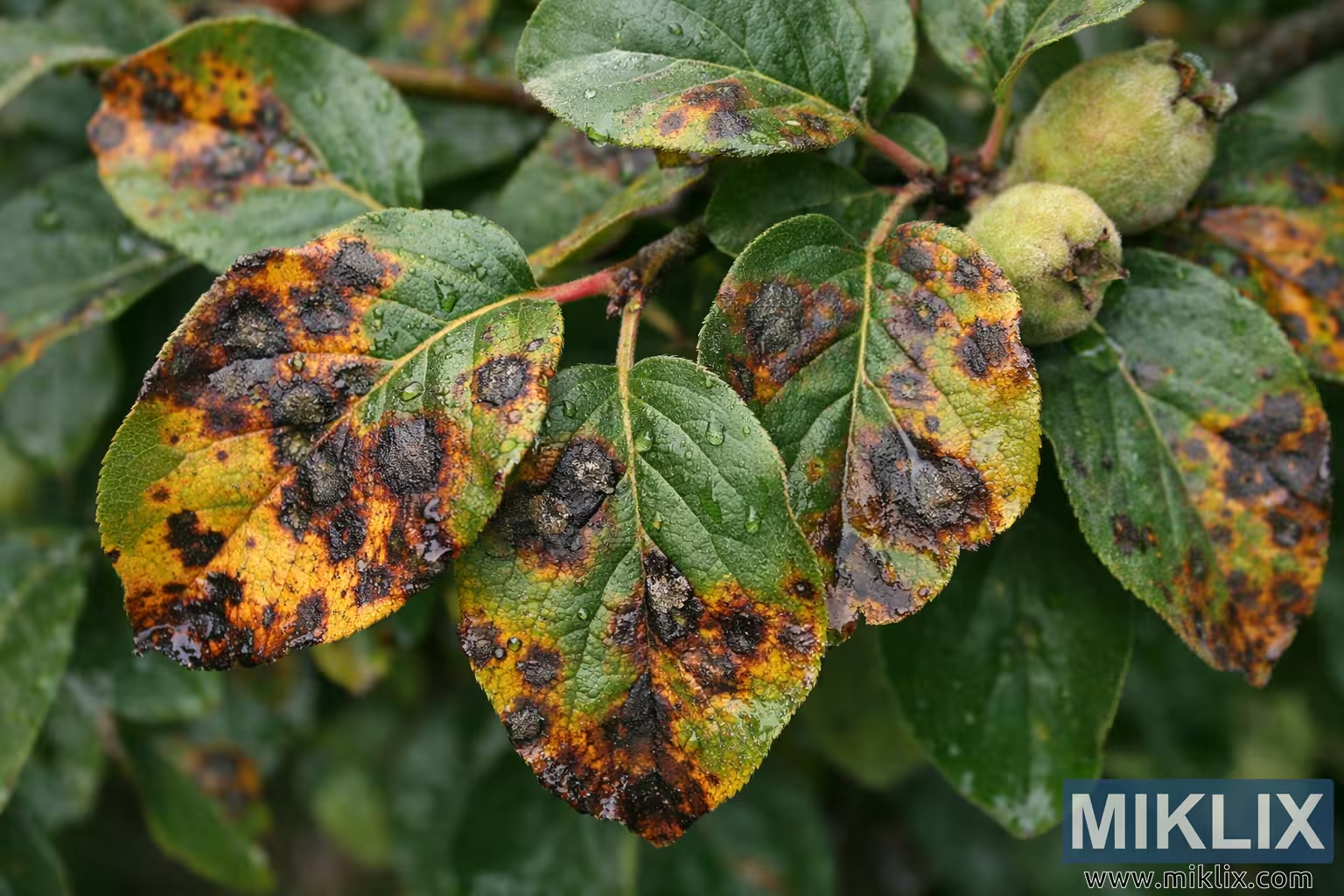
Detailed landscape photo of quince tree leaves infected with leaf spot disease, showing dark necrotic spots, yellowing tissue, and early fruit in a natural garden setting.
Close-Up of Quince Leaves Affected by Leaf Spot Disease
Các phiên bản có sẵn của hình ảnh này
Các tệp hình ảnh có sẵn để tải xuống bên dưới được nén ít hơn và có độ phân giải cao hơn - và do đó, chất lượng cao hơn - so với các hình ảnh được nhúng trong các bài viết và trang trên trang web này, vốn được tối ưu hóa về kích thước tệp để giảm mức tiêu thụ băng thông.
Kích thước thông thường (1,536 x 1,024)
Kích thước lớn (3,072 x 2,048)
Kích thước rất lớn (4,608 x 3,072)
Kích thước cực lớn (6,144 x 4,096)
Kích thước lớn đến mức buồn cười (1,048,576 x 699,051)
- Vẫn đang tải lên... ;-)
Mô tả hình ảnh
This high-resolution landscape photograph presents a detailed close-up view of quince tree leaves visibly affected by leaf spot diseases. The composition centers on a small cluster of broad, oval-shaped leaves attached to a slender reddish-brown stem. The leaves occupy most of the frame, sharply in focus, allowing the viewer to examine the intricate surface textures and patterns of infection. Their natural green coloration is heavily disrupted by numerous irregularly shaped lesions scattered across the leaf blades.
The diseased areas appear as dark brown to nearly black spots, many of which are surrounded by distinct yellow halos. In some places, the lesions have merged together, forming larger blotches that consume significant portions of the leaf surface. The affected tissue looks dry, brittle, and necrotic, contrasting starkly with the healthier green sections that remain between the spots. Along the leaf margins, discoloration intensifies, with edges turning yellow and brown, suggesting progressive damage. Some edges show slight curling and distortion, further indicating stress caused by the infection.
Tiny water droplets cling to the leaf surfaces, catching light and adding a subtle sheen. These droplets emphasize the texture of the leaves, highlighting their slightly leathery appearance and the fine network of veins branching from the central midrib. The veins remain faintly visible beneath both healthy and damaged areas, though they appear more pronounced where the surrounding tissue has yellowed.
In the softly blurred background, additional green foliage creates a natural garden setting. The shallow depth of field isolates the infected leaves as the primary subject, while hints of unripe quince fruits can be seen to the right side of the frame. These fruits are pale green and covered in a fine fuzz, typical of developing quinces, and they provide context for the tree species without distracting from the central focus on the diseased foliage.
The overall color palette blends deep greens, muted yellows, rusty oranges, and dark browns. The contrast between healthy and infected tissue is visually striking, clearly illustrating the severity and spread of leaf spot disease. The lighting appears natural and diffused, likely captured under overcast conditions or filtered sunlight, which reduces harsh shadows and enhances the clarity of surface details.
Altogether, the image serves as a vivid botanical study of plant pathology, documenting the characteristic symptoms of leaf spot infection on quince leaves. It combines scientific detail with natural aesthetics, making it suitable for educational materials, agricultural references, or discussions about orchard health and disease management.
Hình ảnh có liên quan đến: Complete Guide to Growing Your Own Quince Trees