
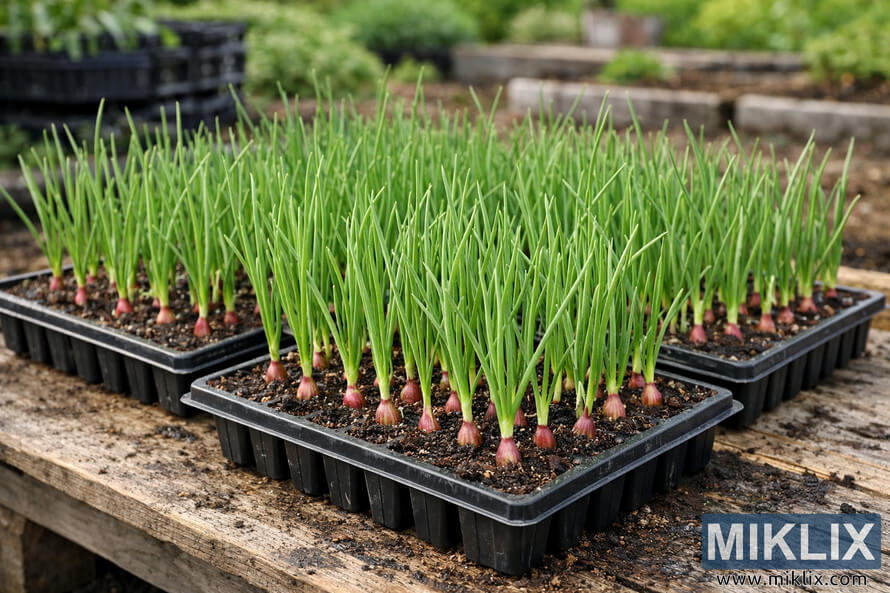
Hình ảnh: Seedling Trays with Young Shallot Plants Ready for Transplanting
Đã xuất bản:
Cập nhật lần cuối: lúc 21:44:17 UTC 22 tháng 3, 2026
Healthy shallot seedlings growing densely in nursery trays outdoors, showing vibrant green leaves and reddish bases, ready to be transplanted into garden beds.
Seedling Trays with Young Shallot Plants Ready for Transplanting
Các phiên bản có sẵn của hình ảnh này
Các tệp hình ảnh có sẵn để tải xuống bên dưới được nén ít hơn và có độ phân giải cao hơn - và do đó, chất lượng cao hơn - so với các hình ảnh được nhúng trong các bài viết và trang trên trang web này, vốn được tối ưu hóa về kích thước tệp để giảm mức tiêu thụ băng thông.
Kích thước thông thường (1,536 x 1,024)
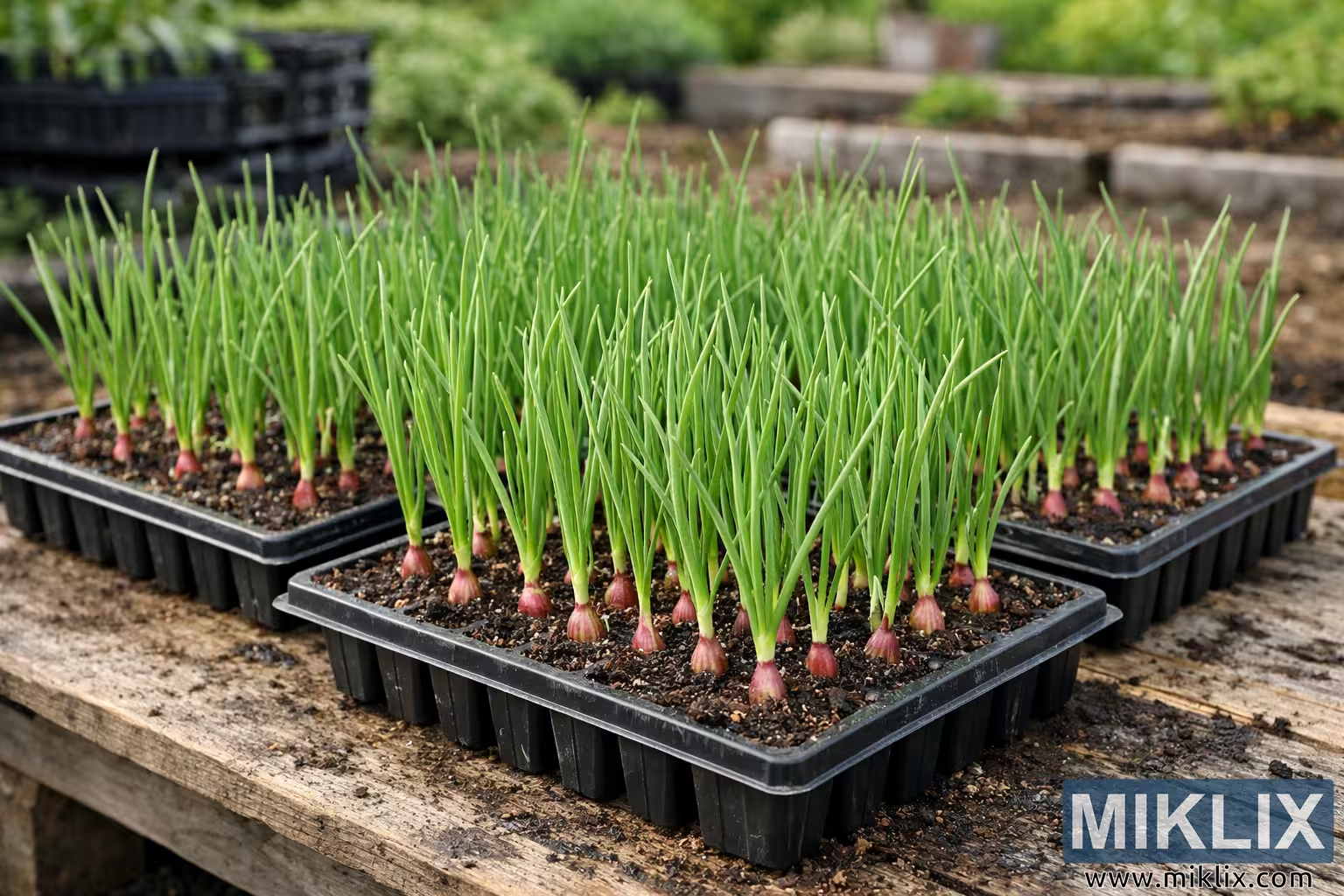
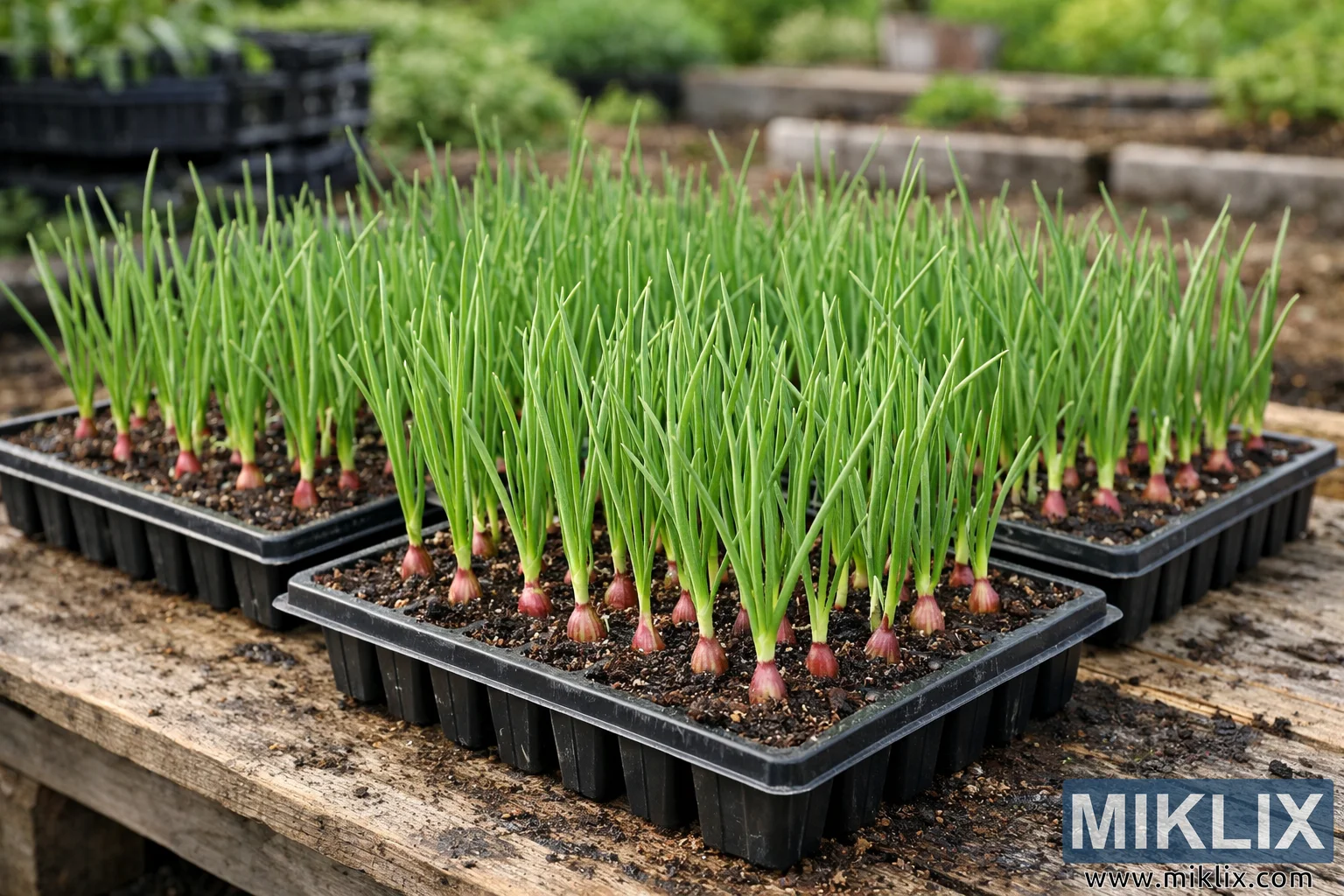
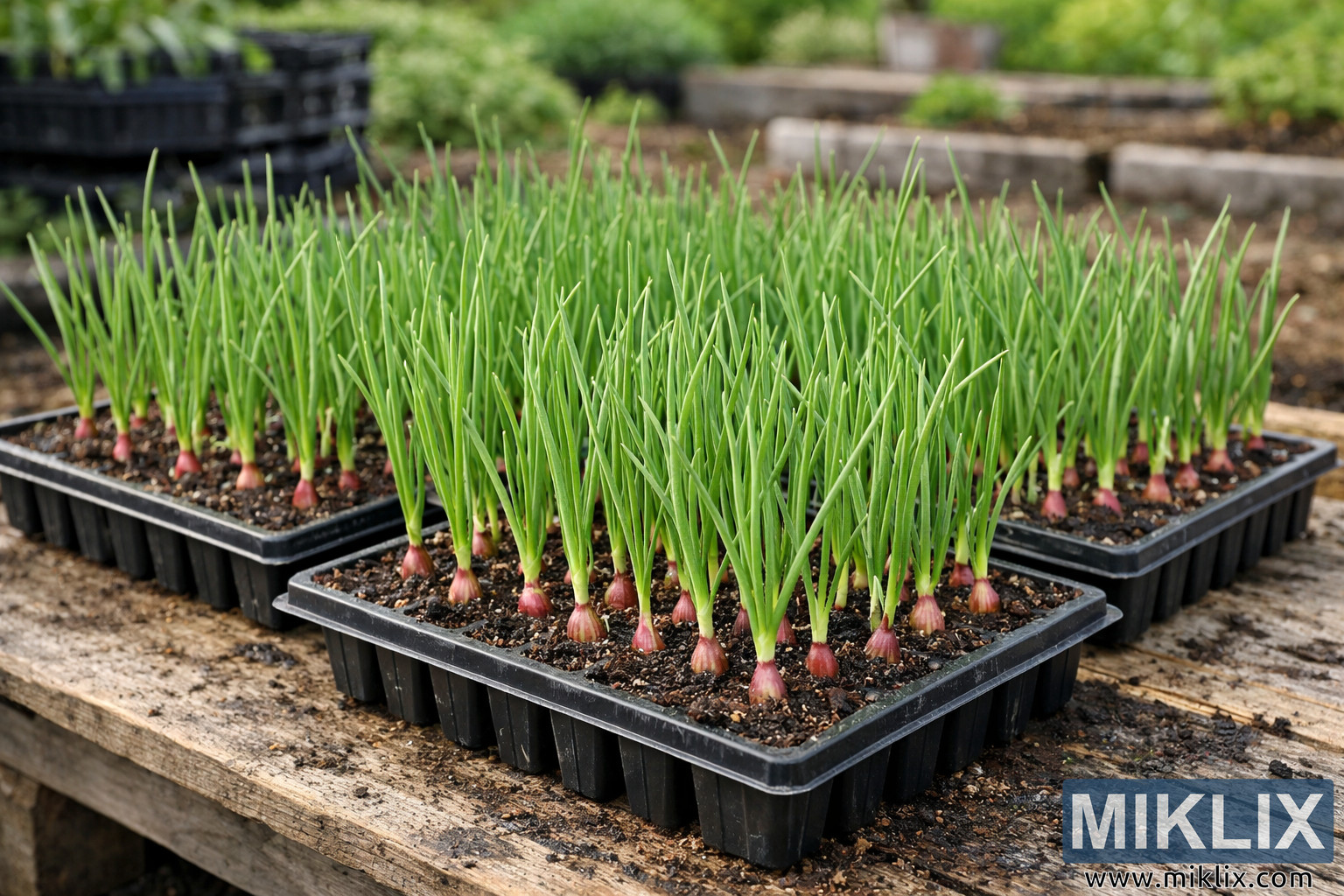
Kích thước lớn (3,072 x 2,048)
Kích thước rất lớn (4,608 x 3,072)
Kích thước cực lớn (6,144 x 4,096)
Kích thước lớn đến mức buồn cười (1,048,576 x 699,051)
- Vẫn đang tải lên... ;-)
Mô tả hình ảnh
A high-resolution landscape photograph shows several black plastic seedling trays densely filled with young shallot plants that are ready for transplanting into the garden. The trays are arranged neatly on a weathered wooden potting bench, whose rough texture and scattered soil particles emphasize the working environment of a gardener preparing seedlings for the next stage of growth. Each tray contains dozens of small plants emerging from dark, moist potting mix, their slender green leaves growing upright in clusters and creating a vibrant, grass-like canopy across the trays.
At the base of each seedling, the developing shallot bulbs are visible just above the soil surface. These small bulbs display a distinctive reddish-purple color that contrasts vividly with the rich brown soil and the bright green leaves. The stems transition from pale green near the soil line to darker, more saturated green toward the tips of the leaves. The leaves themselves are thin, tubular, and slightly curved, giving the entire planting a lively, vertical texture that fills most of the foreground of the image.
The trays appear well organized and evenly planted, suggesting careful cultivation in a nursery or home gardening setup. The soil looks loose and well aerated, with small particles and organic matter visible between the seedlings. The black plastic trays have square cells, each holding an individual plant, indicating that the seedlings were started in a controlled environment before being prepared for transplanting into open soil or raised beds.
In the softly blurred background, the garden setting becomes visible. Wooden raised beds and stacked garden crates can be seen out of focus, hinting at a productive vegetable garden beyond the work surface. The shallow depth of field draws attention to the seedlings themselves, making the lush green tops and reddish bulbs the central visual focus while the background elements provide context without distracting from the subject.
Natural daylight illuminates the scene, casting soft, even light across the trays and highlighting the freshness and health of the plants. The lighting accentuates the glossy surface of the leaves and the subtle color variations within the bulbs and stems. Overall, the image conveys the early stage of a productive gardening process—healthy shallot seedlings carefully grown in trays and ready to be transplanted into the garden, where they will continue developing into mature plants that produce flavorful bulbs for harvest.
Hình ảnh có liên quan đến: Growing Shallots: Your Complete Guide to a Bountiful Harvest