
Hình ảnh: Tangerine Tree Infected with Citrus Canker Disease
Đã xuất bản:
Cập nhật lần cuối: lúc 19:06:01 UTC 25 tháng 3, 2026
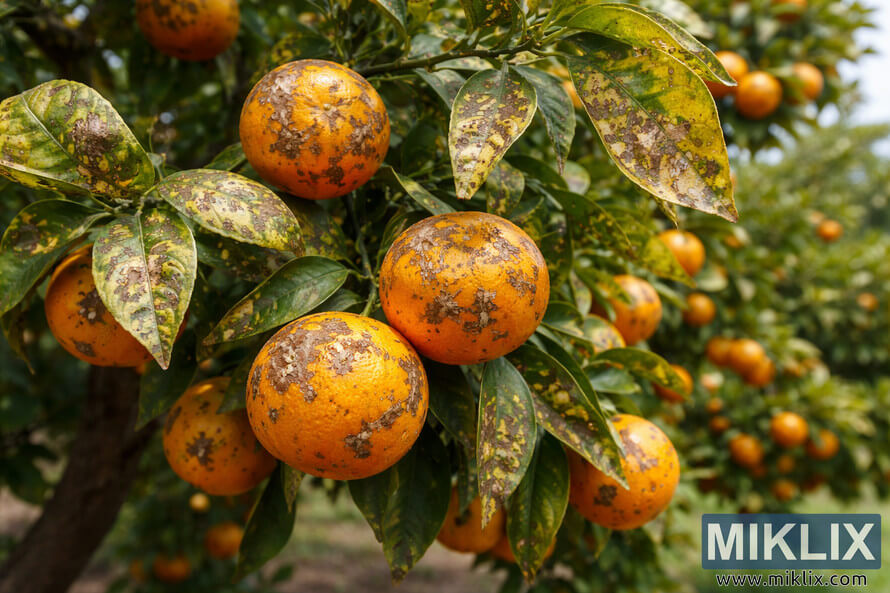
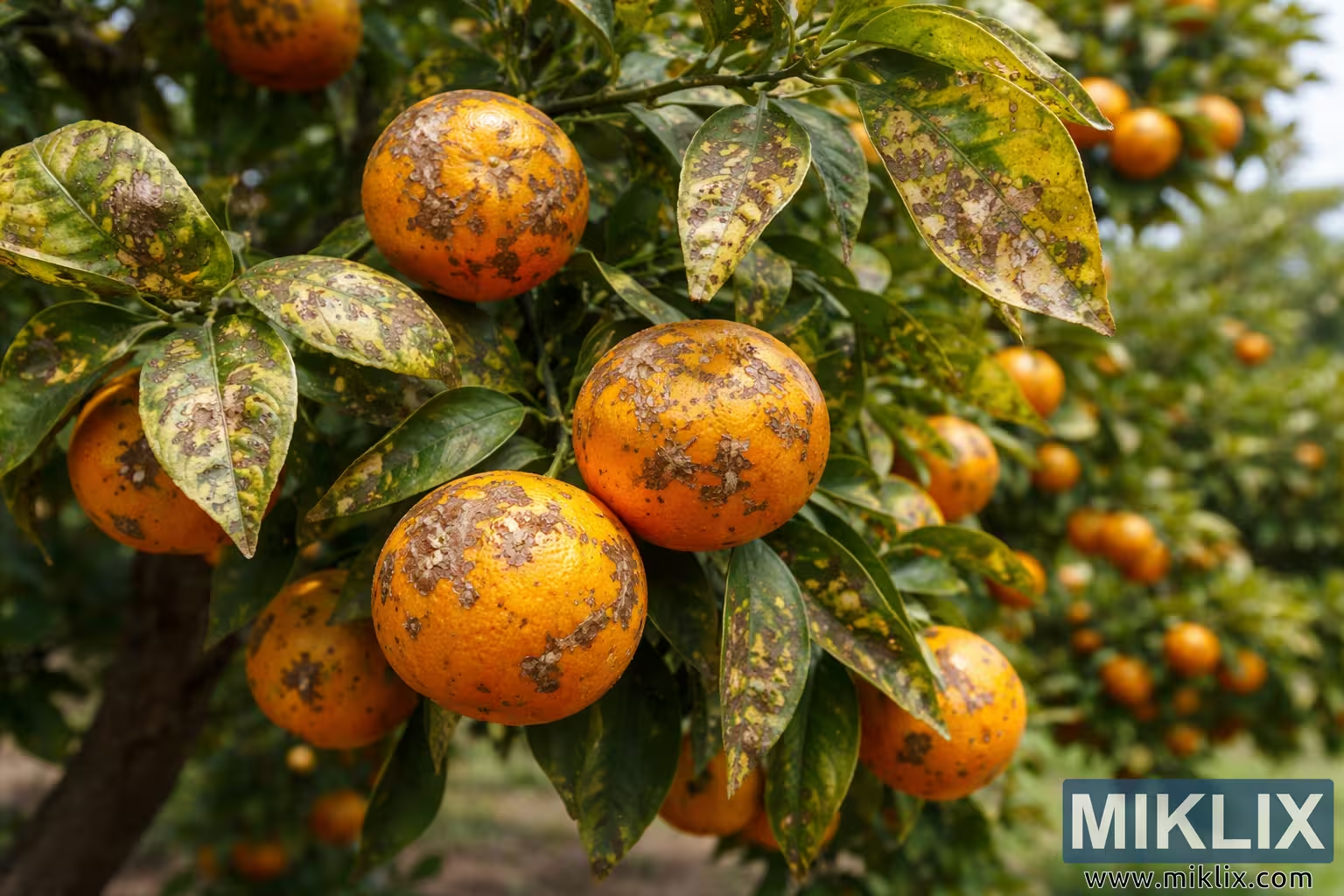
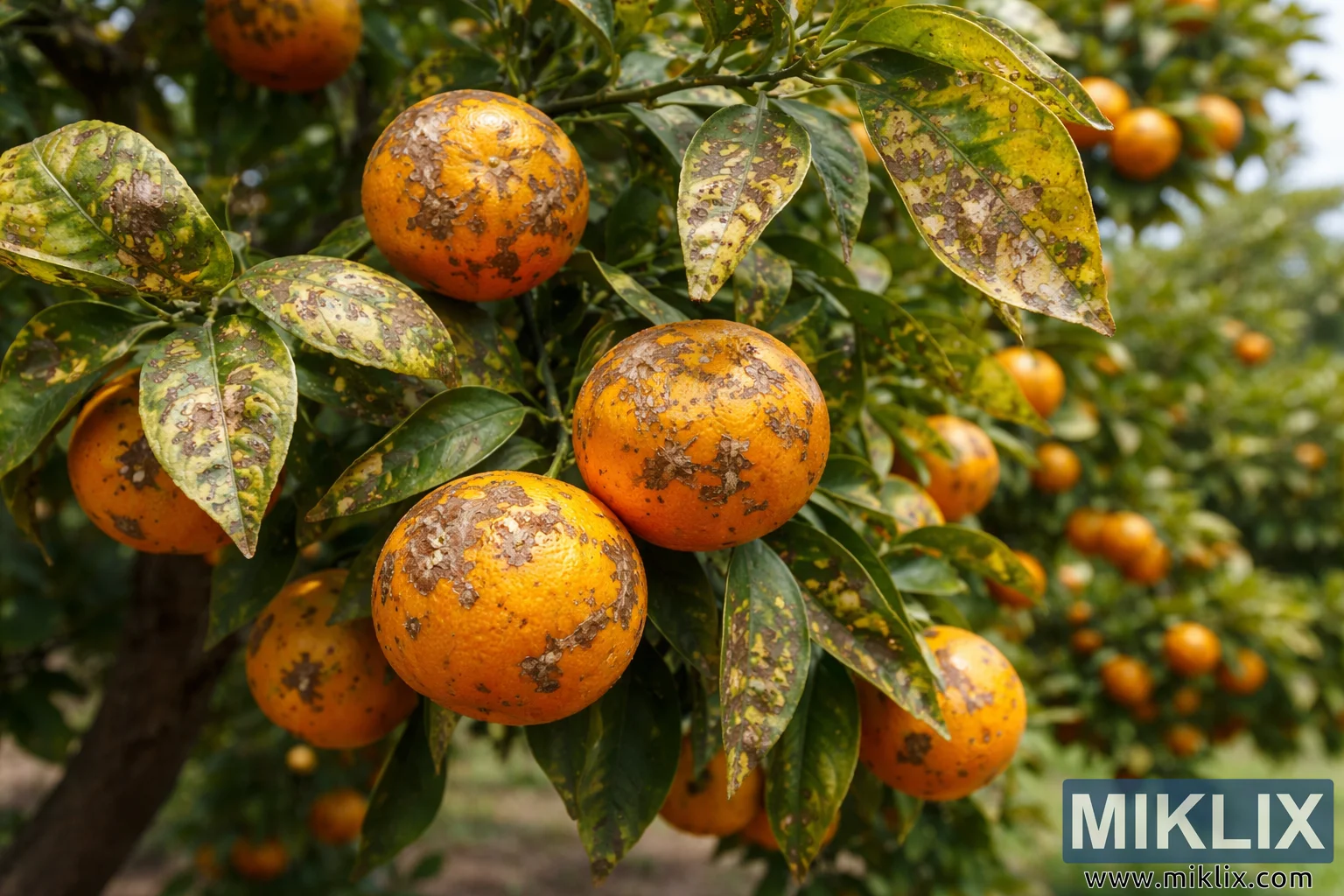
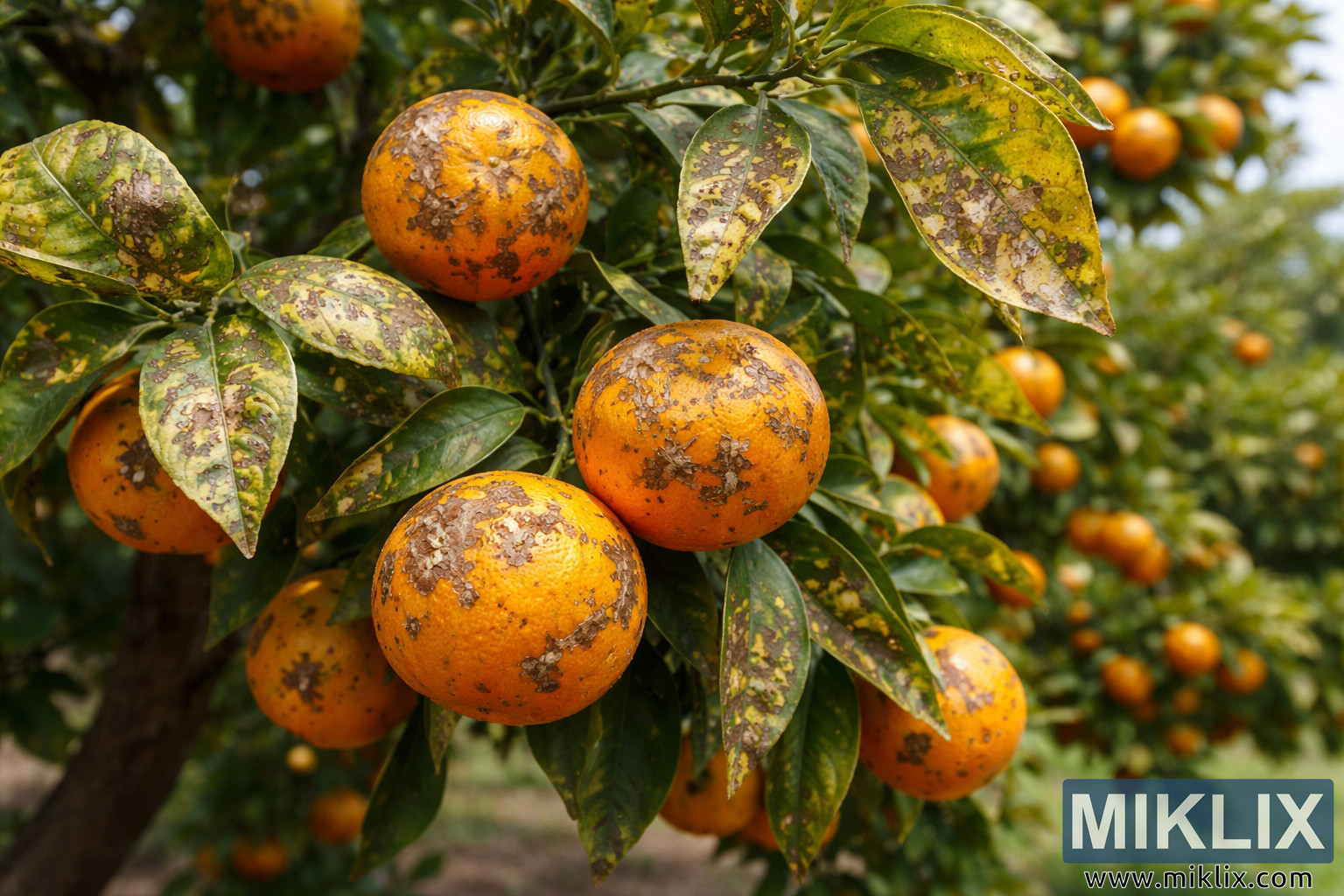
High-resolution image of a tangerine tree affected by citrus canker disease, showing infected fruit and leaves with characteristic brown lesions and yellow halos in a citrus orchard.
Tangerine Tree Infected with Citrus Canker Disease
Các phiên bản có sẵn của hình ảnh này
Các tệp hình ảnh có sẵn để tải xuống bên dưới được nén ít hơn và có độ phân giải cao hơn - và do đó, chất lượng cao hơn - so với các hình ảnh được nhúng trong các bài viết và trang trên trang web này, vốn được tối ưu hóa về kích thước tệp để giảm mức tiêu thụ băng thông.
Kích thước thông thường (1,536 x 1,024)
Kích thước lớn (3,072 x 2,048)
Kích thước rất lớn (4,608 x 3,072)
Kích thước cực lớn (6,144 x 4,096)
Kích thước lớn đến mức buồn cười (1,048,576 x 699,051)
- Vẫn đang tải lên... ;-)
Mô tả hình ảnh
A high-resolution landscape photograph shows a close-up view of a tangerine tree heavily affected by citrus canker disease in a citrus orchard. Several ripe tangerines hang prominently from the foreground branches, their bright orange skins disrupted by numerous rough, brown, corky lesions that form irregular scab-like patches across the fruit surface. These lesions vary in size and shape and are surrounded in places by faint yellow halos, a visual hallmark of citrus canker infection. The fruit appears otherwise mature and glossy, but the disease damage creates a mottled, uneven texture that contrasts strongly with the natural smoothness of healthy citrus peel.
Surrounding the fruit are elongated green leaves that also show extensive symptoms of infection. Many leaves display clusters of small brown spots with slightly raised centers and yellowish margins. Some leaves exhibit yellowing, discoloration, and irregular blotching that spreads across the leaf blade, giving them a speckled and stressed appearance. The edges of several leaves curl slightly or appear weakened, suggesting the ongoing impact of the bacterial disease on plant tissue.
The tangerines are attached to slender stems that extend from a dense cluster of branches and glossy foliage. Sunlight filters through the canopy, illuminating the fruit and leaves with soft natural light. This lighting emphasizes the texture of the lesions on the fruit and highlights the contrast between the healthy green portions of the leaves and the damaged areas. The main cluster of fruit occupies the center and left side of the frame, drawing immediate attention to the visible disease symptoms.
In the background, the image gradually fades into a soft blur, revealing rows of additional citrus trees in the orchard. More orange fruits can be seen hanging from branches farther away, but they are out of focus due to the shallow depth of field. This blurred orchard backdrop provides environmental context while keeping the viewer’s focus on the infected fruit and foliage in the foreground.
Overall, the photograph documents the characteristic visual signs of citrus canker on a tangerine tree: raised corky lesions on the fruit, spotted and yellowing leaves, and a general appearance of plant stress. The detailed close-up perspective allows the viewer to clearly observe how the bacterial disease manifests on both fruit and foliage, making the image useful for educational, agricultural, or plant pathology contexts.
Hình ảnh có liên quan đến: Growing Tangerines: The Complete Guide to Sweet Success in Your Home Garden