
Hình ảnh: Overcrowded vs Properly Spaced Radish Plants Comparison
Đã xuất bản:
Cập nhật lần cuối: lúc 20:43:54 UTC 31 tháng 3, 2026
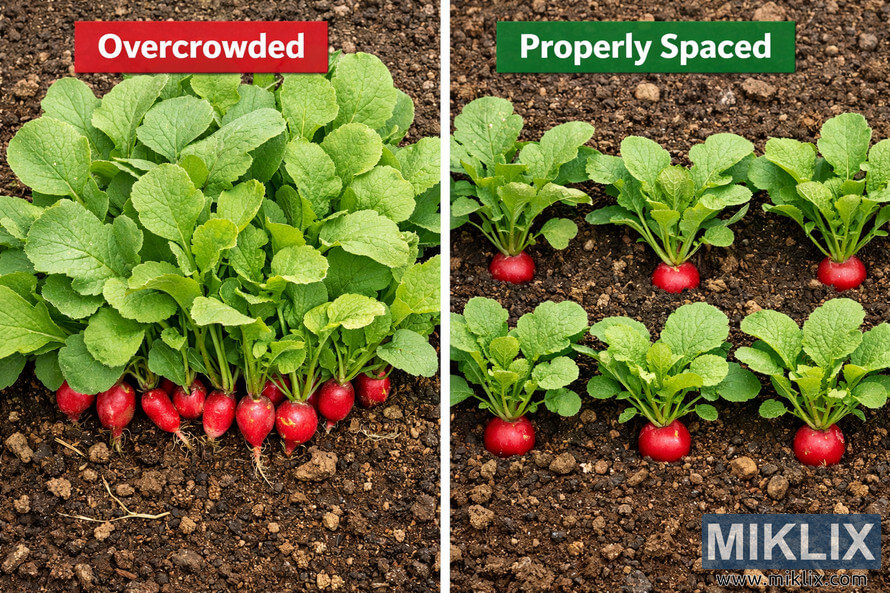
A visual comparison showing the difference between overcrowded radish plants and properly spaced radishes, highlighting improved growth, leaf structure, and root development when plants are spaced correctly.
Overcrowded vs Properly Spaced Radish Plants Comparison
Các phiên bản có sẵn của hình ảnh này
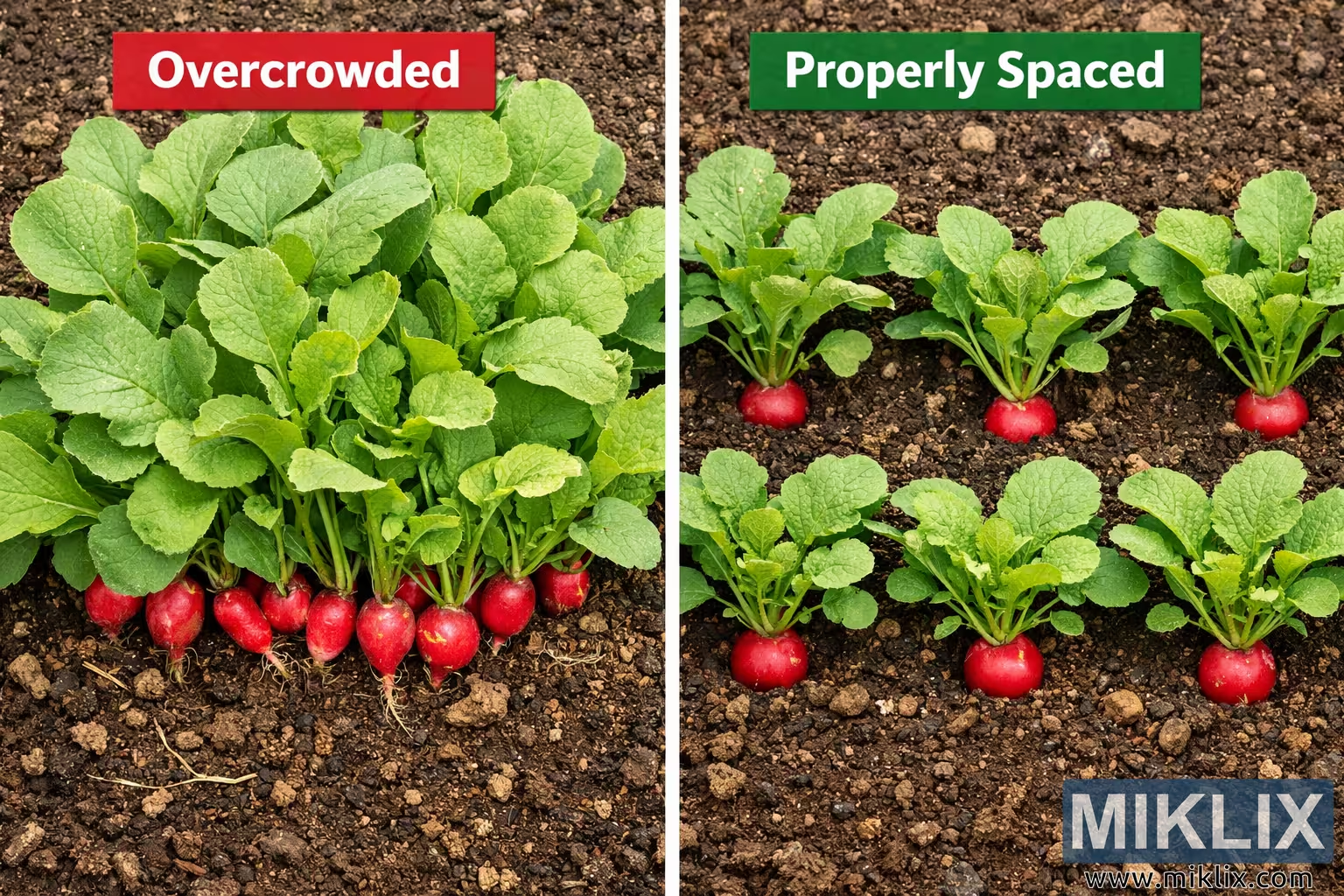
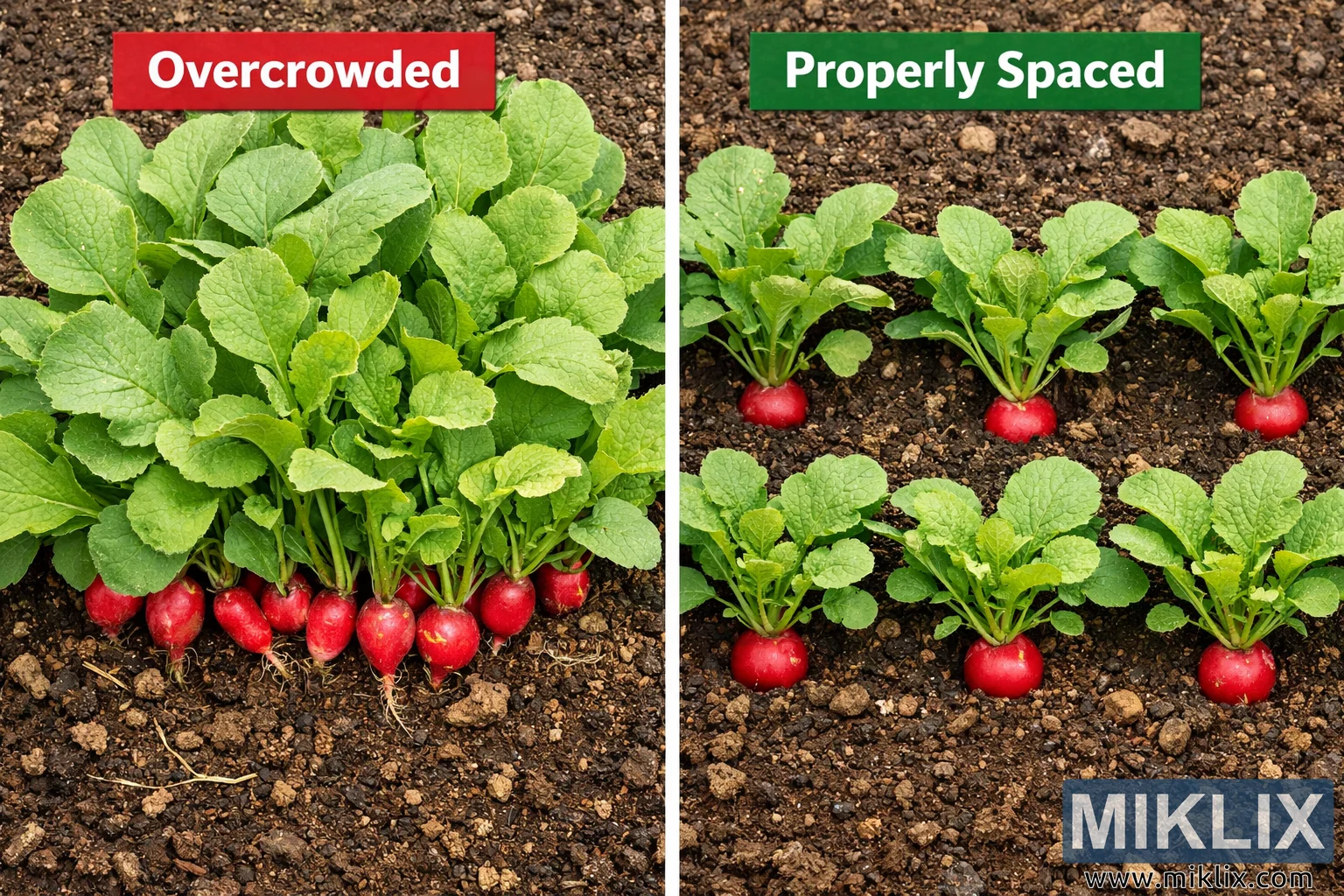
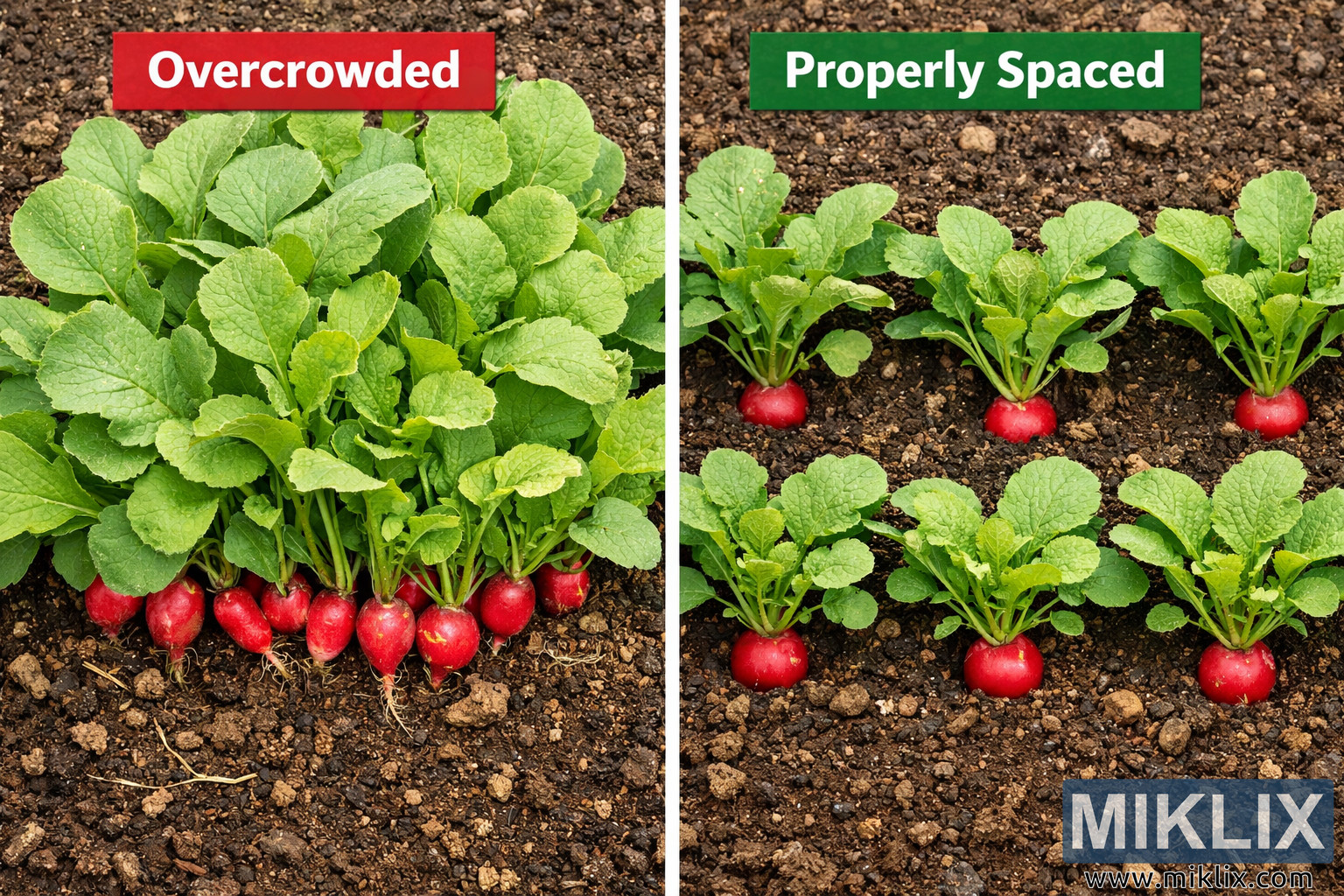
Các tệp hình ảnh có sẵn để tải xuống bên dưới được nén ít hơn và có độ phân giải cao hơn - và do đó, chất lượng cao hơn - so với các hình ảnh được nhúng trong các bài viết và trang trên trang web này, vốn được tối ưu hóa về kích thước tệp để giảm mức tiêu thụ băng thông.
Kích thước thông thường (1,536 x 1,024)
Kích thước lớn (3,072 x 2,048)
Kích thước rất lớn (4,608 x 3,072)
Kích thước cực lớn (6,144 x 4,096)
Kích thước lớn đến mức buồn cười (1,048,576 x 699,051)
- Vẫn đang tải lên... ;-)
Mô tả hình ảnh
The image presents a side-by-side visual comparison illustrating the effects of plant spacing on radish growth. The photograph is divided vertically into two equal sections, each showing radish plants growing in dark, loose garden soil. The purpose of the image is to clearly demonstrate the difference between overcrowded radish plants and properly spaced radishes, making it useful as an educational gardening reference.
On the left side of the image, a large cluster of radish plants is labeled "Overcrowded" with bold white text on a red banner near the top. The radish plants are tightly packed together, with very little space between them. Their green leaves overlap heavily, forming a dense canopy that makes it difficult to distinguish individual plants. The foliage appears tangled and compressed due to the lack of space. Beneath the leaves, numerous small red radish bulbs are visible near the soil surface, but many of them are undersized and irregular. Because the plants compete for nutrients, water, and sunlight, their growth appears uneven and crowded. The soil around them looks disturbed by the cluster of roots competing in the same area.
On the right side of the image, a second group of radish plants is labeled "Properly Spaced" with bold white text on a green banner at the top. In contrast to the left side, these radish plants are arranged in neat rows with clear spacing between each plant. The green leaves spread outward naturally without overlapping excessively, allowing each plant to receive sufficient sunlight and airflow. The foliage appears healthier and more organized compared to the crowded side. At the base of each plant, bright red radish bulbs are clearly visible, larger and more uniformly shaped than those on the overcrowded side. The soil between the plants remains visible and undisturbed, emphasizing the intentional spacing and orderly planting pattern.
The overall composition highlights the dramatic visual difference between the two planting methods. The left side emphasizes congestion and competition among plants, while the right side demonstrates the benefits of proper spacing for healthy plant development. The contrasting labels and arrangement help viewers quickly understand the gardening principle being illustrated: that radishes grow larger and healthier when given adequate space to develop.
Hình ảnh có liên quan đến: How to Grow Radishes: Your Complete Beginner's Guide to a Perfect Harvest