
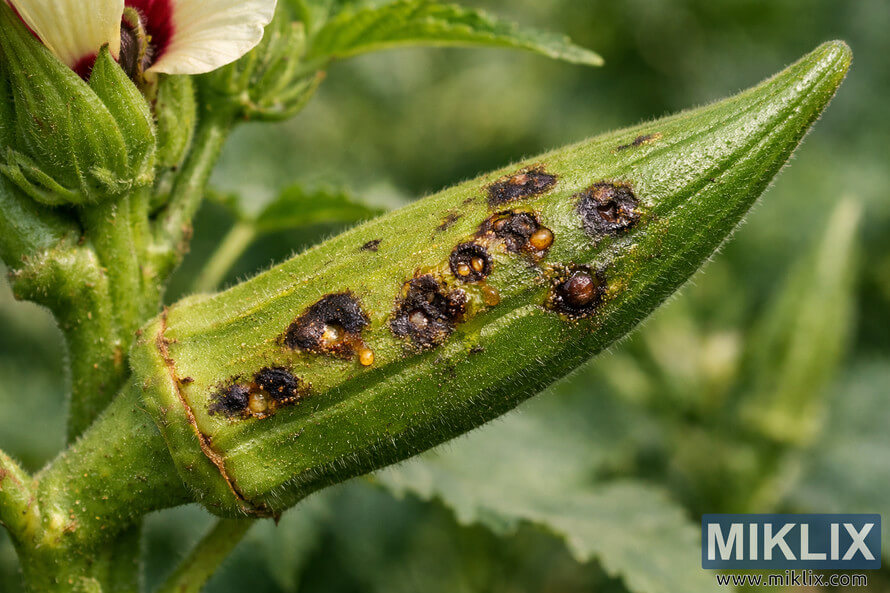
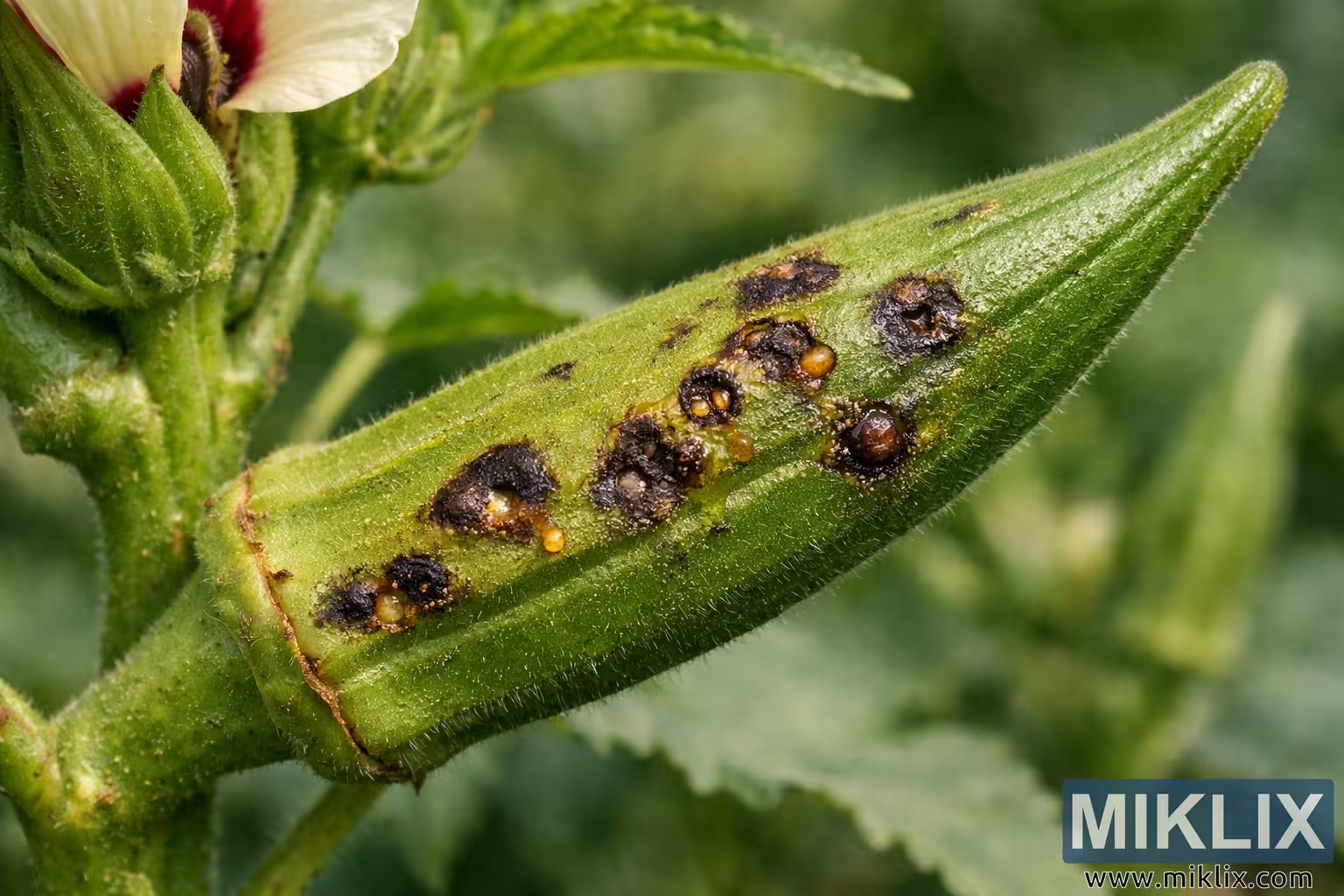
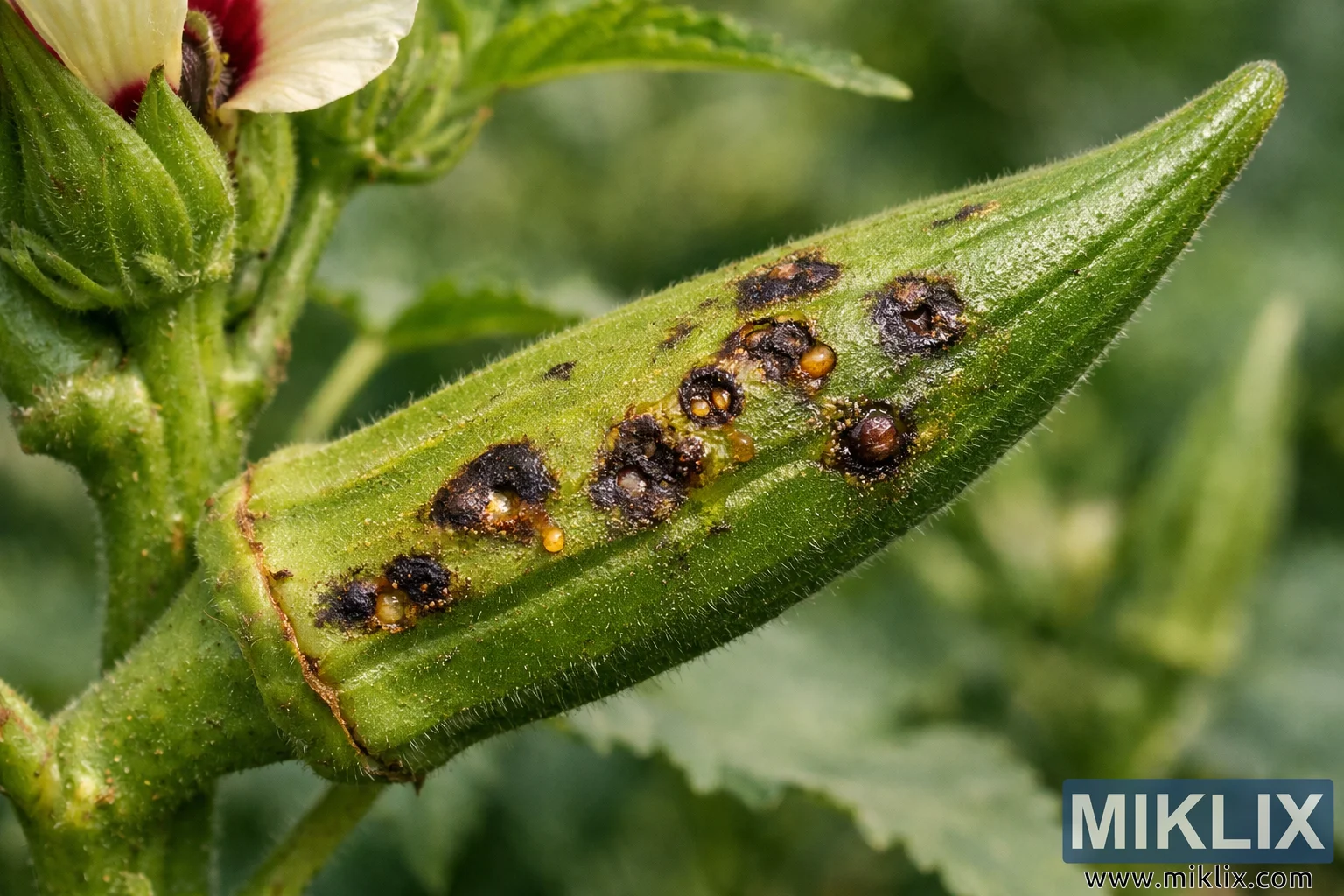
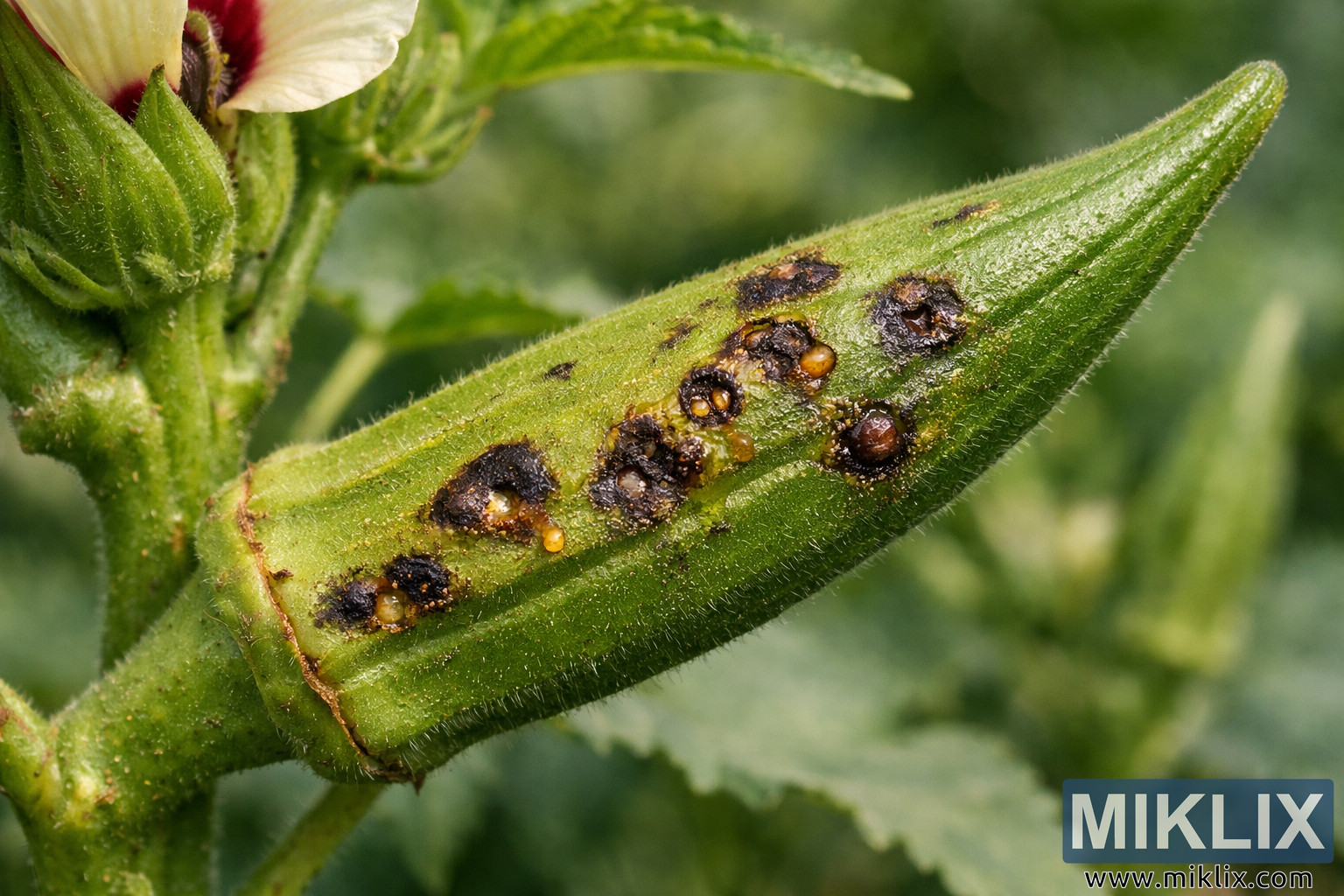
Hình ảnh: Stink Bug Feeding Damage on Okra Pod
Đã xuất bản:
Cập nhật lần cuối: lúc 21:38:09 UTC 17 tháng 3, 2026
Detailed close-up photograph of stink bug damage on an okra pod, showing dark, sunken feeding spots and plant tissue discoloration typical of pest injury.
Stink Bug Feeding Damage on Okra Pod
Các phiên bản có sẵn của hình ảnh này
Các tệp hình ảnh có sẵn để tải xuống bên dưới được nén ít hơn và có độ phân giải cao hơn - và do đó, chất lượng cao hơn - so với các hình ảnh được nhúng trong các bài viết và trang trên trang web này, vốn được tối ưu hóa về kích thước tệp để giảm mức tiêu thụ băng thông.
Kích thước thông thường (1,536 x 1,024)
Kích thước lớn (3,072 x 2,048)
Kích thước rất lớn (4,608 x 3,072)
Kích thước cực lớn (6,144 x 4,096)
Kích thước lớn đến mức buồn cười (1,048,576 x 699,051)
- Vẫn đang tải lên... ;-)
Mô tả hình ảnh
A high-resolution landscape-oriented macro photograph shows a developing okra pod (Abelmoschus esculentus) attached to the plant, prominently displaying damage caused by stink bug feeding. The okra pod extends diagonally across the frame from left to right, its tapered tip pointing toward the right side of the image. The pod surface is bright green and covered with fine, soft hairs that catch the light, giving the skin a slightly textured and velvety appearance. Along the central ridge of the pod, several dark, irregular lesions mark the areas where stink bugs have punctured the tissue with their piercing mouthparts.
These feeding sites appear as small clusters of dark brown to nearly black spots surrounded by subtle yellowish or pale halos. Many of the lesions are slightly sunken, indicating collapsed plant tissue where cells have been damaged. In some of the spots, tiny droplets of amber-colored sap or plant exudate are visible, suggesting recent feeding activity or plant response to injury. The lesions vary in size, with some isolated marks and others grouped closely together, creating a band of damage along the pod’s surface.
On the left side of the frame, the okra stem and a partially open flower are visible. The flower features pale cream-colored petals with a deep reddish-purple center, a characteristic trait of okra blossoms. The flower is slightly out of focus compared to the pod, but still recognizable. Several green sepals and small developing pods cluster near the stem junction, providing additional botanical context and emphasizing that the plant is actively growing and flowering.
The background consists of soft, blurred green foliage created by shallow depth of field, which isolates the damaged pod as the primary subject. The bokeh effect highlights the pod’s texture and the distinct feeding injuries without distraction. Light appears natural and diffuse, likely outdoor daylight, producing gentle shadows that enhance the three-dimensional structure of the pod and the indentations caused by the pest damage.
Overall, the image clearly documents the characteristic symptoms of stink bug injury on okra: localized dark lesions, slight depressions in the pod surface, and areas of tissue discoloration. The photograph combines botanical detail with pest damage evidence, making it useful for educational, agricultural, or plant pathology contexts where visual identification of stink bug feeding damage on okra pods is required.
Hình ảnh có liên quan đến: The Complete Guide to Growing Okra in Your Home Garden