
Hình ảnh: Immune Cells Defending the Body with Bok Choy Nutrients
Đã xuất bản:
Cập nhật lần cuối: lúc 20:34:02 UTC 12 tháng 7, 2026
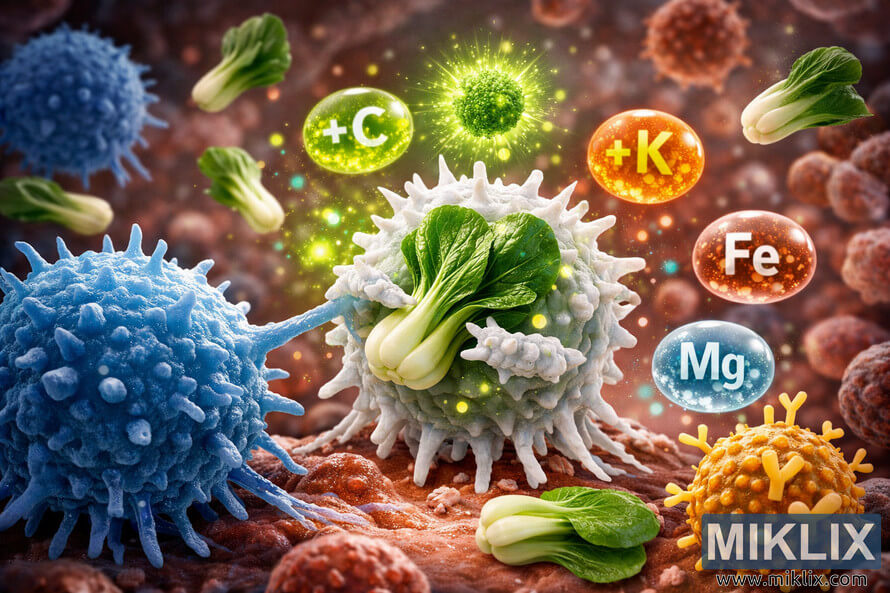
A detailed 3D-rendered microscopic scene showing immune cells defending the body with bok choy nutrients, featuring glowing capsules of vitamins and minerals that represent the harmony between plant nutrition and immune strength.
Immune Cells Defending the Body with Bok Choy Nutrients
Các phiên bản có sẵn của hình ảnh này
Các tệp hình ảnh có sẵn để tải xuống bên dưới được nén ít hơn và có độ phân giải cao hơn - và do đó, chất lượng cao hơn - so với các hình ảnh được nhúng trong các bài viết và trang trên trang web này, vốn được tối ưu hóa về kích thước tệp để giảm mức tiêu thụ băng thông.
Kích thước thông thường (1,536 x 1,024)
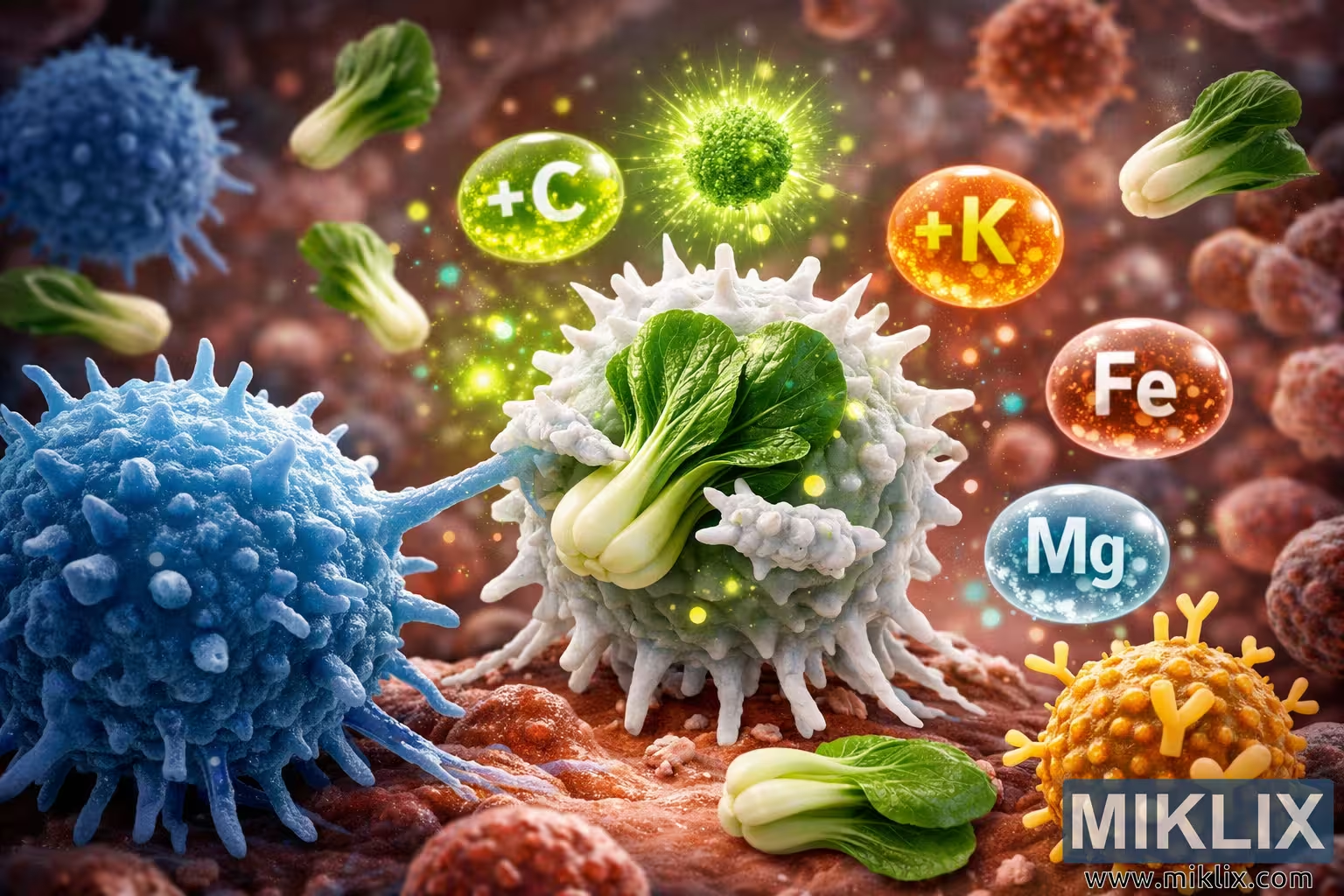
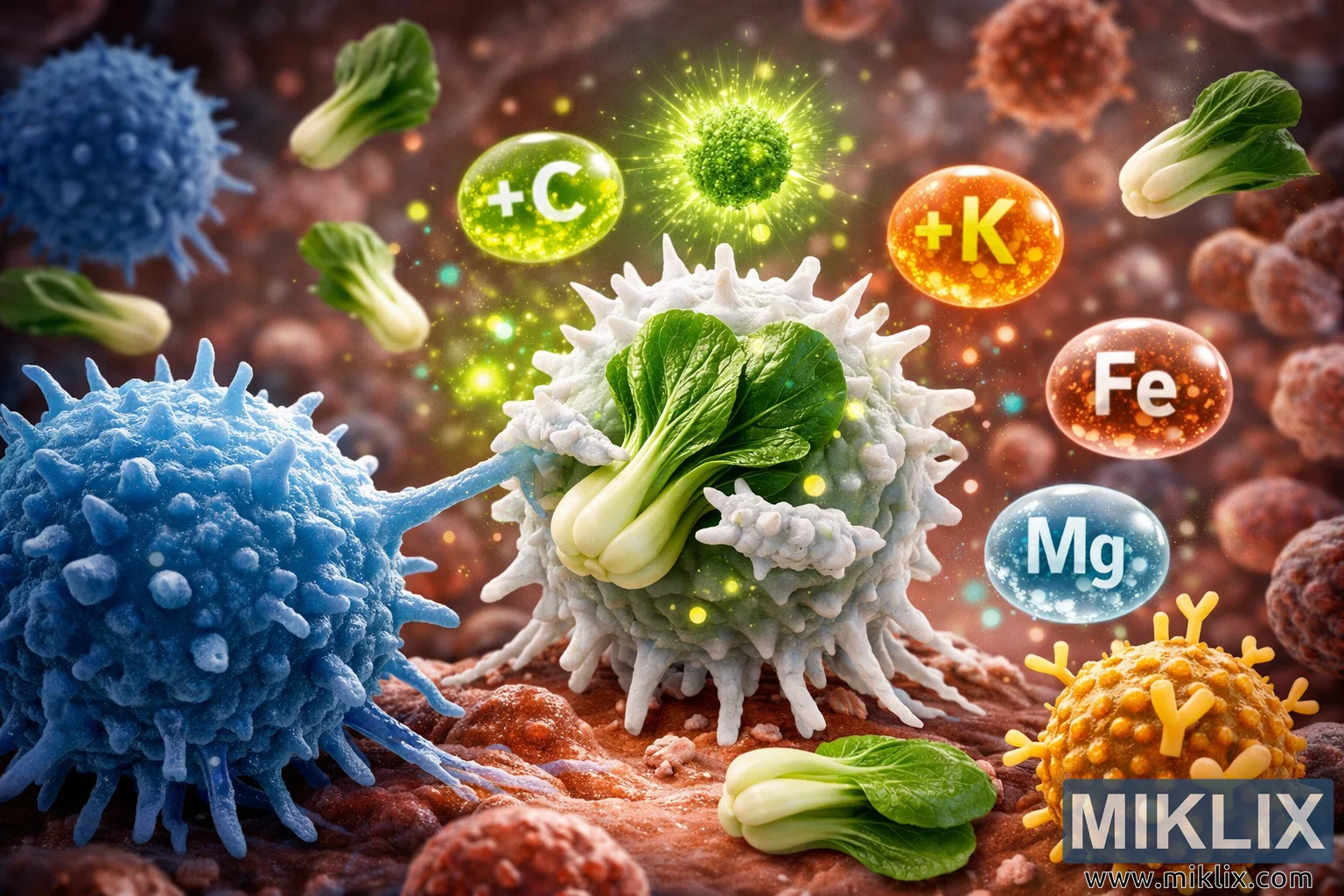
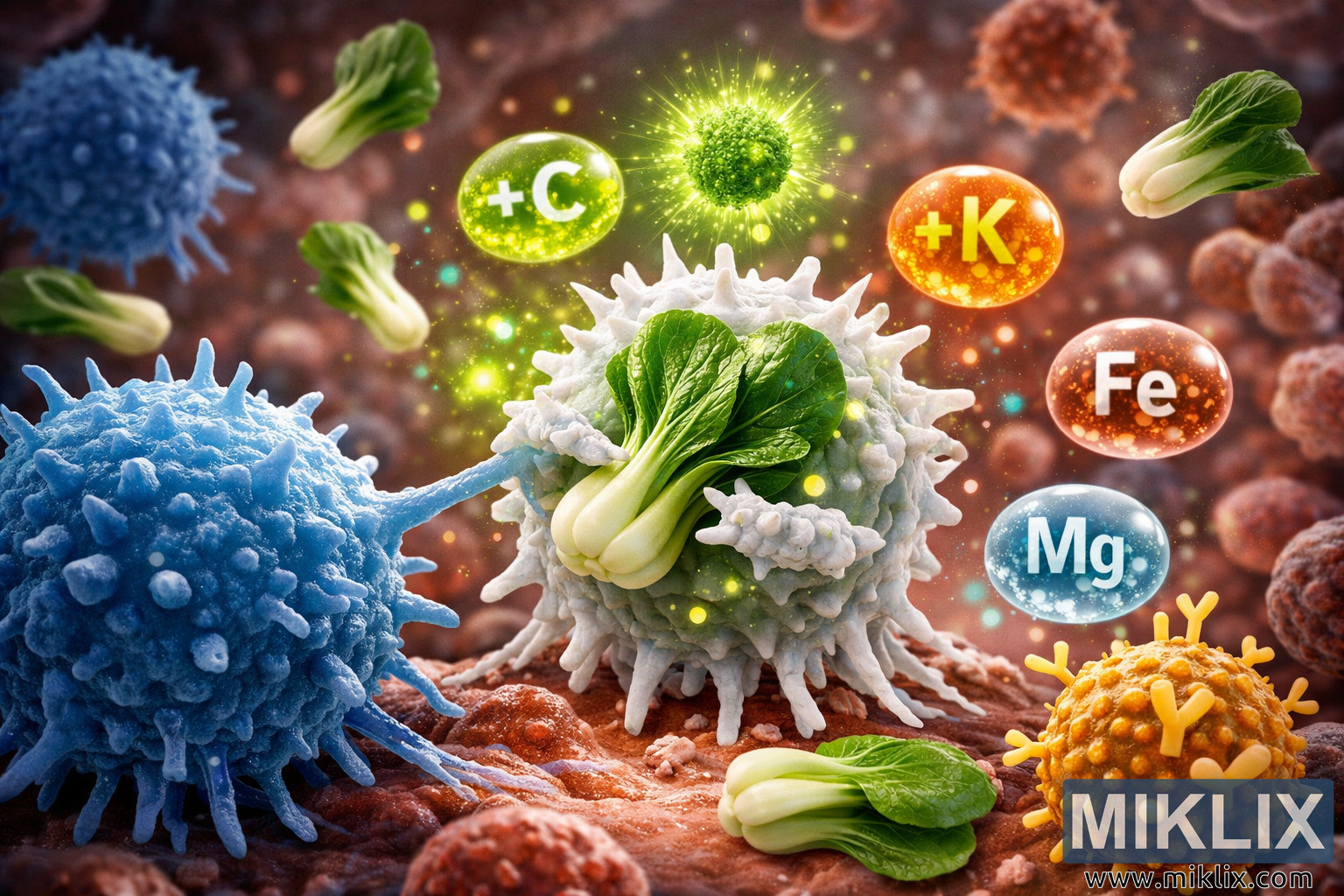
Kích thước lớn (3,072 x 2,048)
Kích thước rất lớn (4,608 x 3,072)
Kích thước cực lớn (6,144 x 4,096)
Kích thước lớn đến mức buồn cười (1,048,576 x 699,051)
- Vẫn đang tải lên... ;-)
Mô tả hình ảnh
This image presents a vivid, high-resolution 3D-rendered microscopic landscape where the human immune system is visualized as a dynamic battlefield infused with the nourishing essence of bok choy. The composition unfolds in a panoramic view, capturing the interplay between immune cells and nutrient particles in a biologically inspired environment that glows with vitality and energy.
At the forefront, a large blue T-cell dominates the left side of the frame. Its surface is textured with fine, spike-like protrusions that shimmer under radiant light, symbolizing its readiness to engage pathogens. A slender pseudopod extends from the T-cell, glowing faintly as it reaches toward the center of the image, suggesting communication and defense coordination among immune cells. The blue hue of the T-cell contrasts sharply with the warm tones of the surrounding environment, emphasizing its role as a sentinel of the body’s defense system.
In the center, a white macrophage stands as the focal point of the composition. Its irregular, spiked surface is rendered with exquisite detail, each protrusion catching the light to reveal the cell’s complex structure. The macrophage is shown grasping a vibrant green bok choy leaf, which glows with a soft, ethereal aura. The bok choy leaf’s crisp white stalks and lush green blades are depicted with botanical precision, symbolizing the infusion of plant-based nutrients into the immune system. Around the macrophage, tiny particles of light float in the air, representing the biochemical exchange between the vegetable’s nutrients and the immune cells.
To the right, an orange-hued natural killer cell adds warmth and balance to the composition. Its bumpy, granular surface is illuminated by diffuse light, giving it a tactile, almost sculptural presence. Nearby, a smaller yellow B-cell is covered in Y-shaped antibodies that protrude from its surface like delicate ornaments. These antibodies are rendered with microscopic accuracy, each one glinting as it interacts with the surrounding nutrient particles.
Scattered throughout the scene are bok choy leaves of varying sizes, suspended in the fluid environment of the body. They appear to float among immune cells, their green tones harmonizing with the glowing nutrient capsules that populate the space. These capsules are labeled with elemental and vitamin symbols—“+C,” “+K,” “Fe,” and “Mg”—each representing essential nutrients that support immune function. The “+C” capsule glows in green, “+K” in yellow, “Fe” in reddish-brown, and “Mg” in light blue. Each capsule contains tiny spheres of light, symbolizing the molecular energy and vitality they contribute to the body’s defense mechanisms.
The background is softly blurred, bathed in a reddish hue that evokes the inner environment of the human body. Within this diffuse backdrop, additional immune cells can be seen engaging in unseen battles, their forms partially obscured by the glowing mist of nutrients and energy. A luminous green orb explodes with light near the upper center of the image, sending rays outward that illuminate the surrounding cells and bok choy fragments. This burst of light serves as a metaphor for the activation of the immune response, triggered by the influx of beneficial plant compounds.
The overall composition is balanced and harmonious, with the blue T-cell anchoring the left side, the white macrophage commanding the center, and the orange and yellow cells providing visual weight on the right. The bok choy leaves and nutrient capsules are distributed evenly throughout the frame, creating a sense of rhythm and movement. The lighting is dynamic, alternating between cool and warm tones to emphasize the contrast between biological defense and nutritional support.
Symbolically, the image represents the synergy between natural nutrition and the body’s immune defense. Bok choy, rich in vitamins and minerals, is portrayed as a catalyst for cellular strength and vitality. The immune cells, rendered as heroic figures in this microscopic tableau, embody the body’s resilience and adaptability. The glowing particles and capsules serve as visual metaphors for the invisible biochemical processes that sustain health.
Every element in the image—from the texture of the cells to the luminescent nutrient particles—contributes to a narrative of protection, nourishment, and balance. The scene invites viewers to imagine the microscopic world within their own bodies, where nutrition and immunity coexist in a perpetual dance of defense and renewal. The result is a visually stunning and scientifically inspired portrayal of how plant-based nutrients like those found in bok choy can empower the immune system to defend and thrive.
Hình ảnh có liên quan đến: Bok Choy Health Benefits: Transform Your Diet with This Nutritional Powerhouse