
Hình ảnh: Chronic Disease Prevention Through Anti-Inflammatory Diet Featuring Watermelon
Đã xuất bản:
Cập nhật lần cuối: lúc 19:10:23 UTC 16 tháng 8, 2026
Explore the concept of chronic disease prevention through an anti-inflammatory diet centered on watermelon and nutrient-rich foods. This detailed description highlights the visual harmony of colorful, health-promoting ingredients that support wellness and longevity.
Chronic Disease Prevention Through Anti-Inflammatory Diet Featuring Watermelon
Các phiên bản có sẵn của hình ảnh này
Các tệp hình ảnh có sẵn để tải xuống bên dưới được nén ít hơn và có độ phân giải cao hơn - và do đó, chất lượng cao hơn - so với các hình ảnh được nhúng trong các bài viết và trang trên trang web này, vốn được tối ưu hóa về kích thước tệp để giảm mức tiêu thụ băng thông.
Kích thước thông thường (1,536 x 1,024)
Kích thước lớn (3,072 x 2,048)
Kích thước rất lớn (4,608 x 3,072)
Kích thước cực lớn (6,144 x 4,096)
Kích thước lớn đến mức buồn cười (1,048,576 x 699,051)
- Vẫn đang tải lên... ;-)
Mô tả hình ảnh
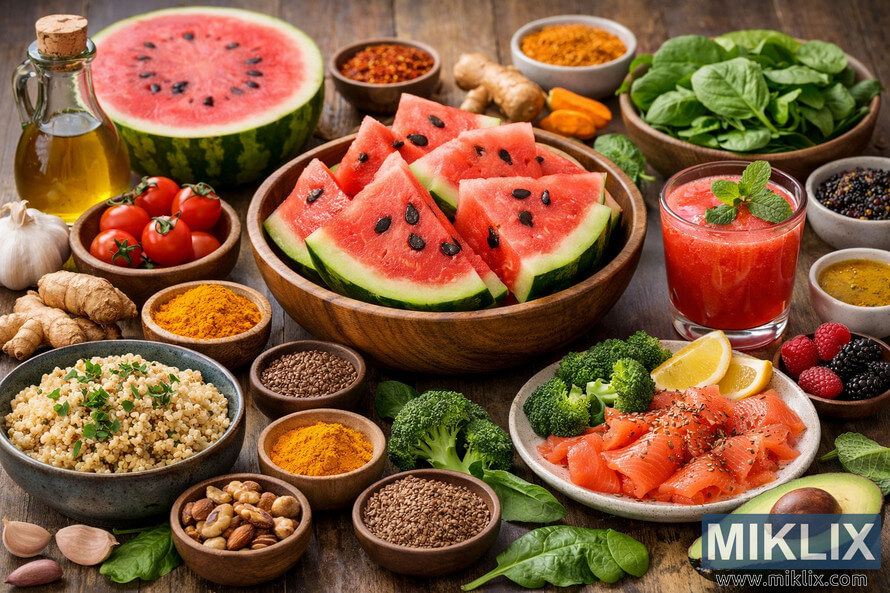
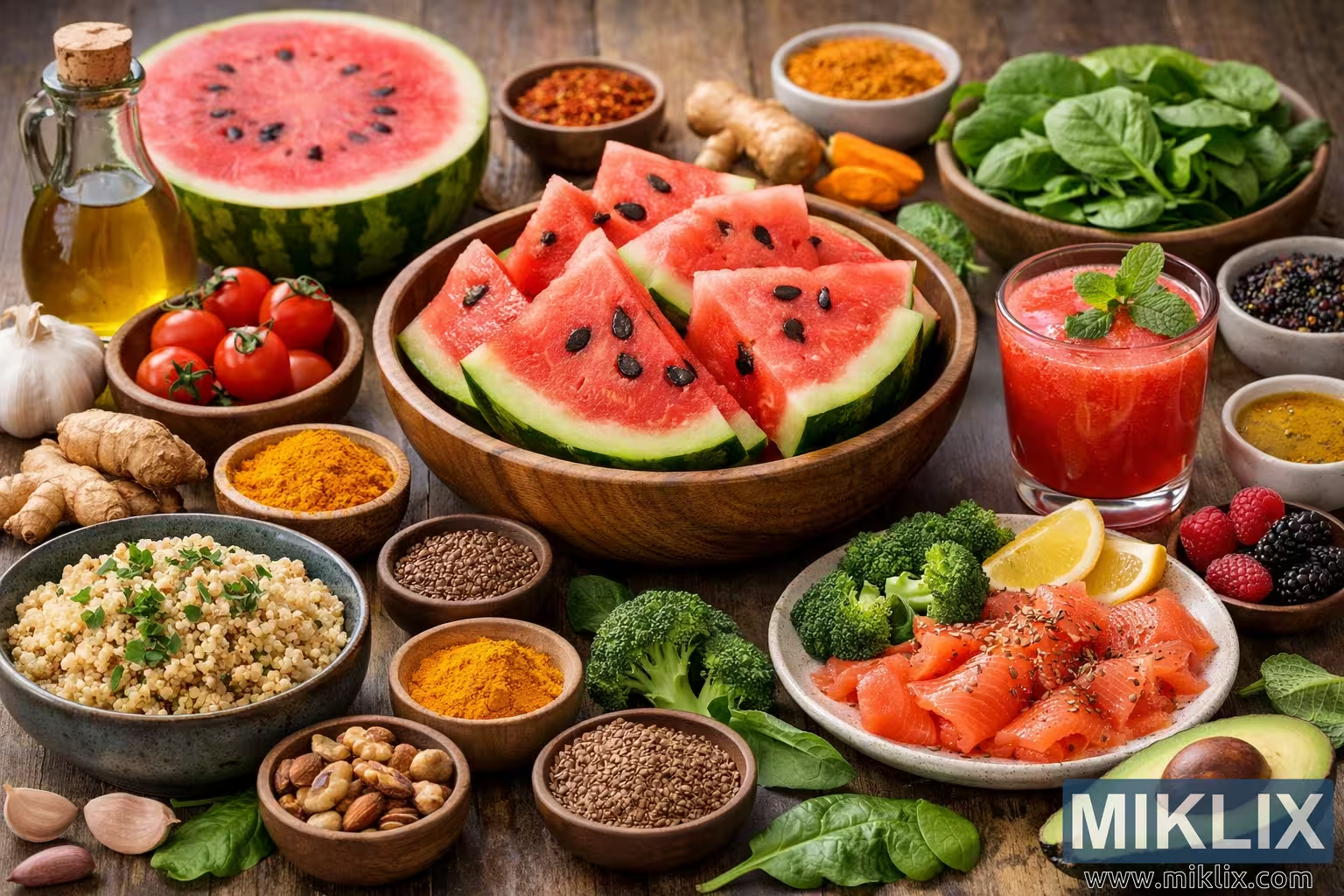
The image presents a visually rich and meticulously composed landscape photograph that embodies the principles of chronic disease prevention through an anti-inflammatory diet. At the heart of the composition lies a large wooden bowl filled with triangular slices of ripe watermelon, their deep red flesh glistening under natural light. The watermelon serves as the central motif, symbolizing hydration, antioxidant power, and the refreshing simplicity of whole foods. Surrounding this centerpiece is a diverse array of ingredients known for their anti-inflammatory properties, each arranged with deliberate care to create a sense of balance and abundance.
To the left of the watermelon bowl, a halved watermelon reveals its vibrant interior, reinforcing the theme of freshness and vitality. Nearby, a glass bottle of golden olive oil catches the light, its translucent glow suggesting purity and heart-healthy fats. A small wooden bowl of turmeric powder adds a burst of yellow-orange color, representing one of the most potent natural anti-inflammatory spices. Close to it, a cluster of cherry tomatoes, a head of garlic, and a piece of ginger root contribute to the palette of reds, whites, and earthy browns, each ingredient known for its immune-boosting and anti-inflammatory effects.
In the foreground, a ceramic bowl filled with cooked quinoa garnished with chopped parsley introduces texture and a sense of wholesome nourishment. The quinoa’s subtle beige tones contrast beautifully with the surrounding greens and reds, emphasizing the diversity of plant-based nutrition. To its right, a wooden bowl brimming with fresh broccoli florets adds a deep green hue, symbolizing detoxification and cellular protection. A small dish of ground flaxseeds and another of mixed nuts—almonds and walnuts—reinforce the theme of omega-rich foods that support cardiovascular health.
On the right side of the composition, a bowl of avocado slices rests beside half an avocado displaying its seed, a visual reminder of healthy monounsaturated fats. Adjacent to it, a plate of smoked salmon garnished with lemon wedges and sprinkled with flaxseeds introduces a touch of orange and yellow, balancing the cooler tones of the greens and reds. The salmon’s silky texture and the lemon’s brightness evoke the synergy between flavor and function in anti-inflammatory eating. A glass of watermelon juice garnished with a sprig of mint completes the scene, its vivid red color echoing the central fruit and tying the composition together.
In the background, small bowls of spices—red pepper flakes, turmeric root, and chia seeds—add depth and complexity to the visual narrative. Each element contributes to the overarching message: that chronic disease prevention is not achieved through restriction but through the celebration of colorful, nutrient-dense foods. The rustic wooden table beneath these ingredients grounds the image in natural simplicity, while the bright, even lighting enhances the vibrancy of every hue.
The photograph’s composition is carefully balanced, with the watermelon bowl serving as the focal point from which the eye travels outward to explore the surrounding foods. The interplay of textures—smooth avocado, flaky salmon, crisp broccoli, and juicy watermelon—creates a tactile richness that mirrors the sensory pleasure of eating well. The color harmony is striking: reds and greens dominate, complemented by yellows, oranges, and earthy browns, forming a palette that feels both energizing and soothing.
Beyond its aesthetic appeal, the image communicates a deeper narrative about health and longevity. It illustrates how an anti-inflammatory diet can be both beautiful and accessible, emphasizing whole foods that reduce oxidative stress and inflammation. The watermelon, with its high water content and lycopene concentration, stands as a symbol of hydration and cellular protection. Surrounding it, the ensemble of fruits, vegetables, spices, and healthy fats represents a holistic approach to wellness—one that integrates flavor, color, and nutrition into a unified vision of preventive health.
Overall, the image captures the essence of mindful eating and the joy of nourishment. It invites viewers to appreciate the artistry of food as medicine, encouraging a lifestyle where every meal becomes an opportunity to support the body’s natural resilience. The scene is not merely a still life; it is a visual manifesto for living vibrantly through conscious dietary choices, with watermelon as the radiant centerpiece of an anti-inflammatory symphony.
Hình ảnh có liên quan đến: Watermelon: The Hydrating Superfruit You Should Eat More Often