
图像: Comparison of Watermelon Varieties by Size and Flesh Color
已出版:
最后更新 2026年3月27日 UTC 17:51:46
High-resolution landscape photo comparing multiple watermelon varieties, highlighting differences in size, rind patterns, and flesh colors such as red, orange, yellow, and white.
Comparison of Watermelon Varieties by Size and Flesh Color
该图片的可用版本
与本网站文章和网页中嵌入的图片相比,以下可供下载的图片文件压缩程度更低,分辨率更高,因此质量也更高。
正常尺寸 (1,536 x 1,024)
大尺寸 (3,072 x 2,048)
尺寸非常大 (4,608 x 3,072)
超大尺寸 (6,144 x 4,096)
夸张的大尺寸 (1,048,576 x 699,051)
- 仍在上传......;-)
图片说明
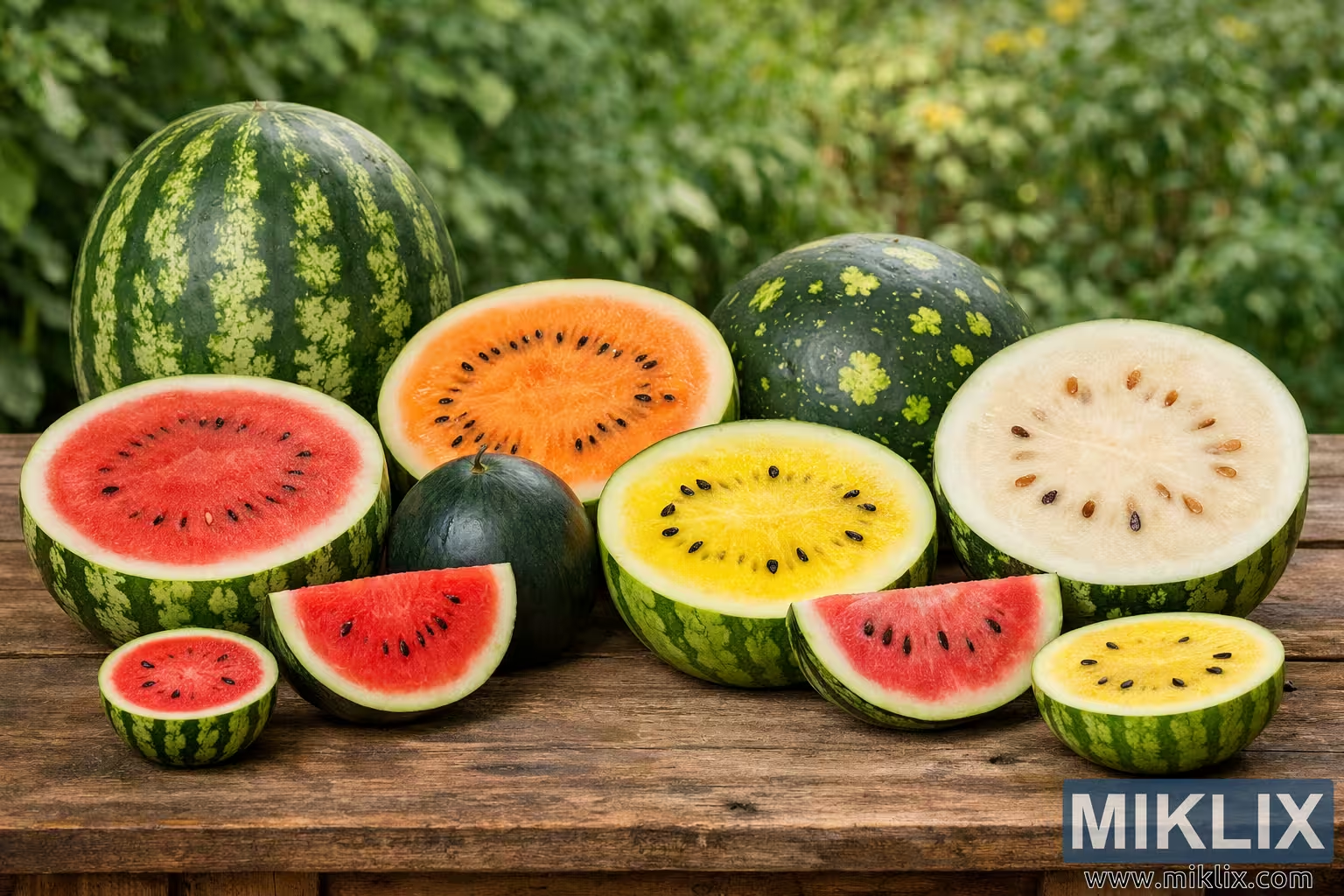
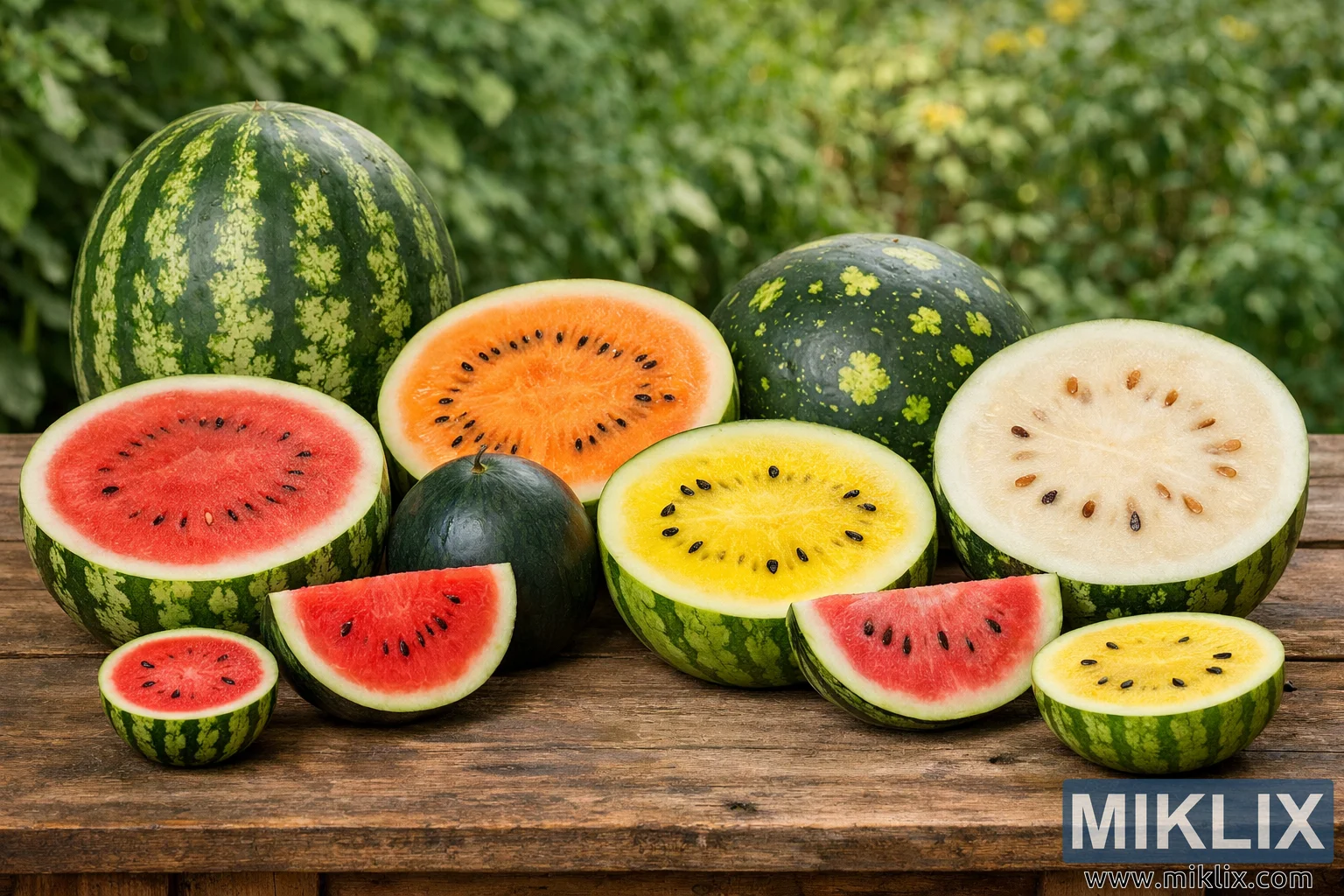
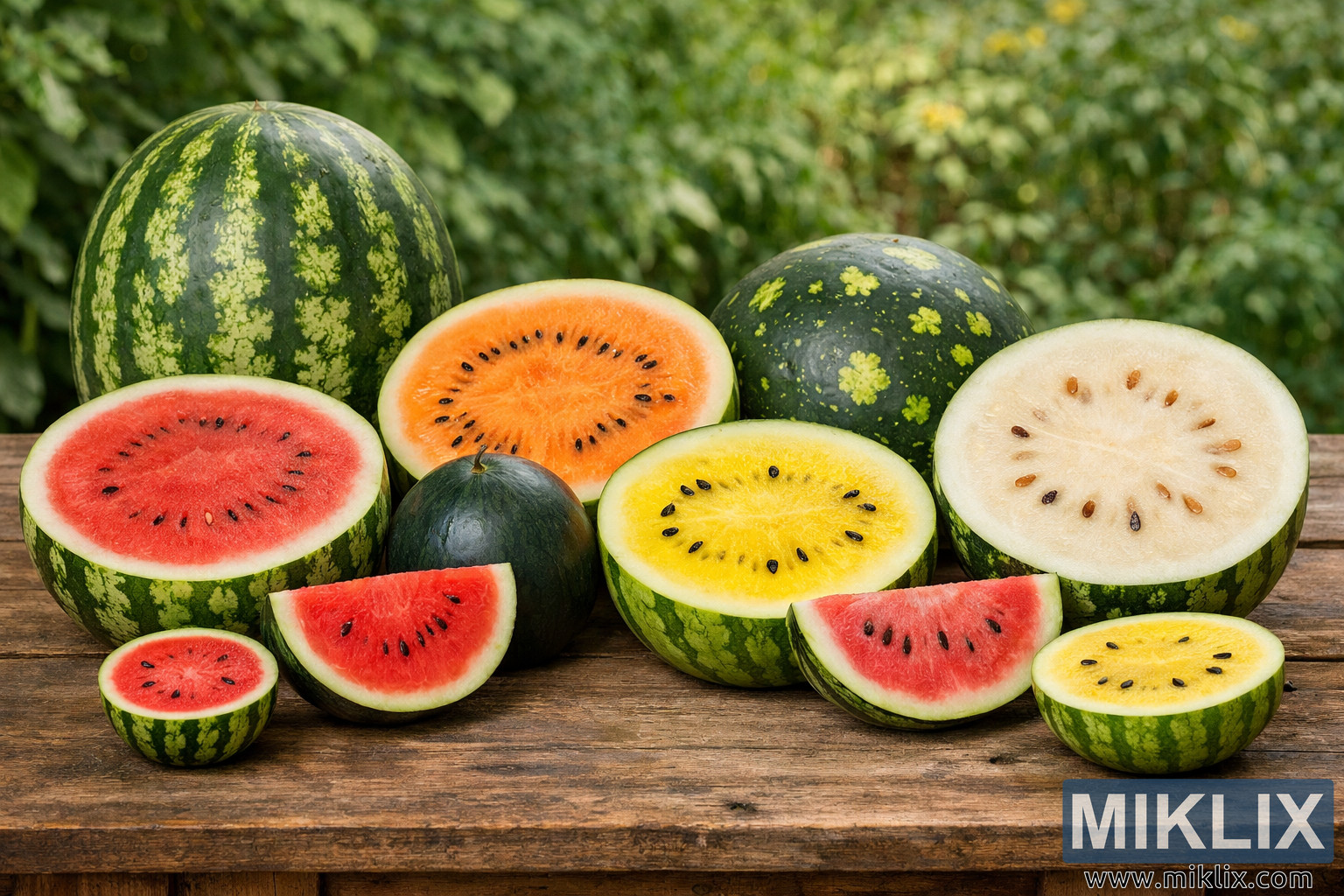
A high-resolution landscape photograph presents a carefully arranged comparison of several watermelon varieties displayed across a rustic wooden table outdoors. The scene is brightly lit with soft natural daylight, and the background is filled with gently blurred green foliage that suggests a garden or farm setting. This shallow depth of field keeps the focus on the fruit while creating a calm, natural atmosphere that emphasizes freshness and agricultural variety.
Across the table, whole watermelons and sliced halves are placed side by side so their differences in size, shape, rind patterns, and flesh color can be easily observed. Some of the melons are small and round, while others are noticeably larger and more elongated, illustrating the wide range of watermelon types grown around the world. The outer rinds vary in color and pattern: some show classic dark-green stripes against lighter green backgrounds, while others appear darker and more solid with scattered lighter markings. These visual differences highlight the diversity of cultivars even before the fruit is cut open.
Several melons have been sliced cleanly in half and positioned so their interiors face the viewer. The cross-sections reveal strikingly different flesh colors. Traditional bright red flesh appears in some varieties, packed with small black seeds arranged in gentle arcs. Other melons display vibrant orange interiors that glow warmly against the pale rind. A few halves show vivid yellow flesh with scattered dark seeds, while another variety reveals an almost creamy white interior, offering a surprising contrast to the more familiar red types. These variations demonstrate how watermelon breeding has produced fruits with many unique flavors, textures, and appearances.
Additional wedges and smaller cut pieces are arranged near the larger halves, reinforcing the comparison of internal color and fruit size. The slices show the juicy, granular texture typical of ripe watermelon, with glossy seed surfaces and moist flesh that reflects the sunlight. The wooden tabletop beneath them adds a warm, natural texture that complements the organic subject matter and enhances the farm-fresh visual theme.
Overall, the composition functions as an educational visual comparison of watermelon diversity. By displaying whole fruits alongside cut sections, the image clearly illustrates differences in scale, rind pattern, and flesh color in a single cohesive scene. The vibrant palette of reds, oranges, yellows, whites, and greens creates an appealing and informative display that celebrates the remarkable variety found within this familiar summer fruit.
图片与此有关: Growing Watermelons: Your Complete Guide to Juicy, Homegrown Success